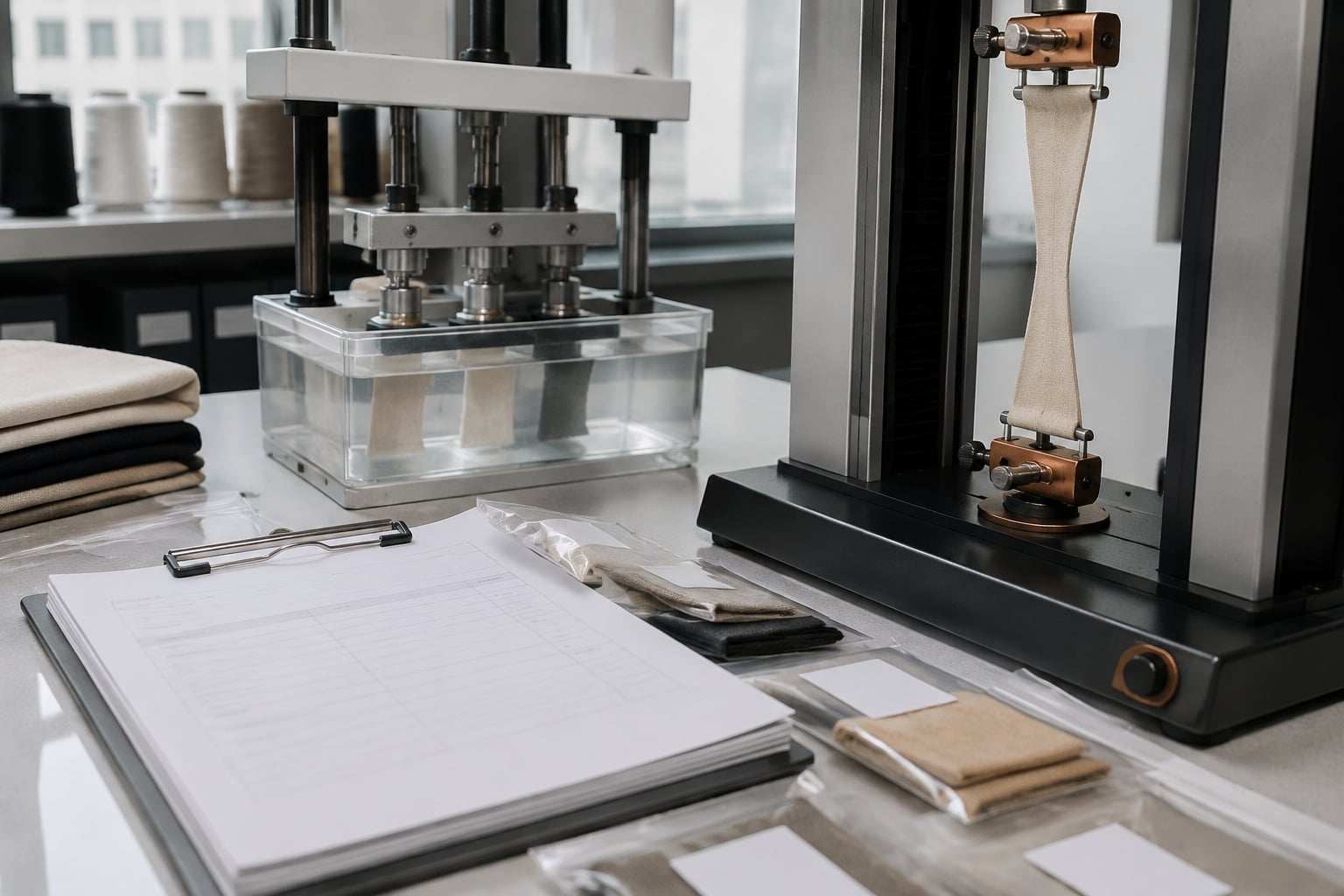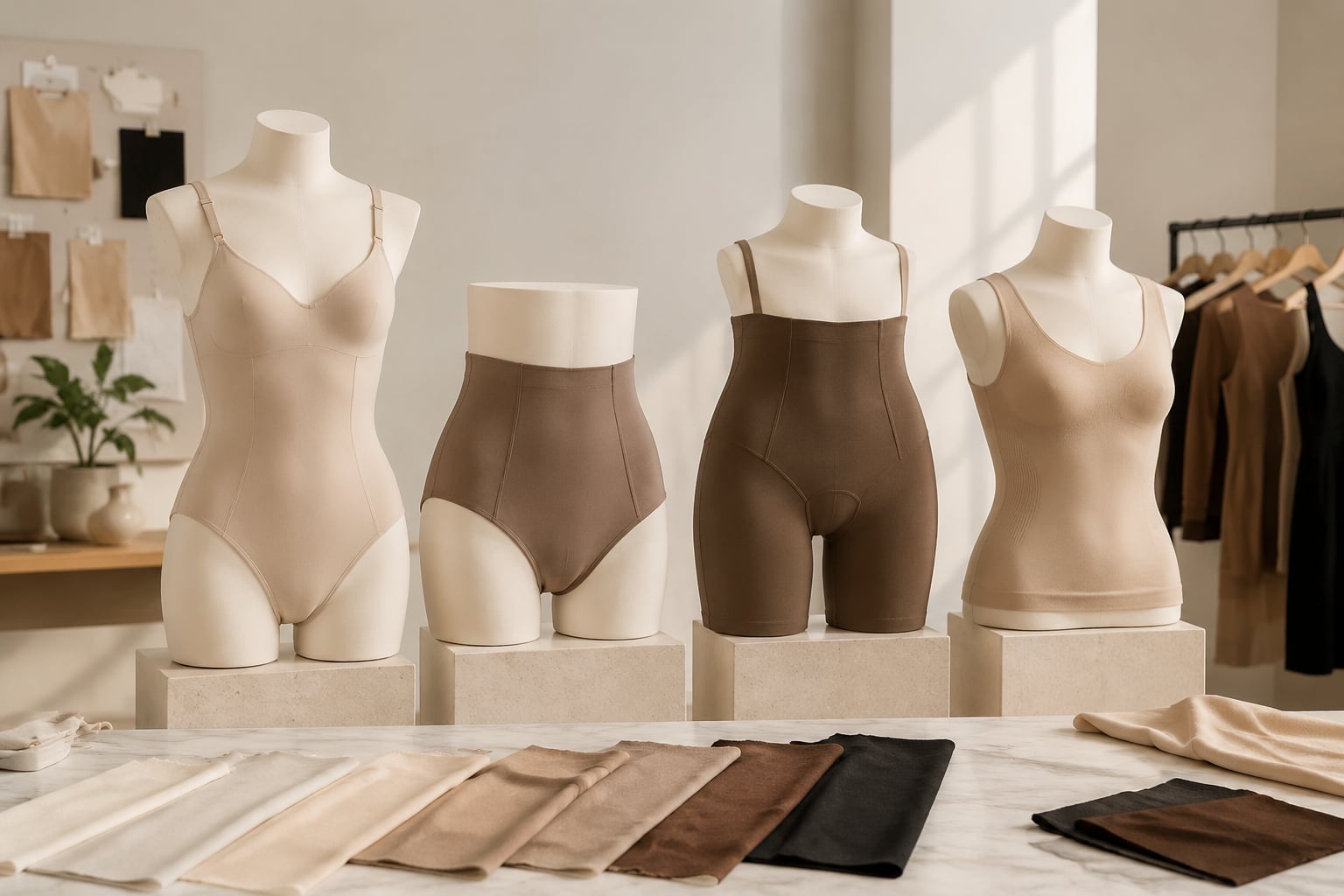
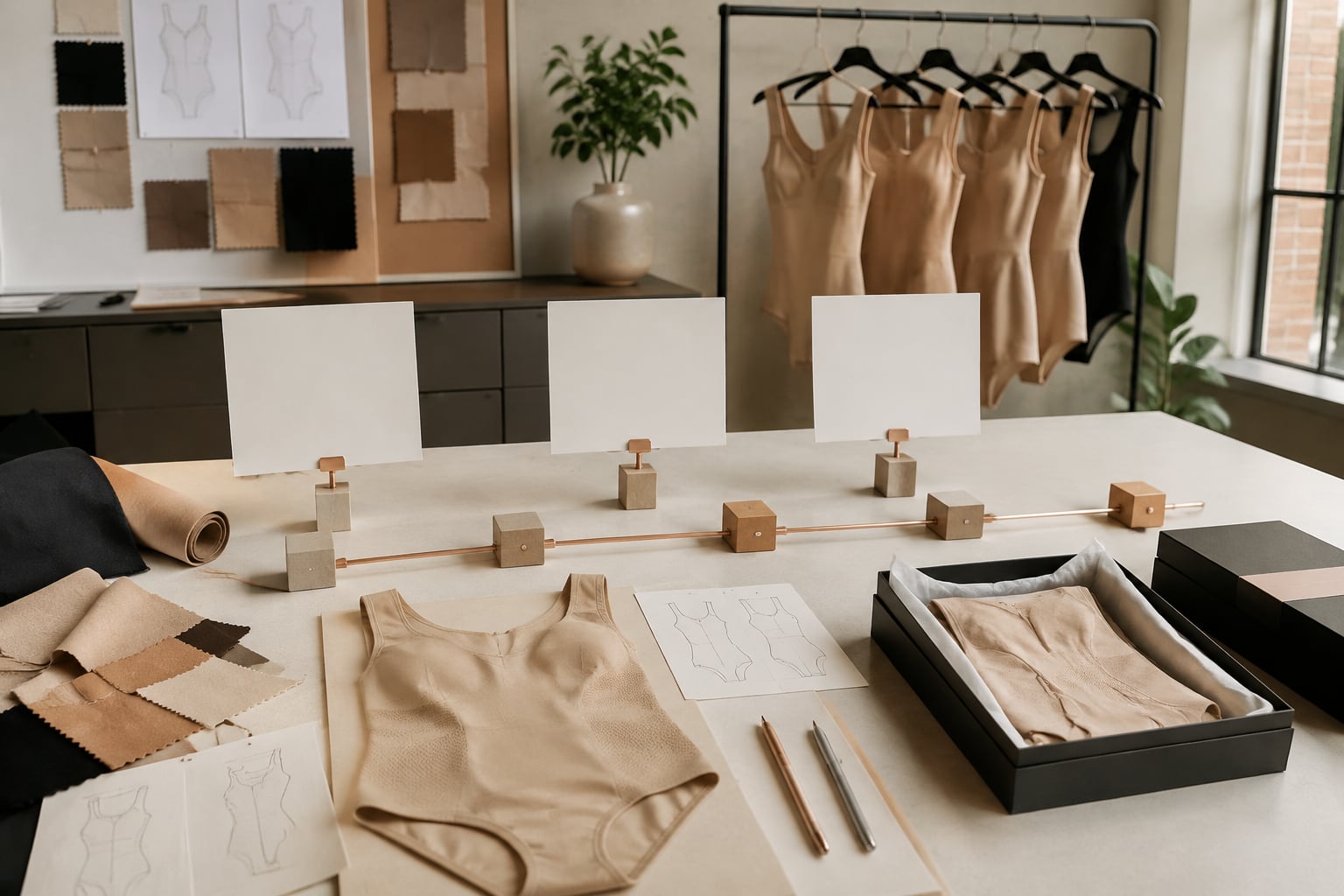
A shapewear collection can move from an approved brief to launch in around 24 weeks, but that is a planning framework rather than a guaranteed lead time. A simpler existing model may progress faster; a new construction, complex size range, custom packaging or sea freight programme may take longer.
This timeline is intended for shapewear brands, retailers, distributors and sourcing teams planning an OEM, ODM or private-label project for the UK market. Before requesting a quotation, prepare the product type, target customer, size range, materials or reference garments, forecast quantity, packaging requirements, delivery destination and intended launch window. Those inputs determine the critical path more than the calendar alone.
Quick answer: how long does it take to launch a shapewear collection?
A realistic planning range is approximately 20–28 weeks from confirmed brief to stock ready for sale, assuming the project includes product development, sample approval, testing, bulk production, freight and sales preparation.
A useful milestone plan is:
| Stage | Indicative timing | Main output |
|---|---|---|
| Briefing, model selection and supplier review | Weeks 1–4 | Agreed product brief and development route |
| Materials, samples and fit corrections | Weeks 5–10 | Approved construction, fabric direction and fit |
| Testing, labels, packaging and final approvals | Weeks 11–14 | Production-ready specifications |
| Bulk production and quality control | Weeks 15–20 | Inspected finished goods |
| Freight, customs, content and pre-launch sales work | Weeks 21–24 | Stock and launch assets prepared |
These durations are conditional. The timeline can change because of:
- whether the product is an existing base style or a new development;
- the number of styles, colours and sizes;
- fabric availability and minimum order quantities;
- the number of sample correction rounds;
- the complexity of bonding, panels, closures, trims or support zones;
- testing and labelling requirements for the markets where the product will be sold;
- packaging artwork and approval speed;
- production capacity at the selected supplier;
- freight method, booking availability and customs clearance;
- the timing of supplier holidays or factory closures.
For a procurement team, the important question is not simply “How many weeks?” It is: which activities can run in parallel, which approvals stop production, and where is contingency needed?
Plan backwards from the launch date and sales channel
Start with the date on which customers need to be able to buy the collection, then work backwards to the latest safe date for each milestone. “Launch” may mean different things:
- stock available in a UK warehouse;
- stock received by a retailer or distributor;
- an online product page open for orders;
- a pre-order campaign going live;
- a wholesale selling appointment or range review;
- a marketplace listing approved and operational.
A direct-to-consumer launch may allow content production and stock intake to overlap. A department store, marketplace or wholesale launch may have earlier deadlines for product data, barcodes, packaging, photography, compliance documentation and delivery into a nominated warehouse.
Before requesting a quote, create a launch input sheet covering the following:
| Quote input | What to define | Why it affects timing |
|---|---|---|
| Product scope | Style names or descriptions, such as shorts, briefs, bodysuits or waist cinchers | Each construction may need separate development and approval |
| Development route | Existing style adaptation, ODM base or fully custom OEM design | New patterns and construction generally require more sampling |
| Size range | UK size presentation, body measurements and grading expectations | Larger ranges may require additional fit checks |
| Colours | Core colours, seasonal shades and colour references | Custom dyeing or colour approval can add a separate step |
| Materials | Fibre composition, stretch, weight, finish and hand feel | Fabric sourcing and testing depend on the specification |
| Quantity | Units by style, colour and size | Allocation affects production planning and packaging |
| Branding | Labels, logos, trims, heat transfers and care information | Artwork approval must precede production |
| Packaging | Bags, boxes, inserts, stickers and carton markings | Custom packaging may have its own proofing and minimums |
| Delivery | UK warehouse, retailer distribution centre or another destination | Freight, customs and receiving dates vary |
| Commercial deadline | Required stock date, content date and sales launch date | Determines the available buffer and transport plan |
If S-SHAPER UK is part of the supplier shortlist, clarify the development route and production assumptions during weeks 1–4. Its team can assess an OEM, ODM or private-label brief, while the quotation confirms the model, colour, size, packaging and order allocation for the actual collection.
Weeks 1–4: briefing, model selection and supplier selection
The first four weeks should establish what is being made, for whom and under which commercial assumptions. A weak brief at this stage often creates delays later because the supplier is developing against changing requirements.
Define the product brief
A usable shapewear brief should include:
- intended level of support and the body areas to be addressed;
- garment silhouette and coverage;
- target wearing occasion;
- desired compression or comfort balance;
- construction details, such as panels, seams, gussets, openings or fastenings;
- fabric preferences and acceptable alternatives;
- size range and measurement chart;
- colour range;
- branding and packaging requirements;
- target cost or cost framework, if available;
- target order quantity and delivery window.
Reference garments, annotated photographs, sketches and measurement tables can all help, but they should not contradict one another. If a reference garment is supplied, state which features are essential and which are only directional.
For a more detailed preparation process, use this shapewear tech pack and OEM production guide. It can help separate design intent from measurable production requirements.
Compare suppliers by response quality, not only headline timing
A credible supplier response should identify assumptions and exclusions. Ask for confirmation of:
- which parts of the brief are understood;
- whether the proposal uses an existing base style or new development;
- sample stages included;
- estimated timing for each stage;
- material alternatives and their consequences;
- minimum quantities by project, style, colour and size;
- packaging and labelling assumptions;
- testing options or buyer-provided testing requirements;
- production and quality-control checkpoints;
- freight assumptions and delivery terms;
- what information is still needed before the estimate can be firmed up.
A short promise such as “delivery in eight weeks” is not enough unless it defines whether that means first sample, ex-factory completion, shipment departure or stock delivered to the UK.
Weeks 5–10: materials, samples and fit corrections
Sampling is often the largest variable in a shapewear launch timeline. The first sample may prove the concept but still require changes to support, stretch recovery, comfort, coverage, leg opening, neckline, gusset construction or visual appearance.
Confirm the material direction
Material selection should consider more than fibre content. For shapewear, the development team may need to assess:
- stretch and recovery;
- thickness and opacity;
- compression behaviour;
- surface finish;
- edge stability;
- resistance to rolling or digging in;
- comfort against skin;
- compatibility with bonding, sewing or heat application;
- colour consistency;
- wash-care expectations.
A substitute fabric can change the fit, support and appearance even when its composition looks similar on paper. If the requested material is unavailable, ask for a clear comparison sample and a written explanation of the change.
Allow time for sample review
A practical sample cycle normally includes:
- supplier reviews the brief and proposes construction;
- first sample is made;
- buyer reviews measurements, fit and appearance;
- corrections are documented;
- revised sample is assessed;
- final construction and grading are approved.
Do not approve a sample based only on a photograph. A buyer should review the physical garment, measurement points, seam placement, stretch response and fit on the relevant body shapes. If the collection is intended for a broad size range, a single fit size may not reveal grading problems at the smallest or largest size.
Use a consistent shapewear sample approval checklist so each round records the same information. The approval record should identify the sample version, date, measurements, comments, agreed changes and the person authorised to approve production.
Common causes of sampling delay
Sampling can extend beyond the planned four to six weeks when:
- comments arrive in separate or conflicting messages;
- the buyer changes the design after the first sample;
- fabric or trims are not available;
- several styles are developed simultaneously without a priority order;
- fit feedback is based on subjective comments without measurements;
- the supplier and buyer use different definitions of “final sample”;
- packaging or branding changes are introduced late.
Set a decision date for each sample round. If a correction is essential for fit or function, it should be treated differently from a preference change that could wait for a later collection.
Weeks 11–14: testing, labels, packaging and approvals
Once fit and construction are close to final, the project moves into technical and commercial approval. These activities may overlap with final sample work, but bulk production should not begin while key specifications remain open.
Establish the test plan for the intended market
The required checks depend on the product, materials, claims, sales channels and countries where the collection will be offered. A buyer may need to consider:
- fibre composition and care information;
- colourfastness and dimensional stability;
- seam or component performance;
- wash and wear behaviour;
- packaging and labelling accuracy;
- restricted substances or material safety requirements where applicable;
- claims such as “seamless”, “shaping”, “supportive” or “breathable”.
This is general commercial guidance, not legal advice. UK product, consumer, labelling, packaging, tax and import requirements can change and may depend on the exact product and sales model. Check current official UK guidance and obtain specialist advice where necessary.
Do not assume that a general supplier test report automatically covers every product variant. Confirm which style, colour, material and size the report relates to, and whether the intended sales channel has additional data requirements.
Finalise labels and packaging
Artwork approval should cover:
- brand and product name;
- size presentation;
- fibre composition;
- care instructions;
- country-of-origin wording where required;
- importer, responsible business or contact details where applicable;
- barcode or stock code;
- packaging copy and claims;
- carton quantities and markings.
The buyer should approve a final artwork proof, not only a low-resolution preview. Confirm whether labels are sewn in, printed, heat transferred or supplied as hangtags, since the method can affect comfort and production.
Packaging can become a critical-path item if it is custom-made. Ask whether the supplier is waiting for packaging before production can be packed, and whether plain or temporary packaging is possible without compromising the launch plan.
Use a formal approval gate
At the end of this phase, the project should have:
- an approved size chart and grading direction;
- an approved construction and measurement specification;
- a confirmed material and colour standard;
- approved branding and packaging artwork;
- a documented test plan and outstanding actions;
- a purchase order or production agreement reflecting the agreed scope.
Weeks 15–20: bulk production and quality control
Bulk production should begin only after the production sample, specifications, artwork and commercial allocation are approved. The production schedule may be quoted from different starting points, so confirm exactly when the clock begins.
Ask whether the stated production time starts from:
- purchase-order confirmation;
- deposit or payment receipt;
- material approval;
- receipt of approved packaging;
- final pre-production sample approval;
- completion of all testing and documentation.
Confirm the production control plan
A practical quality plan should define:
- approved reference sample;
- measurement tolerance method;
- acceptable workmanship standard;
- colour and shade checking;
- label and packaging verification;
- quantity reconciliation;
- inspection timing;
- treatment of defective or non-conforming goods;
- approval process for any production deviation.
Quality control is not a substitute for a clear specification. If the buyer has not defined the measurement points or acceptable tolerance, an inspection may confirm that goods match an unclear standard rather than the intended product.
General quality guidance, such as this shapewear quality assurance overview, is useful for preparing questions. For any supplier—including S-SHAPER UK—confirm which checks, documents and inspection stages are included in the quotation rather than assuming a general process applies unchanged.
Avoid releasing all variants at once without prioritisation
If the collection contains multiple styles, colours and sizes, consider whether one delayed component could hold back the entire order. A buyer may instead define:
- must-launch styles;
- secondary styles;
- priority colours;
- acceptable partial shipment conditions;
- final date for deciding whether to split delivery.
Any split shipment can affect freight cost, warehouse receiving and the customer experience, so it should be agreed commercially before the problem occurs.
Weeks 21–24: freight, customs, content and pre-launch
The final four weeks are often underestimated because production completion is mistaken for launch readiness. Finished goods still need to move, clear import processes, arrive at the correct facility and be matched with sales assets.
Plan UK delivery rather than only shipment departure
Confirm:
- freight method;
- estimated departure and arrival windows;
- who books transport;
- who acts as importer of record;
- who prepares commercial and shipping documents;
- delivery terms;
- customs clearance responsibilities;
- UK VAT and duty treatment with the relevant adviser;
- destination warehouse requirements;
- carton dimensions, weights and pallet information.
These points are commercial and tax matters that depend on the transaction structure. They should be confirmed in writing for the specific order and checked against current official UK guidance. A supplier’s production completion date is not the same as a UK stock-available date.
Prepare content before stock arrives
Product content can be developed while production is under way, provided the final specifications are stable. Prepare:
- product names and descriptions;
- size and fit guidance;
- garment measurements;
- care information;
- product photography or approved sample photography;
- packaging and barcode data;
- wholesale line sheets;
- marketplace attributes;
- launch emails and paid-media assets;
- customer-service guidance for fit and returns.
Avoid publishing claims that have not been checked against the final product. If the production garment changes after photography, compare the final item with the approved sample before launch.
Allow for warehouse and channel checks
Online retailers may need time to upload product data, test stock feeds, configure fulfilment and verify returns handling. Wholesale accounts may require delivery bookings, carton labels or advance shipping information. Include these steps in the plan rather than treating them as administrative work after the launch date.
Account for the critical path, contingency and Chinese holidays
The critical path is the chain of activities where a delay moves the final launch date. In a shapewear project, it commonly includes:
brief approval → material confirmation → sample approval → testing and artwork approval → production → inspection → freight → customs and receiving
Some tasks can run in parallel, such as photography, product copy and wholesale preparation. Others cannot. For example, final packaging production may depend on approved dimensions, while bulk production may depend on confirmed materials and construction.
Build practical buffers
A buffer should reflect the risk, not simply be added as an arbitrary number of days. Consider separate allowances for:
- sample corrections;
- material or trim availability;
- packaging artwork;
- production;
- inspection and rework;
- freight and customs;
- warehouse intake;
- channel or marketplace approval.
A launch with a fixed campaign date should normally have more protection than an evergreen range with a flexible release window. Decide in advance which activities can be accelerated and what the financial or quality consequences would be.
Check supplier holiday periods early
If production is in China or another overseas manufacturing market, ask for the supplier’s year-specific closure periods and the last safe dates for:
- approving samples;
- confirming materials;
- placing production orders;
- receiving packaging;
- booking freight;
- completing inspection.
Factory closures can affect material suppliers, packaging vendors, transport bookings and customs activity at the same time. Do not rely on a generic annual assumption; obtain the relevant dates for the supplier and production year.
Define go/no-go gates for samples, production and launch
A written gate prevents a project from progressing because the calendar feels urgent. Use objective conditions wherever possible.
| Gate | Go criteria | No-go warning |
|---|---|---|
| Sample approval | Fit, measurements, construction, material and appearance are signed off | Comments remain open or the sample differs from the intended specification |
| Production release | Purchase order, approved sample, artwork, quantity allocation and material confirmation are complete | Supplier is working from provisional artwork or unresolved changes |
| Quality release | Inspection outcome, quantity and corrective actions are accepted | Defects, shade variation or measurement issues remain unresolved |
| Freight release | Shipping documents, delivery address, importer responsibilities and booking are confirmed | Goods are ready but clearance or receiving information is incomplete |
| Launch release | Stock is received or reliably scheduled, content is accurate and fulfilment is ready | Product pages, size guidance or returns processes are not operational |
Keep a single approval log with version numbers and named approvers. Verbal approval or scattered chat messages can create disputes about which sample, artwork or specification was authorised.
FAQ: shapewear collection launch timeline
Can a shapewear collection launch in less than 20 weeks?
It may be possible for a small, straightforward project using an existing base style, readily available materials, limited colours and simple packaging. That should be treated as a project-specific scenario, not a standard promise. New patterns, multiple fit rounds, custom fabrics and complex packaging usually require more time.
What is the biggest cause of delay?
Late decisions are a common cause. A change to the material, size range, compression level, branding or packaging after sample approval can affect patterns, testing, costing and production. Clear decision owners and written approval gates reduce this risk.
Should I launch all sizes and colours together?
Not necessarily. A phased range can reduce the initial operational burden, but it may affect minimum quantities, brand positioning, marketing and customer expectations. Decide based on demand evidence, channel commitments, size inclusivity goals and the supplier’s allocation requirements.
When should I request a quotation?
Request a quotation once you can provide enough information for the supplier to identify assumptions: product type, development route, materials or references, size range, colours, quantity, packaging, destination and required date. If several details are undecided, request a budgetary discussion that clearly labels the estimate as provisional.
Does the quoted lead time include freight to the UK?
Not automatically. Ask whether the quoted period covers sampling, bulk production, inspection, shipment departure, customs clearance or delivery to your warehouse. A credible quotation should state the point at which the lead time starts and ends.
What should I send to S-SHAPER for a project review?
Send the product type, target market, target quantity, size range, preferred materials or reference garments, colour requirements, branding and packaging needs, delivery destination and target sales window. S-SHAPER UK can use these inputs to review the OEM, ODM or private-label route; the final model, colour, size, packaging and commercial allocation should be confirmed in the project quotation.
A buyer-ready launch plan does not need every detail to be perfect on day one. It does need clear priorities, measurable approval criteria and an honest distinction between an indicative timeline and a confirmed project schedule. For a project-specific review and quotation, provide the product brief and commercial inputs above so the development route, assumptions and critical path can be assessed before commitments are made.