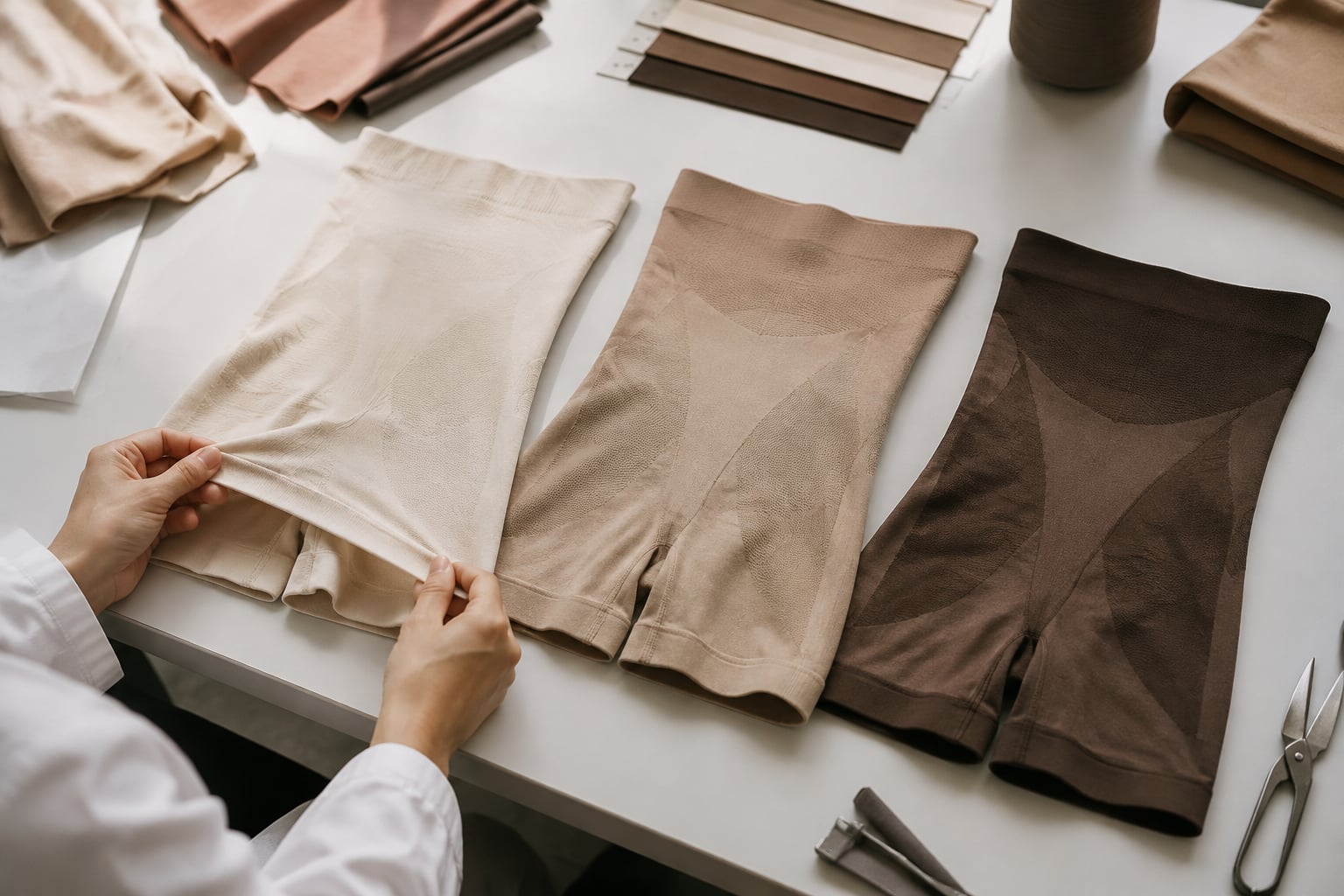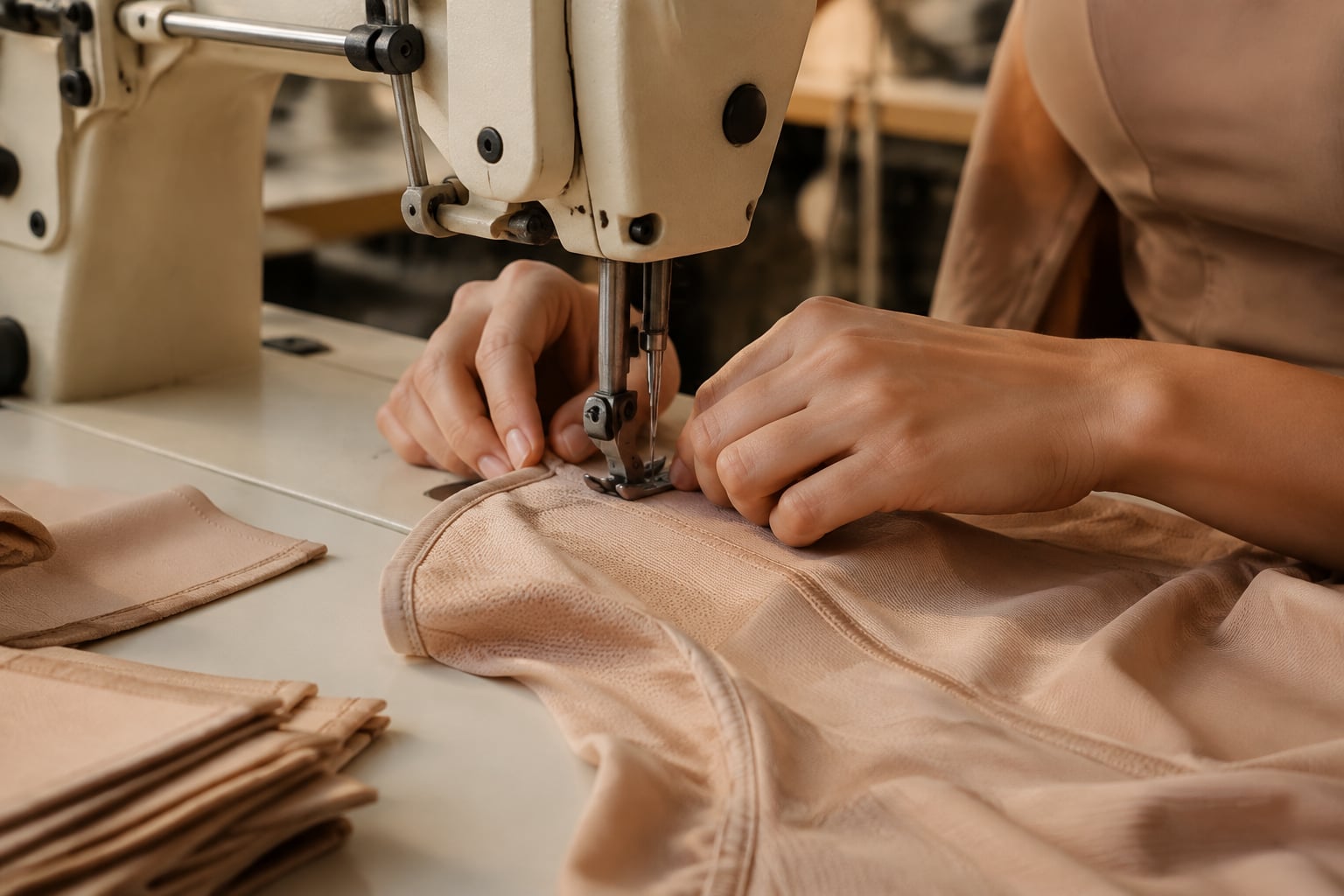
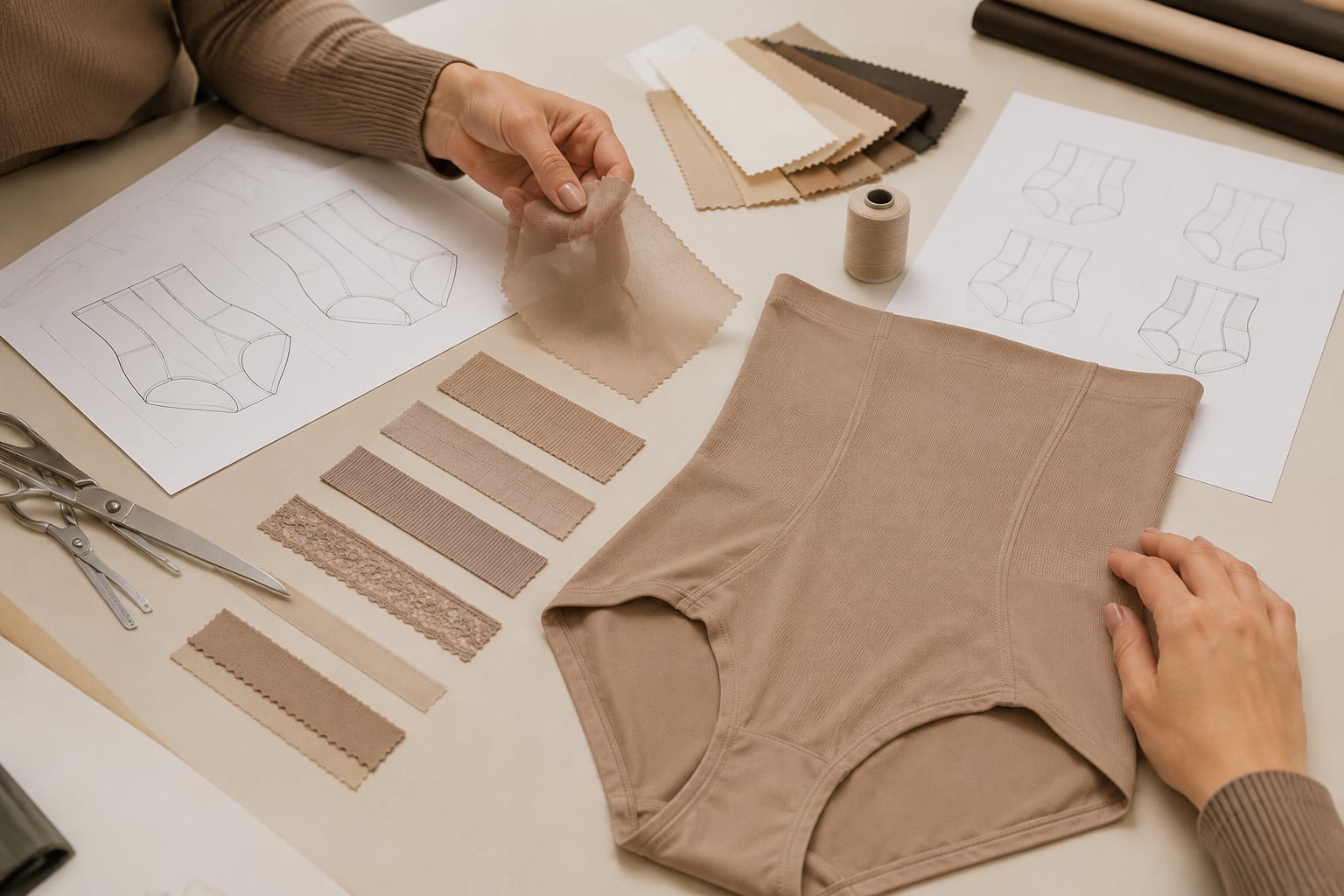
A shapewear tech pack is the single controlled specification document used to turn a product idea into repeatable OEM production. It should tell a factory exactly what to make, how it should fit and perform, which materials and trims to use, how samples will be assessed, and which version is approved for bulk manufacture.
For shapewear, a sketch and a size chart are not enough. Compression, recovery, seam placement, bonded edges, gusset construction and body coverage all affect the final experience. A useful tech pack makes these decisions visible without guessing technical values that have not yet been sampled or tested.
Define the Product and Target Fit
Start with a one-page product overview. This gives the factory, pattern team and sample room a common interpretation of the product before detailed specifications begin.
State the commercial identity of the garment:
- Product name and internal style code
- Product category, such as bodysuit, shaping brief, high-waisted short, thigh shaper, camisole or shaping leggings
- Intended wearer and target market
- Core use case, such as everyday smoothing, occasionwear support, post-partum comfort or activewear layering
- Planned size range and colourways
- Intended retail positioning, if relevant to material and finishing choices
- Season or delivery programme reference
- Tech pack version number, issue date and owner
Then describe the target fit in practical, observable terms. For example: “high-rise waist that remains below the bra line”, “mid-thigh leg ending without rolling”, or “firm smoothing through the lower abdomen with comfortable movement at the rib cage”.
Avoid vague statements such as “snatches the waist” or “maximum control” unless you define what that means for construction and fit. A factory cannot reliably convert marketing language into a pattern, fabric selection or sewing method.
Write a fit brief that can be sampled
A strong fit brief describes both the desired silhouette and the boundaries that must not be crossed.
Include:
- Where the garment starts and ends on the body
- Which areas are smoothed, shaped, supported or left relatively unrestricted
- Whether the garment is designed to be stepped into, pulled over the head, or opened with a closure
- Expected wearing conditions, including duration, garment layering and likely movement
- Sensitive areas where pressure, seam bulk or rolling would be unacceptable
- Fit priorities in order, such as waist stability first, then leg comfort, then bust coverage
A high-compression garment may suit one buyer but feel unsuitable for another. Rather than assigning a compression rating without evidence, give the factory a target wearing outcome and use samples to establish the appropriate fabric, pattern and zone construction.
Create Technical Flats and Construction Callouts
Technical flats are the factory-facing drawings of the garment. They are not fashion illustrations. Their purpose is to show every seam, panel, edge finish, closure and component from the front and back, with additional views where needed.
Use clean line drawings with numbered callouts. A factory should be able to trace every callout to a written construction instruction, bill of materials entry or artwork file.
For a shaping bodysuit, flats may need to show:
- Front and back body panels
- Bust construction and underbust support
- Adjustable or fixed straps
- Waist reinforcement panels
- Leg openings and edge treatment
- Open, closed or gusseted crotch construction
- Hook-and-eye placket, poppers or other fastening
- Centre-back seam, if present
- Interior labels and care label placement
Make the construction instructions specific
For each callout, state what the component is, where it sits and how it should be made. “Seamless edge” is not a complete instruction: it could mean a raw-cut bonded edge, a folded-and-stitched edge, a silicone-grip treatment, or another method.
Useful construction callouts include:
- Seam type and stitch location
- Bonded, stitched, laser-cut or folded edge finish
- Seam allowance treatment where it affects bulk or comfort
- Reinforcement layers and their coverage area
- Direction of stretch for each panel
- Strap adjustment method and hardware
- Closure type, placement and functional requirements
- Gusset shape, lining arrangement and hygiene considerations
- Requirement for symmetrical placement of panels and trims
Add close-up reference images where a line drawing cannot communicate the required finish. Mark the image clearly as a construction reference, not an uncontrolled source of dimensions.
A prototype garment can be useful as a reference, but it should not replace the written specification. If the sample differs from the tech pack, record which source takes priority.
Build the Bill of Materials
The bill of materials (BOM) is the purchasing and component-control section of the shapewear tech pack. Every material, trim, label and packaging item should have its own line item and a clear link to where it appears in the garment.
At minimum, use the following columns:
| BOM field | What to record | Why it matters |
|---|---|---|
| Item number | Unique reference for each component | Prevents confusion during sampling and buying |
| Component name | Main fabric, power mesh, elastic, hook-and-eye, label or carton | Identifies the item’s function |
| Placement | Where the item is used | Helps check correct application |
| Supplier or source reference | Approved material or trim code, where available | Supports consistency between samples and bulk |
| Fibre composition | Declared composition for the component | Needed for product information and labelling review |
| Weight or specification | Relevant fabric or trim detail | Allows comparison of proposed substitutes |
| Colour reference | Named colour plus approved standard or swatch reference | Reduces subjective colour matching |
| Consumption | Estimated use per garment where established | Supports costing and material planning |
| Approval status | Proposed, sample-approved or bulk-approved | Stops unapproved substitutions |
Do not rely on broad descriptions such as “nylon fabric” or “soft elastic”. Shapewear performance depends on fibre blend, knit structure, stretch direction, recovery, weight, finish and width. Two materials with similar compositions may behave very differently once cut, sewn, bonded and worn.
Separate approved materials from development options
During development, it is normal to compare several candidate fabrics or trims. Keep these options separate from the approved BOM.
For example, label a material as:
- Development option — pending fit sample
- Approved for second fit sample
- Approved for pre-production sample only
- Approved for bulk production
- Rejected — do not use
This creates an audit trail without allowing an early material option to be mistaken for the bulk-approved component. If a factory proposes an alternative because of availability, cost or minimum order quantity, require a documented comparison and approval before it replaces the specified item.
For projects requiring product development support, review how an OEM and ODM shapewear process handles material sourcing, sampling responsibilities and approval stages before committing to a programme.
Add Measurements and Points of Measure
A measurement specification converts the intended fit into checkable dimensions. It is one of the most important parts of a shapewear tech pack, but it must be built carefully: a measurement table alone does not define compression or on-body comfort.
Begin with a base size. List finished-garment measurements for that size, then provide grade rules or complete measurements for every planned size. Identify whether each measurement is taken relaxed, stretched to a stated condition, or on a garment laid flat without tension.
Typical points of measure (POMs) for shapewear include:
- Waist width
- High-hip width
- Low-hip width
- Leg-opening circumference or width
- Front rise and back rise
- Inseam
- Outseam
- Body length
- Strap length and adjustment range
- Underbust width
- Bust height or cup-related dimensions where applicable
- Gusset length and width
- Closure length and position
- Panel widths at defined locations
Include a numbered POM diagram alongside the table. Names alone can be interpreted differently between teams. “Front rise”, for instance, needs a clear start and end point, particularly where the garment has a gusset, bonded edge or shaped waistband.
Use tolerances responsibly
Tolerances allow for normal manufacturing variation. They are not a substitute for an achievable pattern or a clear quality standard.
Set tolerances after reviewing sample consistency and understanding the fabric’s behaviour. Very tight tolerances may be unrealistic for highly elastic garments, while overly broad tolerances can conceal a fit problem. Identify critical POMs separately, especially dimensions that affect waist position, leg comfort, closure function or panel alignment.
A practical measurement sheet should show:
- POM number and description
- How and where to measure
- Base-size target
- Tolerance
- Grading rule or each-size values
- Sample result
- Pass, fail or pending status
- Notes on corrective action
For stretch styles, confirm whether the factory will measure each garment after a defined conditioning period. Recovery after cutting, bonding, pressing and handling can affect finished dimensions.
Document Compression Zones and Fabric Behaviour
Compression is the defining technical challenge in shapewear. It should be documented as a system of materials, pattern reduction, panel placement, seam construction and edge behaviour—not as an unsupported promise.
Create a body-zone map using the front, back and side flats. Give each zone a functional description, such as:
- Light smoothing at the upper abdomen
- Greater support through the lower abdomen
- Stabilisation at the waist edge
- Flexible movement zone at the rib cage
- Lower-pressure finish at the thigh
- Supportive back panel with breathable or flexible area where required
Use relative terms—light, moderate, firm—only if they are defined within your own product range. Do not assume that one factory’s “firm” compression means the same thing as another’s. Compare samples on the same fit model and with a consistent evaluation method.
Specify behaviour, not just material names
The tech pack should state how the garment needs to perform before and after wear. Relevant behaviours include:
- Stretch direction and required recovery
- Resistance to waist or leg-edge rolling
- Stability of bonded edges after repeated extension
- Opacity when stretched within intended use
- Comfort at seams and closures
- Ability to move between sitting, standing and walking
- Shape retention after laundering
- Risk of panel show-through under close-fitting outerwear
If there are critical performance requirements, agree the evaluation method with the factory before bulk approval. That might include wear trials, stretch-and-recovery checks, wash testing, seam checks or visual assessments. The appropriate method, sample number and acceptance criteria depend on the product, materials and sales market, so they should be confirmed rather than assumed.
Material innovation can change both hand feel and garment performance. When comparing knit structures, bonding methods or panel solutions, examine the available shapewear technology and innovation approach alongside the factory’s ability to reproduce the approved construction at scale.
Common compression-specification mistakes
The most frequent issues are avoidable:
- Giving a compression claim without a zone map. The factory needs to know where support is wanted, not simply that the garment should feel “strong”.
- Using one fabric throughout by default. A single material may create excessive pressure, weak support or poor edge comfort in certain areas.
- Ignoring stretch direction. Rotating a panel can change the behaviour of the garment significantly.
- Approving fit only while standing. Sitting, bending and walking reveal rolling, digging and closure problems.
- Changing fabric after fit approval. Even a similar replacement can require another fit review.
Specify Labels, Packaging and Artwork
Labels, packaging and artwork often cause late-stage errors because they are treated as separate from the garment. Put them in the same controlled tech pack and assign each file a version number.
Your labelling section should cover:
- Brand label location, dimensions and attachment method
- Size label format and placement
- Care label content, placement and fold method
- Fibre-content declaration, where required for the intended market
- Country-of-origin marking requirements, if applicable
- Warning statements or instructions that are relevant to the product
- Barcode position and data ownership
- Hangtag, sticker and insert specifications
For products sold in the United Kingdom, confirm the current labelling, consumer-information and packaging obligations that apply to your sales model and product category. Requirements can differ where goods are also supplied into other markets, and the party responsible for the final product information should be clear from the outset.
Treat artwork as controlled production data
Provide artwork as production-ready files, not screenshots embedded in an email. Each artwork entry should identify:
- File name and revision
- Intended component or print area
- Dimensions and placement
- Colour references
- Print or application method
- Front and reverse artwork where applicable
- Approval status
Packaging instructions should state the folding method, whether garments are bagged, how size stickers are applied, and the packing ratio for inner packs and cartons where known. Ask the factory to confirm any packaging process that could affect bonded edges, moulded cups or garment appearance.
Set Sample Review and Revision Rules
A shapewear tech pack works only if its revision process is disciplined. Without it, comments from email threads, messaging apps and calls can conflict with the document the production team is actually using.
Set the sample stages before development starts. Names vary by supplier, but a typical sequence may include an initial development sample, fit sample, revised fit sample, size-set sample and pre-production sample. Define what each stage is intended to prove.
| Sample stage | Primary purpose | Do not approve until |
|---|---|---|
| Development sample | Checks whether the concept and construction are feasible | Key construction choices are visible and reviewable |
| Fit sample | Assesses silhouette, comfort, coverage and compression balance | Fit comments are recorded against the current tech pack version |
| Revised fit sample | Confirms corrections from the previous sample | All critical fit and construction changes are verified |
| Size set | Reviews grading across the size range | Proportions and critical POMs are acceptable in each reviewed size |
| Pre-production sample | Confirms the approved bulk configuration | Materials, trims, artwork, labels and packaging match the approved specification |
Make comments actionable
Each comment should contain:
- The tech pack and sample version being reviewed
- The affected page, POM, callout or BOM line
- A clear problem statement
- The required change
- Whether the change is critical, major or minor
- Whether a new sample, photograph, measurement report or material submission is required
“Make the waist tighter” is not actionable. A better comment is: “In base size, waist edge rolls after sitting. Review edge construction and panel balance; submit revised fit sample with updated POM sheet and proposed construction change.”
Keep a revision log at the front of the document. Record the date, version, pages changed, reason for the change and approver. Freeze the document at the pre-production stage. Any later change should trigger a formal change request and an assessment of its effect on fit, materials, cost, lead time and product information.
Issue a Production-Ready Tech Pack
A production-ready shapewear tech pack is not simply a completed template. It is a document where the factory, brand and relevant approvers have resolved the decisions that could change the garment in bulk production.
Before issuing it, check that it includes:
- Product overview, style code and current revision
- Front, back and detail technical flats
- Construction callouts linked to drawings
- Complete and approved BOM
- Colour and artwork references
- Base-size measurements, POM diagram, grading and tolerances
- Compression-zone map and performance expectations
- Label, care, barcode and packaging instructions
- Approved sample references and photographs
- Sample review history and open-item status
- Bulk quality requirements and agreed inspection approach, where applicable
- Named contacts and approval authority
The final issue should clearly say whether it is “for quotation”, “for sampling”, “for pre-production” or “released for bulk”. These stages should not share the same status. A quotation pack may contain estimates; a bulk-release pack should not contain unresolved material choices, conflicting measurement tables or placeholder artwork.
A final OEM factory checklist
Before choosing or briefing an OEM partner, ask:
- Can the factory interpret and challenge the compression brief, rather than only follow a sketch?
- Who owns pattern development and grading, and how are changes documented?
- How will approved fabric, trim and colour references be controlled?
- What information must be final before bulk production can begin?
- How are material substitutions, production changes and quality issues escalated?
- Can the factory provide measurement and sample feedback in a format that fits your approval process?
- Does its shapewear range demonstrate relevant construction experience, such as the styles shown in its shapewear product collection?
A clear answer to these questions matters as much as the initial sample. The best tech pack cannot remove every development risk, but it gives both sides a reliable way to identify, test and approve the decisions that affect the finished garment.
FAQ
What is the difference between a shapewear tech pack and a product specification sheet?
A specification sheet may cover measurements and basic materials. A shapewear tech pack is broader: it combines flats, construction details, BOM, fit information, compression zones, labels, artwork, packaging and revision control. For OEM production, it should operate as the main approved reference.
Can a factory create the tech pack?
Yes, many OEM and ODM suppliers can support product development. However, the brand should still approve the final specifications and retain controlled copies of all versions. Clarify ownership of patterns, artwork, material references and development documents before starting.
Should a tech pack include fabric compression values?
Include verified values when you have a reliable test method, clear units and agreed acceptance criteria. Otherwise, document the required body-zone behaviour and validate it through fit and performance review. Invented or incomparable values can create false confidence.
When is the tech pack ready for bulk production?
It is ready when the approved pre-production sample, BOM, measurements, artwork, labels, packaging and construction details all match one controlled version, with no unresolved critical comments.
A well-built shapewear tech pack gives an OEM factory the clarity needed to sample accurately and produce consistently. If you are planning a private-label, OEM or ODM range, use this structure to assess your existing documents before beginning product development with S-SHAPER UK or another suitable manufacturing partner.