If you want to have shapewear made professionally, you do not need a finished tech pack before speaking to a manufacturer. You do need a clear product brief covering the customer problem, garment type, target fit, compression level, size range, materials, quantity, packaging and delivery market.
The usual route is: define the product commercially, convert the idea into measurable specifications, develop samples, test fit and function, approve a production sample, then confirm the final commercial terms for bulk manufacture. This applies whether you are a start-up, retailer, distributor or established brand assessing OEM, ODM or private-label shapewear.
A quote is only useful when the supplier knows which model, colours, sizes, packaging format and quantities are included. Treat those details as project-specific: a manufacturer must confirm them in writing rather than assuming that a published minimum order quantity covers every possible configuration.
Quick Answer: How do you have shapewear made professionally?
Professional shapewear production normally follows these steps:
- Define the customer and use case — for example, everyday smoothing, occasionwear support, post-partum comfort or performance layering.
- Prepare a product brief — include garment type, target body areas, support level, materials, size range and reference products.
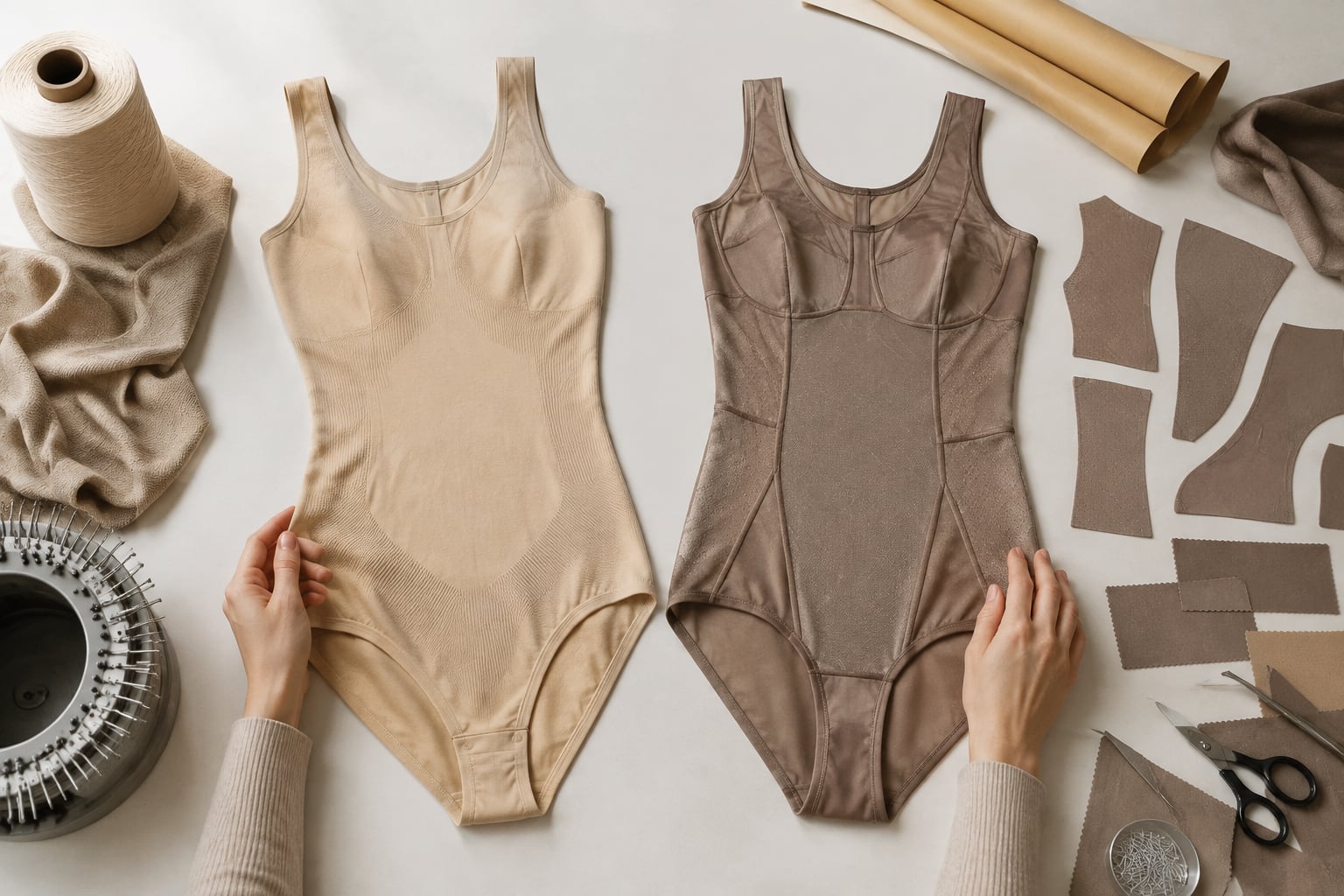
- Choose a production route — seamless knitting, cut-and-sew construction, bonding, or a combination.
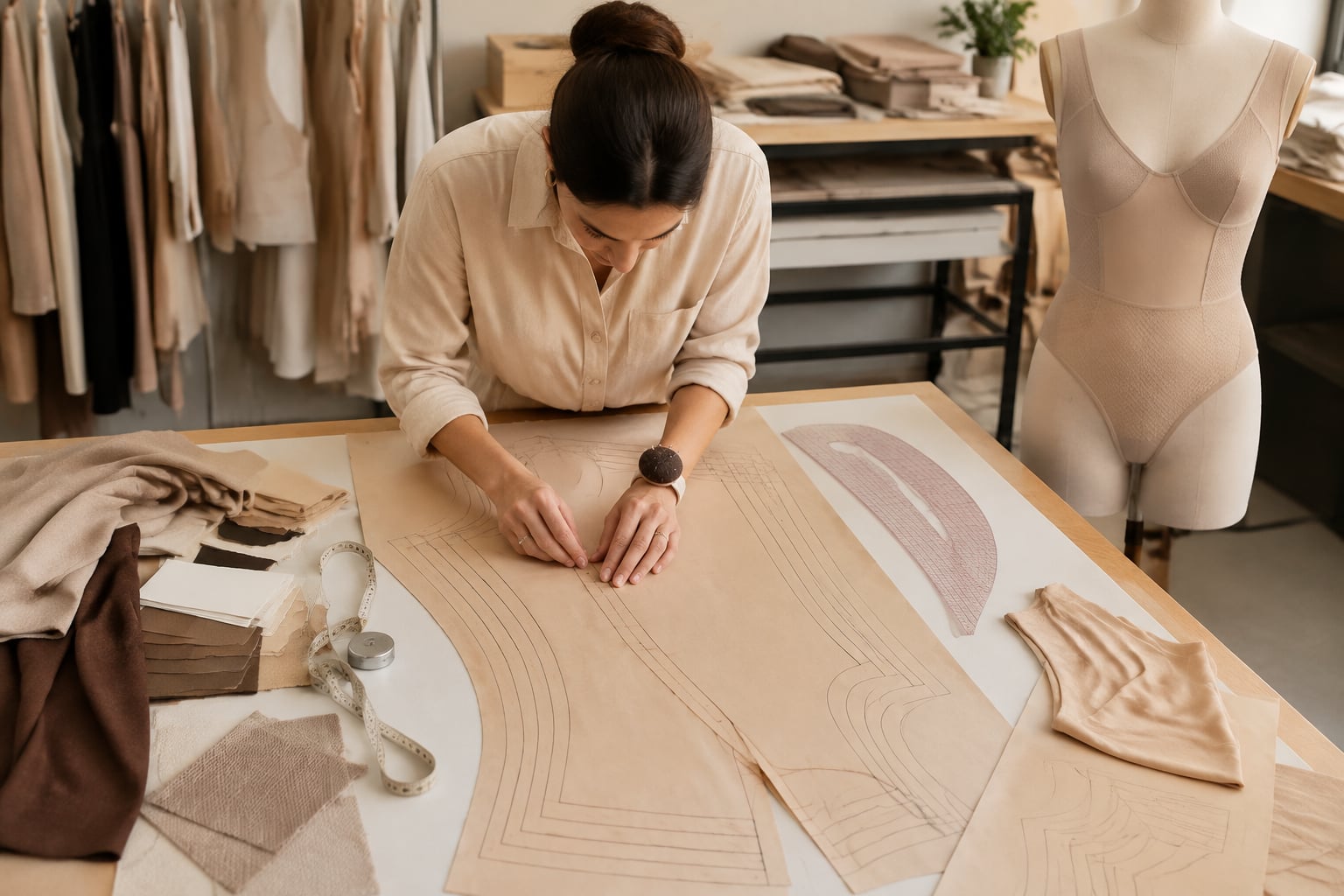
- Develop the first sample — the supplier converts the brief into patterns, construction details and material selections.
- Run fit and function reviews — check measurements, compression, comfort, rolling, transparency, recovery and laundering.
- Approve a pre-production sample — this becomes the reference for bulk production.
- Confirm the quotation and order basis — verify quantity, colour and size allocation, packaging, delivery terms, payment milestones and responsibilities.
- Monitor production and quality — use agreed measurements, tolerances and inspection criteria.
You can approach an OEM or ODM manufacturer with a sketch, reference garment, measurements and intended retail positioning. A finished technical pack makes the process more precise, but it is not the only valid starting point.
At S-SHAPER UK, a buyer can start with an idea, reference garment or tech pack and clarify whether OEM, ODM or private label is the appropriate route. The team then needs to confirm the sample scope and quotation assumptions for the specific model, colours, sizes and packaging; a published minimum does not define those details by itself.
From customer problem to a manufacturable product brief
A shapewear project should start with the problem the garment is expected to solve, not only with a visual style. “High-waisted shorts” is a product category; “a smooth, non-rolling short for wearing under fitted dresses for up to several hours” is a more useful manufacturing brief.
Record the following before requesting quotes:
- Target customer: body shape, intended wearer and typical use
- Main benefit: smoothing, shaping, support, posture assistance, modesty or layering
- Coverage: waist, abdomen, hips, thighs, back, bust or full torso
- Compression intention: light, medium or firm support, subject to measurable supplier confirmation
- Garment format: bodysuit, brief, shorts, leggings, camisole, slip or vest
- Wear context: daily use, occasionwear, workwear, travel, maternity or performance
- Size range: use a defined measurement chart rather than labels such as S–XL alone
- Fabric preferences: fibre content, stretch, opacity, hand feel, breathability and recovery
- Design features: gusset, openings, straps, hooks, silicone grippers, bonded edges or reinforcements
- Target market: United Kingdom or other destination markets, with the relevant labelling and import responsibilities
- Commercial position: target retail price, expected order volume and launch timing
A reference garment can help, but it must be treated as a starting point rather than proof that the design can be copied or legally sold. Ask the supplier to identify which elements are being replicated, redesigned or newly developed.
For a deeper explanation of the information manufacturers use, see this guide to preparing a shapewear tech pack.
What documents are enough without a finished tech pack?
A supplier can often begin an initial assessment with a compact information pack. It should contain enough detail to prevent a vague “please make this” request.
| Information to provide | Useful starting detail |
|---|---|
| Product concept | Sketches, annotated photographs or a reference garment |
| Intended function | Target body area, support objective and wearing occasion |
| Measurements | Key body measurements and proposed garment measurements |
| Size range | UK-facing size chart, grading intention and fit model information |
| Materials | Preferred composition, stretch direction, opacity and finish |
| Construction | Seamless, cut-and-sew, bonded or mixed construction |
| Branding | Logo artwork, label requirements and placement |
| Packaging | Folded garment, polybag, box, hanger or other format |
| Order plan | Total units plus an initial colour and size mix |
| Delivery | Target market, desired shipping window and delivery assumptions |
| Quality needs | Critical measurements, appearance standards and test priorities |
The supplier’s response should then clarify what is still missing. A credible development reply should identify:
- proposed construction method;
- questions about fit or support;
- material alternatives and their implications;
- sample stages and approval points;
- information needed to price accurately;
- minimum quantities and whether they apply per style, colour or project;
- packaging and labelling assumptions;
- estimated production timing, stated as a project-specific estimate rather than a guarantee.
If a factory provides a price without explaining the underlying assumptions, the figure may not be comparable with another quotation.
You can also use shapewear product development services when your team needs support turning a commercial concept into production information.
Seamless, cut-and-sew or bonding: choosing the production route
The construction method affects the look, fit, compression behaviour, development time, machinery requirements and cost structure. There is no universally best method.
| Route | Typical strengths | Points to investigate |
|---|---|---|
| Seamless knitting | Smooth appearance, zonal knitting possibilities and fewer sewn seams | Machine limitations, yarn selection, shaping, edge stability and minimum quantities |
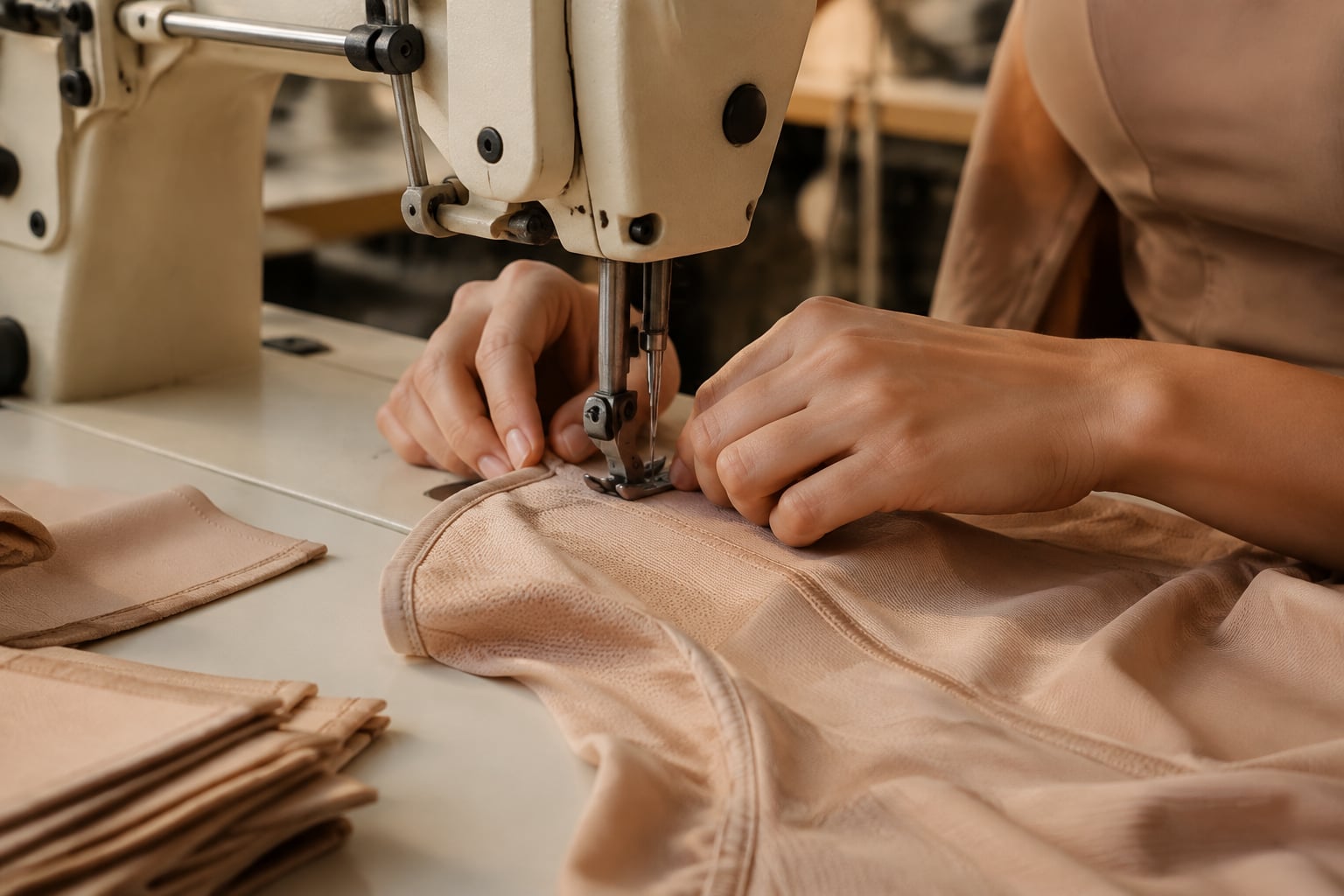
| Cut-and-sew | Flexible pattern development, panel shaping and broad fabric choice | Seam comfort, stitch quality, bulk, fraying and labour requirements |
| Bonding | Low-profile edges and a clean appearance under clothing | Adhesive compatibility, wash durability, peel strength, heat sensitivity and repairability |
| Hybrid construction | Can combine support panels, knitted zones and bonded finishes | More complex quality control, greater sample scrutiny and interaction between materials |
Seamless garments are not automatically invisible or comfortable. A poorly designed edge can still roll, dig in or show through clothing. Likewise, bonded construction can look refined but requires evidence that the adhesive system remains stable after wear and laundering.
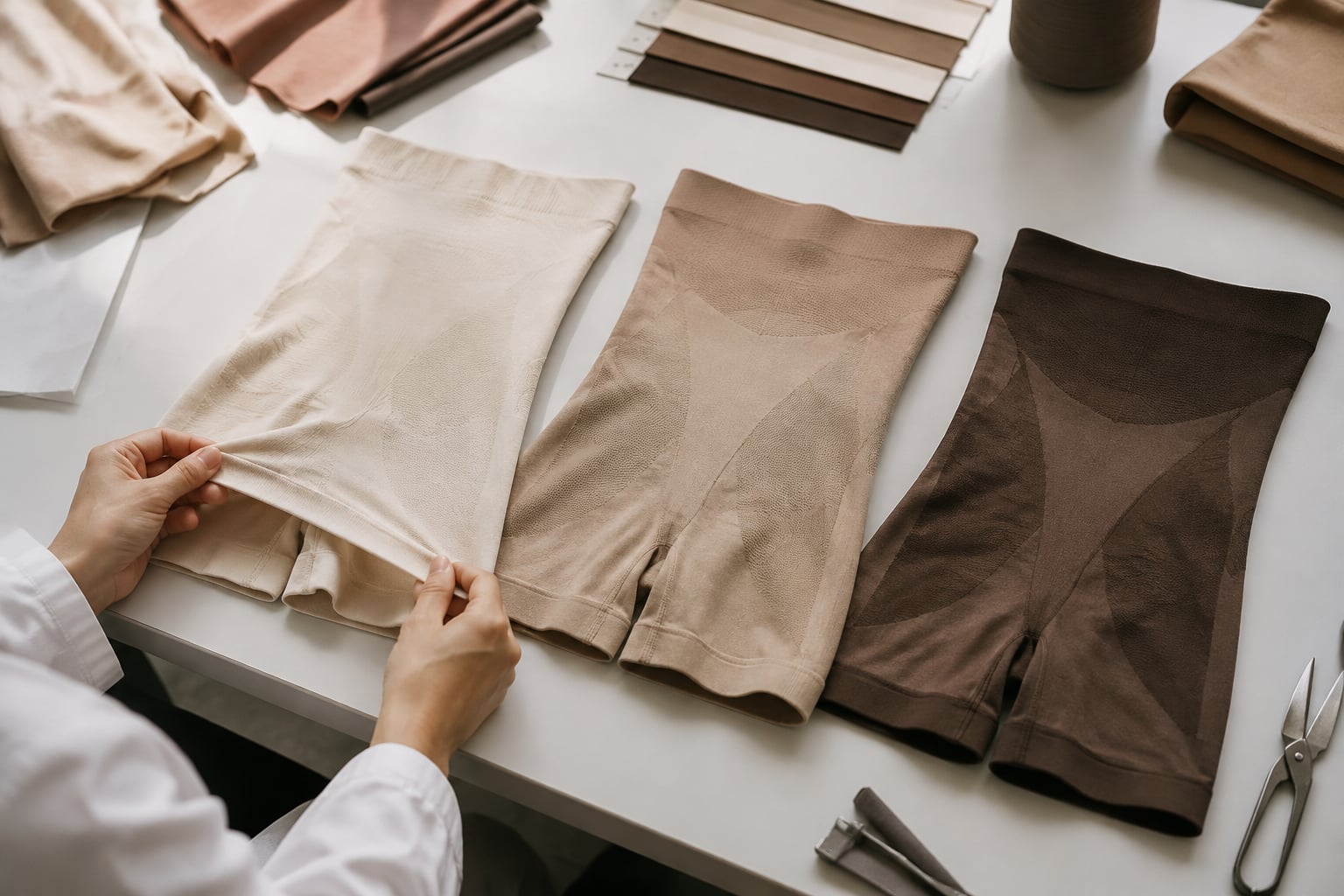
Ask the manufacturer which construction is being proposed for each functional area. Request a sample showing the actual edge finish, gusset construction, strap attachment and support zones rather than approving a general fabric swatch alone.
Making fit, compression and materials measurable
Shapewear cannot be specified reliably through adjectives alone. Terms such as “strong compression”, “second skin” and “buttery soft” mean different things to different suppliers.
Define measurable or observable criteria wherever possible:
Fit
Specify:
- body measurements for the intended size range;
- garment measurements at key points;
- rise, inseam, leg opening and torso length where relevant;
- acceptable measurement tolerances;
- fit model height and body measurements;
- intended ease or negative ease;
- whether the garment should fit a particular body shape.
A size chart should distinguish body measurements from finished garment measurements. Confusing the two can produce a garment that is technically within tolerance but unsuitable for the intended wearer.
Compression and recovery
Ask how the supplier will describe and check compression. Depending on the product, this might involve fabric stretch and recovery, garment measurements under controlled conditions, zonal construction or another agreed method. The important point is to define the method and acceptance criteria before approval.
Confirm:
- where compression is strongest;
- where movement must remain unrestricted;
- how the garment is put on and removed;
- whether compression changes across sizes;
- whether the fabric recovers after stretching;
- how the garment performs after laundering.
Do not make medical or therapeutic claims unless the product, evidence and applicable UK requirements support them. General product development guidance is not legal or regulatory advice; check current official UK guidance and obtain specialist advice where claims, safety or labelling obligations are involved.
Fabric and trims
Confirm the fibre composition, fabric weight if relevant, stretch percentage, recovery, opacity, colourfastness expectations and finish. Also specify components such as:
- elastic bands;
- silicone strips;
- hooks and eyes;
- sliders;
- gussets;
- labels;
- thread;
- adhesives;
- packaging materials.
A material substitution during production can materially change fit and performance. The approved sample should therefore record the actual materials and components, not only the appearance.
Organising samples, fit tests and approval samples
Sampling should be treated as a sequence of decision gates, not as one opportunity to approve a finished garment.
A practical process is:
1. Development sample
This tests whether the concept can be constructed. It may reveal issues with pattern balance, edge tension, gusset placement, strap length or fabric suitability.
2. Fit sample
Review it on an appropriate fit model or against a defined measurement method. Record specific corrections rather than general comments such as “make it tighter”.
Useful fit observations include:
- waistband rolling or cutting in;
- leg opening pressure;
- excess fabric at the lower back;
- bust compression or spillage;
- crotch comfort;
- strap slippage;
- restricted movement;
- visible lines under clothing;
- difficulty dressing and undressing.
3. Revised sample
Check that each correction has been applied. If several changes are made at once, note which change caused which result. This makes later decisions easier.
4. Pre-production approval sample
This should represent the construction, fabric, trims, colour, branding and packaging intended for bulk production. It should be signed off in writing with a dated specification or sample reference.
An approval gate can be as simple as the following:
| Gate | Proceed only when |
|---|---|
| Product brief | Customer, use case, garment type and target size range are defined |
| Construction | Production route and critical components are agreed |
| Fit | Key measurements and wear-test observations are acceptable |
| Function | Compression intention, recovery, opacity and comfort meet the brief |
| Commercial | Quantity, colour, size allocation and packaging are costed |
| Compliance review | Labelling, claims, safety and import responsibilities are allocated |
| Bulk approval | A representative sample and final specification are recorded |
Do not approve bulk production from photographs alone if fit, compression or material performance is critical.
Planning MOQ, colours and sizes without unnecessary SKU complexity
Minimum order quantity is only one part of the purchasing decision. The commercial question is how many combinations you must buy and sell.
Clarify whether the stated MOQ applies:
- per project;
- per style;
- per colour;
- per size;
- per fabric;
- or to a total order that can be allocated across variants.
Any published production minimum should be checked against the way you intend to split models, colours and sizes. The quotation must confirm that allocation and the packaging basis before you use the number in a launch plan.
For a first launch, avoid creating too many variables at once. A narrower range can make it easier to:
- forecast demand;
- maintain stock depth;
- identify the best-performing fit;
- reduce packaging artwork changes;
- manage quality checks;
- avoid stranded inventory.
However, reducing sizes or colours is not always sensible. A shapewear range that excludes important body measurements may create avoidable returns and poor customer experience. Use your target customer data and sales channel requirements to decide which variants are commercially necessary.
Request a size-and-colour allocation table with the quotation. It should show unit quantities, not only a total MOQ.
Comparing cost, lead time and payment milestones
The lowest unit price is not necessarily the lowest total project cost. Compare the complete commercial basis, including:
- development and sample charges;
- pattern or grading charges;
- material and trim costs;
- branding and labels;
- packaging;
- quality inspection;
- freight and insurance;
- customs clearance and import costs;
- taxes and duties where applicable;
- payment fees;
- rework or replacement arrangements;
- storage or fulfilment assumptions.
For delivery timing, separate the stages:
- product brief and quotation;
- material sourcing;
- pattern or programming development;
- first sample;
- revisions;
- approval;
- material purchasing;
- bulk production;
- inspection;
- dispatch and transit.
Ask which dates are estimates and which events trigger the next stage. Confirm whether the quoted timing starts at order placement, payment receipt, material approval or final sample approval.
Payment milestones should be written clearly. Confirm the amount or percentage due at each stage, what is being approved, and what happens if the sample does not meet the agreed brief. Do not rely on an informal message that says “production starts soon”.
For UK imports, establish who is responsible for customs entries, duties, VAT treatment, transport to the final delivery address and any required product documentation. These points are general commercial guidance, not tax advice; check current HMRC and other official UK guidance for your arrangement.
Choosing a manufacturer with an offer and audit checklist
A manufacturer should be assessed on the quality of its process, not only its catalogue or initial quotation. Ask for evidence that the supplier understands shapewear’s specific risks: pressure, stretch recovery, edge comfort, transparency, laundering and size grading.
Use this checklist when comparing responses:
Product and development
- Has the supplier restated the product use case accurately?
- Have they identified construction risks?
- Can they work from a brief, reference sample or incomplete tech pack?
- Are pattern, grading and sample revisions included or charged separately?
- Who owns the final patterns, artwork and approved specifications?
Quality
- What are the critical measurements?
- What tolerances will apply?
- How will colour, appearance and workmanship be checked?
- How are stretch, recovery, bonding or seam issues assessed?
- Is there a pre-production sample approval stage?
- Can the inspection process and defect classification be documented?
Commercial terms
- What exactly does the MOQ cover?
- Are sample, packaging and branding costs included?
- Is the quote based on one colour and one size allocation?
- What are the payment milestones?
- Which delivery term and destination assumptions are used?
- What happens if the delivered goods do not match the approved sample?
Supply and compliance responsibilities
- Who supplies labels and packaging artwork?
- Which party checks UK labelling and product information?
- Who is responsible for import documentation?
- What claims may appear on the packaging or product page?
- Can the supplier provide the material and component information needed for your own review?
If the supplier avoids specific answers, changes assumptions between messages or cannot identify the approval sample, treat that as a procurement risk. An audit should also cover company identity, production capability, quality procedures, subcontracting and communication responsibilities. The level of audit required depends on order value, product risk and your internal procurement policy.
FAQ: Having shapewear made
Can a start-up order shapewear without a tech pack?
Often, yes. Begin with a clear product brief, reference images or a garment, measurements, intended function and target market. The manufacturer can help convert this into a technical production basis, but you should expect questions, revisions and sample costs.
What is the difference between OEM, ODM and private label?
OEM generally means producing a product to the buyer’s specifications. ODM usually involves adapting an existing product or development platform. Private label commonly refers to selling a supplier-developed product under your own brand, although commercial definitions vary. Confirm what design ownership, exclusivity and customisation are included.
You can review the different project routes through OEM and ODM shapewear production options.
Is 500 units enough for a first production run?
It may be a workable starting point, but the answer depends on the number of styles, colours and sizes, as well as your sales channel and forecast. A 500-unit project divided across too many variants may leave each SKU with insufficient stock. Confirm the supplier’s allocation rules in the quotation.
How many samples should be tested?
There is no universal number. At minimum, allow time for an initial development sample, a revised fit sample and a representative pre-production approval sample where the product is fit-sensitive. The required process depends on how complex the garment and size range are.
What should be included in a shapewear quotation?
Request the model, construction, fabric and components, colour, size range, unit allocation, MOQ, sample terms, packaging, branding, quality basis, payment milestones, delivery assumptions and validity period. The quote should also identify exclusions and project-specific items still awaiting confirmation.
How do I reduce the risk of a poor fit?
Use body measurements and finished garment measurements, specify tolerances, fit-test on an appropriate body, record corrections and approve a physical sample. Do not judge fit from a flat product photograph or a single generic size.
What UK requirements should I check?
Review current UK requirements for product safety, textile information, labelling, packaging, marketing claims, imports and taxation. The correct obligations depend on the product, claims, sales route and supply chain. This article is general information, not legal or tax advice, so obtain specialist guidance where needed.
What should I send for a project review?
Prepare the product type, customer use case, target market, estimated quantity, size range, preferred materials or reference garments, branding, packaging and desired delivery window. That gives a manufacturer enough context to identify open questions and build a quotation on stated assumptions.
A practical next step is to send those details to S-SHAPER UK for a project-specific review of the development route and quotation basis. You can begin with an idea rather than a finished tech pack, provided the commercial and product requirements are clearly described.