For a start-up, the right shapewear manufacturer is rarely simply the largest or cheapest factory. The better choice is the supplier that can turn your positioning into a technically viable product, communicate clearly through sampling, evidence consistent quality, and accommodate a realistic first order without blocking future growth.
When comparing a Shapewear Hersteller für Startups, assess the whole working relationship: product-development capability, fit and construction knowledge, minimum order quantities, material sourcing, quality controls and change management. A lower unit price can become expensive if the supplier cannot resolve fit issues, maintain shade consistency or document what has changed between sample and production.
Quick Answer: Which shapewear manufacturer suits a start-up?
A suitable manufacturer for a new shapewear brand should meet five core tests:
- It understands the product category. Shapewear requires more than standard cut-and-sew garment capability. It relies on controlled stretch, recovery, graduated compression, seam placement and size consistency.
- It can guide development. Start-ups without an in-house technical designer need structured support with specifications, fabric selection, samples and fit feedback.
- Its commercial terms fit your launch plan. Check MOQ by style, colour and size—not only the headline minimum.
- It provides verifiable quality evidence. Ask how incoming materials, production output and final inspection are controlled.
- It can scale without losing control. A supplier should explain what changes when volumes increase, including lead times, material reservations and production planning.
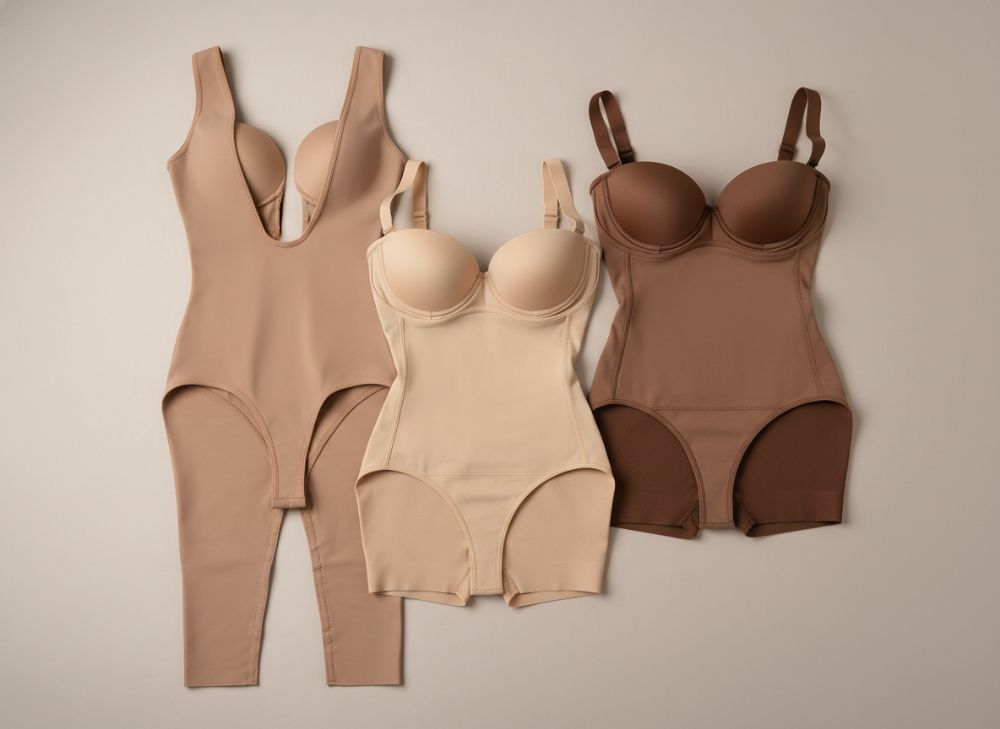
The right partner is not necessarily the one offering every product category. A specialist with proven experience in your intended constructions—such as bodysuits, shaping shorts, high-waist briefs or seamless pieces—may be a more dependable choice than a general apparel factory.
Assess product expertise, not factory size alone
Large factories may have broad capacity, but capacity does not automatically equal technical suitability. Shapewear is a performance garment: how it feels, supports and recovers after wear is central to whether customers keep it.
Ask prospective suppliers specific questions that reveal relevant capability:
- Which shapewear constructions do they make regularly?
- Can they explain the difference between light smoothing, medium shaping and firmer control in practical product terms?
- How do they manage tension around the waist, leg openings, bust and gusset?
- Which fabrics and elastane blends are appropriate for the intended compression level?
- How are bonded edges, silicone grips, hooks, gussets, panels and reinforced zones handled?
- How do they prevent rolling, digging-in, excessive flattening or visible lines beneath clothing?
- Do they have experience with seamless knitting, cut-and-sew construction, or both?
A supplier should be able to discuss trade-offs. For example, a firmer fabric may improve perceived control but make the garment harder to put on, less breathable or more difficult to grade across sizes. A very lightweight fabric may suit everyday smoothing but may not deliver the shaping effect suggested by the product imagery.
Also check whether their construction knowledge matches the customer you intend to serve. A UK-focused brand may need a size range and fit approach aligned to its own target customer rather than relying on a generic size chart. Request the supplier’s proposed measurement chart and compare it against your customer research before approving a sample.
Development support for teams without a technical department
Many founders start with a clear product idea but no technical pack, construction specification or garment technologist in-house. This is normal, but it makes the supplier’s development process especially important.
A useful manufacturer should help establish a clear development route, usually covering:
- Product brief — intended wearer, level of control, use occasion, target retail price and preferred silhouette.
- Technical specification — measurements, panels, fabric weight, trims, stitching, labels and packaging requirements.
- Material and component selection — main fabric, lining, elastics, hooks, gusset materials, care labels and packaging.
- First prototype — an early sample used to assess concept, construction and material direction.
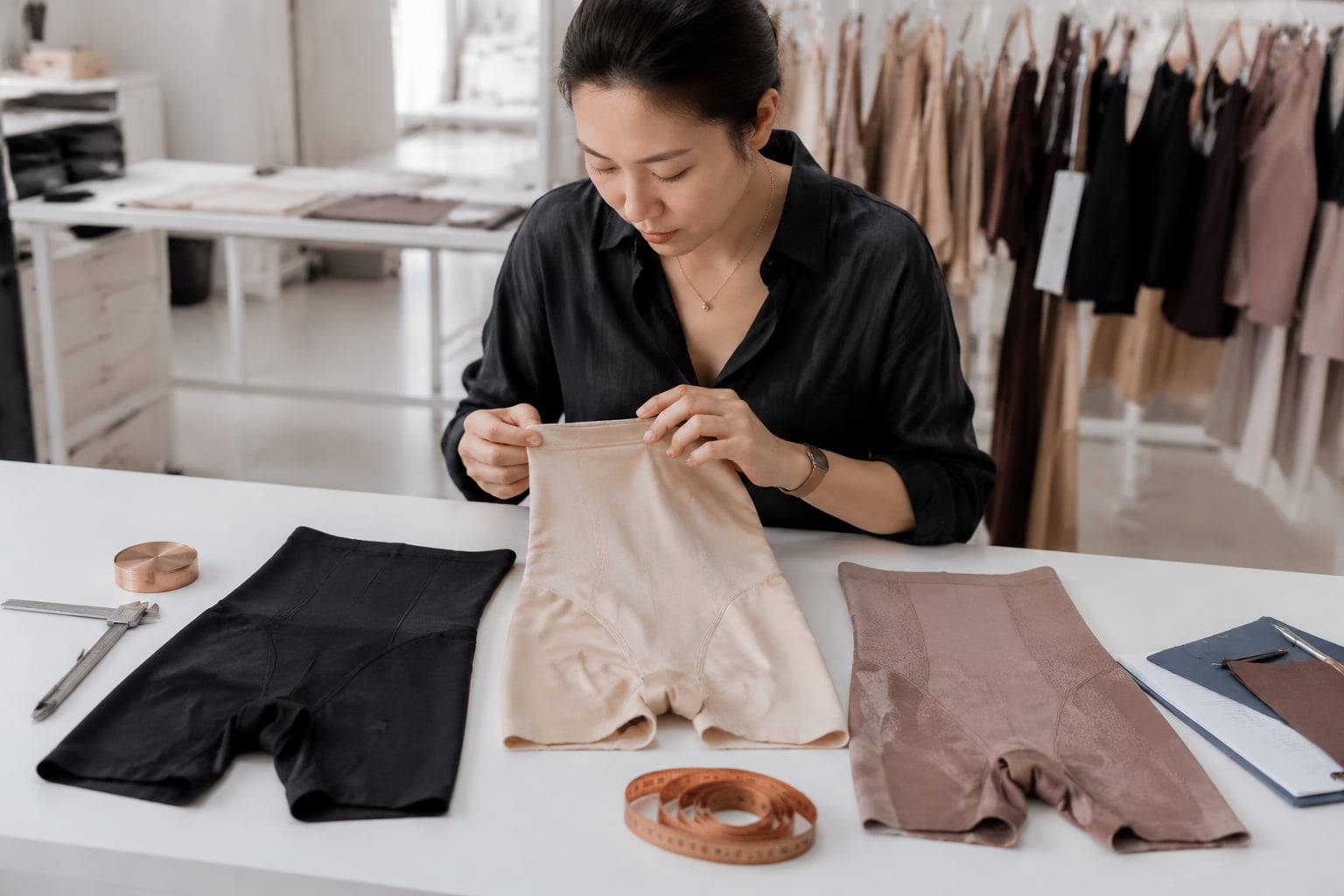
- Fit and wear review — checks for comfort, compression, movement, recovery and visible fit issues.
- Revised sample and pre-production approval — confirmation of the final specification before bulk production.
Do not assume a factory will interpret mood boards, competitor garments or a rough sketch in the same way you do. Provide a written brief and record every decision. If you supply a reference garment, state precisely what should be copied as inspiration and what should be changed. Avoid asking a supplier to replicate another brand’s protected design, labels or proprietary details.
For a team without technical expertise, it can be worth commissioning an independent garment technologist to review the grading, measurements and samples. This can be a focused, one-off investment that reduces the risk of ordering stock that fits poorly.
Check MOQs, sample quantities and scalable capacity
MOQ is one of the most important practical considerations for a start-up, but it is often misunderstood. A supplier may state a project-level starting quantity while the viable allocation across styles, colours and sizes is subject to quotation.
Ask for the full MOQ structure in writing:
- Minimum units per project
- Minimum units per style
- Minimum units per colour
- Minimum units per size, where applicable
- Whether sizes can be mixed within a colour run
- Minimum fabric, trim and packaging purchases
- Sample charges and quantities included
- Whether sample costs can be credited against a bulk order
- Requirements for repeat orders
- Conditions that apply if a colour or component is discontinued
For example, an order of 500 units may be feasible as one style in a limited colour range, but not necessarily as three styles, four colours and an extensive size run. Your product assortment must work with the actual production constraints, not merely the marketing plan.
S-SHAPER states a published starting point of 500 units per project for OEM, ODM and private-label shapewear work. The final allocation by model, colour, size and packaging should still be confirmed in the quotation, as those choices directly affect feasibility.
Scale readiness matters too. Ask what happens if your first launch sells through and you need a replenishment order. A supplier should be able to describe how fabric availability, production slots, component ordering and quality checks are managed as volumes grow. Do not treat a promising first sample as proof that the supplier can support repeatable series production.
Verify references, machinery and quality processes
A supplier’s website and product photography are useful starting points, not proof of capability. Verification should focus on the systems behind the sample.
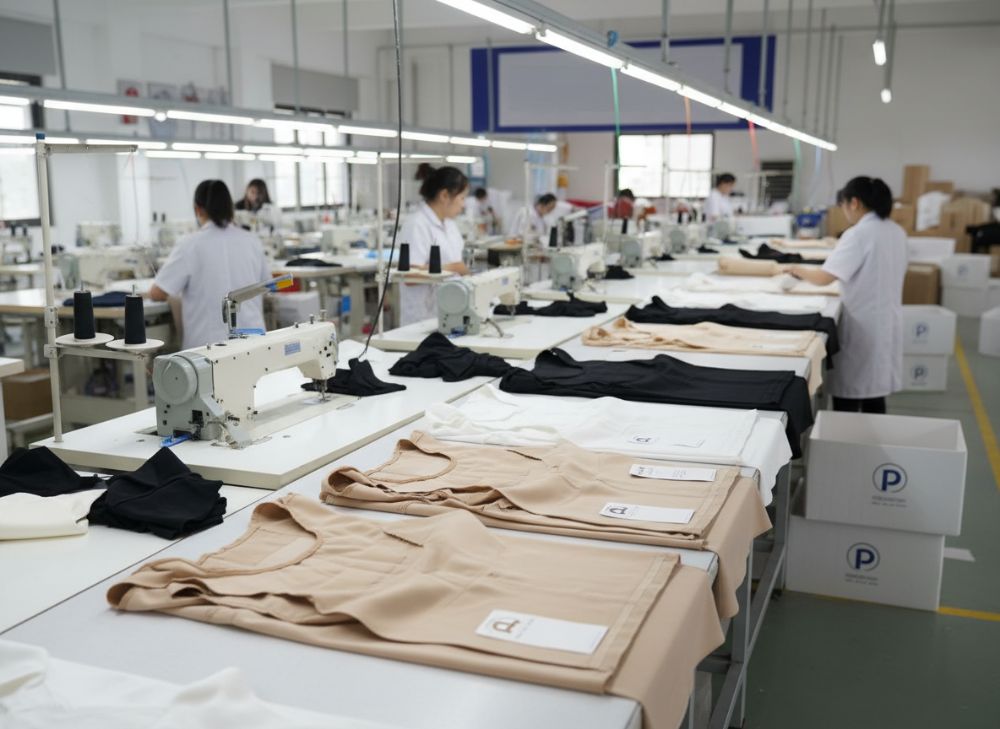
Start with a review of the manufacturer’s facilities and stated processes. A look inside the factory and production approach can help you understand what to ask about, including specialist machinery, workflow and the separation of development from bulk production.
Request evidence relevant to your product, such as:
- Images or video of comparable construction methods, where confidentiality permits
- Details of machinery used for the proposed style
- A process map from material receipt to packing
- Internal inspection points and acceptance criteria
- Measurement tolerances for key garment points
- Procedures for shade consistency and component matching
- Records used to identify production batches
- The process for isolating and reworking defective goods
- The final inspection process before shipment
Quality control should not be described only as “100% checked”. Ask what is checked, by whom, at which stage and against which approved reference. A robust process compares bulk output with a signed-off pre-production sample, measurement chart and packaging specification.
Review the supplier’s quality assurance process for shapewear production alongside your own product requirements. Quality documentation must be meaningful for your project: a factory process cannot replace clear acceptance criteria from the buyer.
If possible, arrange a remote or on-site audit before a major commitment. Use a structured shapewear supplier audit checklist to keep the conversation focused on evidence rather than broad assurances.
Test communication, response time and change management
The sampling stage is the safest time to test how a supplier will behave when production becomes more complex. Speed matters, but clarity and accuracy matter more.
Pay attention to whether the supplier:
- Restates your request in a clear specification
- Flags missing information rather than making assumptions
- Explains technical constraints and alternatives
- Answers questions directly, including difficult commercial questions
- Identifies changes between sample versions
- Uses version numbers for specifications, artwork and measurements
- Confirms approval points in writing
- Provides realistic rather than overly optimistic timing
Change management is particularly important in shapewear because a small adjustment can affect fit and performance. A different elastic width, fabric weight, stitch density or panel dimension can materially alter compression and comfort.
Establish a simple approval discipline before placing a bulk order. Each approved item should have a version-controlled reference: technical pack, measurement chart, bill of materials, approved colour standard, artwork, labels, packaging layout and pre-production sample. Changes should be logged with the reason, cost implication and delivery impact.
A common mistake is approving a sample informally by message and later discovering that the factory used a different fabric, trim or measurement set in production. Make the final approval unambiguous.
Clarify material access, alternatives and traceability
Materials often determine whether a shapewear launch is commercially viable. The best garment construction cannot compensate for fabric with poor recovery, inconsistent dyeing, uncomfortable hand feel or unreliable availability.
Before selecting a supplier, clarify:
- Whether proposed materials are stock-supported or made to order
- Indicative availability and replenishment risk
- Fibre composition and fabric performance information
- Colour options and any minimums linked to dyeing
- Whether the supplier can source equivalent alternatives
- How material substitutions are approved
- Batch identification and traceability records
- Origin information needed for your own supply-chain records
Do not approve a fabric solely by touching a swatch. Test it in the garment. A material can feel excellent flat but perform differently when stretched over the body, repeatedly washed or worn for several hours.
For UK sales, make sure you understand the product information and labelling responsibilities that apply to your route to market. Textile fibre information, care instructions, country-of-origin statements where used, packaging details, safety expectations and any performance claims should be reviewed for accuracy. If you import, sell under your own brand or make claims about medical, post-operative or therapeutic benefits, obtain current professional and official guidance. This is general commercial information, not legal or tax advice.
Avoid unqualified claims such as “medically proven”, “improves circulation” or “post-surgery approved” unless you have the appropriate evidence and have obtained specialist advice. Positioning a product as everyday smoothing or support is not the same as making a medical claim.
Compare quotations with a weighted supplier scorecard
A well-structured scorecard prevents price from dominating the decision. Score each supplier on the same evidence and apply weights that reflect your launch risks.
| Selection criterion | Suggested weighting | What to compare |
|---|---|---|
| Product and construction expertise | 20% | Relevant styles, fabric knowledge, fit and compression understanding |
| Development support | 15% | Technical pack help, sampling process, clarity of feedback and revisions |
| Quality evidence | 15% | Inspection process, measurement control, traceability and approvals |
| Commercial fit | 15% | MOQ structure, sample costs, payment terms and quotation clarity |
| Communication and change control | 10% | Response quality, version control and escalation process |
| Materials and sourcing resilience | 10% | Fabric access, alternatives, component control and consistency |
| Scale readiness | 10% | Repeat-order planning, capacity visibility and production process |
| Total landed-cost visibility | 5% | Unit cost, development, packaging, freight, duties and contingency |
Score each category from one to five, then multiply by the weighting. Add notes that explain the score, including evidence received and outstanding questions.
Do not compare quotations only by ex-works garment price. Your commercial model should account for samples, development changes, packaging, labelling, inspection, freight, insurance, import costs, warehousing, returns and expected markdown risk. A lower unit cost is not necessarily better if it requires you to buy too many variants or carries a high risk of quality-related returns.
Spot red flags before paying a deposit or approving production
Most supplier relationships have some uncertainty at the outset. The concern is not a supplier admitting limitations; it is a supplier avoiding reasonable questions or promising anything without supporting detail.
Watch for these red flags:
- A quotation lacks style, colour, size, fabric, trim or packaging assumptions.
- The supplier cannot explain its MOQ by variant.
- Sample and bulk construction appear materially different without explanation.
- Fabric composition, colour reference or component details are absent.
- Technical questions receive vague sales answers.
- There is pressure to pay before the specification, sample route or payment milestones are clear.
- The supplier resists documenting changes or providing a pre-production sample.
- Delivery promises are made without reference to material availability or approval dates.
- Quality is described in generic terms with no stated inspection method.
- The supplier agrees to reproduce a competitor’s branded product or protected design without challenge.
- Claims about certification, testing or compliance cannot be supported with relevant documentation.
Before a deposit or production release, ensure you have a signed or otherwise clearly agreed commercial document covering the product specification, order quantities, pricing basis, payment schedule, delivery terms, inspection approach, defect handling, ownership of tooling or artwork where relevant, and procedures for changes or cancellation.
No checklist removes all supply risk. However, a documented approval process makes disputes less likely and gives both parties a shared reference if a problem occurs.
FAQ: Shapewear manufacturers for start-ups
What is a realistic first order for a shapewear start-up?
It depends on the manufacturer, construction, fabric and number of variants. Assess the minimum by style, colour and size rather than relying on one overall number. A focused launch with fewer colours and a carefully planned size range is often more practical than a broad collection with very shallow stock per variant.
Should a start-up choose OEM, ODM or private label?
Choose based on how distinctive the product needs to be and how much development resource you have. Private label can be faster where an existing base product meets your brief. ODM may allow changes to an established design. OEM is generally more suitable when you have a detailed specification or want a more bespoke product. Ask each supplier exactly what can be changed under its chosen model.
How many samples should be approved before bulk production?
At minimum, approve a sample that reflects the agreed construction, materials, colour, labels and packaging direction. More than one round is often needed where fit, compression or fabric performance needs refinement. The key is not the number of samples but whether the final pre-production reference matches the documents used for bulk production.
Can a supplier guarantee shapewear will fit every customer?
No. Fit is influenced by body shape, size grading, garment construction and the wearer’s expectations of compression. You can reduce returns by defining the fit intent, wear-testing with relevant participants, providing accurate measurements and giving customers clear sizing guidance.
What should be included in a shapewear technical pack?
Include technical sketches, garment measurements, grading rules, fabric and trim details, seam and panel instructions, label placement, colour references, packaging requirements, care information and quality expectations. If you cannot create this internally, agree which parts the supplier will develop and how final approval will be documented.
How should I choose between two similarly priced manufacturers?
Choose the supplier with stronger evidence around technical competence, communication and repeatability—not simply the more polished sales presentation. Compare their sample quality, response to technical questions, clarity of quotations, material plan and willingness to record changes.
Start by narrowing your brief to one or two commercially viable hero products, then request comparable quotations and sample plans from shortlisted suppliers. Use the scorecard, insist on documented assumptions, and approve production only when the product, materials and quality expectations are clear.