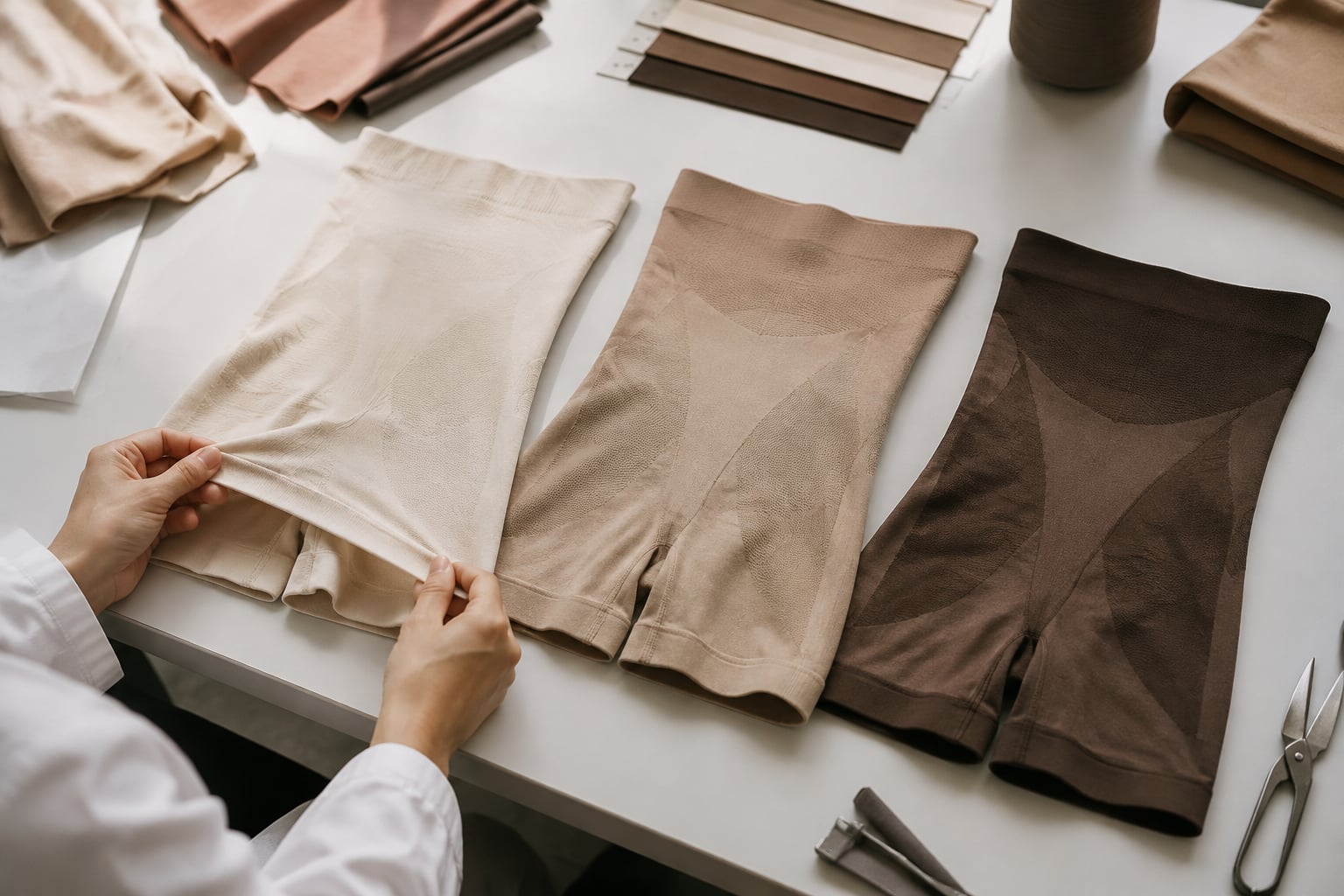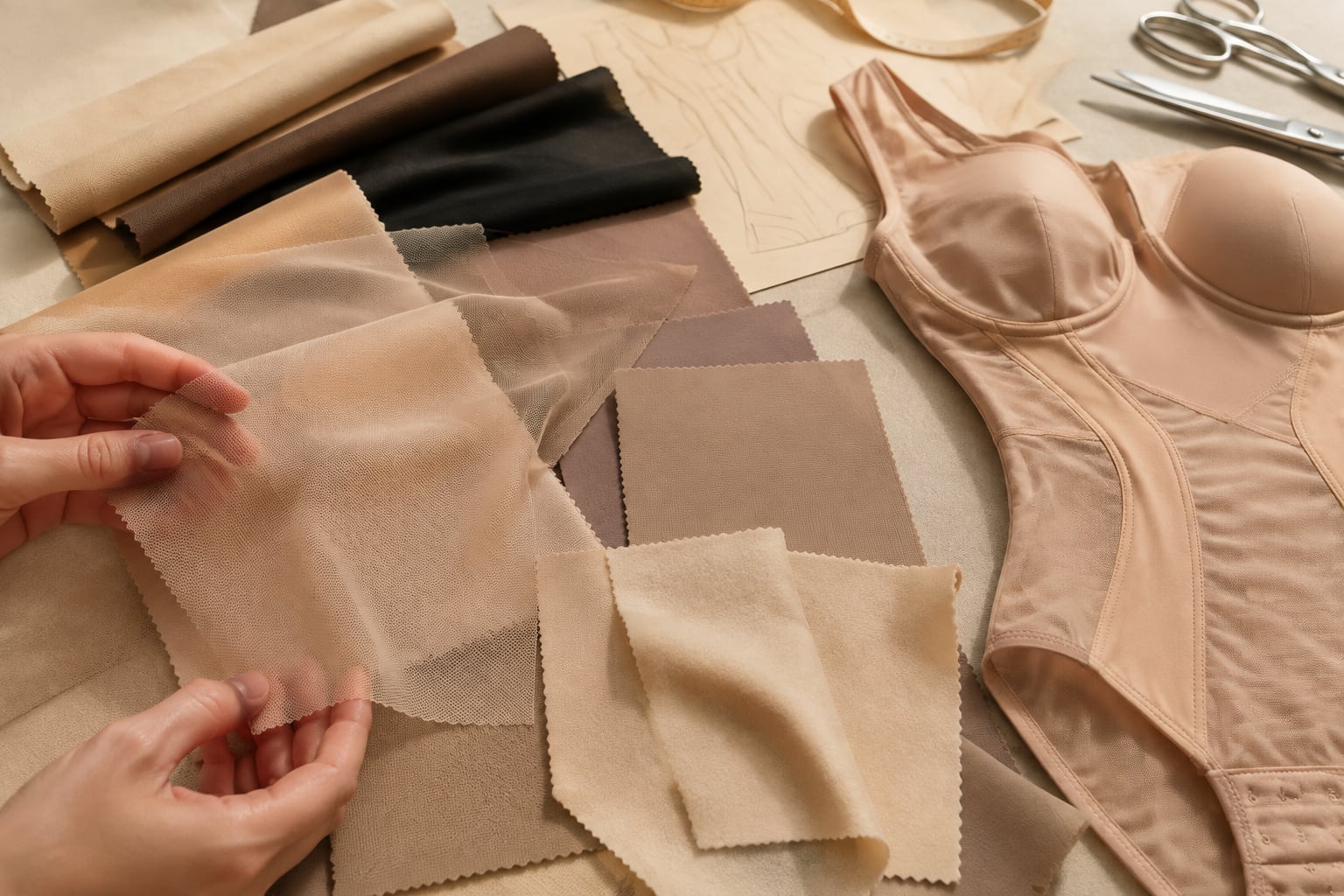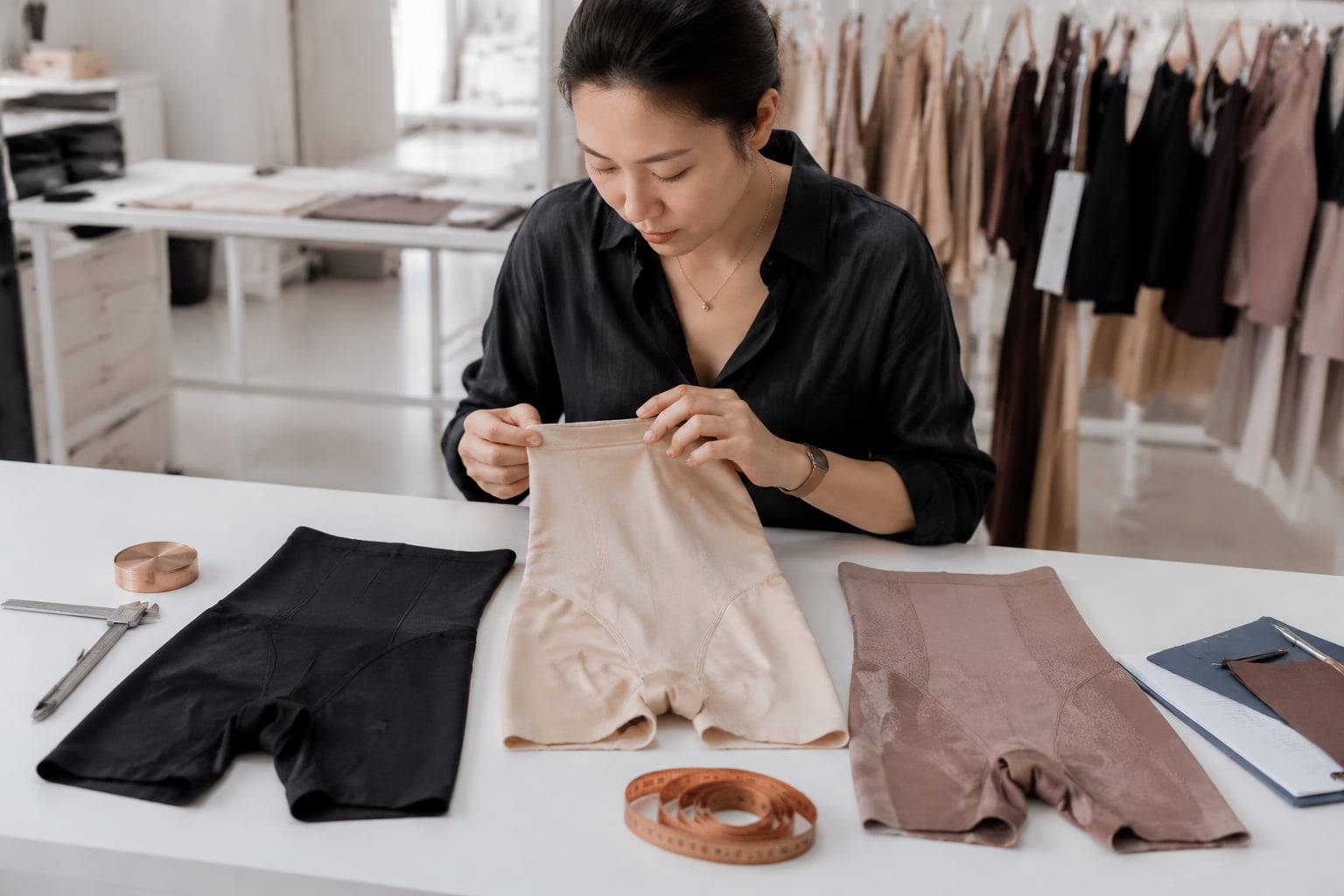

Shapewear claims in Germany should describe the garment’s observable, supportable effect while it is worn—not promise weight loss, health treatment, or a lasting change to the body. The safest approach is simple: link every benefit statement to a measurable product feature, such as compression construction, panel placement, fabric composition, seam design, or adjustable closures.
For brands and retailers, the goal is not to make claims vague. It is to make them precise. “Targeted waist support through a double-layer front panel” tells customers what the product does and why. “Melts inches away” does not. This distinction supports clearer customer expectations and reduces avoidable compliance and returns risks.
Connect Every Claim to a Product Feature
A claim is easier to defend when the product feature behind it is identifiable in the bill of materials, technical pack, sample approval records, or quality-control process. Marketing teams should be able to ask, “What in the garment delivers this benefit?” and receive a specific answer.
For example:
| Customer-facing claim | Product feature that should support it | What to verify |
|---|---|---|
| Smooths the silhouette under clothing | Bonded edges, flat seams, or a seamless knitting construction | The edge and seam finish on the approved production sample |
| Provides targeted tummy support | Reinforced front panel or double-layer abdominal zone | Panel placement, material weight, stretch and recovery |
| Helps keep the garment in place | Silicone grip, elasticated hem, strap configuration, or body-specific patterning | Wear testing for rolling, slipping, and comfort |
| Offers firm shaping | Defined compression zones and fabric construction | A documented internal method for assigning shaping level |
| Supports a smooth back profile | Extended back panel, higher rise, or strategically placed seams | Fit on representative body types and under intended garments |
| Comfortable for extended wear | Soft-touch yarns, breathable knit areas, reduced seam bulk, suitable sizing | Wear feedback, fit checks, care performance |
Avoid treating a material name as proof of a benefit. Elastane content alone does not substantiate “sculpting,” “anti-roll,” or “all-day comfort.” The garment’s pattern, fabric weight, construction, sizing, and fit all matter.
Product descriptions should also name the wearing context where relevant. A bodysuit may provide a smoother appearance beneath a dress, while a high-waist brief may be designed to shape the waist and lower abdomen. Context is more credible than a broad promise that one product works equally well for every body, occasion, or wardrobe.
A useful writing formula is:
Product feature + immediate wearable effect + intended area or use
Examples:
- “A reinforced front panel provides targeted support across the lower abdomen.”
- “Flat, bonded edges help create a smoother transition beneath close-fitting clothing.”
- “Graduated knit zones offer medium shaping through the waist and hips.”
- “Adjustable straps help the bodysuit accommodate different torso lengths.”
These statements remain customer-focused without implying a medical or permanent result.
Identify High-Risk Claims Before They Reach Packaging
Claims become high risk when they imply that shapewear changes physiology, treats a condition, causes weight loss, or delivers a result that cannot reasonably be supported. In Germany, consumer-facing marketing must not mislead. Medical-style communications may also trigger additional concerns where a product is presented as treating, preventing, or alleviating health conditions.
The following types of wording deserve formal internal review before publication.
Weight-loss and fat-reduction promises
Do not claim or imply that shapewear burns fat, accelerates metabolism, causes slimming, or produces weight loss. Sweating while wearing a garment is not evidence of fat loss, and a temporary measurement change while compressed is not a permanent reduction.
High-risk examples include:
- “Burns belly fat”
- “Makes you lose centimetres”
- “Melts away the waistline”
- “A workout replacement”
- “Permanent inch loss”
Use product-focused alternatives instead:
- “Creates a smoother waistline appearance while worn”
- “Provides firm waist and abdominal shaping”
- “Designed for a more streamlined look beneath clothing”
Permanent body-change promises
A shapewear garment may temporarily alter the visible outline of the body during wear. It should not be described as reshaping bones, training the waist permanently, correcting posture over time, or changing body proportions after removal.
Avoid:
- “Trains your waist into shape”
- “Reshapes your body permanently”
- “Corrects your posture”
- “Restores your figure”
Prefer:
- “Creates a defined waist appearance while worn”
- “Provides structured support around the midsection”
- “Designed to sit smoothly beneath occasionwear”
Medical, therapeutic, and recovery language
Terms such as “medical-grade,” “therapeutic,” “post-operative,” “treats,” “improves circulation,” “reduces swelling,” or “relieves pain” should not be used merely because a garment feels supportive or applies compression.
These statements can change how the product is perceived and may require a different regulatory assessment, evidence standard, product classification, and documentation. A fashion shapewear item should not borrow the credibility of medical compression products.
Be particularly careful with claims directed at pregnancy, postpartum recovery, surgery recovery, lymphatic conditions, varicose veins, back pain, or circulation. These are not routine styling claims.
Absolute and universal guarantees
Words such as “never,” “guaranteed,” “perfect,” “for every body,” and “no rolling whatsoever” create a high burden of proof. Fit and comfort vary with body shape, garment size, movement, styling, and the clothing worn over the item.
More realistic wording includes:
- “Designed to help reduce rolling at the waistband”
- “A wide waistband is intended to support a secure fit”
- “Available in shaping levels to suit different styling preferences”
- “Fit may vary by body shape and garment selection”
Use Clear Non-Medical Alternatives
Non-medical language can still be specific and persuasive. The difference is that it describes temporary appearance, physical garment support, and comfort rather than a health outcome.
Use terms such as:
- shaping
- smoothing
- contouring appearance
- support
- hold
- coverage
- streamlined silhouette
- secure fit
- flexible movement
- targeted compression zones
- high-rise coverage
- seamless finish
- smooth layering
Use these terms carefully. “Compression” is commonly used in apparel descriptions, but the surrounding wording must not imply medical efficacy. A claim about compression should refer to garment construction or wearing feel unless the product has been developed, classified, and documented for a medical purpose.
Here is a practical comparison:
| Avoid or review closely | Clearer non-medical alternative |
|---|---|
| “Flattens your stomach” | “Provides firm shaping across the abdomen” |
| “Instantly removes love handles” | “Helps create a smoother side profile while worn” |
| “Corrects posture” | “Offers structured support through the torso” |
| “Improves circulation” | “Designed with flexible stretch for everyday movement” |
| “Post-surgery recovery essential” | “For everyday shaping; not presented as a medical product” |
| “Lose a dress size” | “Choose the stated size for the intended fit and shaping effect” |
| “Eliminates back bulges” | “An extended back panel helps create a smoother look beneath clothing” |
The wording “while worn” is especially useful because it sets an accurate time boundary. It distinguishes an immediate apparel effect from a promise about the wearer’s body after the garment is removed.
Images must follow the same principle. Before-and-after presentations, heavily edited body imagery, or visual effects that exceed the garment’s plausible result can make an otherwise careful text claim misleading. Keep styling photography, size representation, and retouching practices aligned with the written description.
Define Shaping Levels Carefully
“Light,” “medium,” and “firm” shaping are valuable shopping tools, but they are not automatically standardised consumer categories. A customer may interpret “firm” differently from a product team, and one supplier’s medium construction may feel firmer than another’s.
Brands should create an internal shaping-level framework and apply it consistently across product pages, packaging, marketplaces, and wholesale materials.
A practical framework might look like this:
| Shaping level | Appropriate description | Typical use cases | Avoid saying |
|---|---|---|---|
| Light | Gentle smoothing with flexible everyday movement | Layering, casual outfits, lightweight fabrics | “No compression” if the garment still applies noticeable hold |
| Medium | Noticeable shaping with balanced comfort and support | Workwear, dresses, regular occasionwear | “Suitable for everyone all day” |
| Firm | Stronger, more structured shaping for a defined appearance | Special-event styling, structured garments | “Medical compression” or “guaranteed body transformation” |
The labels themselves are less important than consistency. Define what each level means using product criteria, such as fabric structure, stretch resistance, panel reinforcement, garment coverage, and fit testing. Keep a written rationale for the classification.
Do not use a shaping-level scale to conceal fit limitations. A firm shaper should still be sold in the correct size. Encouraging consumers to size down for a more dramatic effect can increase discomfort, rolling, tearing, dissatisfaction, and returns. Size guidance should explain that the intended shaping result depends on selecting the brand’s recommended size.
Where product construction differs meaningfully within a range, explain it. For example, a firm high-waist brief and a firm open-bust bodysuit may shape different areas and feel different even if both carry the same level label.
Separate Shapewear from Medical Products
Shapewear is generally marketed as apparel that affects appearance, support, and fit during wear. Medical products are designed and presented for specific medical purposes. The distinction should be made early in product development—not after marketing copy has been drafted.
A product may need a separate assessment if the intended purpose includes diagnosing, preventing, monitoring, predicting, treating, or alleviating a disease, injury, disability, or medical condition. The relevant framework depends on the product’s intended purpose, claims, design, instructions, and market presentation.
For a standard consumer shapewear line, keep communications focused on apparel benefits:
- silhouette smoothing
- shaping and support during wear
- garment coverage
- seam placement
- comfort-related construction
- styling compatibility
- care and durability information
Do not suggest that fashion shapewear can replace prescribed compression garments, clinical support products, physiotherapy, surgery aftercare, or professional medical advice. If a brand genuinely intends to develop a product for a medical use, it needs specialist regulatory, quality, and legal input before claims are made.
This boundary also matters for customer service. Support teams should not advise customers on whether a shapewear item is suitable for a health condition, pregnancy-related issue, surgery recovery, or pain management. A clear escalation policy helps prevent well-meaning but inappropriate advice.
Create a Claim Evidence Matrix
A claim evidence matrix turns marketing approval from an informal discussion into a repeatable process. It does not need to be complicated. A shared spreadsheet or product information system can provide a reliable record for each SKU and channel.
Include at least these columns:
| Matrix field | Why it matters |
|---|---|
| Exact claim | Ensures the approved wording is clear and traceable |
| Product and SKU | Prevents evidence for one product being reused incorrectly for another |
| Sales channel | A product page, hangtag, marketplace listing, and social post may use different wording |
| Claim category | Identifies whether the statement concerns fit, shaping, fabric, care, comfort, or medical risk |
| Supporting feature | Connects the claim to construction, materials, pattern, or approved sample |
| Evidence available | Records specifications, test results, sample reviews, wear feedback, or supplier documentation |
| Limitations and qualifiers | Captures phrases such as “while worn” or usage-specific boundaries |
| Risk level | Flags medical, weight-loss, permanent-change, and absolute claims |
| Owner and approver | Establishes accountability across product, compliance, legal, and marketing teams |
| Review date | Helps maintain accuracy after supplier, fabric, or construction changes |
Evidence should be proportionate to the claim. A basic factual material claim needs accurate composition and labelling information. A claim about a non-slip waistband needs a product-based rationale and appropriate evaluation. A broad claim such as “all-day comfort” requires more robust support because it concerns a subjective experience across varied wearers.
The matrix should cover implied claims as well as direct statements. A headline, product image, comparison graphic, icon, influencer brief, or product name can communicate a promise even when the claim does not appear in the main description.
Align Supplier Data and Marketing
The product development team, supplier, quality team, and marketing team must work from the same product facts. Claims often become risky when a sales description is written from an early sample, while the final production garment uses a revised fabric, different elastic, altered panel construction, or changed sizing.
Before finalising copy, obtain and review the data relevant to the claim:
- fibre composition and care information
- construction details, including panels, seams, bonding, and closures
- approved size chart and grading information
- stretch and recovery expectations where documented
- approved colour and trim specifications
- sample review records and fit feedback
- product testing or inspection records, where available
- known wear limitations, such as sensitivity to sharp nails, jewellery, or certain garment layers
For private-label projects, establish who owns each step of claim approval. The brand placing the claim on the market needs visibility into the product basis for that claim, while the manufacturing partner should be able to confirm construction and production consistency.
S-SHAPER supports OEM, ODM, and private-label shapewear projects from product development through scalable series production. For teams planning a new range, early alignment between the technical brief and the customer promise can prevent a gap between product design and final marketing. Its shapewear technology and innovation approach is relevant when evaluating how construction choices may support the benefits a brand wants to communicate.
For ecommerce teams, the same approved claim set should feed product pages, marketplace content, paid advertising, email copy, and customer-service scripts. This reduces the common problem of careful packaging language sitting alongside exaggerated marketplace bullets. Consider a structured product-content workflow for shapewear ecommerce operations so product facts and updates are controlled across channels.
Use a Final Approval Checklist
Use this checklist before publishing a shapewear claim in Germany.
- Does the claim describe an effect that occurs while the garment is worn?
- Can the team identify the exact product feature behind the claim?
- Is the wording consistent with the approved technical specification and final sample?
- Does the claim avoid weight-loss, fat-burning, detoxification, or metabolism promises?
- Does it avoid permanent body-change statements?
- Does it avoid therapeutic, post-operative, pain-relief, circulation, or other medical implications?
- Are shaping levels defined consistently across the product range?
- Are absolute terms such as “guaranteed,” “never,” and “perfect” removed or adequately substantiated?
- Do product images and graphics show a plausible result consistent with the wording?
- Does sizing guidance tell customers to select their recommended size rather than size down?
- Are fibre composition, care details, and other mandatory product information accurate and current?
- Has the claim been checked across all relevant sales channels?
- Is evidence recorded in the claim evidence matrix?
- Has the appropriate legal or compliance reviewer assessed higher-risk wording?
Common Mistakes That Create Avoidable Risk
The first common mistake is treating “shaping” as a licence for unrestricted transformation language. Shapewear can make a visible difference under clothing, but the description should match a temporary apparel effect.
The second is copying competitor claims without checking whether the underlying product and evidence are comparable. A competitor’s wording may be unsupported, unsuitable for the German market, or based on a different product category.
The third is allowing marketplace content, affiliates, or social partners to create their own benefit language. Give external partners an approved claim library and clear prohibited terms. Monitor high-visibility listings, especially when product data is syndicated automatically.
The fourth is failing to update claims after a material or construction change. Even a seemingly minor revision can affect fit, opacity, seam comfort, grip, or shaping feel. Product changes should trigger a claim review.
Finally, do not confuse a customer preference with universal proof. Some consumers may describe a garment as “comfortable all day,” but that does not necessarily support an unconditional all-day comfort promise for every wearer.
FAQ
Can a shapewear brand say “slimming” in Germany?
The term may be interpreted as a temporary appearance claim if the context clearly concerns the silhouette while worn. However, it is safer to use precise language such as “smoothing,” “shaping,” or “a more streamlined appearance,” and to avoid any implication of weight loss or lasting body reduction.
Can we state a centimetre reduction?
Only use a specific measurement claim when it is supported by a robust, relevant method and clearly states the conditions under which it was measured. A temporary measurement under garment compression must not be presented as fat loss or a lasting change. Many brands find feature-led shaping language clearer and lower risk.
Is “medical-grade compression” acceptable for fashion shapewear?
Not as a casual marketing phrase. It can imply medical performance or purpose and should not be used unless the product’s intended purpose, classification, evidence, and regulatory position support it. Standard shapewear should be described as fashion or everyday apparel unless it has been developed for a distinct regulated purpose.
Who should approve shapewear marketing claims?
At minimum, product development should verify the technical basis, marketing should verify clear customer communication, and a designated compliance or legal reviewer should assess higher-risk claims. For private-label programmes, define responsibilities between the brand and supplier in writing.
A reliable shapewear claim is specific, temporary, and tied to the garment’s real construction. Build the evidence matrix before copywriting, apply one shaping-level framework across the range, and obtain specialist review whenever a claim approaches health, recovery, or body-change territory. Brands evaluating product-development support can also review private-label shapewear solutions alongside their own claim approval process.