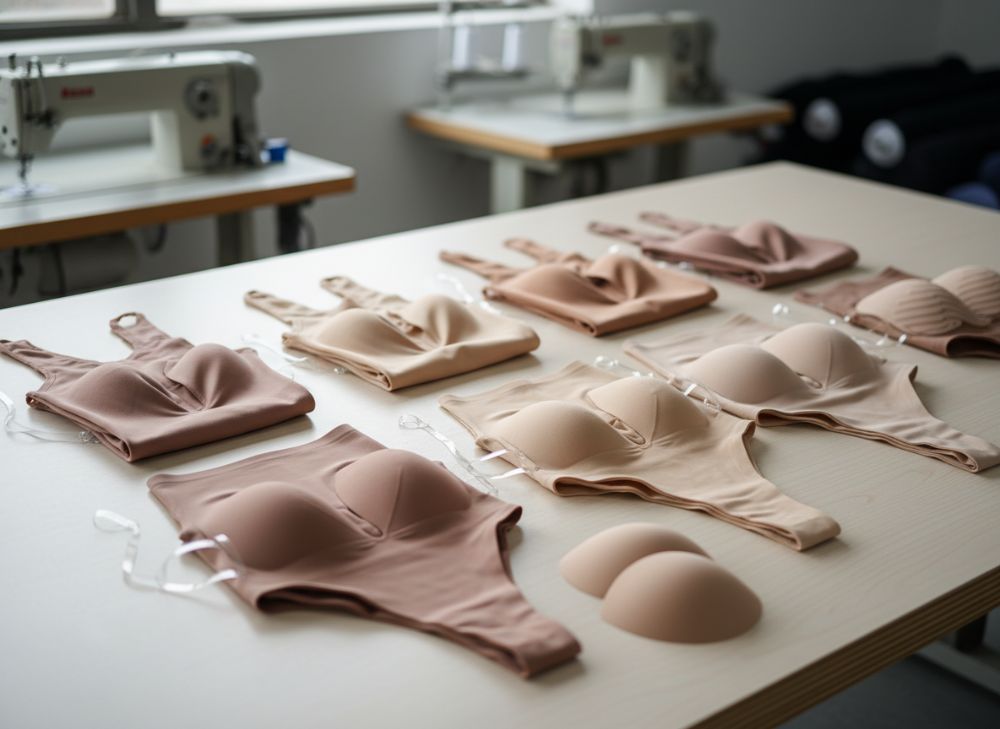
For buyers in the United Kingdom, a wholesale shaping bra supplier is a manufacturing partner that develops, samples, produces and ships shaping bras in bulk for retailers, e-commerce brands, distributors and private label businesses. The right supplier helps you control fit, fabric performance, compliance, margin and delivery speed, which is why B2B buyers care far more about consistency and technical capability than headline price alone.
The UK shapewear and intimate apparel market continues to move toward performance-led products that combine support, comfort, inclusivity and discreet styling. Buyers in London, Manchester, Birmingham, Leeds and Glasgow are increasingly sourcing shaping bras for online-first labels, department store programmes, boutique lingerie chains, fitness brands, postpartum ranges and post-surgical categories. At the same time, importers working through Felixstowe, Southampton, London Gateway and Liverpool want suppliers that can handle dependable lead times, clear documentation and scalable production.
In this guide, we explain how to evaluate a wholesale shaping bra supplier, what services matter most, which certifications to check, how OEM and ODM models differ, what MOQ and sample policies are common, and how to build a durable sourcing relationship for the UK market. Where relevant, we also show how a specialist manufacturer such as S-SHAPER can fit into the buying process for brands seeking a one-stop shapewear partner.
Quick Answer
A strong wholesale shaping bra supplier gives UK buyers five things: reliable fit development, stable fabric sourcing, quality-controlled bulk production, commercial flexibility and export-ready logistics. If you are buying for the United Kingdom, prioritise suppliers that can prove compression engineering, inclusive sizing, safe material standards, clear sampling workflows and the ability to scale from testing orders to repeat volume.
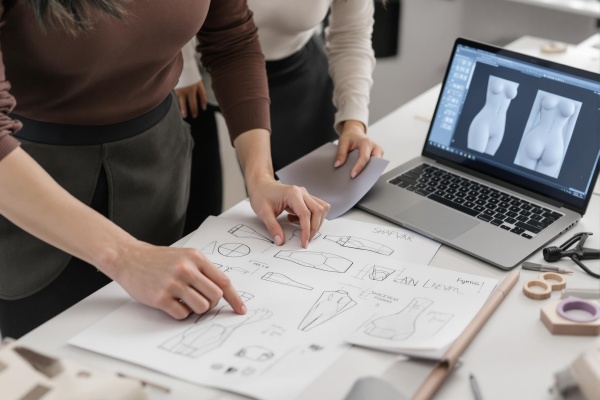
The best partners do more than sew garments. They advise on bra structure, panel placement, bonding or seamless construction, bust support levels, skin feel, size grading, packaging and delivery schedules. For shaping bras specifically, that technical input matters because end users expect smoothing, lift and comfort without visible bulk. Poorly developed products generate high returns, low repeat purchase and brand damage.
For most UK B2B buyers, the decision should be based on the total supply equation:
- Can the supplier build shaping bras that fit your target customer?
- Can they support your required business model, whether wholesale, OEM, ODM or private label?
- Can they comply with UK and broader international quality expectations?
- Can they offer workable MOQ levels for launch, testing and scale-up?
- Can they ship on time into UK trade routes with accurate paperwork?
If the answer is yes across all five, you are looking at a commercially viable supplier relationship.
| Buyer Priority | Why It Matters in the UK | Typical Risk if Ignored | What to Ask the Supplier |
|---|---|---|---|
| Fit accuracy | UK consumers expect reliable size consistency across online orders | High returns and poor reviews | How do you grade sizes and test fit? |
| Fabric performance | Comfort and breathability are key for daily wear | Complaints about rolling, digging or overheating | Which compression and moisture-control fabrics do you use? |
| MOQ flexibility | Many UK brands launch with smaller test runs | Cash flow pressure and overstock | What is your minimum per style, colour and size range? |
| Compliance | Retailers and marketplaces increasingly require documentation | Listing delays or rejected shipments | Which factory and material certifications can you provide? |
| Lead time | Seasonal promotions and replenishment cycles are tight | Missed sales windows | What are sample and bulk production timelines? |
| Communication | Fast revisions reduce sourcing errors | Sampling delays and misunderstanding | Who manages development and after-sales support? |
The table above shows why supplier selection should be treated as a strategic sourcing decision rather than a simple price comparison. A shaping bra may look straightforward, but construction detail, elasticity recovery and body support performance are what separate a premium product from a return-heavy one.
What Is a Wholesale Shaping Bra Supplier and Why UK B2B Buyers Care
A wholesale shaping bra supplier is a company that manufactures or organises the manufacture of shaping bras in bulk for business clients. Depending on the supplier model, they may provide ready-developed designs, custom-made OEM production, full ODM development, branding, packaging, inspection and export support. Some operate as traders, while others own or directly control the factory.
UK B2B buyers care because shaping bras sit at the intersection of lingerie, shapewear and functional apparel. They must perform like technical garments while still feeling wearable for everyday consumers. For a retailer, the wrong supplier can create major issues: inconsistent cup shaping, unstable elastic recovery, seam irritation, weak support zones or poor size grading between S and 6XL.
Demand in the UK is also becoming more segmented. Buyers are not sourcing a single generic item anymore. They may need:
- Daily smoothing bras for fashion retail
- High-support shaping bras for fuller bust customers
- Postpartum support styles
- Post-surgical recovery options
- Wellness-led bras using functional textile concepts
- Seamless active shaping bras for fitness channels
This shift means the supplier must understand both product engineering and market positioning. A good partner will ask about your target age group, average selling price, route to market, size profile, expected reorder frequency and regional preferences. UK buyers selling into premium online channels may require softer hand feel and luxury presentation, while value-focused chain buyers may focus on cost-efficient construction with stable repeatability.
There is also a margin issue. UK importers face freight volatility, warehouse costs, duty planning, returns management and marketing spend. If a shaping bra supplier cannot maintain quality, the true landed cost rises quickly. That is why experienced buyers often prefer a dependable long-term supplier over the cheapest quote.
The growth trend above reflects a realistic sourcing outlook rather than consumer sales alone. Buyers are expanding assortments due to body-inclusive merchandising, social commerce growth and continued demand for hybrid comfort shapewear.
| UK Buyer Type | Main Purchase Goal | Preferred Supplier Strength | Typical Order Pattern |
|---|---|---|---|
| Online lingerie brand | Low-return, size-consistent products | Fit development and fast restocks | Smaller launch runs, frequent repeats |
| Department store vendor | Compliance and broad size coverage | Documentation and process control | Seasonal programme orders |
| Boutique chain | Differentiated styling | Private label flexibility | Limited editions and capsule launches |
| Wellness distributor | Functional fabric positioning | Special material expertise | Niche but higher value orders |
| Postpartum brand | Comfort plus gentle support | Soft compression engineering | Steady replenishment |
| Marketplace seller | Speed to market | Low MOQ and ready development | Test-and-scale cycles |
The table shows why there is no single ideal supplier profile. The right fit depends on your channel, customer promise and operational model.
Wholesale Shaping Bra Supplier Services and Production Capabilities
When reviewing supplier capabilities, UK buyers should separate three areas: technological capabilities, manufacturing capabilities and service capabilities. This helps avoid confusion between factories that merely offer sewing capacity and those that can support full product commercialisation.
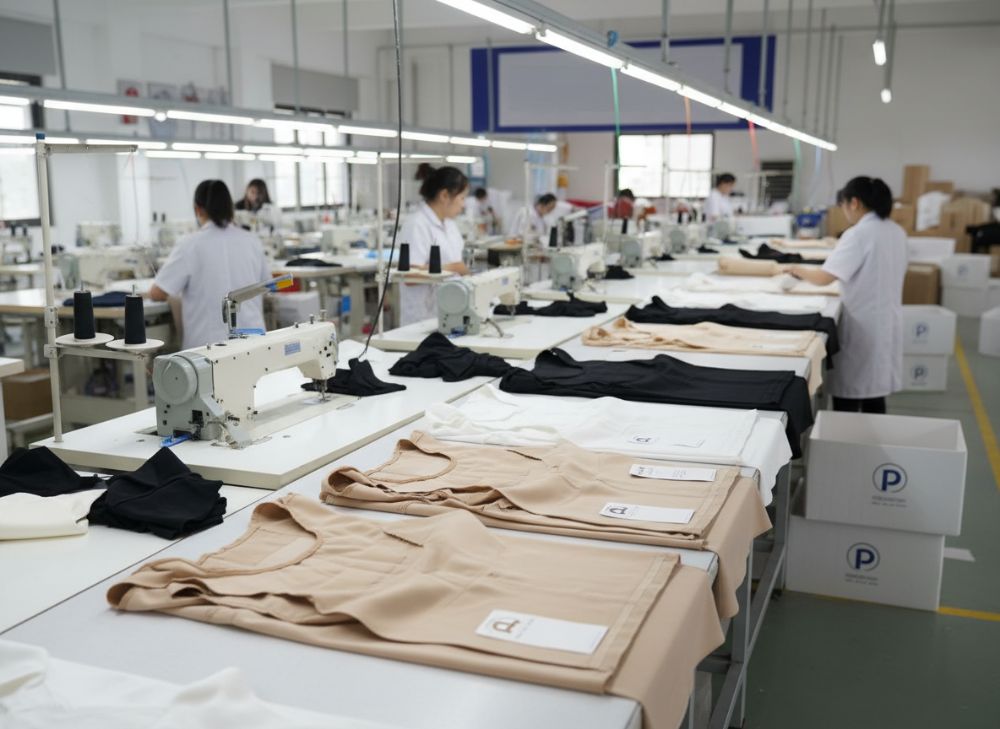
Technological capabilities are especially important in shaping bras. Advanced factories use precise cutting systems, engineered knitting or seamless technology, compression mapping and detailed panel control. S-SHAPER, for example, operates a self-owned smart factory in China with automated processes and computer-controlled cutting, plus 3D weaving accuracy within very tight tolerances. For shaping products, this level of control helps support consistency in panel symmetry, support zones and overall comfort. High-speed seamless knitting can also improve finish quality while reducing seam irritation in close-fitting garments.
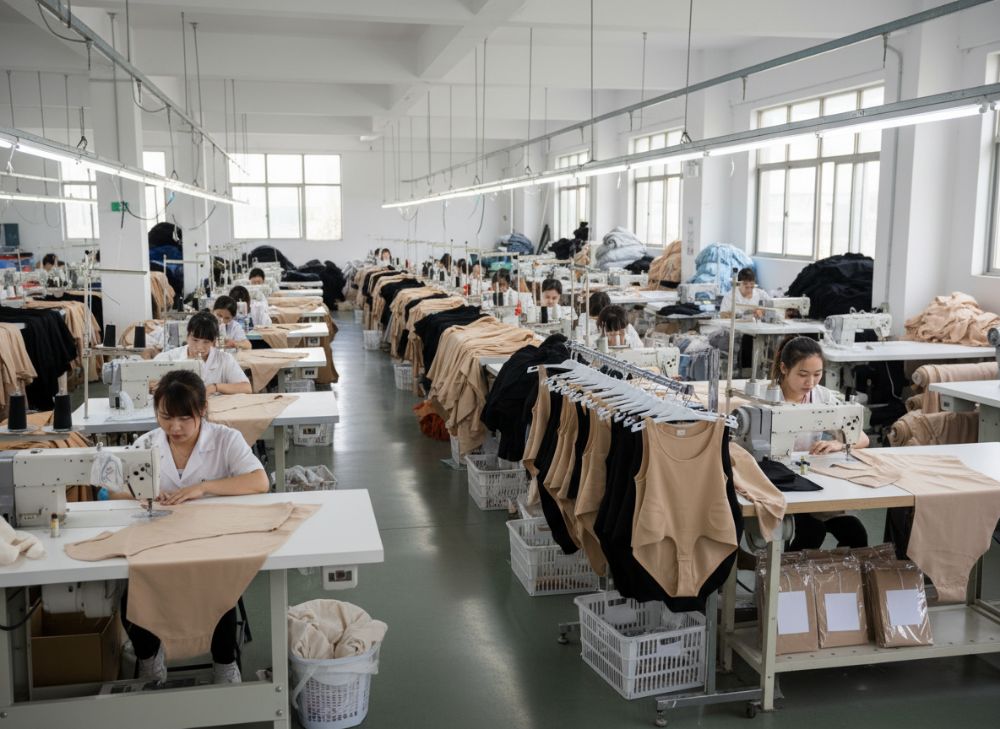
Manufacturing capabilities determine whether a supplier can handle your volume mix. Buyers should ask about monthly capacity, number of lines, specialist machines, annual output, labour structure and whether the factory manages all key steps in-house or outsources critical processes. S-SHAPER’s production profile is geared toward scalability, from small test quantities to large-volume output, supported by dedicated lines and specialist equipment. That kind of structure is useful for UK buyers that need to validate a style online before scaling into larger replenishment orders.
Service capabilities define the ease of partnership. This includes design support, material recommendations, sample revisions, branding application, packaging customisation, quality reporting and shipping coordination. A supplier with true OEM and ODM capability should be able to move from concept to production without requiring the buyer to manage every technical detail. Through its OEM and ODM shapewear services, S-SHAPER positions itself as a full-service partner rather than only a cut-make-trim factory.
For shaping bras, the most valuable production capabilities often include:
- Seamless knitting for smooth body contact
- Compression zoning for shaping and support
- Custom dyeing and Pantone matching
- Inclusive size grading from small through plus sizes
- Elastic and recovery testing
- Logo, label and packaging customisation
- Fabric blending for breathability, stretch and rebound
Buyers should also assess product range breadth. Suppliers that already develop shapewear categories such as support tanks, waist solutions, leggings and post-surgical garments may be stronger at technical body-shaping development than a standard lingerie producer. S-SHAPER’s broader shapewear line, including C Shape, T Shape, Air Shape and HP Shape concepts, suggests category depth that can support shaping bra design from both fashion and functional angles.
The segment demand chart shows how UK sourcing demand is strongest in daily wear and plus-size shaping bras, but specialist subcategories remain commercially relevant for brands that want stronger margins and less direct competition.
| Capability Area | Basic Supplier | Advanced Supplier | Why It Matters to UK Buyers |
|---|---|---|---|
| Pattern and fit | Uses standard templates | Custom fit development and revisions | Better online conversion and fewer returns |
| Cutting accuracy | Manual or low automation | Smart computer-controlled cutting | More consistent shaping performance |
| Construction | Traditional sewing only | Seamless and technical assembly options | Improved comfort and premium positioning |
| Size range | Limited core sizes | Inclusive grading up to extended sizes | Supports broader UK demographic demand |
| Sampling support | Minimal guidance | Material and trend recommendations | Faster product development |
| Scalability | Inconsistent for larger orders | Handles low MOQ through mass production | Supports growth from test to rollout |
The difference between a basic and advanced supplier is often visible only after orders begin. That is why pre-qualification matters.
Certifications to Check When Choosing a Wholesale Shaping Bra Supplier
Certifications are not just box-ticking. For UK buyers, they reduce compliance risk and create confidence with retailers, marketplaces and end customers. At a minimum, review factory quality management, fabric safety and social responsibility standards relevant to your channel.
The most commonly requested certification framework starts with ISO 9001 for quality management. A factory operating under ISO-based systems should have more consistent document control, process discipline, inspection records and traceability. S-SHAPER highlights ISO 9001-certified operations, which is a useful starting point for buyers wanting process maturity.
Material standards are equally important. Because shaping bras are worn directly against the skin, buyers should request evidence that fabrics are skin friendly and responsibly sourced. If the supplier promotes sustainable or eco-certified textiles, ask for the exact certification names behind the claim. It is better to receive documented proof than rely on general marketing language.
For more demanding retail channels, especially in Europe and the UK, buyers may also review:
- Factory audit reports
- Social compliance certifications or assessment results
- Chemical management policies
- Restricted substances compliance records
- Test reports for colourfastness, stretch recovery and dimensional stability
A good practice is to ask not only “What certificates do you have?” but also “Which current reports can you share for the exact materials proposed for my programme?” This helps separate general factory credentials from order-specific compliance support.
Buyers considering S-SHAPER can review its approach to process and standards through the company’s quality assurance and compliance information, then request current supporting documents during the sourcing process.
| Certification or Document | What It Covers | Why UK Buyers Should Check | Best Time to Request |
|---|---|---|---|
| ISO 9001 | Quality management systems | Shows controlled production processes | Factory pre-qualification |
| Fabric safety test report | Skin-contact material suitability | Important for intimate apparel | Before sampling approval |
| Colourfastness report | Dye stability in wear and wash | Prevents complaints and returns | Before bulk production |
| Stretch and recovery test | Elastic performance | Critical to shaping bra longevity | Development stage |
| Social audit or equivalent | Workplace standards | Useful for retailers and ESG reviews | Supplier onboarding |
| Packaging compliance data | Packaging materials and claims | Supports retailer and sustainability expectations | Before final packaging sign-off |
This table matters because different documents answer different risks. ISO 9001 does not replace fabric testing, and fabric testing does not confirm broader operational discipline.
OEM, ODM and Private Label Options at a Wholesale Shaping Bra Supplier
Understanding the commercial model is one of the most important steps for UK buyers. OEM, ODM and private label are often used interchangeably, but they are not the same.
OEM is the best fit when your business already has a design direction, tech pack, branding concept or target fit profile. The supplier manufactures to your specification, while you retain stronger control over design identity. This model works well for established UK brands, chain retailers and buyers that already know their core customer measurements and product architecture.
ODM is ideal when you want the supplier to contribute more heavily to concept, structure, material recommendations and product development. This is useful for start-ups or expanding brands that know the market opportunity but need technical support to turn the idea into a commercially viable shaping bra.
Private label usually means selecting an existing or semi-customised style, then applying your own brand name, packaging and market positioning. This often allows faster launch and lower development cost, though differentiation may be lower unless the supplier offers meaningful custom options.
S-SHAPER supports both OEM and ODM, which gives UK buyers flexibility. A retailer entering the shapewear category can use ODM support for concept and sampling, while a more mature brand can move to OEM with its own fit standards, labels, fabrics and packaging preferences. Because the company also offers a broad customisation path across colours, sizing, logo application and presentation, it can support private label-style launches too.
When comparing these models, ask yourself four questions:
- Do I already have a proven design or do I need development support?
- How fast do I need to enter the market?
- How differentiated must the final product be?
- How much technical responsibility can my team handle internally?
| Model | Best For | Buyer Control Level | Speed to Market | Development Cost |
|---|---|---|---|---|
| OEM | Established brands with clear specs | High | Medium | Medium |
| ODM | Brands needing design and R&D support | Medium | Medium to fast | Medium |
| Private label | Fast launch and test sellers | Low to medium | Fast | Low |
| Hybrid OEM/ODM | Brands customising existing concepts | Medium to high | Medium | Low to medium |
| Retailer exclusive | Chains wanting channel protection | High | Medium | Medium to high |
| Marketplace capsule | E-commerce experiment launches | Medium | Fast | Low |
The best commercial model depends on your brand maturity. New UK entrants often begin with a private label or ODM route, then move into OEM once customer feedback clarifies the best-performing fit and silhouette.
MOQ, Pricing and Sample Policies for a Wholesale Shaping Bra Supplier
MOQ, pricing and sampling are often where good sourcing plans succeed or fail. In the UK market, many brands want lower initial inventory risk, especially when selling online or testing via paid social campaigns. At the same time, factories need enough volume to source materials efficiently and maintain production economics.
Reasonable MOQ policy is therefore a major buying advantage. S-SHAPER states that production can start from low minimum order quantities from 50 pieces for small-batch testing while also scaling into very large monthly production. That can be attractive for UK brands that want to validate colourways, support levels or target size curves before committing to broad inventory.
However, MOQ should always be broken down further. Ask whether the minimum applies per style, per colour, per size set or per total order. A supplier may advertise 50 pieces, but the true practical MOQ may increase once fabric colour matching, trims and packaging customisation are included.
Pricing also needs to be evaluated in context. A shaping bra price depends on:
- Fabric composition and functional finishes
- Seamless or cut-and-sew construction
- Moulding, bonding or support structure complexity
- Size range breadth
- Packaging specification
- Order volume and repeat potential
- Testing and certification needs
Sample policy deserves special attention. Good suppliers clearly separate development sample costs, fit revision samples, pre-production samples and shipping costs. They also explain whether sample fees are refundable against future bulk orders. UK buyers should seek a supplier that can provide fast sample turnarounds and absorb iterative fit changes without communication breakdown.
If you are a new buyer, avoid making decisions solely on ex-factory unit price. A slightly higher quote from a technically stronger supplier may reduce return rates, improve reorders and protect your online review profile.
| Cost Factor | Low-Cost Scenario | Higher-Cost Scenario | Commercial Impact |
|---|---|---|---|
| Fabric | Standard blend | Eco-certified performance fabric | Changes positioning and margin potential |
| Construction | Basic stitching | Seamless or engineered shaping | Affects comfort and product value |
| MOQ | Higher volume commitment | Lower trial MOQ | Affects cash flow and inventory risk |
| Branding | Simple care label | Custom logo, box and inserts | Influences presentation and cost |
| Sampling | One standard sample | Multiple fit revisions | Improves accuracy but adds lead time |
| Testing | Basic internal checks | External verified reports | Improves retailer readiness |
The key lesson from the table is that pricing is not a single variable. You are buying a package of product engineering, process certainty and commercial support.
Quality Control Standards at Wholesale Shaping Bra Supplier Facilities
Shaping bras require more disciplined quality control than standard basics because support performance must remain stable across size ranges and production batches. For UK buyers, quality control should be reviewed in three stages: incoming materials, in-line production and final inspection.
Incoming material control checks fabric weight, stretch, recovery, colour consistency and trim compatibility before bulk production begins. If a supplier skips this stage, shaping performance can drift from one batch to the next.
In-line quality control monitors cutting accuracy, seam integrity, panel alignment, bonding consistency, strap attachment, elastics and measurement tolerance during production. This stage reduces the chance of discovering large-scale defects only at final inspection.
Final inspection should review appearance, measurements, packing accuracy, barcode or label compliance and random wear-function checks where appropriate. Buyers may also request AQL-based inspections or third-party inspection support before shipment.
S-SHAPER presents quality assurance as a core operational strength, supported by its self-owned factory model and process control emphasis. For UK buyers, that ownership structure can be an advantage because it may improve accountability, traceability and consistency compared with fragmented subcontracting.
When assessing quality systems, ask for examples of:
- Measurement tolerance standards
- Compression and recovery checks
- Defect classification rules
- Corrective action process
- Pre-shipment inspection reports
- Batch traceability records
The area chart reflects a strong trend shaping the UK market: demand is moving away from purely cosmetic shapewear and toward products that combine sustainability, comfort and technical function.
| QC Stage | What Should Be Checked | Why It Matters for Shaping Bras | Buyer Verification Method |
|---|---|---|---|
| Fabric intake | Stretch, recovery, shade and feel | Compression must stay consistent | Request incoming inspection records |
| Cutting stage | Panel symmetry and dimensions | Impacts lift and smoothing effect | Review cutting process photos or audit |
| Sewing or knitting | Seam quality and support zone placement | Comfort and durability depend on this | Check in-line reports |
| Measurement control | Tolerance by size | Prevents sizing complaints | Approve spec sheet and sample set |
| Finishing | Thread ends, appearance and labels | Essential for retail presentation | Review final inspection report |
| Packing | Correct assortment and carton marks | Avoids warehouse receiving issues in the UK | Ask for packing list verification |
Quality control should never be discussed in vague terms. Ask for process evidence and sample records. Strong factories are used to these questions and usually answer them clearly.
Lead Times and Shipping Logistics for Wholesale Shaping Bra Supplier Orders
Even a well-made shaping bra can become a bad buy if it misses the selling window. UK buyers should evaluate lead times in five parts: development, sample approval, raw material procurement, bulk production and shipping.
Typical sample timelines vary depending on complexity, but shaping bras often require more than one fit round because support, cup shaping and underbust comfort need real wear assessment. Once approved, production lead time depends on material stock availability, order size and factory loading.
Shipping logistics matter just as much. Buyers importing into the United Kingdom should discuss whether the supplier can support sea freight, air freight or rail-linked solutions where appropriate, and whether they can coordinate shipment to key UK entry points such as Felixstowe, Southampton, London Gateway or Liverpool. For urgent e-commerce replenishment, some brands split shipments: initial air freight for launch stock, followed by sea freight for balance volume.
S-SHAPER’s broader international logistics structure, including multiple overseas warehousing links, may be useful for clients looking to improve delivery agility. This is particularly relevant for UK brands balancing marketplace restock pressure with freight cost control.
To reduce delays, buyers should confirm the following before production:
- Approved sample sign-off date
- Final colour and size ratio confirmation
- Packaging artwork approval
- Inspection booking timing
- Incoterms and destination details
- Commercial invoice and packing list requirements
Lead-time planning must also account for seasonal pressure. Orders for Q4 gifting, January wellness campaigns, spring launches and summer travel edits often compete for factory capacity. Book early if your bra programme depends on custom material or specific compression development.
This comparison highlights why logistics should be judged alongside supplier structure. The cheapest source may not have the systems needed for fast repeat business or flexible shipment planning.
| Logistics Factor | Key Question | UK Relevance | Risk if Unclear |
|---|---|---|---|
| Sample lead time | How many days for first and revised samples? | Impacts launch schedule | Delayed range sign-off |
| Production lead time | What is the confirmed factory calendar? | Affects campaign planning | Late arrival in peak season |
| Port routing | Which UK ports do you commonly ship to? | Supports smoother import handling | Routing confusion and added cost |
| Freight mode | Can orders be split by air and sea? | Useful for urgent replenishment | Stockouts or margin loss |
| Documents | Who prepares export paperwork? | Needed for customs clearance | Border delays |
| Warehouse support | Can stock be staged or consolidated? | Helps multi-channel UK distribution | Inefficient inbound flow |
Good shipping planning reduces not only delays but also total landed cost. That matters heavily in a category where promotional timing often determines sell-through.
How to Vet and Partner With Wholesale Shaping Bra Supplier Experts
Vetting a shaping bra supplier should follow a structured process. Start with desktop screening, then move to technical review, sampling, compliance verification and limited bulk testing before entering a larger programme.
Step one is supplier background review. Check whether the business is a manufacturer, trader or integrated service provider. Look at factory ownership, category specialisation, export experience and whether they appear focused on shapewear rather than generic apparel. Buyers interested in a more technical partner may review the company background of S-SHAPER to understand its shapewear-first positioning.
Step two is technical fit review. Ask for product photos, material options, construction details, sample process and fit range. Request comments on your target customer profile. A serious supplier will usually respond with specific suggestions rather than generic selling language.
Step three is compliance and quality review. Ask for current certifications, audit material, process summaries and recent inspection examples. This is also the stage to discuss packaging, claims language and any sustainability positioning you intend to use in the UK market.
Step four is commercial testing. Start with a manageable order size and measure not just product quality but also communication speed, revision handling, packaging accuracy and on-time shipment performance. The first order is effectively the supplier’s live interview.
Partnership quality is also shaped by communication habits. The strongest suppliers provide clear points of contact across development, production and shipping. They report problems early rather than hiding them until the ship date. This matters especially for UK buyers working across time zones.
Below is a practical supplier vetting checklist:
- Review whether the supplier specialises in shapewear and intimate technical products
- Confirm ownership or control of manufacturing facilities
- Check if low MOQ and scale-up capacity can both be supported
- Validate quality systems and sample approval flow
- Ask for current compliance documents and testing approach
- Evaluate how quickly and accurately they answer technical questions
- Place a pilot order before committing to wider rollout
Case study logic is useful here. For example, a Manchester-based e-commerce brand launching a shaping bra capsule may begin with 100 to 300 pieces across two colours, test conversion and return data, then expand into four new sizes and a second fabric weight. A supplier with both flexible MOQ and deep fit support is more likely to help that brand scale successfully. By contrast, a Birmingham wholesaler supplying independent retailers may prioritise repeatability, simple packaging and commercial pricing over heavy design customisation. The “best” supplier depends on the business model.
UK buyers should also look ahead to 2026 trends. Three forces are shaping future supplier choices:
- More technical textile integration, including body-mapped support and comfort engineering
- Higher sustainability expectations around material sourcing, packaging and traceability
- Stricter retailer and marketplace scrutiny of claims, product safety and supply chain transparency
A supplier that is investing in automation, responsible sourcing and stronger documentation will usually be better placed to support future growth than one competing purely on price.
FAQ: Wholesale Shaping Bra Supplier
What is the ideal MOQ for a new UK shaping bra brand?
There is no universal number, but lower MOQs are usually better for first tests. Programmes starting at 50 pieces per style can work for concept validation, though practical buying often requires enough units to cover key sizes and colourways.
Should I choose OEM or ODM?
Choose OEM if you already have a clear design, fit direction and brand specification. Choose ODM if you need more help with development, materials and technical execution.
How long does sampling usually take?
It depends on complexity and revision rounds. Shaping bras often need more fit checks than simple apparel because compression, support and comfort all need evaluation.
What are the biggest risks when importing shaping bras into the UK?
The biggest risks are inconsistent fit, weak quality control, unclear documentation, inaccurate packaging and missed delivery windows. These issues affect both margin and customer trust.
What certifications matter most?
Start with quality management and product safety evidence. ISO 9001 is a strong indicator of process control, but buyers should also ask for fabric-specific testing and any social or sustainability documentation relevant to their channel.
Can a supplier handle plus-size shaping bras properly?
Only if it has strong size grading and technical support experience. Plus-size shaping bras require careful compression balance and fit adjustment, not simple enlargement of smaller sizes.
Why do some shaping bra prices vary so much between suppliers?
Price differences usually reflect fabric quality, support engineering, construction method, MOQ, packaging and quality control depth. A lower quote may exclude services you actually need.
How can I reduce returns in the UK market?
Invest in fit development, clear size charts, comfort-focused materials, honest product claims and consistent production. Supplier quality and accurate grading have a direct impact on return rates.
What should I ask before placing a first bulk order?
Confirm final specs, size breakdown, approved sample, packaging details, inspection plan, lead time, shipping method and payment terms. Make sure all changes are documented.
Is it worth working with a specialist shapewear manufacturer instead of a general lingerie factory?
Usually yes, especially if shaping performance is central to your brand promise. Specialist manufacturers are more likely to understand compression zoning, seamless structures and body-shaping functionality.
For UK buyers seeking a supply partner that combines technical shapewear know-how, scalable manufacturing and flexible OEM or ODM support, S-SHAPER is worth shortlisting. Its smart-factory approach, inclusive sizing, low-MOQ entry point and full-service development model align well with the needs of modern UK lingerie and shapewear brands. The most effective next step is to define your target customer, price point, expected volume and fit goals, then begin a structured sampling and supplier evaluation process.