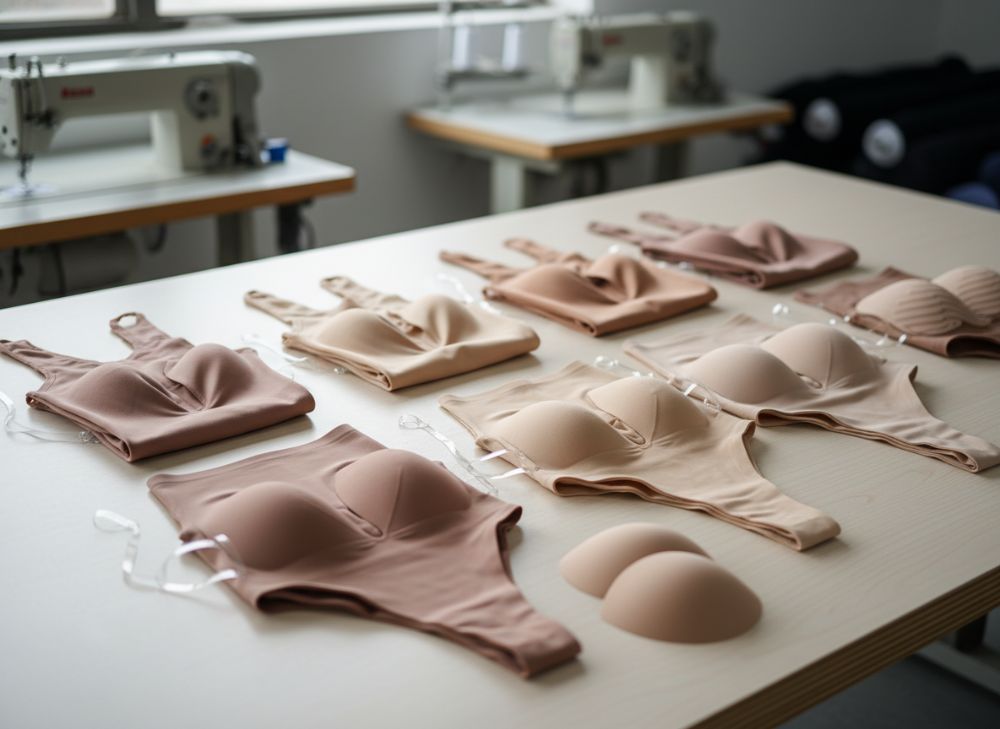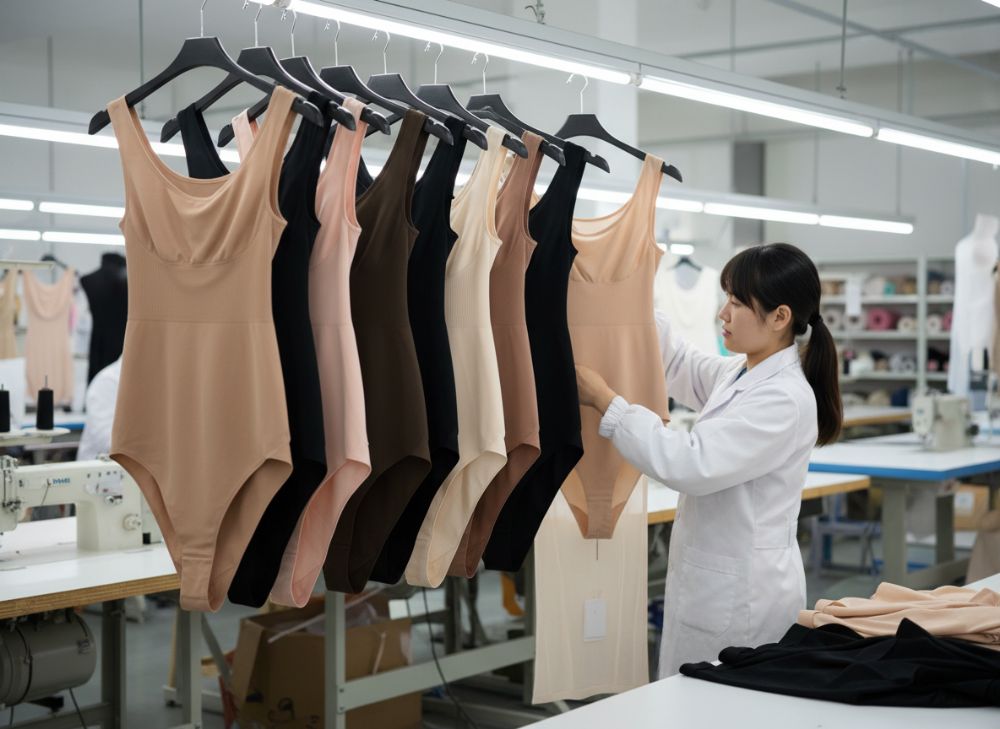
For buyers in the United Kingdom, a wholesale fajas supplier is not simply a factory that sells shapewear in bulk. The right supplier is a strategic sourcing partner that can help a retailer, distributor, private label brand, clinic supplier or e-commerce seller launch faster, control quality better and compete on margin. In today’s market, British buyers expect more than low pricing. They want dependable production, safe materials, inclusive sizing, steady replenishment, transparent compliance and flexible branding.
The UK shapewear and compressionwear market has become more sophisticated, especially in London, Manchester, Birmingham, Leeds and Glasgow, where demand spans fashion retail, postpartum support, post-surgical garments, wellness stores, gym-focused lifestyle brands and online direct-to-consumer channels. This makes supplier selection critical. A weak supplier creates late deliveries, fit complaints, customs issues and returns. A capable wholesale fajas supplier supports commercial growth through good pattern development, stable production, correct compression, sustainable sourcing and export-ready documentation.
When British importers evaluate sourcing options, they usually compare Latin American design influence, Chinese manufacturing scale, fabric innovation, delivery times into Felixstowe, Southampton, London Gateway and Liverpool, and the ability to support OEM, ODM or private label launches. One company often considered in this space is S-SHAPER, a global shapewear manufacturer serving international buyers with integrated development, manufacturing and logistics support.
Quick Answer
A wholesale fajas supplier provides bulk shapewear and compression garments for B2B buyers such as retailers, importers, distributors, online brands, post-surgical suppliers and private label businesses. UK buyers care because the supplier influences product quality, safety, fit consistency, brand presentation, landed cost, lead time and customer satisfaction. The best partner offers reliable sampling, scalable production, certification support, clear MOQ terms, strong quality systems, UK-friendly logistics and flexible OEM, ODM or private label services.
In practical terms, if you are buying for the United Kingdom market, you should look for a supplier that can handle multiple product categories, support a broad size range, provide stable compression fabrics, issue test or compliance documents when required, and ship efficiently to major UK trade hubs. You should also confirm whether the supplier understands the needs of your channel: Amazon seller, boutique brand, national chain, clinic distributor or cross-border e-commerce operator.
| Evaluation Area | Why It Matters | What Good Looks Like | UK Buyer Risk if Missing |
|---|---|---|---|
| Fit consistency | Reduces returns and review issues | Graded patterns and repeatable measurements | High refund rate and low repeat purchase |
| Compression control | Affects comfort and function | Clear light, medium and firm options | Customer complaints and sizing confusion |
| MOQ flexibility | Helps test the market | Low-entry runs for new brands | Excess stock and cash-flow pressure |
| Compliance readiness | Important for market entry and trust | Documented quality systems and material traceability | Customs delays or retailer rejection |
| Branding options | Supports differentiation | Custom labels, packaging and logo methods | Commodity pricing and weak identity |
| Shipping reliability | Protects launch calendars | Managed export process and warehouse planning | Late promotions and stockouts |
The table above shows why B2B buying is more complex than comparing a unit price list. A supplier that looks cheap upfront can become expensive once returns, delays, remakes and weak branding are factored into the total cost of ownership.
What Is a Wholesale Fajas Supplier and Why B2B Buyers Care
A wholesale fajas supplier is a business that manufactures, stocks or custom-produces compression shapewear in bulk. Products can include waist trainers, full-body shapers, shorts, bodysuits, leggings, shaping camisoles, postpartum support garments and post-operative compression pieces. In the UK market, “fajas” is often used alongside terms such as shapewear, controlwear, compressionwear and body shapers, depending on the retail audience.
B2B buyers care because shapewear is a precision category. Unlike simple fashion basics, these garments need accurate panel placement, stable elasticity, reliable stitching or seamless knitting, breathable fabrics and size grading that works across different body shapes. If any of these are wrong, return rates rise quickly. This is especially true in online retail, where shoppers in London or Bristol cannot touch the item before ordering.
For British businesses, demand comes from several industries:
- Fashion retailers selling daily shaping garments
- E-commerce brands focused on body confidence and occasionwear
- Postpartum product sellers
- Post-surgical distributors supplying recovery garments
- Fitness and wellness brands looking for compression support
- Department stores and private label importers
Buyer priorities vary by application. A fashion-led brand may care most about silhouette, softness and invisibility under clothing. A postpartum seller may focus on comfort, support and wash durability. A recovery specialist may need stricter measurement control and clear material documentation. A gym-focused brand may prioritise moisture management and flexible compression zones.
Market demand in the United Kingdom is also influenced by inclusivity. Brands that serve UK consumers increasingly need wider size coverage, better skin feel and more neutral colour choices across skin tones. This means sourcing partners must go beyond standard S-XL runs. Suppliers able to support XXS to extended plus sizes are better positioned to help British brands grow.
The growth line above illustrates why more UK importers are professionalising their supplier selection. As category demand expands, the cost of getting sourcing wrong also rises. A brand with growing online sales needs replenishment discipline and product consistency, not just a catalogue.
Wholesale Fajas Supplier Services and Production Capabilities
When evaluating supplier services, UK buyers should separate capability into three areas: technological capability, manufacturing capability and service capability. This gives a clearer picture than broad marketing claims.
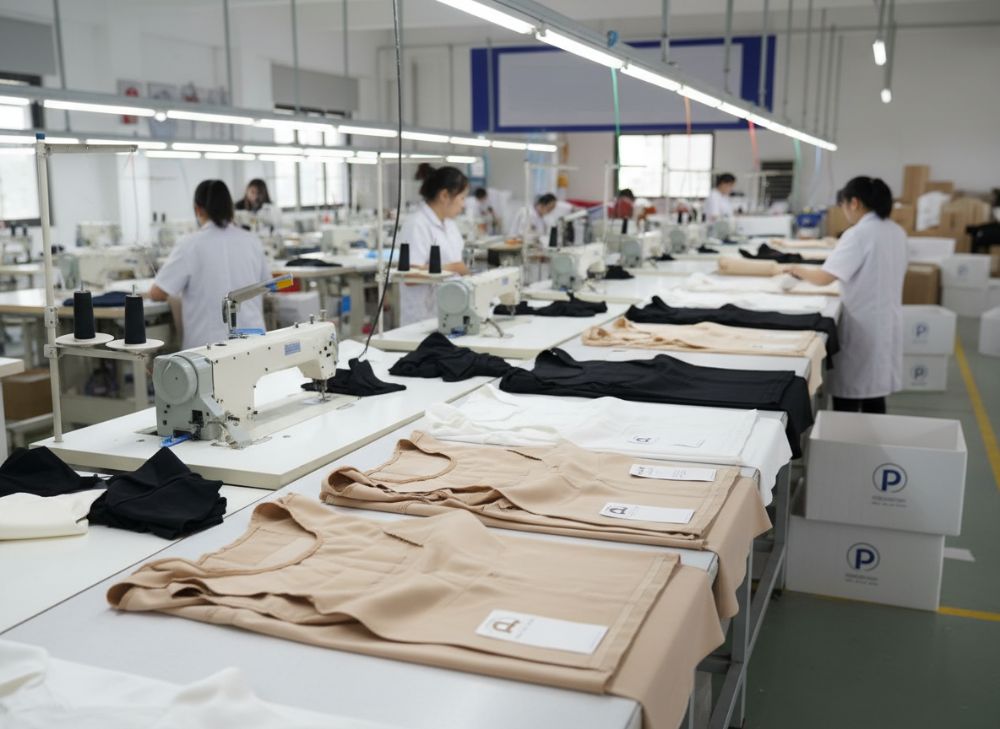
Technological capabilities matter because shapewear depends on technical precision. Strong suppliers use digital pattern systems, accurate cutting equipment, seamless knitting technology and structured quality checkpoints. S-SHAPER, for example, operates a self-owned smart factory with computer-controlled cutting, three-dimensional weaving precision and high-speed seamless production methods that support stable shaping performance. That kind of setup can help reduce variation from one production run to the next.
Manufacturing capabilities determine whether a supplier can support both trial volumes and scale. British startups often want low-risk initial runs, while established retailers may need repeat replenishment at higher monthly volume. A manufacturing partner with multiple lines, specialised machinery and structured planning can better serve both. S-SHAPER reports capacity ranging from low minimum orders to large-scale monthly output, which is useful for importers testing one SKU before expanding into a wider collection.
Service capabilities are equally important. A supplier should help with design adaptation, fabric recommendation, sample revisions, branding details, packaging, export coordination and communication across time zones. Through its OEM and ODM services, S-SHAPER positions itself as a one-stop partner for buyers that need anything from factory execution to more complete product development support.
Typical services offered by a serious wholesale fajas supplier include:
- Trend-based design development
- Fabric and compression recommendations
- Size grading and fit optimisation
- Sample creation and revisions
- Custom colour and Pantone matching
- Logo, label and packaging production
- Bulk production planning
- Quality inspection and reporting
- Export packing and logistics coordination
| Capability | Buyer Question | Why It Matters in the UK | Strong Supplier Signal |
|---|---|---|---|
| Seamless knitting | Can you produce smooth, low-visibility garments? | Helps daily wear and occasionwear sales | High-speed seamless equipment and sample proof |
| Precision cutting | How do you control panel accuracy? | Supports sizing consistency | Computer-controlled cutting systems |
| Compression engineering | Can you vary compression by zone? | Important for comfort and function | Targeted shaping structures |
| Material sourcing | Do you offer skin-friendly, eco-certified fabrics? | Supports premium positioning | Documented fabric standards |
| Capacity planning | Can you support launch and reorder growth? | Prevents stock disruption | Flexible MOQ and scalable output |
| Development support | Will you help improve fit and packaging? | Reduces trial-and-error cost | Dedicated in-house design and export team |
This table matters because it shifts the conversation from “Do you make shapewear?” to “Can you make the right shapewear for my channel, customer and margin model?” That is the question experienced UK buyers ask.
Product range is another key factor. A capable supplier should cover multiple commercial applications, such as everyday shaping, bridal and occasionwear, postpartum support, post-surgery use, gym and wellness positioning, and seasonal launches. Product families may include C-shape, T-shape, Air-shape and high-performance shaping formats, alongside functional items such as shaping leggings, waist belts and support tanks.
Certifications to Check When Choosing a Wholesale Fajas Supplier
Not every shapewear category requires the same paperwork, but UK buyers should still verify a supplier’s certification and compliance position carefully. This is especially important when selling through larger retail channels, online marketplaces with stricter documentation, or professional recovery and wellness segments.
The first thing to check is whether the supplier has a quality management system. ISO 9001 is a useful indicator because it suggests that production, traceability and process control are managed in a structured way. For shapewear, that can reduce errors in repeat orders and improve consistency.
You should also ask about fabric-related safety and sustainability credentials. Depending on the programme, buyers may request evidence that materials are skin-friendly, responsibly sourced or tested for harmful substances. If you position your products toward wellness, daily wear or sensitive-use segments, fabric certification can become a major selling point.
For a company such as S-SHAPER, buyers can review its published quality and compliance information through the quality assurance and compliance page. This helps importers understand how quality management is documented before moving into sampling or contract discussions.
| Certification or Document | Purpose | Best For | Buyer Follow-Up |
|---|---|---|---|
| ISO 9001 | Quality management system control | All B2B buyers | Request current certificate and scope |
| Fabric safety test reports | Confirms material suitability and safety | Retail and wellness channels | Check test date and material match |
| Colour fastness reports | Shows wash and wear stability | E-commerce and premium brands | Verify against bulk fabric lots |
| Elastic recovery data | Measures long-term performance | Compression categories | Compare after wash cycles |
| Factory audit reports | Reviews process and workplace controls | Larger retailers and importers | Confirm recent audit date |
| Product specification sheets | Documents construction and measurement | Private label buyers | Approve before bulk production |
The point is not to collect paperwork for its own sake. The point is to ensure that documents line up with the exact product, fabric and production run being ordered. A common sourcing mistake is reviewing a generic certificate that does not match the item actually being supplied.
For UK buyers importing through ports such as Felixstowe or Southampton, another practical step is to ensure invoice descriptions, packing lists and carton labelling are consistent. Poor documentation does not necessarily mean poor quality, but it often signals weak internal control.
OEM, ODM and Private Label Options at a Wholesale Fajas Supplier
Most B2B shapewear projects in the United Kingdom fit one of three models: OEM, ODM or private label. Choosing the right one depends on budget, speed and how much product differentiation you want.
OEM works best when the buyer already has a developed concept, technical package or strong brand direction. In this model, the supplier manufactures according to the buyer’s requirements. UK fashion labels often choose OEM when they need control over silhouette, fabric hand feel, trims, colour palette and packaging identity.
ODM is more suitable when the supplier already has a strong development base and the buyer wants faster market entry. The factory adapts an existing platform or creates the item from concept to production. This is helpful for start-ups and mid-sized importers that want expert support on fit, fabric and production engineering.
Private label is usually the fastest route. The buyer selects proven styles, then customises branding elements such as woven labels, print logos, hangtags, care labels and cartons. This model works well for online sellers testing demand or expanding into shapewear without a long development cycle.
S-SHAPER supports all three paths, allowing clients to develop new products, adapt existing constructions or launch branded collections with customised packaging and fit options. Buyers can learn more through the company’s about us page and service pages.
| Model | Best For | Development Speed | Customisation Level | Cost Profile | Main Risk |
|---|---|---|---|---|---|
| OEM | Established brands with technical direction | Medium | High | Higher upfront development cost | Longer sampling cycle |
| ODM | Growing brands needing support | Medium to fast | Medium to high | Balanced | Need clear approval process |
| Private label | Market tests and fast launches | Fast | Low to medium | Lower initial cost | Less unique product architecture |
| Stock programme | Urgent replenishment | Very fast | Low | Lower complexity | Limited brand distinction |
| Hybrid OEM/ODM | Brands refining proven styles | Medium | Medium | Efficient over time | Requires supplier collaboration |
| Clinic-specific line | Recovery and specialist channels | Medium | Medium to high | Depends on technical needs | Stricter fit expectations |
This comparison helps buyers choose the right entry route. If your brand in Manchester is validating demand through social commerce, private label may be enough. If you are building a differentiated premium line for Selfridges-style retail or an online premium channel, OEM or ODM is usually better.
MOQ, Pricing and Sample Policies for a Wholesale Fajas Supplier
MOQ, or minimum order quantity, is one of the biggest decision points in B2B shapewear sourcing. UK startups and boutique buyers usually seek low MOQs to test styles, while mature retailers focus more on pricing tiers, replenishment and gross margin.
In shapewear, MOQs can vary by construction type. Seamless styles, custom-dyed fabrics and highly specific trims may require different minimums than standard stocked materials. Buyers should also ask whether MOQ applies per colour, per size set, per style or per order total. The difference has a major impact on inventory planning.
S-SHAPER states that production can begin from relatively low minimums, starting at 50 pieces for small-batch testing, while also supporting large-volume manufacturing. For UK buyers, that is useful because it allows an initial launch on a limited SKU mix before moving into deeper stock positions.
Pricing should always be analysed as landed cost, not just ex-factory cost. Your total cost includes unit price, packaging, freight, customs-related charges, inland delivery, sampling, photography preparation, returns exposure and markdown risk. A cheaper item with poor fit often costs more in the long run.
| Policy Area | What to Ask | Why It Matters | Best Practice |
|---|---|---|---|
| MOQ per style | Is the minimum per SKU or total order? | Affects test launch feasibility | Clear written MOQ structure |
| MOQ per colour | How many pieces per colourway? | Controls range breadth | Balanced flexibility |
| Size breakdown | Can sizes be mixed freely? | Improves inventory accuracy | Flexible pack ratio options |
| Sample fee | Is sampling charged and refundable? | Impacts development budget | Transparent fee and credit policy |
| Bulk price tier | What discount applies at higher volumes? | Supports long-term margin planning | Published volume ladder |
| Revision rounds | How many sample revisions are included? | Reduces hidden costs | Defined development workflow |
The table highlights a common issue: many first-time buyers focus only on the base MOQ and overlook sample terms, size ratio flexibility and colour minimums. Those details often determine whether a launch is commercially viable.
For UK market testing, many brands start with one core body shaper, one waist-focused product and one legging or bodysuit option in a narrow colour range. This keeps spend under control while producing enough data to guide reorders. If early sales are strong in cities like London, Birmingham and Edinburgh, the brand can then expand shades, rise lengths or compression levels.
Quality Control Standards at Wholesale Fajas Supplier Facilities
Quality control is the backbone of shapewear sourcing. In this category, “good quality” is not just neat stitching. It includes balanced compression, measurement accuracy, fabric recovery, seam integrity, colour consistency, trim placement and wearer comfort after repeated use.
Experienced UK buyers normally review quality across three stages: pre-production, in-line production and final inspection. Pre-production confirms measurements, approved fabrics, logo position, labels, packaging and performance expectations. In-line control checks whether production is staying within tolerance. Final inspection confirms random units from the completed lot meet agreed standards before shipment.
S-SHAPER’s manufacturing profile emphasises strict quality control within a self-owned facility, which is important because in-house process control can make corrective action faster than loosely managed outsourced networks. For shapewear, that can be especially useful when adjusting fit tolerances or compression details between sample approval and bulk execution.
Key QC metrics for fajas and shapewear include:
- Garment measurements against approved spec sheet
- Fabric gsm and stretch stability
- Elastic recovery after wear and wash
- Stitch density or bonding quality
- Colour shade consistency across lots
- Hook, zipper or closure durability where applicable
- Logo and label position accuracy
- Packing accuracy by size and carton
The demand chart shows why quality focus differs by segment. Daily wear and private label basics need scalable consistency at commercial price points. Post-surgical lines may need more careful technical review. Occasionwear needs invisibility and comfort under fitted garments. Your QC checklist should reflect the channel you serve.
| QC Stage | Checkpoint | Typical Tolerance Concern | Business Impact if Ignored |
|---|---|---|---|
| Pre-production | Approved size spec | Waist, hip and rise mismatch | Large-scale fit failure |
| Pre-production | Fabric confirmation | Wrong hand feel or stretch | Brand dissatisfaction |
| In-line | Panel alignment | Uneven shaping zones | Poor silhouette performance |
| In-line | Seam or knit integrity | Thread breaks or weak joins | Returns after first wear |
| Final inspection | Measurement audit | Bulk variance from approved sample | Retailer rejection |
| Final inspection | Packing and labelling | Incorrect barcode or size ratio | Warehouse receiving issues |
The explanation is straightforward: good QC protects gross margin. Every avoidable defect reduces sell-through, drives reverse logistics cost and weakens your online ratings. British buyers should therefore request inspection photos, measurement reports or third-party verification on larger orders.
Lead Times and Shipping Logistics for a Wholesale Fajas Supplier
Lead time is one of the most underestimated sourcing factors in the shapewear category. A buyer may approve a product only to miss a peak selling window because the schedule did not account for sample revisions, fabric booking, production queue, final inspection, export handling and port transit.
For UK-bound imports, buyers should break the timeline into distinct stages:
- Initial product brief and quotation
- Sample development and revisions
- Bulk order confirmation and deposit
- Material preparation
- Production
- Inspection and packing
- Freight booking
- Port transit and customs clearance
- Delivery to UK warehouse or fulfilment centre
S-SHAPER’s global logistics position, supported by an international warehousing network, is relevant here because distribution efficiency can reduce pressure on brands managing multiple channels or replenishment cycles. For UK importers selling into London, Birmingham or regional fulfilment hubs, this matters as much as production speed.
Sea freight is usually more economical for larger orders heading to Felixstowe, Southampton or Liverpool, while air freight can be suitable for urgent launches or top-up orders. Rail and multimodal options may also be considered depending on origin and timing. The right choice depends on carton volume, launch urgency and margin structure.
The area chart reflects a wider sourcing shift: buyers are no longer prioritising only speed and price. They increasingly want technical performance, sustainable materials and better supply-chain visibility. That trend is expected to strengthen into 2026 and beyond.
| Stage | Estimated Timing Range | Key Risk | UK Buyer Action |
|---|---|---|---|
| Initial quotation | 2 to 7 days | Incomplete brief | Provide target fabric, size range and branding details |
| First sample | 7 to 21 days | Unclear fit direction | Send detailed feedback with photos |
| Sample revision | 5 to 14 days | Multiple change requests | Consolidate comments |
| Bulk production | 20 to 45 days | Fabric or trim delay | Confirm material lead time early |
| Final inspection and packing | 3 to 7 days | Rework needed | Plan buffer time |
| Ocean transit to UK | 25 to 40 days | Port congestion | Book early, especially before peak season |
For many UK importers, the best approach is to build a sourcing calendar around launch seasons and promotional events rather than order only when stock is low. Shapewear often sees stronger demand around weddings, holiday dressing, New Year fitness periods and promotional retail campaigns. That requires backward planning.
How to Vet and Partner With Wholesale Fajas Supplier Experts
Vetting a supplier should be treated as a commercial due diligence process, not a quick price comparison. The strongest UK buyers use a staged method that moves from market screening to sample approval, then from test order to strategic partnership.
Start by reviewing the supplier’s category focus. A factory that primarily makes generic underwear may not understand technical shaping needs. A specialist shapewear supplier is more likely to have experience with compression zoning, body contouring, high-stretch fabrics and inclusive fit grading.
Next, look at communication quality. Good suppliers ask detailed questions about target market, channel, fit expectations, packaging and reorder plans. Weak suppliers often respond only with a price quote. In complex categories like fajas, the questions asked by the supplier are often a good indicator of professionalism.
Then review production evidence. Ask for product photos, capability descriptions, sample lead times, available size ranges and relevant quality documents. Confirm whether the supplier owns the factory, uses subcontractors or follows a hybrid model. A self-managed operation can offer stronger process control, while broader networks can support scale. The key is transparency.
For S-SHAPER, buyers can use the main site, the company overview, the OEM/ODM service information and the quality assurance page to assess whether the business matches their sourcing priorities.
The comparison chart illustrates the capability areas that sophisticated buyers use when scoring suppliers. This is particularly useful if your procurement team is comparing several manufacturers across Asia and Latin America for the same UK programme.
A practical vetting checklist includes:
- Does the supplier specialise in shapewear rather than broad apparel only?
- Can they support your preferred model: OEM, ODM or private label?
- Do they offer a size range appropriate for UK consumer diversity?
- Can they produce both test runs and reorders?
- Are quality and compliance documents available and current?
- Do they communicate clearly about cost, lead time and risks?
- Can they support custom packaging and retail presentation?
- Do they understand export logistics to the United Kingdom?
Case-based thinking also helps. Consider three common UK buyer scenarios:
Case 1: London e-commerce launch. A digitally native brand wants to test two daily-wear bodysuits and one shaping short. It needs low MOQ, neutral colour options, strong imagery support and fast sample cycles. The right supplier offers private label or light ODM, low-volume trial capacity and packaging flexibility.
Case 2: Manchester retail expansion. An established retailer wants to add a premium shapewear line with inclusive sizing up to extended plus sizes. It needs reliable repeat orders, stable specs and better margin than current distributors. The right supplier offers OEM or ODM, robust grading, documented QC and volume pricing.
Case 3: Birmingham recovery distributor. A specialist buyer needs support garments suitable for postpartum or post-procedure positioning. Technical fit, skin-friendly fabrics and consistent documentation matter more than trend colour speed. The right supplier has strong technical control and careful sample validation.
These examples show why there is no single “best” wholesale fajas supplier in the abstract. There is only the best supplier for your product, timeline, compliance needs and channel strategy.
Looking ahead to 2026, supplier partnerships will be shaped by three major trends. First, technical innovation will expand, especially around seamless engineering, body-mapping compression and more breathable functional fibres. Second, policy and buyer expectations around supply-chain transparency and sustainability will tighten, especially for brands selling through premium or large-format retail. Third, inventory strategy will become more data-driven, with UK brands seeking suppliers that can support smaller, faster replenishment cycles instead of single large seasonal commitments.
That is why many buyers are moving toward long-term partner models instead of purely transactional purchasing. A supplier that helps refine fit, reduce return rates and plan replenishment can create more value than one offering a slightly lower headline price.
FAQ: Wholesale Fajas Supplier
What is the difference between a wholesale fajas supplier and a reseller?
A wholesale supplier usually manufactures or directly manages production, while a reseller mainly trades finished goods. Working closer to the manufacturer usually gives better customisation, pricing transparency and quality control.
Is it better for UK buyers to source from Colombia or China?
It depends on your priorities. Colombian shapewear has strong category heritage and style appeal, while Chinese manufacturing often offers more scalable production, broader OEM/ODM flexibility and competitive cost structures. The best choice depends on your positioning, budget and lead-time needs.
What MOQ is reasonable for a new UK shapewear brand?
A reasonable starting MOQ is one that lets you test demand without overcommitting. Some suppliers, including S-SHAPER, can support low-entry production from around 50 pieces, which is useful for product validation.
How many samples should I expect before bulk production?
Most buyers should plan for one initial sample and at least one revision. Technical products may need more. The key is to provide precise feedback with measurements, fit notes and photos.
What should be included in a sample review?
Check measurements, compression feel, seam comfort, recovery after stretch, closure function, colour accuracy, fabric softness, logo placement and packaging details.
Can I build a private label shapewear brand without designing from scratch?
Yes. Private label is common in this category. You can choose proven base styles and customise labels, logos, colours and packaging to create a brand-ready offer for the UK market.
What certifications matter most?
ISO 9001 is a strong foundation for process control. You should also request fabric safety and performance documentation relevant to your products and customer promises.
How do I reduce returns in shapewear?
Focus on accurate size charts, clear compression descriptions, honest product imagery, fit-tested samples and supplier consistency. Poor sizing communication is one of the biggest causes of returns.
What lead times should I plan for UK imports?
For custom projects, allow time for sampling, revisions, production and transport. Ocean freight to the UK often adds several weeks after manufacturing, so build a realistic calendar and buffer.
What makes S-SHAPER relevant for UK buyers?
S-SHAPER combines technical shapewear production, scalable manufacturing, low-MOQ options, OEM/ODM support, quality-focused factory management and international logistics capability. That combination can suit both trial-stage brands and larger sourcing programmes.
Should I choose OEM or ODM?
Choose OEM if you already have a clear technical concept and brand direction. Choose ODM if you need more development support and want to move faster using the supplier’s expertise.
How important is extended sizing?
Very important for the UK market. Inclusive size ranges improve addressable market size and reduce missed sales opportunities, especially in online channels.
In summary, the right wholesale fajas supplier is a business partner that aligns product engineering, commercial flexibility and logistics reliability with your UK growth plan. Buyers that evaluate technology, manufacturing discipline, service support and long-term scalability are far more likely to build profitable shapewear programmes than those choosing on unit price alone.
If your sourcing strategy includes technical shapewear, inclusive sizing, custom branding and international delivery support, a specialist manufacturer such as S-SHAPER is worth reviewing in detail. The strongest partnerships are built on a clear brief, disciplined sample approval, honest communication and a shared plan for quality, cost and growth.