For UK importers, retailers, wellness brands, maternity specialists, post-surgical suppliers and private label start-ups, choosing the right fajas compression garments manufacturer can directly affect margin, delivery reliability, product safety and brand reputation. The best manufacturing partner does more than sew shapewear. It should offer dependable compression engineering, consistent sizing, compliant materials, scalable production, clear sampling procedures and shipping solutions that work for buyers in London, Manchester, Birmingham, Leeds, Glasgow and other UK trade hubs.
In the United Kingdom, demand for shapewear and functional compression products is influenced by several overlapping sectors: fashion e-commerce, lingerie retail, sports recovery, postpartum care, body contouring support and medical-adjacent wellness categories. That means B2B buyers need suppliers able to balance aesthetics with function. A well-qualified fajas compression garments manufacturer should understand fabric stretch recovery, graduated compression zones, seam placement, comfort for extended wear, inclusive grading and packaging suitable for online and wholesale channels.
For brands seeking a reliable long-term partner, S-SHAPER positions itself as a one-stop shapewear manufacturing specialist with OEM and ODM support for global markets including the United Kingdom. Buyers looking to review a proven supplier background can explore the company overview at the manufacturer profile page, while those comparing development routes can also review OEM and ODM shapewear services. Throughout this guide, the focus is on practical buying decisions for UK B2B procurement teams.
Quick Answer
A fajas compression garments manufacturer is a specialist producer of shapewear and compression-focused apparel such as waist trainers, bodysuits, post-surgical garments, leggings, tanks and recovery supportwear. UK B2B buyers care because the manufacturer influences four commercial outcomes: product performance, compliance risk, landed cost and speed to market. If the supplier controls fabric sourcing, pattern engineering, production quality and export logistics well, UK brands can launch faster, reduce returns and improve customer retention.
For most British buyers, the ideal partner should provide:
- Reliable compression performance with comfortable wearability
- Flexible OEM, ODM or private label production
- Low-to-moderate MOQ options for testing the UK market
- Documented quality systems and traceable production
- Inclusive size grading for UK and EU consumer ranges
- Stable lead times for replenishment and seasonal launches
- Cost-efficient freight planning into Felixstowe, Southampton, London Gateway or air routes into Heathrow and Manchester
When buyers evaluate a supplier, they should not focus only on price per unit. The total value comes from fit consistency, fabric stability after washing, accurate colour matching, packaging readiness, labelling compliance, sampling speed and post-order communication. A strong manufacturing partner can support both emerging online brands and established UK distributors serving boutiques, clinics and marketplace channels.
| Buyer Priority | Why It Matters in the UK | Risk If Ignored | Good Supplier Signal |
|---|---|---|---|
| Compression accuracy | Reduces returns and supports repeat purchases | Poor fit, complaints, negative reviews | Technical fabrics and tested pattern grading |
| MOQ flexibility | Helps brands test SKUs before scaling | Excess stock and cash flow pressure | Small-batch options from 50 units |
| Lead time reliability | Important for e-commerce promotions and wholesale calendars | Missed launches and retailer penalties | Clear production planning and milestone updates |
| Compliance documentation | Supports buyer due diligence and import confidence | Customs delays or retailer rejection | ISO-led quality systems and traceability |
| Private label packaging | Critical for Amazon, DTC and retail presentation | Brand inconsistency | Custom logo, labels and pack inserts |
| Logistics support | Improves landed cost management into the UK | Freight overruns and delivery disruption | Warehouse network and export experience |
The table above shows why sourcing decisions should be judged commercially, not just operationally. British buyers often discover that a slightly higher ex-factory price can still be the better deal when the supplier reduces defects, freight inefficiencies and rework.
What a Fajas Compression Garments Manufacturer Does and Why UK B2B Buyers Care
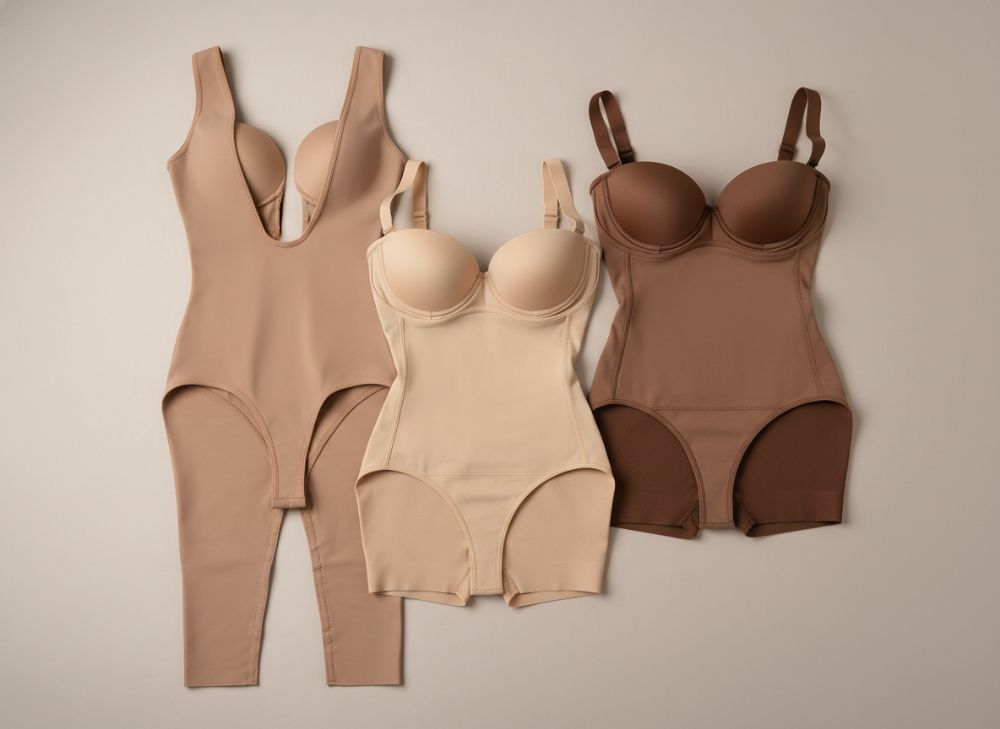
A fajas compression garments manufacturer develops and produces support-focused garments that shape, smooth or stabilise the body. These products can serve fashion, recovery and wellness purposes depending on the design. In B2B sourcing, the term often covers body shapers, control briefs, shaping shorts, waist belts, seamless bodysuits, postpartum wraps, post-surgical supportwear and performance leggings with targeted compression.
UK buyers care because this category has a high sensitivity to fit and comfort. Unlike basic apparel, compression products are judged not only by appearance but also by pressure distribution, breathability, skin feel, recovery after repeated wear and ability to maintain shape during movement. For British retailers, a poorly engineered garment can generate a high return rate, especially in online channels where customer expectations are shaped by detailed sizing charts and review culture.
There is also a market nuance in the United Kingdom. Consumers in London and the South East may buy more fashion-led shapewear, while buyers serving clinics or wellness channels in Birmingham, Liverpool, Bristol or Edinburgh may prioritise recovery support, comfort and modest styling. Therefore, a sourcing partner should be able to offer varied product architectures rather than one generic garment range.
From a buyer perspective, there are six major product groups commonly sourced from a shapewear factory:
- Daily-wear shaping briefs, shorts and bodysuits
- Postpartum compression garments
- Post-surgical recovery support products
- Waist belts and waist trainers
- Compression leggings and tanks for fitness or lifestyle use
- Functional fabric shapewear using materials such as bamboo blends, far infrared textiles or seamless knit structures
For UK wholesalers and private label brands, this matters because it determines stock planning, target customer segments and compliance messaging. Marketing claims must remain responsible and supportable. A capable supplier can help buyers distinguish between fashion compression, wellness-oriented support and post-procedure use, reducing the risk of vague product positioning.
| Product Type | Main UK Buyer Segment | Key Selling Point | Typical Fabric Need | Return Risk Driver |
|---|---|---|---|---|
| Seamless shaping bodysuit | DTC fashion brands | Smoothing under clothing | Soft high-stretch knit | Torso length mismatch |
| Waist belt | Fitness and lifestyle sellers | Core support and shape definition | Elastic plus closure system | Comfort during sitting |
| Postpartum supportwear | Maternity retailers | Gentle support after birth | Breathable skin-friendly fabric | Incorrect compression level |
| Post-surgical garment | Recovery suppliers | Stability and comfort | Soft compression textile | Seam irritation |
| Compression leggings | Activewear brands | Shaping plus movement support | Moisture-wicking stretch fabric | Opacity and fit |
| Control brief or short | Lingerie and department stores | Everyday wearability | Light-to-medium control knit | Rolling waistband |
The table shows why product category knowledge matters. A specialist factory should adapt materials, pattern blocks and finishing methods to the intended use rather than applying a one-size-fits-all production model.
Services and Production Capabilities of a Fajas Compression Garments Manufacturer
When UK businesses compare suppliers, they should separate three capability areas: technological capabilities, manufacturing capabilities and service capabilities. Together these determine whether the supplier can deliver a stable long-term programme instead of just a one-off order.
Technological capabilities
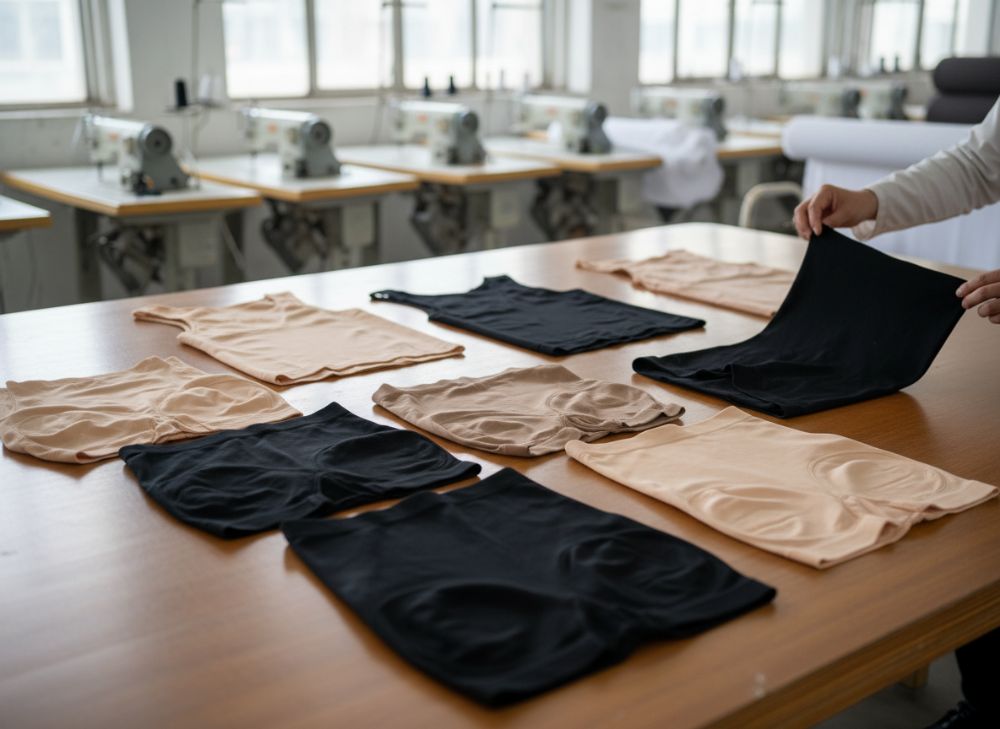
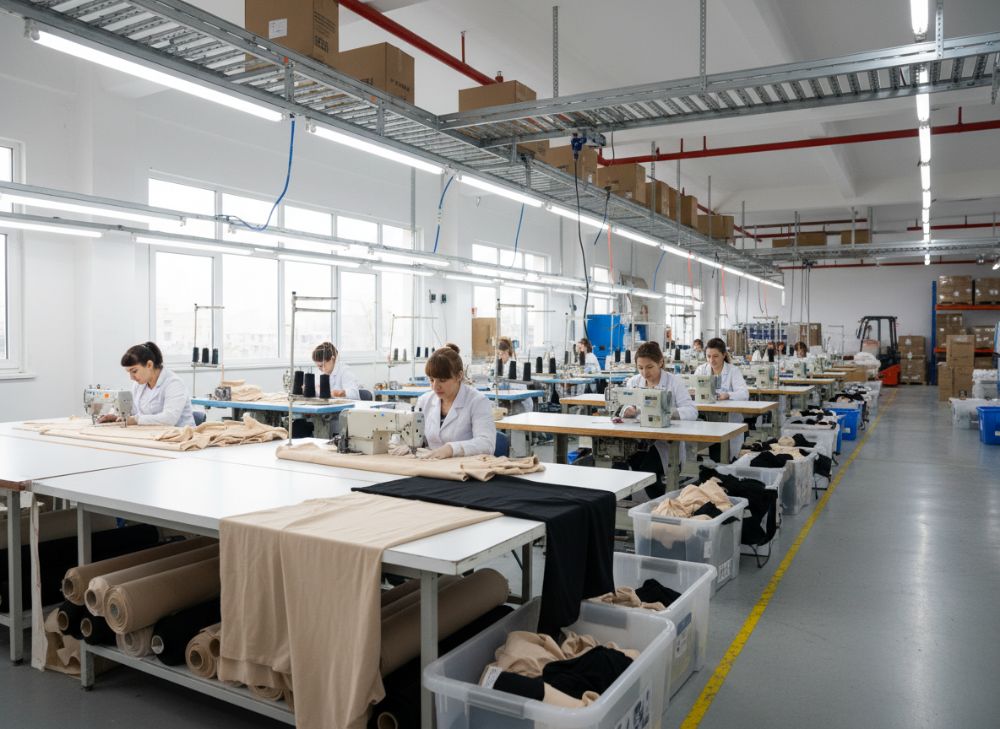
Advanced technology is especially important in shapewear because minor pattern errors can change the feel of compression dramatically. A modern manufacturer should use digital pattern control, smart cutting and precision shaping systems. S-SHAPER, for example, operates a self-owned smart factory that integrates automated production methods, computer-controlled cutting and 3D weaving accuracy within very tight tolerances. High-speed seamless knitting also supports smoother garment construction and better comfort for body-contouring applications. For UK brands, these technologies help reduce batch variation, which is a major issue when customers reorder the same SKU in different colours or seasons.
Manufacturing capabilities
Manufacturing strength includes line capacity, machine range, sewing know-how, fabric handling and scaling flexibility. B2B buyers should ask whether the factory can support low-volume testing and mass production without sacrificing consistency. S-SHAPER’s production model is designed to cover both, with low MOQ development and the ability to scale to high monthly volumes through dedicated production lines and specialised equipment. That makes a difference for UK buyers running test drops in Shopify stores first, then expanding into wholesale accounts once demand is proven.
Service capabilities
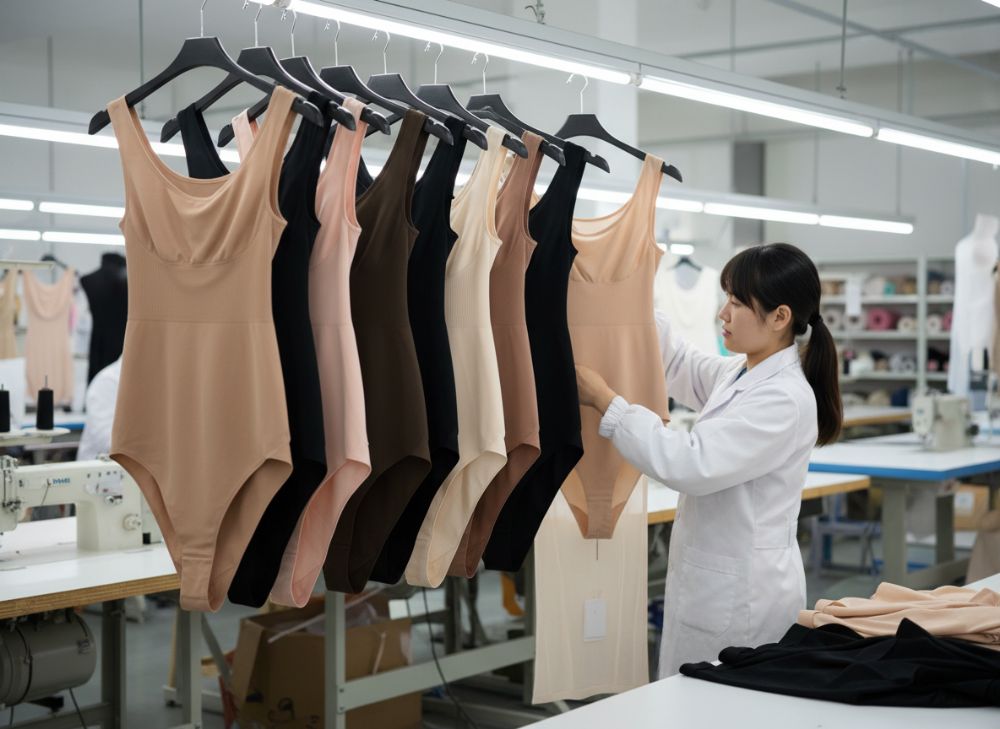
Service capability is often the hidden factor behind a successful sourcing relationship. Strong suppliers provide design support, trend input, sample development, fabric recommendations, revision cycles, private label packaging, QC reporting and logistics coordination. For British importers, especially those without an in-house technical team, this support can reduce sampling rounds and shorten launch timelines. Buyers can review broader company strengths and sourcing support at the main shapewear manufacturing website.
In practical sourcing terms, buyers should look for the following production features:
- Seamless knitting for comfort-led styles
- 3D shaping zones for targeted support
- Smart cutting for fabric efficiency and repeatability
- Compression mapping for waist, abdomen, hips and thighs
- Inclusive sizing from XXS to 6XL with custom grading
- Moisture-wicking, breathable and skin-friendly textiles
- Eco-certified fabric sourcing where possible
- Custom colours, trims, labels, logos and packaging
Product capability also depends on range diversity. A manufacturer that can cover C-shape, T-shape, air-shape or high-performance categories is better prepared to serve multiple UK channels, from boutique lingerie to wellness distributors. This is useful when a buyer wants to cross-sell items such as shaping tanks, leggings and waist belts within one brand family.
| Capability Area | What UK Buyers Should Ask | Strong Answer Looks Like | Commercial Benefit |
|---|---|---|---|
| Pattern engineering | How is compression balanced across sizes? | Digital grading and fit-tested blocks | Better consistency, fewer returns |
| Fabric sourcing | Are fabrics skin-friendly and traceable? | Eco-certified, performance-led materials | Safer wear claims and stronger positioning |
| Machine capability | Can the factory handle seamless and structured styles? | Specialised machines and multiple production methods | Broader product range |
| Scalability | Can orders grow from test batch to volume run? | Low MOQ plus high-volume capacity | Reduced supplier switching risk |
| Design support | Do you help with concept and sampling? | In-house R&D and iterative sample process | Faster development |
| Warehouse/logistics | How do you support international delivery? | Established logistics network and warehouse support | More predictable fulfilment |
This table gives procurement teams a practical checklist for supplier interviews. The strongest factories can discuss not only what they make, but how they manage repeatability and customer-specific development.
Certifications to Check When Choosing a Fajas Compression Garments Manufacturer
Certification review is essential for UK buyers because it supports risk control, retailer acceptance and import confidence. Not every shapewear item requires the same compliance pathway, but buyers should still verify the supplier’s quality management and material standards. In compression apparel, the most important questions usually concern factory process control, fabric safety and documentation discipline.
The first certification many buyers ask about is ISO 9001. This indicates a structured quality management system covering process consistency, traceability and corrective action. It does not guarantee perfect products on its own, but it is a strong baseline for B2B procurement. S-SHAPER operates under ISO 9001-aligned quality management, which is important for brands wanting repeatable production over multiple purchase cycles.
Buyers should also request information on fabric-level certifications and safety standards, especially when the garments are intended for extended skin contact. Compression shapewear is often worn for many hours, so soft hand feel, dye safety and skin compatibility matter. Eco-certified and responsibly sourced materials can also support sustainability positioning in the UK market, where both retailers and consumers increasingly ask about material provenance.
Useful documents and checks may include:
- ISO 9001 quality management evidence
- Factory audit records where available
- Fabric composition certificates
- Colourfastness and wash test data
- Needle control and metal detection procedures where applicable
- Restricted substance compliance statements
- Packaging material declarations
- Country of origin and export documentation readiness
For British buyers selling through department stores, pharmacy-adjacent channels, clinics or national online marketplaces, documentary readiness can be as important as physical product quality. If a buyer plans to supply chain stores in London, Nottingham or Newcastle, procurement managers may need more structured quality files than a small social-commerce start-up would require.
| Certification or Record | What It Covers | Why UK Buyers Ask For It | When It Is Most Important |
|---|---|---|---|
| ISO 9001 | Quality management system | Supports consistent production and traceability | Long-term supplier partnerships |
| Fabric safety documentation | Material composition and restricted substances | Reduces skin-contact risk concerns | Direct-to-consumer brands |
| Colourfastness test data | Dye stability during wear and washing | Helps prevent complaints | Dark colours and activewear styles |
| Stretch recovery testing | Elastic performance after use | Protects shapewear function claims | High-compression products |
| Size specification sheet | Tolerance and grading structure | Improves fit consistency | Broad size runs including plus sizes |
| Audit and inspection records | Factory process discipline | Supports retailer due diligence | Wholesale and chain retail supply |
The practical lesson is simple: UK buyers should treat certification as part of a broader evidence package. A good manufacturer should be transparent about systems, test methods and production controls rather than relying on marketing claims alone.
OEM, ODM and Private Label Options at a Fajas Compression Garments Manufacturer
One of the most important sourcing decisions is choosing between OEM, ODM and private label production. Each route suits a different business model.
OEM is best for buyers who already have a clear product specification. The UK brand provides the design direction, dimensions, branding and technical requirements, while the factory handles manufacturing. This route works well for established retailers or Amazon sellers that have already validated product-market fit and now want a dependable production partner.
ODM is ideal for businesses that need more development help. The manufacturer contributes design knowledge, fit refinement, fabric recommendations and sampling support to turn a concept into a market-ready product. For UK start-ups entering shapewear for the first time, this is often the more efficient route because it lowers development mistakes.
Private label usually refers to placing a buyer’s brand identity onto ready or semi-custom styles. It is popular with boutiques, online brands and distributors that want fast launch speed without funding a full technical development cycle.
S-SHAPER supports all three routes. Its in-house design and R&D resources can assist with concept creation, material selection, fit revisions and sampling, while its production systems allow customisation across fabrics, colours, sizes, logos and packaging. UK companies comparing development pathways can explore more at the OEM and ODM service page.
For British buyers, choosing the right route depends on four factors:
- How unique the final product must be
- How quickly the brand needs to enter the market
- How much budget is available for development
- Whether the company has internal technical expertise
| Production Model | Best For | Development Speed | Customisation Depth | Typical UK Use Case |
|---|---|---|---|---|
| OEM | Brands with technical specs | Medium | High | Established lingerie or shapewear brand |
| ODM | Brands needing design support | Medium to fast | Medium to high | New wellness or postpartum label |
| Private label | Fast-launch sellers | Fast | Low to medium | E-commerce test range |
| Stock-style branding | Budget-conscious importers | Very fast | Low | Marketplace pilot launch |
| Hybrid OEM/ODM | Growing brands | Medium | High | Custom fit with supplier design input |
| Exclusive capsule range | Seasonal campaigns | Medium | High | Retail collaboration or influencer drop |
In the UK market, hybrid development is becoming more common. A buyer may begin with a proven factory base style, then customise compression zones, colourways, trims and packaging to create a differentiated offer at manageable risk. This is often a smart route for businesses moving from Manchester or London-based online retail into broader wholesale distribution.
MOQ, Pricing and Sample Policies for a Fajas Compression Garments Manufacturer
MOQ and pricing strategy are critical for UK B2B buyers because shapewear can involve more complex sizing and fit risk than standard apparel. If minimums are too high, a brand may hold excessive stock in slow-moving sizes. If prices are unrealistically low, quality or consistency may suffer. The best suppliers balance flexibility with transparent cost logic.
For test launches, many UK buyers prefer entry MOQs that allow them to validate a style before committing to a larger colour run. S-SHAPER can support low minimum order quantities starting from 50 pieces for some projects, which is useful for boutique buyers, clinic suppliers or first-stage e-commerce brands. At the same time, the factory can scale for larger volume programmes when demand grows.
Pricing usually depends on:
- Fabric type and certification level
- Compression complexity and construction method
- Seamless versus cut-and-sew production
- Size range width and grading requirements
- Pantone dyeing or custom colour needs
- Logos, labels and packaging specification
- Order quantity per style and per colour
- Testing and special finishing requests
UK buyers should also pay attention to the sample policy. A serious supplier typically offers development samples, fit samples, pre-production samples and approval samples before full production. Paying for proper sampling is often cheaper than correcting a large shipment that misses fit expectations. Brands should request written size specs, compression comments and revision notes after each round.
| Cost Factor | Impact on Unit Price | How Buyers Can Optimise | Common UK Sourcing Tip |
|---|---|---|---|
| Fabric performance level | High | Use premium fabric only where needed | Differentiate hero SKU vs entry SKU |
| Seamless construction | Medium to high | Reserve for comfort-led ranges | Best for DTC premium positioning |
| Size range breadth | Medium | Launch core sizes first, then expand | Use sales data to refine grading |
| Custom dyeing | Medium | Consolidate colours per order | Start with black, nude and cocoa tones |
| Packaging complexity | Low to medium | Simplify inserts and box types | Use mailer-ready options for e-commerce |
| Order volume | Can lower cost significantly | Plan seasonal repeats | Combine SKUs where possible |
A realistic sample policy for UK buyers often follows this pattern: initial consultation, quotation, sample payment, first prototype, fit feedback, revised sample, pre-production approval, then full order confirmation. Procurement teams should document tolerance expectations clearly, especially for shapewear where small measurement changes can alter comfort.
Buyers importing into the UK should compare suppliers using landed cost, not only ex-works or FOB price. Duties, shipping mode, warehouse handling and final-mile packaging all affect margin. A supplier with strong export support may save money overall even if its base unit price is not the cheapest.
Quality Control Standards at Fajas Compression Garments Manufacturer Facilities
Quality control in shapewear manufacturing should be more rigorous than in basic jersey apparel because compression garments must perform consistently across sizes, batches and wash cycles. UK buyers should ask what checkpoints exist before cutting, during production and before packing.
A good factory normally follows four stages of control:
- Incoming material inspection
- In-line production checks
- Final measurement and appearance inspection
- Packing and shipment verification
Incoming checks confirm fabric weight, elasticity, colour consistency and defect rates. In-line checks monitor stitching integrity, seam appearance, panel matching and accessory placement. Final inspection reviews measurements, stretch recovery, labelling, cleanliness and packaging. For shapewear, fit approval samples should also be linked closely to production tolerances so the bulk order matches the approved reference.
S-SHAPER highlights strict quality control as part of its operating model, supported by process discipline in its self-owned factory. Buyers wanting more details on system management and inspection practices can review quality assurance and compliance information. This is especially relevant for UK buyers supplying repeat-order retail programmes.
Key QC questions to ask include:
- What are your size tolerances by garment type?
- How do you test elasticity and recovery?
- How are compression-sensitive zones measured or verified?
- How do you manage shade consistency between batches?
- What is your AQL or final inspection approach?
- Can you provide pre-shipment photos or inspection reports?
| QC Stage | Main Checkpoint | Issue Prevented | Why It Matters to UK Buyers |
|---|---|---|---|
| Fabric intake | Weight, stretch, defects | Weak support and visual faults | Protects brand quality promise |
| Cutting | Pattern alignment and yield control | Size inconsistency | Reduces fit complaints |
| Sewing/knitting | Seam quality and construction accuracy | Irritation and early failure | Important for long wear comfort |
| Finishing | Thread cleanup and garment shape | Poor presentation | Improves retail readiness |
| Final measurement | Tolerance verification | Mismatch against approved sample | Critical for online sizing trust |
| Packing audit | Labels, barcodes and pack count | Fulfilment errors | Essential for UK warehouse receipt |
The lesson for procurement teams is that the best QC is preventive rather than reactive. Buyers should ask for process evidence early, not after a shipment problem appears. In the shapewear category, consistency is what sustains repeat sales.
Lead Times and Shipping Logistics for a Fajas Compression Garments Manufacturer
Lead time management is a decisive issue for UK importers, especially those selling through promotional e-commerce cycles, seasonal fashion calendars or replenishment-based wholesale contracts. A shapewear supplier should provide realistic planning for development, bulk production and shipping.
Typical lead times can vary depending on order complexity, but buyers often encounter the following structure:
- Initial quotation and feasibility review: a few days
- Sample development: 7 to 21 days depending on revisions
- Bulk production: 20 to 45 days after approval and deposit
- Sea freight to the UK: several weeks depending on route and port schedule
- Air freight: faster but more expensive
UK buyers should also consider the arrival port and inland distribution plan. Common freight gateways include Felixstowe, Southampton and London Gateway for sea shipments, while Heathrow and Manchester are major air cargo options for urgent replenishment. Businesses using third-party logistics providers in Birmingham, Milton Keynes or East Midlands often need exact carton labelling and ASN-style packing accuracy to avoid warehouse intake delays.
A supplier with international logistics experience can help buyers choose between ex-works, FOB, CIF or more managed delivery structures. S-SHAPER’s broader logistics support, backed by an international warehouse network, is relevant for brands that need agile fulfilment planning across multiple markets while still serving UK stock points efficiently.
For buyers, the most common lead-time mistakes are:
- Approving samples too late
- Changing packaging after production starts
- Launching too many sizes or colours in the first run
- Ignoring Chinese holiday production impact
- Choosing sea freight for urgently needed stock
| Supply Stage | Typical Timing | Main Delay Risk | Buyer Action |
|---|---|---|---|
| Specification confirmation | 2 to 5 days | Incomplete tech pack | Provide clear size chart and branding files |
| Sample development | 7 to 21 days | Multiple fit changes | Consolidate comments in one review round |
| Material preparation | 5 to 15 days | Custom dyeing or trims | Approve colours early |
| Bulk production | 20 to 45 days | Capacity congestion | Book production windows in advance |
| Sea freight to UK | 25 to 40 days | Port congestion | Build buffer for Felixstowe/Southampton schedules |
| Air freight to UK | 3 to 10 days | Peak-season rates | Reserve only for urgent replenishment |
The table highlights a key procurement truth: many delays happen before the goods even leave the factory. In shapewear sourcing, disciplined approvals are one of the best ways to protect launch dates.
How to Vet and Partner With Fajas Compression Garments Manufacturer Experts
Vetting a supplier should go beyond catalogue review. UK buyers should assess whether the manufacturer can become a strategic partner across product development, quality assurance and scaling. This matters particularly in shapewear because repeat success depends on fit refinement over time.
A strong supplier-vetting process usually includes:
- Initial capability screening
- Factory background review
- Sample assessment
- Quality documentation check
- Commercial negotiation
- Pilot order
- Performance review after first shipment
During capability screening, buyers should ask about product focus. Some factories make general apparel and only occasionally produce compression garments. Others specialise in shaping and supportwear. The latter is often safer for UK brands that want differentiated products and fewer fit issues.
During sample assessment, British buyers should wear-test products across body types where possible. A sample may look good on a mannequin but fail in seated comfort, waistband stability or under-clothing smoothness. For postpartum or recovery-oriented items, comfort and skin feel should be tested carefully.
Commercially, buyers should confirm payment terms, defect handling, remake policy, communication timeline and packaging responsibility. If the manufacturer is supporting a private label launch, written approval points should cover artwork, care labels, barcode placement and carton marks.
For businesses seeking a long-term partner rather than a transactional vendor, S-SHAPER offers several attractive features: dedicated shapewear expertise, in-house design and R&D support, flexible MOQ capability, advanced smart-factory systems, scalable output and broad export experience. Those qualities are particularly useful for UK buyers that want to start with a small capsule range and later expand across marketplaces, retail and wholesale channels.
It is also worth considering market fit. A supplier serving Europe, the United States, Japan and the Middle East may already understand the variation in fit preferences, sizing expectations and packaging standards across global markets. That international familiarity can benefit UK brands operating across multiple online regions.
| Vetting Step | What to Review | Pass Signal | Warning Sign |
|---|---|---|---|
| Factory specialisation | Compression/shapewear experience | Clear category expertise | Only generic apparel background |
| Sample quality | Fit, comfort, recovery, finish | Consistent and wearable | Uneven tension or poor trim quality |
| Communication | Speed and clarity | Structured replies and timelines | Vague answers or slow updates |
| Documentation | Specs, QC records, certifications | Organised and transparent | Missing or inconsistent records |
| Scalability | MOQ to mass production path | Can support growth | Capacity too limited |
| Logistics readiness | Export and packing experience | Clear shipment planning | Little knowledge of UK import needs |
For UK buyers, the best partnership approach is to begin with a pilot order, monitor defect rate and consumer feedback, then expand gradually. This reduces risk while giving both sides time to align on fit standards and replenishment processes.
Looking ahead to 2026, UK buyers should expect three major trends to shape partnership decisions. First, more brands will request data-backed fit development, seamless comfort and technical fabric innovation. Second, sustainability scrutiny will increase, pushing suppliers toward eco-certified materials, lower-waste cutting and more transparent sourcing documentation. Third, policy and marketplace expectations around traceability, product safety and supply-chain accountability are likely to tighten, meaning structured factories with robust quality systems will become even more attractive.
These trends favour manufacturers that combine product innovation with process maturity. Buyers should therefore assess not only what a supplier can make today, but how well it can adapt to future UK retail expectations.
FAQ: Fajas Compression Garments Manufacturer
What is the difference between shapewear and fajas products?
In B2B sourcing, the terms often overlap. “Fajas” is commonly used for body-shaping or support garments with stronger contouring intent, while “shapewear” can include lighter everyday smoothing items. A capable manufacturer should produce both light-control and firm-control styles.
What MOQ is suitable for a new UK brand?
For many start-ups, a low MOQ test run is safest. Depending on the style and customisation level, some specialist suppliers can start at around 50 pieces. This allows a brand to validate demand before scaling into larger repeat orders.
How long does sampling usually take?
Simple styles can move quickly, but most buyers should plan 7 to 21 days for sample development depending on the complexity of the garment and the number of fit revisions required.
What certifications should I ask for first?
Start with ISO 9001 or equivalent quality-management evidence, then request material safety and fabric-related documentation relevant to skin-contact products. Also ask for size specs, testing data and QC procedures.
Can a manufacturer help with product design if I only have an idea?
Yes. That is where ODM support is useful. A supplier with in-house design and R&D can help convert a concept into a production-ready garment through material selection, prototyping and fit refinement.
What product types are most popular in the UK market?
Seamless bodysuits, shaping shorts, control briefs, leggings with contour support, postpartum supportwear and comfort-led waist belts are all relevant. The best mix depends on whether the brand serves fashion, wellness, maternity or recovery channels.
How can I reduce returns when importing shapewear?
Prioritise accurate grading, fit-tested size charts, clear compression descriptions and careful sample approval. UK buyers should test comfort in motion, seated posture and long-wear conditions before full production.
Should I choose sea freight or air freight to the UK?
Sea freight is usually more cost-effective for planned inventory, while air freight suits urgent replenishment or launch-critical samples. The best option depends on margin structure, launch date and stock urgency.
Can one supplier support both small runs and large repeat orders?
Yes, if the manufacturer has flexible MOQ options and scalable line capacity. This is especially useful for UK brands that begin with online testing and later expand into wholesale or multi-channel retail.
Why do UK buyers work with specialist shapewear factories instead of general apparel suppliers?
Because compression garments demand better control over elasticity, fit, comfort and body-mapping. A specialist factory usually has more relevant machines, pattern expertise and QC knowledge, which improves commercial outcomes.
For UK companies evaluating a fajas compression garments manufacturer, the most successful sourcing strategy is to choose a partner that combines technical precision, flexible service and long-term scalability. Whether the goal is to launch a private label range, build a premium postpartum collection or expand a shapewear catalogue for e-commerce and wholesale, the right supplier should help your business move from concept to repeatable growth with less risk and better product confidence.