Shapewear MOQ planning is the process of converting a supplier’s headline minimum order quantity into an assortment that can realistically sell. The total figure alone is not enough: a 1,000-unit order may be straightforward for one core style in two colours, but unworkable if it is divided across several silhouettes, colourways, sizes, fabrics and branded components.
The practical aim is to create the smallest range that gives customers meaningful choice while meeting the separate minimums that may apply to garment production, fabric, dyeing, trims, packaging and labels. Start with demand, then test whether each proposed variant earns its place in the order.
Clarify How the Supplier Defines MOQ
“MOQ” can mean different things depending on the supplier, factory process and product. Before selecting styles or building a size breakdown, ask what the stated minimum applies to.
A headline MOQ may refer to:
- Total units across an order
- Units per style
- Units per colour within a style
- Units per size-colour SKU
- Fabric quantity for a particular composition or colour
- Minimum consumption of a custom trim, elastic, hook-and-eye tape or bonding material
- A minimum for custom packaging, hangtags or care labels
- A production run rather than a finished-garment quantity
This distinction changes the economics of the launch. For example, a supplier may accept 600 units of one bodysuit style across three colours, but require sufficient volume in each colour to make fabric dyeing or cutting efficient. Another supplier may permit low unit quantities per colour if stock fabric and standard components are used, while charging more or limiting customisation.
Ask for MOQ information in a simple hierarchy:
- What is the minimum total order quantity?
- What is the minimum per style?
- What is the minimum per colour per style?
- Are there minimums by size or can sizes be freely mixed?
- Which materials, trims and packaging items introduce separate minimums?
- Does the minimum change for development samples, a pilot run or repeat production?
Do not assume a supplier has a universal MOQ policy. It may differ by construction method, fabric availability, dye process, degree of customisation and production schedule. A high-compression bonded short and a seamless shaping brief can have very different constraints even when they sit in the same collection.
For OEM, ODM and private-label work, agree the definition in writing alongside the proposed product specification. This prevents a seemingly acceptable order quantity becoming impractical once colour, sizing and branding choices are added.
Separate Style, Colour and Size Minimums
A shapewear range is built from SKUs, but production is often planned around larger groupings. The key is to map every proposed SKU back to the minimum that governs it.
A useful planning equation is:
Total units = styles × colours per style × total size units per colour
However, the calculation must also pass the supplier’s individual minimum tests.
| Planning level | Example question | Why it matters |
|---|---|---|
| Total order | Can all styles combined meet the overall order requirement? | Determines whether the project can proceed commercially. |
| Style | Does each bodysuit, brief or short meet its own minimum? | Construction, cutting and sewing may be planned style by style. |
| Colour | Is each colour sufficient for fabric allocation or dyeing? | Low-volume fashion shades can create fabric and wastage issues. |
| Size | Is there a minimum by individual size, or only a size mix requirement? | Affects whether extended sizes can be included at launch. |
| Components | Can each elastic, hook, label or carton meet its supplier minimum? | Small components can become the constraint on a modest order. |
Work from an SKU map, not a product mood board
Create a table before requesting final quotations. List each unique sellable variant:
| Style | Colour | Size range | Planned units | Notes |
|---|---|---|---|---|
| High-waist shaping short | Black | UK 8–20 | 320 | Core colour |
| High-waist shaping short | Nude shade | UK 8–20 | 280 | Confirm shade and fabric availability |
| Sculpting bodysuit | Black | UK 8–20 | 240 | Separate construction and gusset requirements |
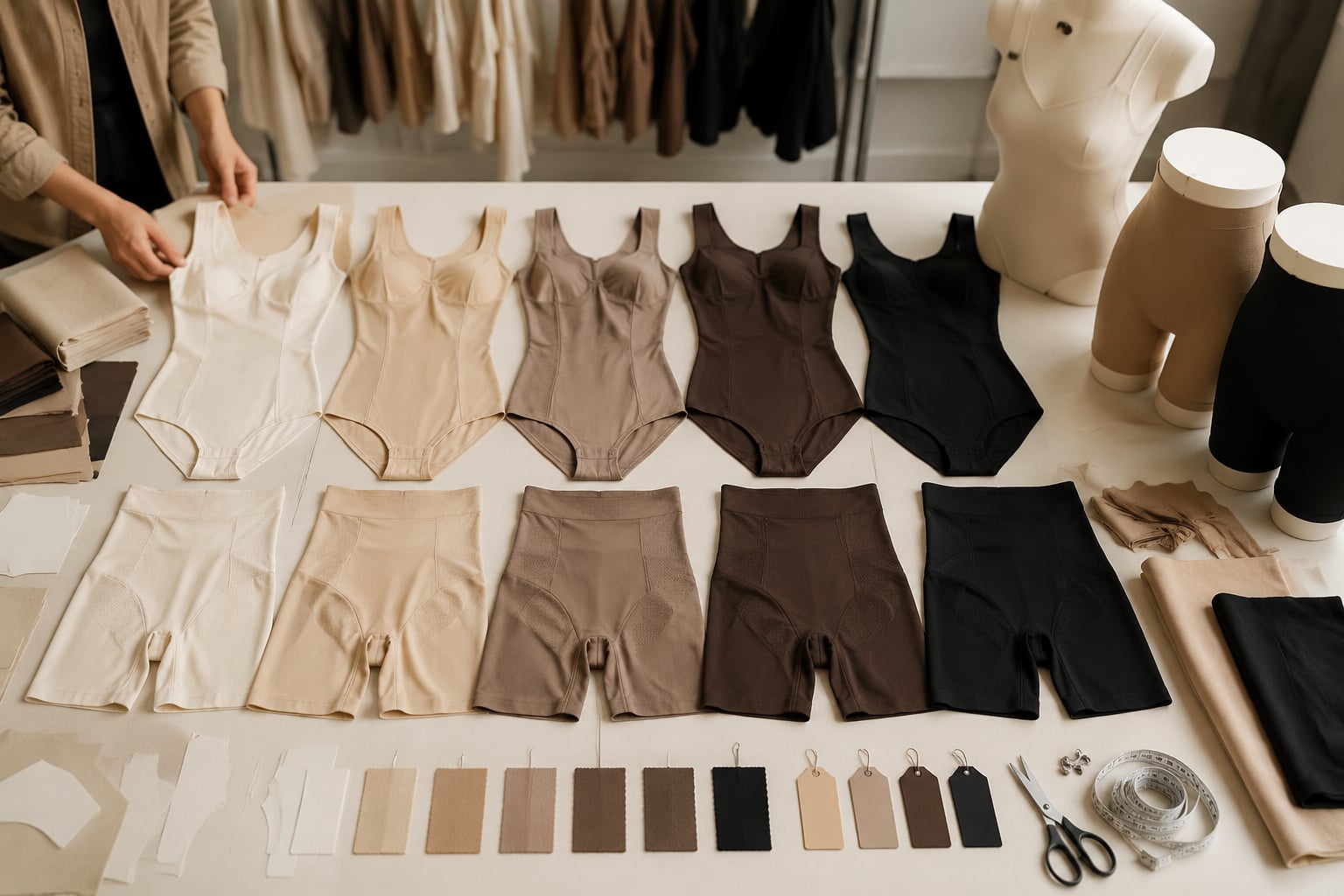
This makes hidden complexity visible. Three styles in three colours across seven sizes can quickly become 63 sellable SKUs. Even if total units satisfy the headline MOQ, too many low-volume variants can complicate cutting, packing, replenishment and inventory control.
Treat each added option as a demand commitment
Adding a second nude shade, a longer leg length or a different neckline can be commercially sensible. But it should not be treated as a minor design change. It may create a new fabric order, new cutting marker, new packaging artwork, new photography requirement and a lower sales volume per SKU.
A useful test is: Would this variant still be included if it required its own reorder decision? If the answer is no, it may be better introduced after core colours and fit have been validated.
Build a Demand-Led Size Curve
Size allocation should be based on expected customer demand, not an even split across the size range. Equal quantities often leave brands overstocked in slower sizes while running out of their best sellers.
Begin with the size system you will show customers. If selling in the UK, decide whether the product will be labelled in UK dress sizes, letter sizes such as S–XXL, or both. The garment’s stretch, compression level and fit intent matter: a firm-control body may produce a different purchasing pattern from a lighter everyday smoothing brief.
Build the initial curve from the best evidence available:
- Your own historical sales by comparable category and compression level
- Returns and exchange data, especially size-up and size-down patterns
- Customer surveys or pre-launch waitlists
- Sales data from a retail partner or distributor
- The size curve recommended by the supplier for a similar product, treated as input rather than proof
- The demographic and channel you intend to serve
If no reliable data exists, keep the first assortment focused and make the assumptions explicit. Do not present an estimated curve as confirmed demand.
Build a size-curve worksheet
Create one row for every approved size and fill it only with evidence from your own market and channel. Do not start with a generic percentage split and present it as demand. A useful working table is:
| Size | Evidence source | Planned units | Assumption to validate |
|---|---|---|---|
| Each approved size | Sales, returns, research or partner data | Enter your quantity | Record why this depth is appropriate |
Apply the curve to each colour only if the colour is expected to appeal similarly. In reality, size demand can vary by product type, control level and colour. A core black shaping short may justify a broad, deep curve; an experimental seasonal shade may not.
Protect fit inclusivity without creating unusable stock
Offering a wide size range is a product and brand decision, not simply an MOQ exercise. The challenge is ensuring each size receives enough units to be saleable and replenishable.
Consider these checks:
- Is the fit graded and tested across the intended range rather than only on one sample size?
- Does the supplier require a minimum quantity in every size?
- Will a low-volume size create a disproportionate amount of leftover branded packaging?
- Can a smaller initial volume in less certain sizes be increased on the next run using actual sales data?
- Is it better to launch fewer styles with a complete size range than many styles with inconsistent coverage?
Do not solve MOQ pressure by reducing size access without reviewing the commercial and customer implications. A narrower range may lower initial complexity, but it can also exclude intended buyers and weaken the usefulness of launch data.
Limit Early Colour and Trim Complexity
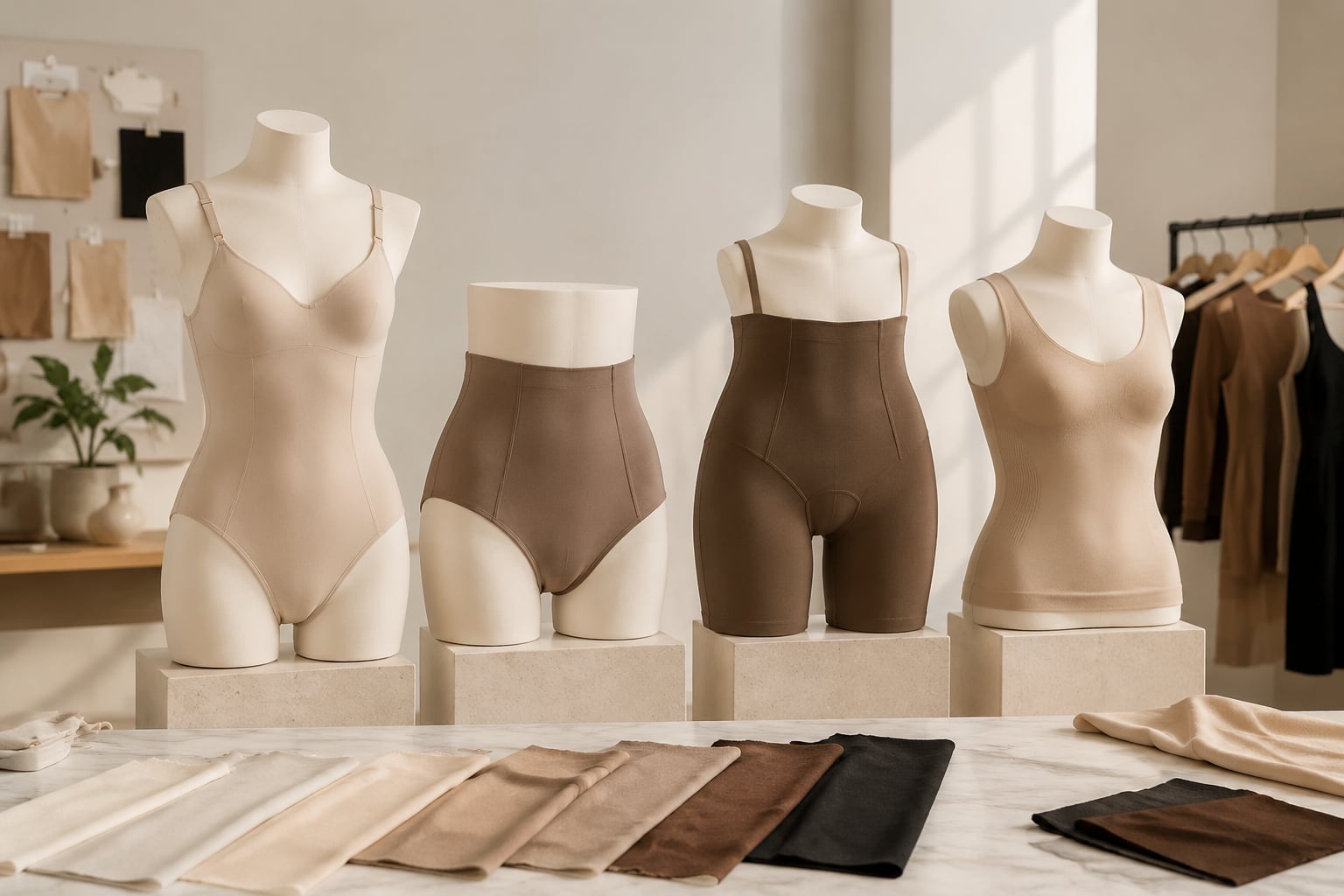
For an initial shapewear order, depth in core options is usually safer than breadth in speculative variants. Black and one well-considered skin-tone option often create a clearer starting point than several fashion colours with thin quantities, though the right decision depends on the intended market and positioning.
Each additional colour can affect:
- Fabric sourcing or dyeing
- Colour approval and lab dips
- Shade consistency between garment panels and trims
- Inventory allocation by size
- Product imagery and merchandising
- Packaging identification and warehouse picking
- Minimum quantities for branded components
Keep trims compatible across the first range
Trims include elastic, hook-and-eye closures, silicone or grip tape, threads, labels, gussets, hardware and seam tapes. A unique trim may improve a specific product, but it may also introduce a separate purchase minimum or increase lead-time risk.
Where the design allows, standardise components across styles:
- Use the same care-label format and brand label across the launch range.
- Use one or two compatible hook-and-eye options rather than a different closure for every body.
- Align elastic colours with core garment colours.
- Avoid custom hardware where a proven standard option meets the product requirement.
- Confirm whether trim colour matching requires a custom dye process.
This is not an argument against distinctive design. It is a reminder to spend complexity where it creates clear customer value, such as comfort, support, fit or durability, rather than on differences that are difficult to see or explain.
Account for Material and Dyeing Constraints
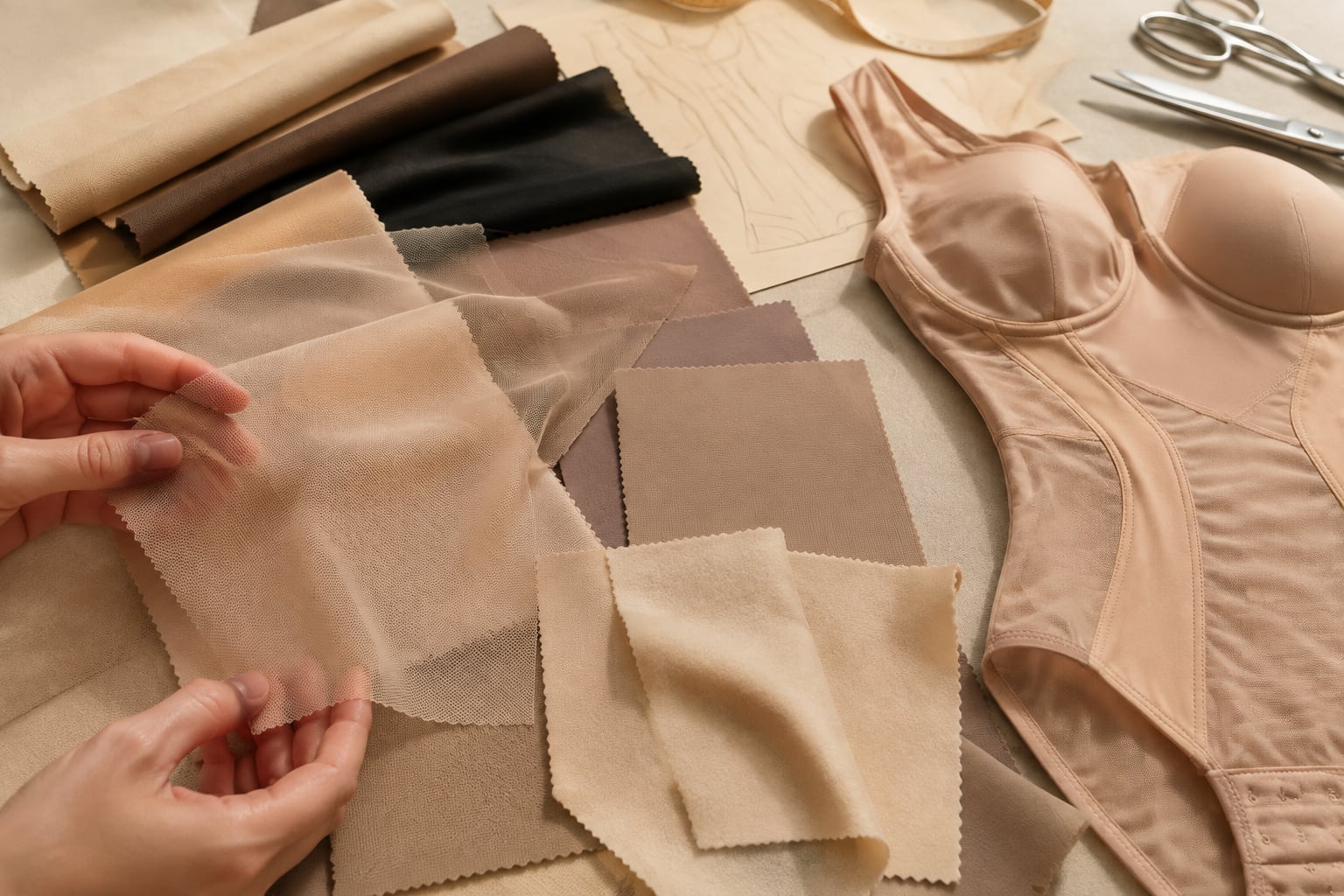
The garment MOQ is only one part of the production picture. Shapewear fabrics often use specialised fibre blends, high-stretch knits, power mesh, bonded materials or compression fabrics. Availability, minimum yardage and colour treatment can all affect what is possible.
Ask whether the proposed fabric is:
- Stocked by the supplier or ordered specifically for the project
- Available in the required colour without custom dyeing
- Suitable for the intended compression, opacity and recovery
- Consistent with the garment’s construction method
- Available in enough quantity for production allowance, testing samples and potential cutting wastage
- Likely to be repeatable for future orders
Stock colours and custom colours are not equivalent
Using an available fabric colour may reduce the number of variables in a first order. Custom colours can strengthen brand identity or improve skin-tone relevance, but they may require colour development, lab-dip approval and a minimum dye lot. Exact commercial requirements vary by mill, fabric and shade.
Also confirm that all visible elements can be aligned. A body fabric, mesh insert, elastic edge and thread may not accept colour in exactly the same way. “Matching nude” is not sufficiently precise; use approved colour standards or physical swatches and clarify acceptable tolerances.
Allow for consumption and yield
Fabric buying is normally based on consumption rather than a simple one-garment-to-one-length calculation. Size mix, pattern placement, cutting efficiency, rejects and construction all influence yield. Larger sizes may consume more fabric and may affect the total material requirement disproportionately.
Ask the supplier to explain whether its quotation and MOQ calculation account for the planned size curve. This is especially important for multi-panel bodysuits, longer-leg shorts and products with power-mesh lining or double-layer zones.
Plan Samples, Packaging and Labels
Samples are not merely an administrative stage before bulk production. They are the point at which fit, compression, comfort, construction, colour and branding assumptions should be checked before money is committed to a full run.
Plan for the possible stages separately:
- Development sample or prototype
- Fit sample
- Revised sample after fit comments
- Pre-production sample
- Colour or trim approval sample
- Packaging mock-up or packed sample
Confirm what materials will be used at each stage. A sample made from substitute fabric may be useful for construction review but not enough for final approval of compression, recovery, opacity or colour.
Packaging can carry its own minimums
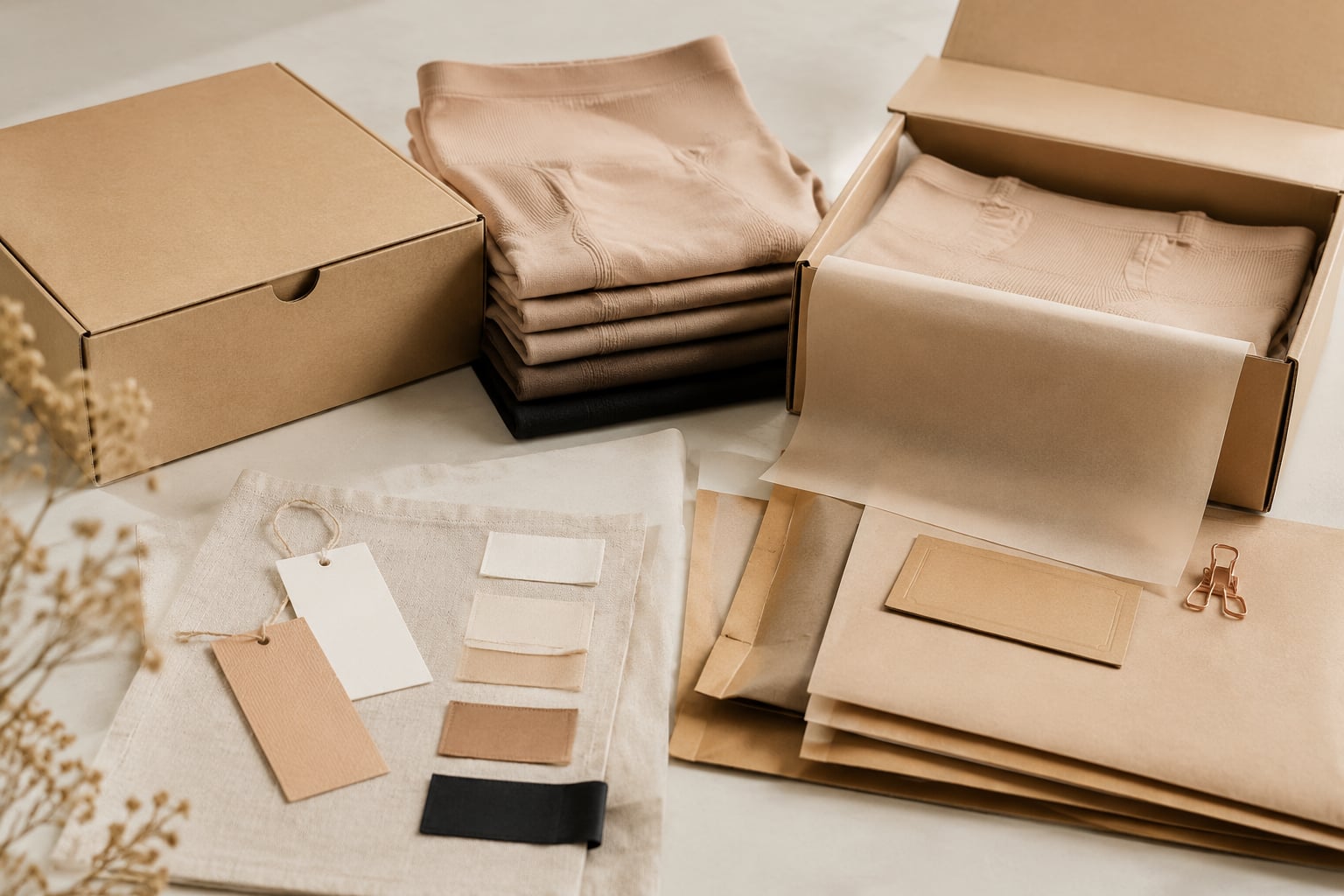
Branded boxes, printed polybags, size stickers, hangtags, barcode labels, garment labels and cartons may all be subject to separate supplier minimums. A box printed for every individual SKU can become expensive or leave obsolete stock if the assortment changes.
For a smaller first run, consider whether you need:
- One shared outer pack design plus variable size stickers
- A universal hangtag with a separate barcode label
- A standard inner bag rather than bespoke printed packaging
- Pack information that can be updated without discarding all packaging stock
The right solution must still support your product presentation and retail channel. If garments will be sold through retailers, distributors or marketplaces, verify their packaging, barcode and labelling requirements before printing anything.
For UK sale, check that fibre composition, care information, responsible business details and any relevant product information are prepared correctly for the route to market. Requirements can vary with the product, sales channel and territory, so obtain appropriate regulatory advice rather than relying on another brand’s label layout.
Compare Pilot Order and Scale-Up Options
A pilot order is useful when demand, fit or operational performance is still uncertain. It is not automatically the best choice: a lower-volume run may cost more per unit, limit custom options or use a narrower material selection. The decision should balance learning value against the cost of complexity.
| Option | Best suited to | Advantages | Limitations to examine |
|---|---|---|---|
| Small pilot order | New product, new brand or untested fit proposition | Limits inventory exposure and produces early sales feedback | Higher unit costs, restricted colour choice or reduced customisation may apply |
| Focused launch order | A validated core style with some demand evidence | Better efficiency while retaining manageable SKU count | Still requires disciplined size and colour planning |
| Larger scale-up order | Proven sales, stable fit and reliable replenishment data | Can support deeper stock, broader sizes and more custom elements | Greater cash tied up in inventory and more exposure if demand shifts |
| Stock-material trial | Testing construction or brand response | May avoid custom fabric or dye minimums | Less differentiation and possible limits on colour or fabric continuity |
When comparing options, assess more than unit price. Include the cost of samples, freight, duty and import arrangements where applicable, packaging, product testing, photography, storage, expected returns and the working capital tied up in slow-moving sizes or colours.
A pilot should be designed to answer questions. For example:
- Does the advertised level of control match customer expectations?
- Which size exchanges are most common?
- Does the nude shade meet customer needs?
- Do customers favour briefs, shorts or bodysuits?
- Is the packaging durable and clear enough for the sales channel?
- What reorder quantity would be viable after initial sales?
If the pilot cannot answer these questions because every SKU has only a handful of units, it may be too fragmented to provide useful learning.
Prepare an MOQ Discussion Checklist
Bring a clear assortment plan to the supplier discussion. This makes it easier to identify trade-offs before development work is advanced.
Product and volume
- What are the proposed styles, control levels and construction features?
- What is the total target quantity for the first order?
- What quantity is planned for each style and colour?
- Which variants are essential, and which are optional?
- Is there a target price range, excluding or including packaging as appropriate?
Sizing and fit
- What size system will be used for the target market?
- What is the proposed size curve by style and colour?
- Can sizes be mixed within a colour run?
- Are there minimums per individual size?
- How will fit, stretch and grading be reviewed before bulk approval?
Fabric, colour and components
- Is the fabric stock-supported or made to order?
- Does each colour require a dye minimum or colour approval process?
- What material quantity is needed after allowing for size mix and cutting yield?
- Which trims have separate minimums?
- Can components be shared across styles or colours?
- What happens if a specified material becomes unavailable?
Branding and packaging
- Which garment labels, care labels, hangtags and barcode labels are required?
- What are the minimums for each printed item?
- Can packaging be shared across variants?
- Who approves final artwork and packed samples?
- What retailer, marketplace or distributor requirements apply?
Commercial and production terms
- How is MOQ defined for this specific project?
- What is included in the quoted price and what is quoted separately?
- Are sample, development and tooling charges applicable?
- What is the process if the approved size curve changes before bulk production?
- What tolerances, quality checks and approval points will apply?
- What are the reorder conditions if a style sells through?
Record answers in the same document as the assortment plan. The objective is not to force every supplier into one model; it is to compare options on a like-for-like basis and make decisions with the full cost and operational effect visible.
Common Shapewear MOQ Planning Mistakes
The most avoidable mistakes come from treating MOQ as a single number rather than a system of linked decisions.
- Dividing quantity evenly across all sizes. This ignores likely demand and can create stockouts and excess inventory at the same time.
- Launching too many colours. Thin colour runs may meet a total MOQ but fail to provide enough depth to sell or replenish.
- Ignoring component minimums. Custom labels, closures and packaging can be more restrictive than the garment itself.
- Approving a fit in only one size. Shapewear relies on stretch, recovery and compression; grading deserves close scrutiny.
- Using a custom colour before validating the core offer. Distinctive shades may be worthwhile, but only after understanding dye and repeatability requirements.
- Comparing prices without comparing assumptions. One quotation may use stock fabric and standard packaging, while another assumes custom-developed materials and printed boxes.
- Leaving reorder planning until stock arrives. A successful first order can still produce lost sales if fabric or trims cannot be repeated promptly.
A workable plan usually begins with one or two clearly differentiated styles, a disciplined core colour strategy and a size curve built from the best available evidence. It then expands as customer demand, fit feedback and reorder data become clearer.
For brands evaluating development routes, S-SHAPER UK’s OEM and ODM shapewear services can be used to discuss how the proposed MOQ should align with the product scope. Reviewing the available shapewear product categories can also help teams simplify a first assortment, while factory capabilities can inform questions about materials, construction and production planning.
Use the checklist above to turn your intended range into a supplier-ready brief. A good MOQ discussion should leave you with a clear answer to three questions: what must be ordered, what can be mixed, and which options should wait until the next production run.