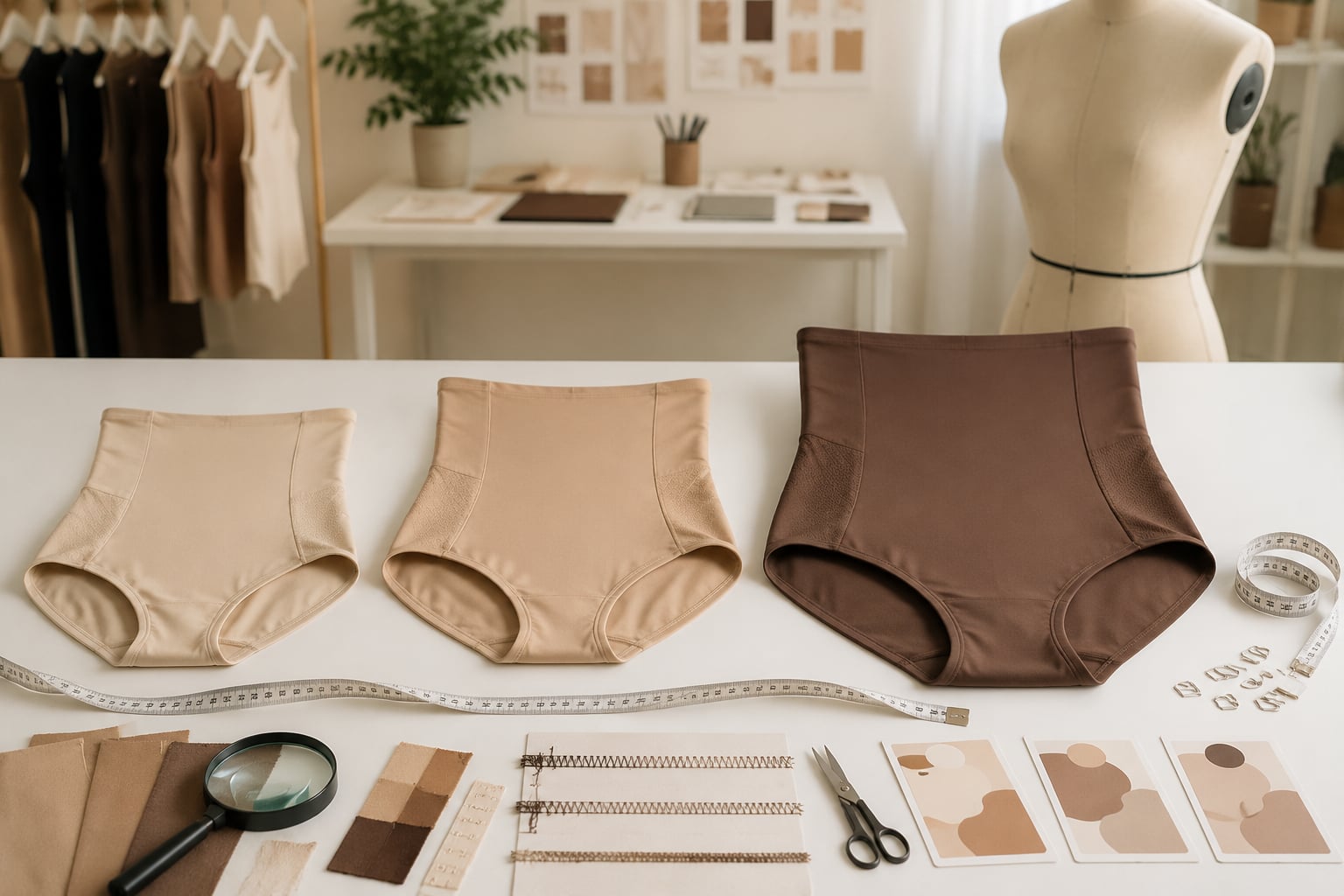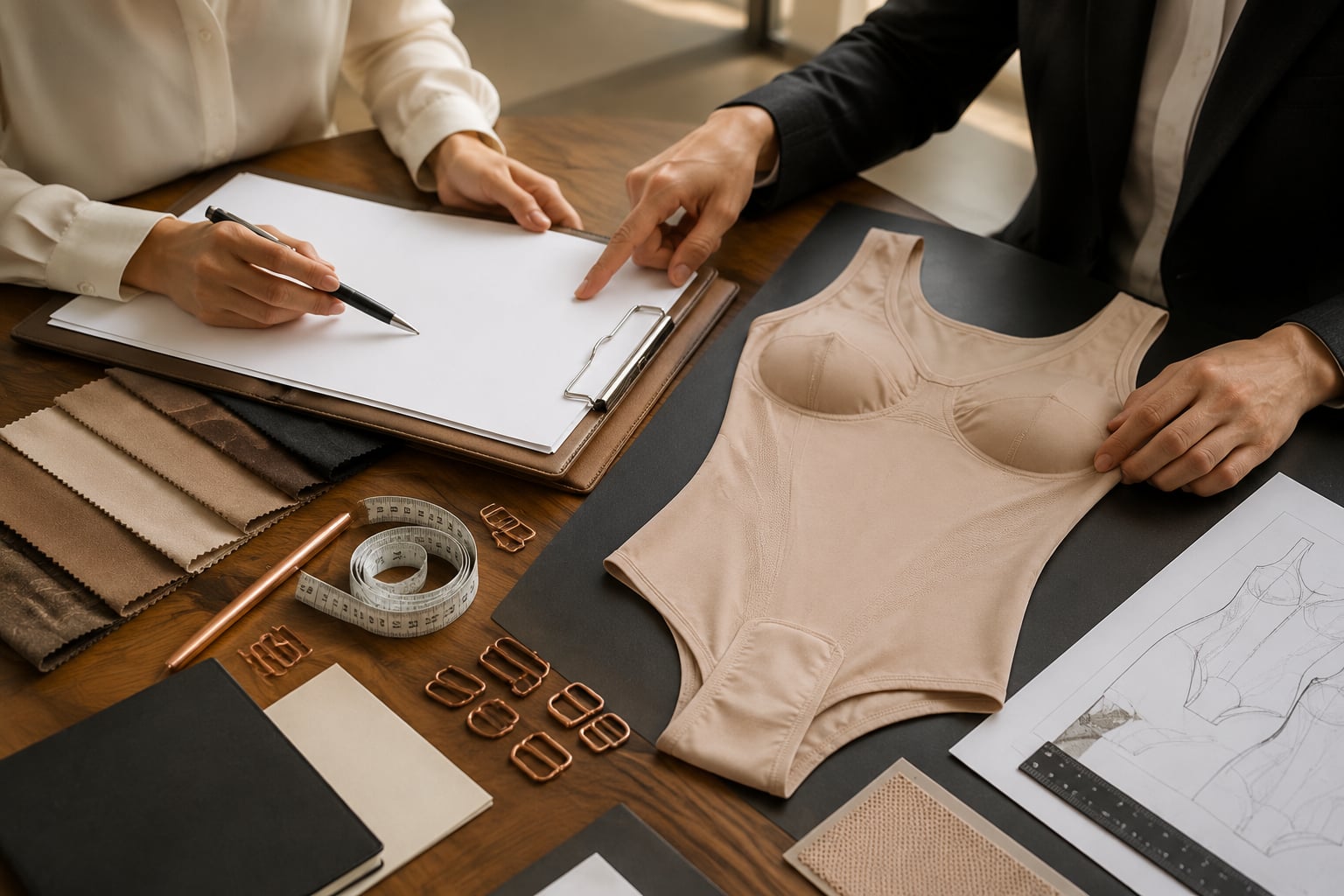
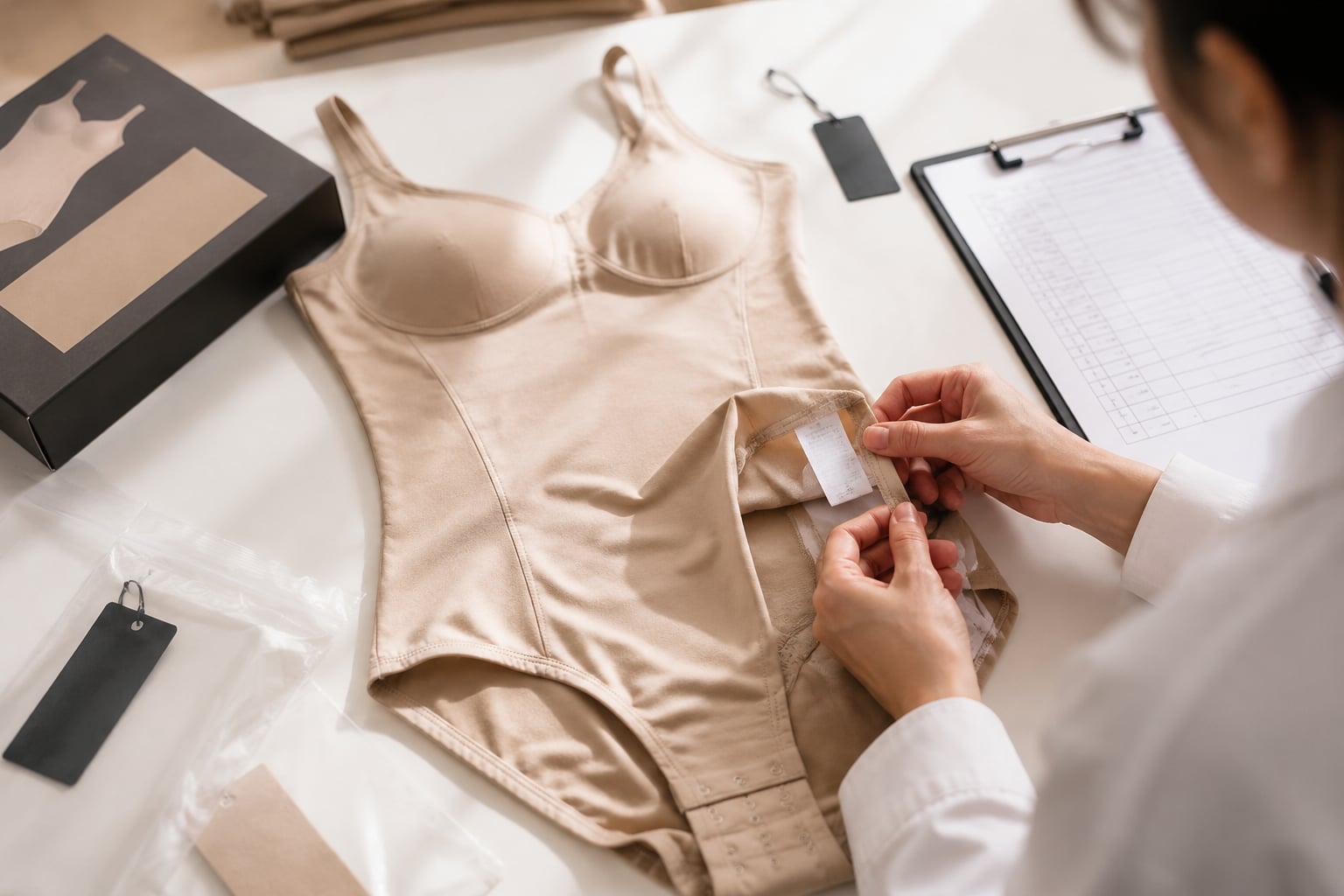
For Great Britain, the EU General Product Safety Regulation (GPSR) is not the governing framework for shapewear. Brands selling consumer shapewear in England, Scotland and Wales should instead work to the UK’s General Product Safety Regulations 2005 and other applicable UK consumer, labelling and chemicals rules.
The practical expectation is similar: only place safe products on the market, identify the business responsible for them, retain evidence supporting safety, ensure traceability and act quickly if a product creates a risk. Northern Ireland is different: EU product-safety requirements, including the GPSR, may apply there. This guide is general information, not legal advice; check current official guidance before launch.
Quick answer: Do UK product-safety rules apply to shapewear?
Yes. Shapewear sold to UK consumers must be safe in normal and reasonably foreseeable use. This includes bodysuits, shaping shorts, waist cinchers, leggings, compression slips, bras, maternity support garments and post-purchase support styles marketed for everyday consumer use.
For most ordinary textile shapewear in Great Britain, there is no single “GPSR certificate” to obtain. Compliance is an ongoing product and supply-chain process. A brand must be able to show that it has considered foreseeable risks and taken proportionate steps to control them.
Key areas normally include:
- fabric composition, chemical safety and colour fastness;
- skin contact, irritation, allergy and sensitisation risks;
- drawstrings, boning, hooks, zips, silicone grips and other components;
- seam strength, garment durability and small-part detachment;
- fit, compression level and product instructions;
- traceability through orders, batches and suppliers;
- clear business identification and consumer-facing safety information;
- a documented route for investigating complaints and carrying out corrective action.
Claims matter too. A garment sold as “medical”, “post-operative”, “treating”, “correcting” or “improving circulation” may fall outside the scope of ordinary fashion shapewear and trigger additional requirements. Do not use health or therapeutic claims unless the product classification and evidence have been assessed properly.
Distinguish the manufacturer, importer, retailer and fulfilment provider
A common compliance failure is assuming that the factory, marketplace or warehouse is legally responsible for the finished product. Each party has a different practical role, and contracts should reflect that reality.
| Role | Typical shapewear activity | Core practical responsibility |
|---|---|---|
| Manufacturer | Makes the garment or has it made under its name or trade mark | Designs and produces a safe product, controls specifications and maintains supporting evidence |
| Importer | Brings goods into Great Britain from outside the UK | Checks that the product is suitable for the GB market and that required identification and information are present |
| Distributor or retailer | Supplies products without changing them materially | Takes reasonable care, preserves product information and does not knowingly supply unsafe goods |
| Marketplace seller | Offers the product directly to the consumer online | Must provide accurate trader and product information and manage safety issues affecting its listings |
| Fulfilment provider | Stores, picks and dispatches stock | Follows agreed stock-control, quarantine and recall procedures; this does not automatically transfer product responsibility |
The legal label is not decided solely by a contract heading. For example, a retailer that sells a garment under its own brand may be treated as the manufacturer in practice, even if an overseas factory physically produced it.
Before production, document who owns each decision: technical specification approval, component substitutions, testing, label sign-off, import checks, online listing approval, complaint handling and recall authority.
For an OEM or private-label project, this division should be agreed before bulk production rather than after a safety complaint. S-SHAPER supports OEM, ODM and private-label shapewear development through series production; its published starting point is 500 units per project, while the final product, colour, size, packaging and commercial allocation should be confirmed in the quotation.
Appoint the right UK economic actor — and consider Northern Ireland separately
For Great Britain, ordinary shapewear does not generally require the EU GPSR concept of an EU-based “responsible person”. However, a business selling into GB still needs a clearly identifiable producer or importer and a reliable UK contact route for regulators and consumers.
If goods are imported from outside the UK, establish in writing:
- who is the importer of record;
- whose name and address will appear on the garment, packaging or accompanying documents;
- who holds the technical and traceability records;
- who can stop sales, isolate stock and communicate with enforcement bodies; and
- who funds testing, returns, corrective action and recalls.
Northern Ireland should not be treated as simply another GB delivery region. Its product-safety regime can differ because EU rules apply in relevant areas. A brand serving both GB and Northern Ireland may therefore need separate compliance review, product information arrangements and market-access decisions.
Likewise, selling the same shapewear into the EU requires an EU-specific assessment. Do not assume a GB label, UK-based contact or GB product file alone will meet EU requirements.
Plan product identification and contact details from the start
A shapewear garment should be identifiable after it has left the warehouse. The identifier can be on the product, a sewn-in label, a swing tag, packaging or accompanying documentation, depending on what is practical and durable for the product.
At a minimum, plan for:
- a product or model name;
- a style or SKU reference;
- a batch, lot or production code where appropriate;
- size and colour identification;
- the brand or manufacturer identity;
- a postal address or clear contact details for the relevant business;
- care and fibre-content information; and
- warnings or use instructions where needed.
For compression garments, the identifier should connect the finished unit to the approved bill of materials. A change from one elastane yarn, dye house, silicone strip, hook supplier or boning material to another can alter the risk profile. A style name alone is rarely enough for effective investigation.
Do not rely on a QR code as the only route to essential safety information. Digital information can be helpful for expanded instructions, but consumers must still receive clear, accessible information with the product where it is needed for safe use.
Textile composition is a separate but closely connected issue. Build it into label approval rather than treating it as a last-minute packaging task. Review these textile labelling considerations for shapewear alongside your product-safety checks.
Build a risk assessment and technical product file
The UK’s general safety framework does not prescribe one universal technical-file template for ordinary shapewear. Nevertheless, a structured product file is the most practical way to demonstrate that foreseeable risks were assessed and controlled.
Create the file per style, then manage controlled variations for colourways, fabric weights, trims and size ranges.
What a useful shapewear safety file contains
Include:
- product description, intended user and intended use;
- design drawings, measurement chart and graded size specifications;
- fibre composition and full bill of materials;
- supplier details for fabric, trims, elastic, silicone, hooks, boning and packaging;
- risk assessment covering normal and foreseeable misuse;
- sample approvals and change-control records;
- relevant test reports and test methods;
- production inspection records;
- labels, care instructions, warnings and online copy;
- batch and shipment records;
- complaint, incident and corrective-action records.
The evidence should match the garment’s risks. A seamless shaping brief without hardware may need a different assessment from a high-compression bodysuit with adjustable hooks, underwire, silicone grip tape and plastic packaging attachments.
Risks worth assessing for shapewear
Consider, at minimum:
- Skin contact: irritation from dyes, finishes, latex-containing components, adhesives, silicone treatments or rough seams.
- Mechanical discomfort or injury: sharp edges, exposed wire ends, broken boning, failed hooks, seam rupture or excessively tight components.
- Fit and use: whether the size guidance is clear, whether consumers could wear the garment incorrectly, and whether compression claims encourage unsafe use.
- Children and vulnerable users: whether the design, packaging or marketing could expose children to small parts, cords or inappropriate use.
- Flammability and heat exposure: whether the fabric or construction creates foreseeable risks in its intended setting.
- Packaging: detachable clips, pins, ties, bags and inserts can create risks separate from the garment.
Testing should be risk-led, not a generic box-ticking exercise. Ask the laboratory or quality team what the result means for the actual material, construction and user group. A pass result from an outdated or unrelated sample does not automatically support a changed production garment.
A factory quality plan can help turn design controls into repeatable production checks. Review the practical elements of a shapewear quality-assurance process when deciding what should be inspected before shipment.
Secure traceability through batches, orders and suppliers
Traceability determines whether a brand can make a narrow, effective correction instead of withdrawing every product that looks similar. It should work in both directions: from a consumer complaint to the production batch, and from a supplier issue to the affected customer orders.
A practical traceability chain is:
consumer order → SKU and size/colour → fulfilment batch → finished-goods lot → production order → component lots → approved suppliers
Keep records long enough to investigate products still likely to be in use. The appropriate retention period depends on the product, channel and commercial arrangements, but it should not end merely because a seasonal collection has sold through.
Traceability controls to set before launch
- Allocate a unique production order number to every bulk run.
- Record fabric and critical-trim lot numbers against that order.
- Preserve approved pre-production and sealed reference samples.
- Prevent unapproved substitutions of elastic, lining, hooks, labels or packaging.
- Record the quantity produced, inspected, rejected, shipped and returned.
- Make warehouse systems capable of locating affected inventory quickly.
- Link marketplace fulfilment stock to the same batch records.
- Define how returned garments and consumer complaints are coded and reviewed.
For private-label buyers, ask the manufacturer whether it can retain production records, component information and inspection evidence for the agreed period. The answer should be reflected in the supply agreement and the purchase-order documentation.
Understanding the supplier’s production controls is as important as reviewing a sample. A visit or structured audit may be appropriate for higher-risk or higher-volume projects; see how a shapewear factory operates for areas that can be assessed in a production discussion.
Present required information correctly in online listings
An online listing should not conceal information that a consumer needs to make a safe and informed purchase. Product pages, marketplace listings, social-commerce shops and catalogue feeds should be governed by one controlled source of product data.
For shapewear, the listing should normally make clear:
- the trader or seller identity and contact route;
- the product’s brand, style or model reference;
- accurate fibre composition;
- available sizes and a meaningful size guide;
- care information where this affects safe use or garment performance;
- material warnings, such as latex-containing components where relevant;
- any necessary usage warning;
- the country-specific delivery market where product compliance differs;
- a fair description of compression, support and intended wear.
Avoid claims that create untested safety expectations. Examples include “guaranteed waist reduction”, “medical-grade”, “improves circulation”, “post-surgery safe” or “safe to wear all day” unless they are properly substantiated and appropriately regulated.
Common listing mistakes include copying a supplier’s generic description, omitting a known material allergen, mixing fibre compositions across colourways, showing an inaccurate size chart, or leaving a recalled SKU live in an automated feed.
Prepare for complaints, incidents, recalls and corrective action
A complaint is not automatically evidence that a product is unsafe, but repeated complaints can reveal a pattern. Treat safety-related complaints as structured product data rather than ordinary customer-service cases.
Create a procedure before the first sale. It should define who assesses reports, who can pause sales, how affected batches are identified and who makes external notifications when required.
A proportionate response process
- Receive and preserve evidence. Record product identifier, batch, purchase channel, issue, photographs and whether injury occurred.
- Triage the risk. Separate fit dissatisfaction from possible chemical, mechanical, fire, choking or injury concerns.
- Contain the issue. Pause relevant listings, warehouse dispatches or replenishment where a credible safety concern exists.
- Investigate the supply chain. Check retained samples, production records, component lots and similar complaints.
- Choose corrective action. This could include corrected instructions, product modification, withdrawal from sale, consumer contact, repair, replacement or recall.
- Notify the appropriate authority where required. In Great Britain, producers must take action when they know a consumer product is dangerous, which can include informing the relevant enforcement authority. Obtain current official guidance for the appropriate route.
- Verify effectiveness. Confirm listings are removed, affected stock is quarantined and consumers receive clear instructions.
A recall notice should identify the product precisely, explain the hazard plainly, state what consumers should do, and provide a usable contact route. Vague messages such as “quality issue” can undermine consumer safety and delay an effective response.
UK product-safety checklist before first shapewear sales
Use this checklist for each product family before launch in Great Britain:
- Confirm the product is ordinary consumer shapewear, not a regulated medical device or other specialist product.
- Identify the legal manufacturer, GB importer where relevant, seller and fulfilment responsibilities.
- Complete a documented risk assessment for the specific design and intended user.
- Obtain and review evidence for materials, components and relevant finished-garment risks.
- Approve the bill of materials, measurements, construction details and packaging.
- Put product, model and batch identification into the garment or its accompanying materials.
- Add accurate business identification and contact information.
- Verify fibre composition, care information, size guidance and safety warnings.
- Check that online product pages match the final, approved physical product.
- Establish records linking consumer orders, stock, production orders and component suppliers.
- Train customer-service and warehouse teams to escalate safety complaints.
- Prepare a stop-sale, withdrawal and recall procedure.
- Review Northern Ireland separately if products will be supplied there.
- Keep current official UK guidance under review as rules and enforcement expectations can change.
FAQ: UK product-safety duties for shapewear brands
Does shapewear need UKCA marking?
Ordinary fashion shapewear does not normally require UKCA marking simply because it is shapewear. UKCA applies to particular regulated product categories, not to all consumer goods. Be cautious if the garment includes electrical components, is marketed for a regulated medical purpose or falls into another specifically regulated category.
Must the factory’s name appear on the garment?
The relevant business identification should be clear and durable, but the correct arrangement depends on who is the manufacturer or importer in practice and on the applicable rules. Private-label brands should agree the label content, packaging information and documentary responsibility before production.
Is an EU GPSR-compliant product automatically compliant in Great Britain?
No. EU GPSR compliance can provide useful safety evidence, but it does not replace a GB compliance assessment. Great Britain and Northern Ireland have different legal arrangements, and the product information, responsible business details and market-specific obligations may differ.
What tests should a shapewear brand request?
There is no universal test package that suits every design. Start with the garment’s material, construction and foreseeable risks. Common areas for consideration include chemical safety, restricted substances, colour fastness, seam and trim strength, dimensional stability, durability and component integrity. Select methods with a qualified laboratory or competent quality professional based on the product specification.
Are marketplace sellers exempt if the platform stores and ships the goods?
No. Outsourcing fulfilment does not remove the seller’s need to ensure accurate listings, traceability and a workable response to safety issues. Confirm how the platform will help remove listings, quarantine stock and identify buyers if corrective action becomes necessary.
What is the most important document to have before placing an order?
For a new private-label style, start with a controlled product specification. It should bring together measurements, approved materials, construction, labels, packaging, test requirements, quality tolerances and batch identification. That specification provides the baseline for both safe production and later investigation.
A robust launch process combines product development, supplier controls and clear ownership after sale. Before committing to bulk production, ask for the proposed specification, batch-identification method, quality checks and change-control process to be reviewed against your intended UK sales channels.