Reducing shapewear returns requires more than adding a larger size chart. Returns usually reflect a gap between the customer’s expectation and the product’s actual fit, compression, coverage or appearance. The most effective approach is to connect return data with garment measurements, customer segments, product-page content and pre-production testing.
This guide is for shapewear brands, retailers, distributors and sourcing teams buying or developing products for online sales in the UK. Before requesting a quotation, define the target customer, intended use, size range, compression level, materials or reference garments, packaging requirements, target quantity and delivery window. A supplier can then assess the project against a clear product brief rather than a general request for “comfortable shapewear”.
Quick answer: how do you reduce shapewear returns in online retail?
To reduce shapewear returns:
- Classify return reasons by style, size, body area, customer segment and sales channel.
- Build size guidance around body measurements, not only UK dress sizes.
- Explain compression in practical terms, including firmness, coverage and how the garment should feel when correctly fitted.
- Show realistic model information, such as height, measurements, usual size and the size worn.
- Structure product pages around use cases, not just fabric and feature lists.
- Test fit finders and pre-sale support using real customer questions.
- Carry out wear tests and fittings across several sizes before approving bulk production.
- Feed return data back into grading, quality control and future orders.
A product page can clarify expectations, but it cannot compensate for incorrect grading, inconsistent measurements or a garment that does not match its intended compression level. Those issues need to be addressed during sampling and production approval.
Analyse return reasons by style, size and customer segment
Start with a return-reason report that goes beyond “too small” or “did not like it”. Those labels are often too broad to identify the underlying problem.
Useful categories include:
- Too tight at the waist, thigh, bust or gusset
- Rolls down or rides up
- Difficult to put on or remove
- Compression feels weaker or firmer than expected
- Visible under clothing
- Leg length or torso length is unsuitable
- Fabric feels too warm, rough or restrictive
- Size selected from the size chart did not fit
- Product appearance differs from images
- Coverage does not match the customer’s intended outfit
- Product damaged, marked or inconsistent with the approved sample
Review these reasons by:
- Product model and colour
- Size and size combination
- Customer height and body shape, where available
- First-time versus returning customers
- Acquisition channel and marketplace
- Intended use, such as everyday smoothing, occasionwear or post-outfit layering
- Batch, production date and supplier lot
A high return rate in one size does not automatically mean that size should be removed. It may indicate a grading issue, a poorly placed control panel, inaccurate copy or customers choosing by their usual dress size rather than their measurements.
Look for patterns such as:
| Pattern in return data | Possible cause | What to investigate |
|---|---|---|
| Returns concentrated in one size | Grading or size-chart problem | Garment measurements, stretch range and customer measurements |
| Several sizes returned as too tight | Compression expectation or base pattern issue | Intended compression, fabric recovery and wearing instructions |
| Returns concentrated in tall customers | Torso or leg length limitation | Rise, gusset, straps and body-length grading |
| “Rolls down” across multiple sizes | Construction or body-area compatibility | Waist finish, panel height and edge tension |
| Customers say “not as shown” | Product-page expectation gap | Images, model details, coverage and compression wording |
| More returns from one sales channel | Channel-specific audience or content issue | Listings, size guidance and customer questions |
Keep general diagnosis separate from supplier confirmation. Your analysis can identify a likely issue, but the supplier should confirm whether the approved pattern, measurement chart and production sample support the intended fit.
For broader planning, review the guidance on shapewear size planning for the UK market and adapt the principles to your own customer data and size architecture.
Improve the measurement chart and measuring instructions
A useful shapewear size chart should tell shoppers what to measure, where to measure and how to choose when they sit between sizes. It should not rely solely on UK dress sizes such as 10, 12 or 16, because dress-size labels vary between brands and do not describe height, torso length or body proportions.
Include, where relevant:
- Bust or underbust measurement
- Natural waist measurement
- Hip or fullest-seat measurement
- Thigh measurement for shorts and bodysuits
- Torso length for bodysuits
- Inside-leg or garment length where it affects coverage
- Suggested size range
- The measurement unit used, ideally centimetres with inches as a secondary reference for UK shoppers
The measuring instructions should be visible near the size selector, not hidden several clicks away. Explain that the tape should sit flat without compressing the body and that measurements should be taken while standing naturally. A simple diagram or short video can be more useful than a paragraph of technical wording.
Body measurements versus garment measurements
Do not present garment measurements as if they were body measurements. A shapewear garment may be smaller than the body it is designed to fit because the fabric stretches, but the amount of stretch and the intended compression vary by style and material.
For each product, confirm:
- Whether the chart refers to body or finished-garment measurements
- The measurement tolerance permitted in production
- The stretch range used during fit approval
- Which measurement takes priority when a customer falls between sizes
- Whether the advice changes for a long torso, fuller hip or different height
A simple “size up if between sizes” message may reduce some returns, but it can also weaken support if applied too broadly. The correct rule should be validated against the actual pattern, fabric and compression target.
Explain compression and fit in practical language
“Firm control” or “high compression” can mean different things to different customers. One shopper may expect strong shaping, while another expects an easy-to-wear smoothing layer. If the product page does not explain the sensation, customers may choose a product that is technically the right size but wrong for their needs.
Describe:
- The areas controlled or smoothed
- Whether the garment is intended for light, moderate or firm shaping
- How close-fitting it should feel
- Whether it is suitable for extended everyday wear
- Whether it is designed to create a visibly sculpted effect or a smoother base under clothing
- Whether the garment has targeted panels, all-over stretch or different zones of support
- How to put it on without overstretching or twisting the garment
Avoid unsupported medical or therapeutic claims. Unless a product has been assessed for a specific regulated purpose, use product language such as “smoothing”, “shaping” or “support” rather than implying treatment or guaranteed physical outcomes.
A clear fit explanation might say that the garment should feel secure without sharp pressure, restricted breathing, numbness or persistent pinching. It should also state what customers should do if the garment cannot be pulled into position or if the edges do not sit flat.
The supplier should confirm the intended compression description for the specific style. Ask for the approved sample, pattern reference, fabric composition, stretch direction and any internal panel construction that affects the final feel. These details should not be inferred from a product photograph.
Show model measurements, worn size and silhouette realistically
Model photography helps shoppers estimate proportion, but only when the supporting information is complete. At minimum, show:
- Model height
- Bust, waist and hip measurements where appropriate
- The size worn
- The model’s usual clothing size, if it is relevant and accurately stated
- The garment style and colour
- Front, side and back views where coverage or rolling may matter
Use a range of body shapes and heights when the product is intended for a broad audience. One model cannot demonstrate how a bodysuit, high-waisted brief or thigh shaper will fit across every torso length and hip proportion.
Images should also show the product in a realistic context. A close crop may hide the waistband, gusset, leg opening or strap placement. Include detail views of:
- Waist and leg edges
- Closures and gussets
- Straps and adjusters
- Fabric texture and opacity
- Areas that may show under close-fitting clothing
Do not digitally alter the silhouette in a way that gives shoppers an unrealistic expectation of the product’s effect. The image should support the written fit explanation rather than promise a result that the garment cannot consistently deliver.
Structure product pages around use cases, not only features
A low-return product page answers the customer’s practical questions in the order they arise. Feature lists such as “seamless”, “breathable” and “high stretch” are useful, but they do not explain whether the garment is right for a particular outfit or body shape.
A strong page structure can include:
-
What the product is for
For example, smoothing under fitted dresses, light shaping beneath workwear or fuller coverage around the midsection. -
Who it may suit
Include body-area coverage, rise, leg length, torso construction and the level of shaping. -
How it should fit
Explain the expected firmness, edge placement and whether the customer should prioritise waist, hip or bust measurements. -
How to choose a size
Put the measurement chart and measuring instructions beside the selector. -
What it looks like when worn
Use complete, unambiguous photography and model details. -
How to wear and care for it
Include putting-on guidance, washing instructions and any limitations relevant to the fabric or construction. -
What to expect
Explain compression, seams, possible garment visibility and whether the product is suitable for a particular clothing style. -
Common questions
Cover rolling, toilet access, layering, returns and size exchanges in clear language.
This structure also helps marketplace listings and customer-service teams remain consistent. Product copy, packaging, care labels and support scripts should not describe the same garment in conflicting ways.
For teams reviewing their wider online operation, the e-commerce business solutions page shows how product information, product development and online sales requirements can be aligned.
Test fit finders, size advice and pre-sale support
A fit finder should make a decision easier, not simply reproduce the size chart in a different format. Test it with realistic questions:
- What happens if waist and hip measurements indicate different sizes?
- How does the tool handle a long or short torso?
- Can a shopper choose “between sizes”?
- Does the result change for a bodysuit compared with a brief?
- Are customers asked for measurements they can reasonably provide?
- Does the recommendation explain why a size was selected?
- Is the advice consistent across your website, marketplaces and customer-service channels?
Use anonymised historical orders and support questions to test the logic. If customers repeatedly ask whether a garment rolls down, works under a particular dress or suits a fuller thigh, those questions belong on the product page.
Pre-sale support should use a defined response framework. A credible answer should refer to the customer’s measurements, the specific style and its intended compression. Avoid giving a confident size recommendation when the available information is incomplete.
Track whether fit-finder users have different return reasons from shoppers who select a size manually. This helps distinguish a genuinely useful tool from one that only adds interface complexity.
Conduct wear tests and multi-size fittings before bulk production
A pre-production fitting should test more than whether one sample looks good on one person. Include the intended size range and, where possible, people with different heights, torso lengths and body proportions.
Assess:
- Putting on and removing the garment
- Waistband or edge stability during movement
- Rolling, riding up and pinching
- Compression consistency
- Coverage while standing, sitting and walking
- Gusset position and comfort
- Strap adjustment and bust fit
- Visibility under intended clothing
- Fabric recovery after wear
- Appearance and measurements after washing, if care instructions require it
Use a structured fit-test form. Record the tester’s body measurements, worn size, observations, severity of each issue and whether the issue is acceptable, requires revision or is a reason to reject the sample.
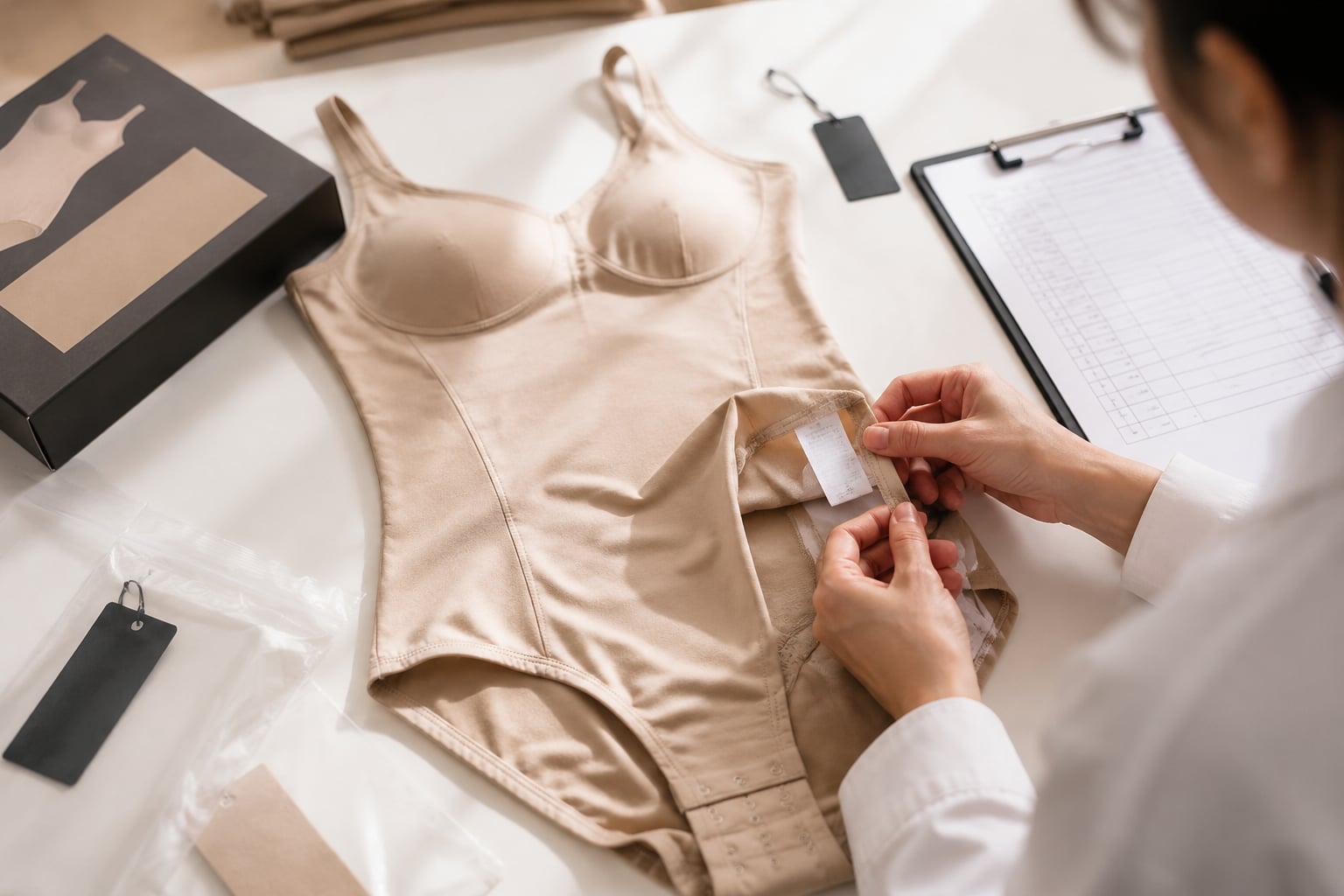
Do not treat a photoshoot sample as final approval. The sample may be made in one size, use a different fabric lot or have temporary finishing. Before approval, compare the sample against the specification and record the changes required.
The shapewear sample approval checklist can help sourcing and product teams organise this gate. The specific measurement tolerances, test conditions and approval documents still need to be agreed for each project, including projects supplied by S-SHAPER UK.
Feed feedback into grading, quality control and repeat orders
Return data has commercial value only when it changes the next product decision. Create a closed feedback loop between e-commerce, customer service, technical design, quality control and purchasing.
Possible actions include:
- Revising grade rules between sizes
- Adjusting rise, torso length or leg opening
- Changing edge construction or elastic tension
- Rewriting size advice for a particular style
- Adding a second model with different proportions
- Changing the compression description
- Updating packaging or wear instructions
- Introducing a style-specific fit finder rule
- Adding a production inspection point for measurements that affect fit
For repeat orders, compare the new production sample with the approved reference sample. Confirm which changes are allowed and which are not. A colour, fabric, trim or packaging change may affect fit or customer expectations even when the product name remains the same.
Buyer-ready quote and approval inputs
Before sending a supplier brief, prepare the following information:
| Input to provide | Why it matters | Supplier response to request |
|---|---|---|
| Product type and intended use | Defines coverage and fit priorities | Recommended construction and open questions |
| Target customer and body-profile assumptions | Supports grading and model selection | Proposed measurement framework and risks |
| Target market and size range | Prevents ambiguous size labels | Body-measurement chart and grading basis |
| Compression or shaping objective | Aligns the physical feel with product copy | Sample interpretation and points to validate |
| Material or reference garment | Establishes hand feel, stretch and appearance | Material options and compatibility notes |
| Quantity and commercial allocation | Supports production planning | Confirmation of the project basis and quotation assumptions |
| Colour and packaging requirements | Affects sampling and final commercial setup | What is included, excluded or pending confirmation |
| Product-page claims and images needed | Connects product development with merchandising | Measurements and information available for PDP use |
| Wear-test requirements | Sets the pre-production gate | Sample sizes, documentation and revision process |
| Delivery window and destination | Clarifies the logistics brief | Items still requiring confirmation before order |
When comparing a S-SHAPER UK quotation with other suppliers, treat the model, colour, size, packaging and commercial allocation as project-specific details to be confirmed in writing rather than assumptions.
FAQ: reducing shapewear returns
What is the most common reason for shapewear returns?
Fit-related problems are a frequent operational category, but “poor fit” can mean several different things. Separate incorrect size selection from rolling, uncomfortable compression, unsuitable length, poor coverage and an expectation gap created by the product page.
Should customers size up in shapewear?
Not as a universal rule. Sizing up may help when a customer is between sizes or prioritises comfort, but it can reduce shaping and cause movement if the garment is designed to fit firmly. The advice should be based on the specific style, fabric and body measurements.
Should a size chart use UK dress sizes?
UK dress sizes can be included as a reference, but body measurements should be the primary method. Labels vary between brands, while waist, hip, bust and length measurements give shoppers a more useful basis for selection.
How can product images reduce returns?
Show the complete garment, relevant construction details and realistic worn views. Include the model’s height, measurements and size worn. Use front, side and back views where the waistband, leg openings, straps or coverage affect the buying decision.
How many sizes should be wear-tested?
Test every commercially important size before bulk approval where possible, with additional attention to the smallest, largest and middle sizes. If resources are limited, do not test only one sample and assume the grading will perform consistently across the range.
What should a supplier confirm before production?
Request the approved sample, technical measurement chart, grading basis, material details, compression intention, measurement tolerances, packaging assumptions and revision process. Also confirm which model, colour, size range and quantity are covered by the quotation.
Can better copy solve a high return rate?
Copy can reduce expectation-related returns, but it cannot correct a pattern, fabric or construction problem. If customers consistently report rolling, pinching or incorrect proportions, investigate the product specification and production sample as well as the page content.
To prepare a project-specific review and quotation with S-SHAPER UK, compile the product type, target market, quantity, size range, materials or reference garments, packaging requirements and delivery window. The quotation can then confirm the appropriate OEM, ODM or private-label route and the commercial and product details for your project.