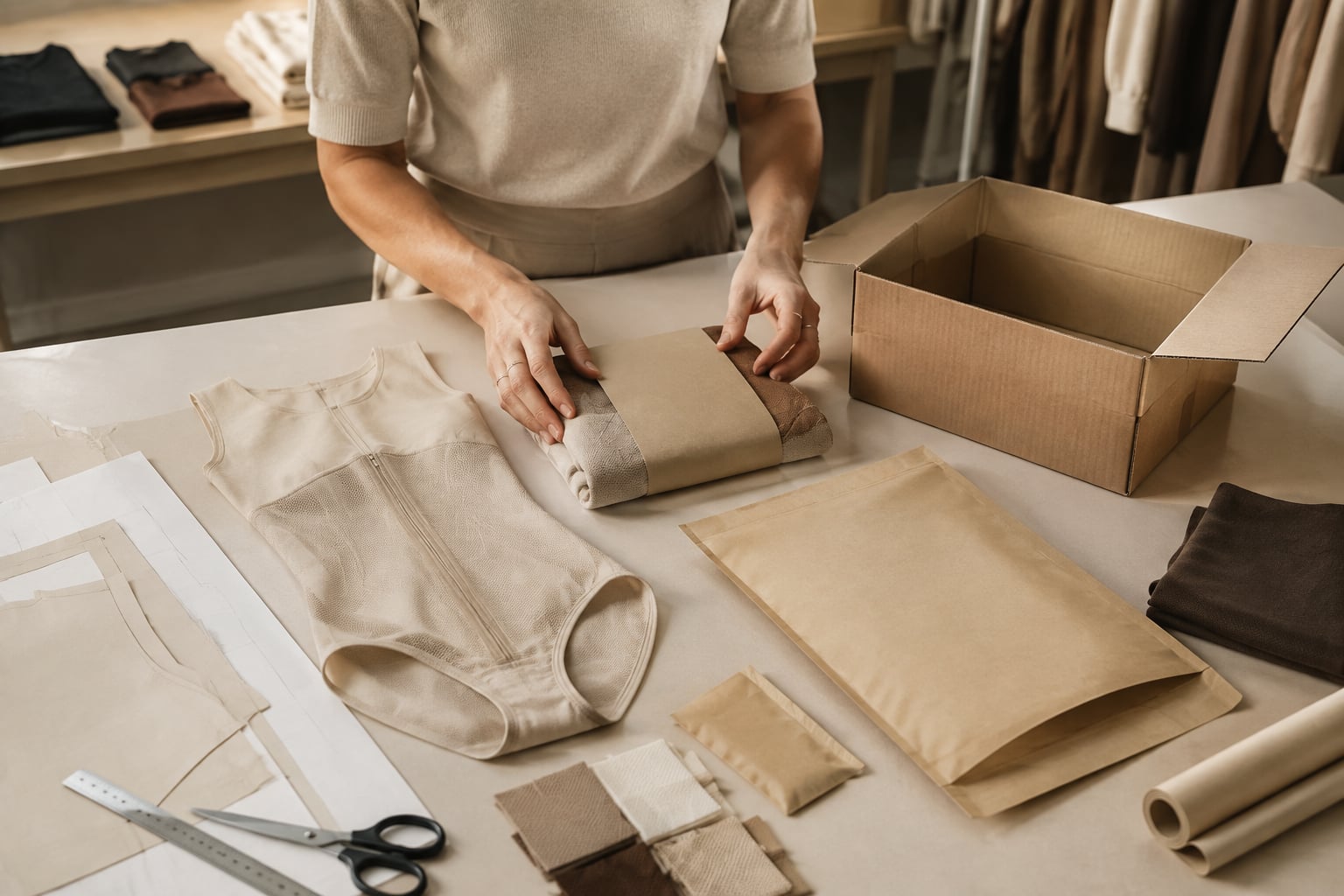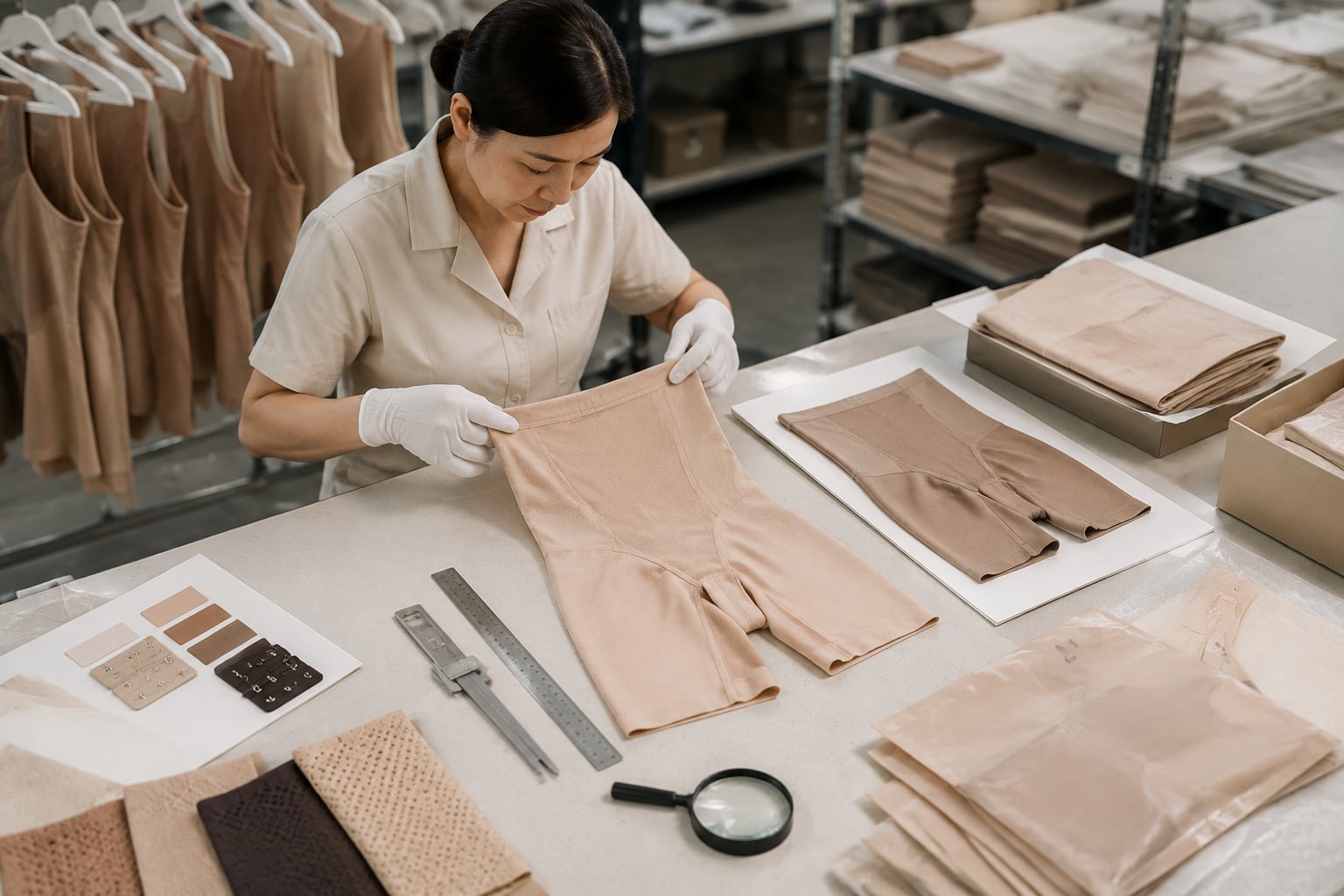
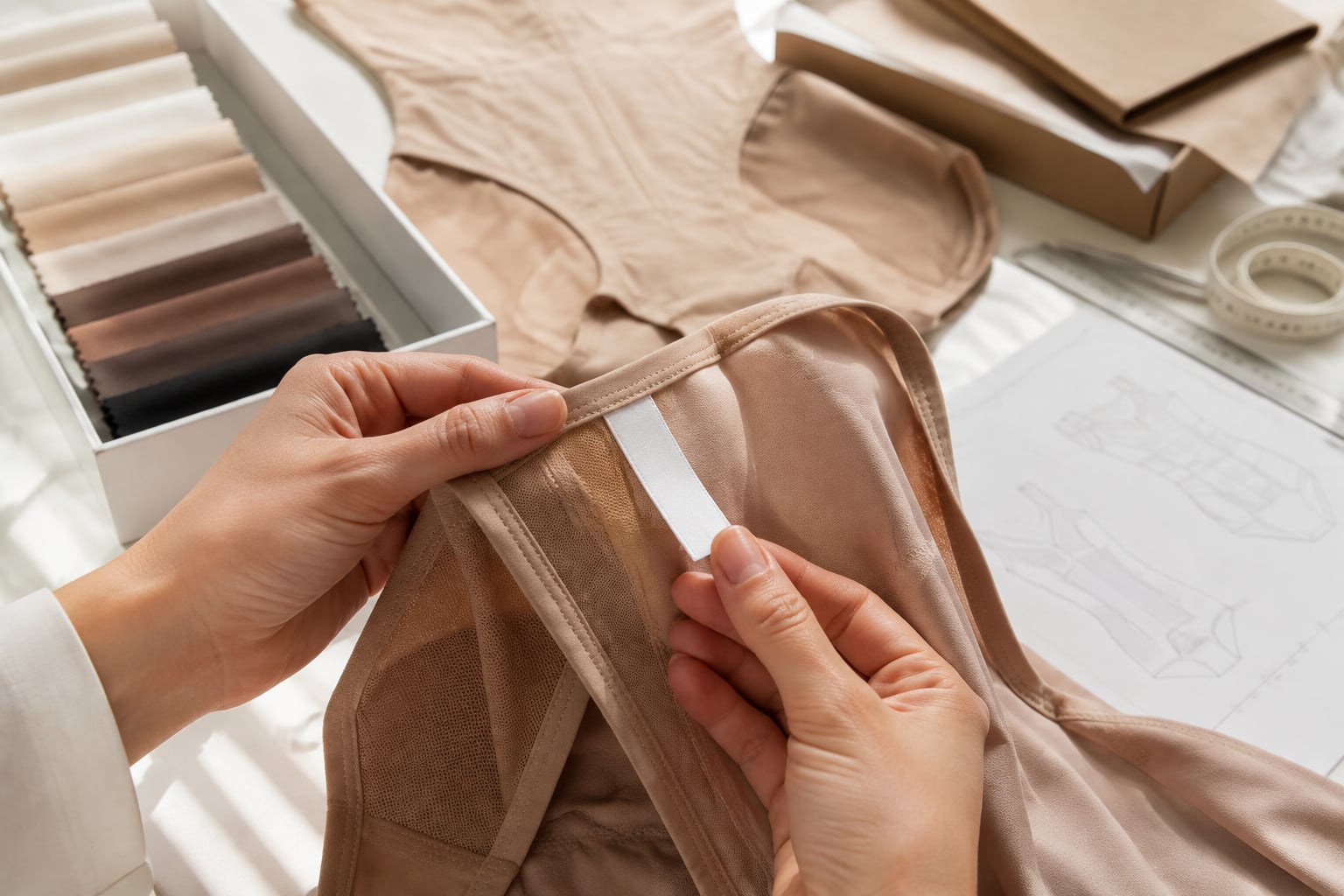
For textile labelling of shapewear in Germany, start with the fibre composition: it must use the prescribed fibre names, show percentages accurately, and be available in German for products sold to German consumers. A practical label programme should then add clear care, size, product identification, and responsible-business information in the right location.
Because shapewear combines high-stretch fabrics, bonded sections, gussets, hooks, silicone trims, and multi-piece constructions, label errors often arise from incomplete component data rather than from the main fabric itself. Build the label specification from verified bills of materials and approved sample information—not from an early development brief.
Identify the Responsible Business
Before finalising a sewn-in label, identify which economic operator details must appear with the product or its accompanying information.
For consumer products placed on the EU market, the General Product Safety Regulation (GPSR) requires traceability and responsible-operator information. In practice, German shapewear brands should establish who is acting as the manufacturer, importer, or EU-based responsible person before artwork is released.
The information normally needs to make it possible to identify and contact the relevant business. Depending on the supply chain and the product’s market placement, this can include:
- Manufacturer name, registered trade name, or trademark
- Postal address
- Electronic contact details, such as an email address or web contact point
- Importer information when the manufacturer is outside the EU and an importer places the product on the market
- A product type, batch, serial number, or another identifier that supports traceability
Not every item of this information needs to be placed on the textile care label. For a small shapewear garment, the product itself may not have enough space for every detail. Information may instead be provided on packaging or in accompanying documentation where appropriate. However, deciding this late can lead to mismatched garment labels, polybags, hangtags, and online listings.
Assign responsibilities before approving artwork
For an OEM, ODM, or private-label project, create a simple responsibility matrix before bulk production.
| Information area | Typical owner | What to verify |
|---|---|---|
| Fibre content | Product development and supplier | Final approved material composition by component |
| Care information | Product development and quality team | Test-supported instructions for the finished garment |
| Size system | Brand or retail buyer | Market-specific size chart and garment measurements |
| Product identifier | Brand, sourcing, or operations team | Style code, colour reference, batch or traceability method |
| Manufacturer/importer details | Brand legal or compliance team | Correct legal entity and contact information |
| Packaging claims | Marketing and compliance team | Claims match the actual product and substantiation |
A label may be technically well printed but still unsuitable if it names an outdated importer, an old company address, or a discontinued style code.
Confirm Fibre Composition
Fibre composition is the core textile-labelling requirement for shapewear sold in Germany. The EU Textile Regulation requires textile products to carry an indication of fibre composition using the recognised textile fibre names and percentages.
For most shapewear, this means showing the fibre content of the relevant textile component, such as:
- Polyamide and elastane for a smoothing bodysuit
- Polyester and elastane for a power-mesh panel
- Cotton, polyamide, and elastane for a gusset or lining
- Polyurethane and polyester where a bonded or laminated construction is involved
Use the legally recognised fibre names rather than marketing shorthand. For example, “stretch fibre,” “comfort fabric,” or a proprietary fabric name does not replace a proper composition statement. Brand names can appear elsewhere, but they should not obscure or replace the fibre declaration.
Show percentages in descending order
Where a textile component contains more than one fibre, list the percentages from highest to lowest. The composition must reflect the finished product, accounting for the specific rules and tolerances that may apply under the Textile Regulation.
A typical format could be:
72% polyamide, 28% elastane
If a garment contains materially different textile components, do not assume the main body composition is enough. Shapewear frequently includes a gusset, lining, control panel, lace trim, or reinforcement layer with a different fibre composition.
Review component-specific compositions
A single all-over composition can be suitable only where it accurately describes the product under the applicable rules. Review separate components when they have a different composition and are relevant to the consumer’s understanding of the product.
Common shapewear examples include:
- A cotton-lined gusset in an otherwise synthetic brief
- A power-mesh abdominal panel with a different elastane ratio
- Detachable or clearly separate straps
- Lace panels with different fibre content
- Bonded constructions made from face fabric, adhesive, and backing layers
- Hook-and-eye closures, boning, silicone strips, or non-textile embellishments
Not every small accessory needs a separate fibre breakdown, and special rules or exemptions may apply. The important operational point is to ask the supplier for a component-level material declaration early. A fabric composition supplied for the shell does not automatically cover the full finished garment.
Treat marketing claims separately
Claims such as “recycled,” “organic,” “bamboo,” “seamless,” or “cooling” need their own review. They should not be used as substitutes for the required fibre description.
If a product includes recycled polyamide, for example, the mandatory fibre content may still need to state “polyamide” rather than a non-standard variation of the fibre name. Any recycled-content claim should be accurate, specific, and supported by the documentation available to the brand.
If a product contains non-textile parts of animal origin, the required wording must be considered separately. This is uncommon for most shapewear but can become relevant for certain trims or decorative components.
Prepare Care Information
Care information is not the same as fibre composition labelling. The textile fibre declaration is subject to specific EU rules, while care guidance is generally a practical and consumer-protection issue: the instructions should help consumers maintain the product safely and should not be misleading.
For shapewear, care instructions are especially important because heat, chlorine, fabric softener, tumble drying, and aggressive washing can affect stretch recovery, bonding, silicone grip strips, lace, and compression performance.
A useful care label usually addresses:
- Maximum washing method and temperature
- Bleaching restrictions
- Drying method
- Ironing restrictions
- Professional cleaning, where relevant
- Additional wording for special construction features
Base care instructions on the finished garment
Do not copy the wash guidance from the main fabric supplier without evaluating the whole garment. The limiting component should guide the care instruction.
For example, a garment made from washable stretch fabric may still need gentler instructions because it has:
- Heat-sensitive bonded seams
- Hook-and-eye hardware
- Delicate lace
- Printed logos
- Silicone tape
- Adhesive-backed shaping panels
A practical instruction such as “Wash before first wear,” “Wash with similar colours,” or “Do not use fabric softener” can be helpful when it is relevant to the product construction. Keep supplementary text concise and ensure it does not conflict with the care symbols.
Consider care-symbol licensing
Care symbols commonly used in Europe are widely recognised, but the symbols associated with GINETEX are protected. Before using them, confirm whether your business requires a licence or permission for the intended markets and label programme.
Text-only care instructions can be easier to localise, but symbols improve quick recognition across sales channels. Many brands use both, provided the artwork is clear and the instructions are internally consistent.
Plan Size and Product Identification
EU textile fibre rules do not prescribe a universal shapewear size format. Nevertheless, size identification is essential for retail operations, returns management, and consumer expectations in Germany.
The best size label is one that matches the size chart used on the product page, packaging, wholesale catalogue, and purchase order. A customer should not see “M” on the garment but be directed to a size chart that treats the same garment as a different size category.
Include the information needed for the selling model, such as:
- Brand name or trademark
- Product style name or style number
- Size
- Colour code or colour name, where operationally useful
- Batch, lot, or production code
- Country-of-origin marking where required by the destination market, retail partner, or commercial programme
Choose a size system that reduces ambiguity
For shapewear, alpha sizing alone can be insufficient because fit depends on bust, waist, hip, torso length, and intended compression level.
A label can use an alpha size while linking it to a clear measurement range, for example:
M — Waist 74–80 cm
This approach is most useful when the garment’s fit guide uses the same measurement basis. Avoid adding body measurements to a label unless the approved size chart and grading specification support them.
For bodysuits and long-torso designs, consider whether the product description or packaging should communicate torso-length guidance. The sewn-in label may not have space, but the customer still needs a clear way to choose between sizes.
Review Language and Legibility
For shapewear sold to consumers in Germany, mandatory textile composition information should be supplied in German. If the same product is intended for several EU markets, a multi-language label can be efficient, but it must remain readable.
The information should be durable, easy to find, and clearly associated with the product. A fibre declaration hidden under a fold, printed in low-contrast ink, or reduced to an unreadably small type size may create avoidable compliance and customer-service problems.
Make labels readable in real use
Review the physical label, not just the artwork PDF. Check:
- Contrast between text and label background
- Font size after printing and washing
- Whether the label is legible when sewn into the garment
- Whether wording remains visible after folding or stitching
- Whether the label placement causes irritation
- Whether heat-transfer printing remains readable after the intended care cycle
Shapewear is worn close to the body, so comfort matters. A scratchy woven label may create complaints even when the legal content is correct. Printed labels, soft satin labels, and carefully placed side-seam labels can improve comfort, but they still need to remain durable and legible.
Do not solve a comfort issue by moving mandatory information entirely to a removable hangtag. Hangtags are usually removed before use. They can supplement permanent product information but should not be the only location for required textile composition details.
Coordinate Labels with Packaging
Garment labels, hangtags, polybags, cartons, and online listings should describe the same product. A mismatch between these materials can create consumer confusion and complicate retailer checks.
Before production, compare the following across all customer-facing assets:
| Item | Check for consistency |
|---|---|
| Sewn-in or printed label | Fibre composition, size, style identifier, care guidance |
| Hangtag | Brand, key product features, size, claim wording |
| Polybag label or sticker | SKU, barcode, colour, size, quantity, traceability data |
| Retail packaging | Product name, composition, claims, responsible business details |
| Product page | Size chart, fibre content, care, safety and operator information |
| Wholesale data sheet | SKU, dimensions, packing details, composition and care fields |
Packaging can carry details that do not fit comfortably on a garment, including extended size guidance, customer-service information, or QR codes. A QR code can be useful as an additional resource, but it should not replace information that must be readily available in a required format.
Check online product information too
Distance-selling information deserves its own review. If the product will be sold through a German web shop or marketplace, ensure the displayed fibre composition, product identification, and responsible-business information align with the physical item.
A common mistake is updating the garment label after a material substitution while leaving the product page, marketplace feed, and packaging artwork unchanged.
Control Changes Before Production
The most effective label-control process starts before bulk fabric is ordered. Any change to material, trim, construction, supplier, or legal entity can affect the label specification.
Use a controlled approval sequence:
-
Collect component data
Request current fibre compositions for shell, lining, gusset, mesh, lace, elastic, and other relevant textile parts. -
Create a label content sheet
Record the exact approved wording, languages, label locations, style codes, and artwork version. -
Check the bill of materials against the label
Confirm that every stated composition matches the approved specification for the production style. -
Review a physical sample
Inspect print clarity, placement, comfort, durability, and consistency with packaging. -
Approve packaging and digital copy together
Treat the product page, hangtag, polybag sticker, and garment label as one controlled information set. -
Lock changes before bulk production
If a fabric substitute or new trim is introduced, trigger a new labelling review rather than assuming the existing artwork remains valid. -
Retain approval records
Keep artwork versions, supplier material declarations, sample approvals, and change records accessible for internal and retail-partner review.
Quality control should include label checks during production, not only at the pre-production stage. For broader supplier and inspection planning, review a structured quality assurance approach alongside the label-control process.
Complete a Market-Specific Review
A product that is correctly labelled for another market may still need adaptation before sale in Germany. The fibre declaration, language, responsible-business details, packaging statements, and online product content should be reviewed as a complete German-market set.
Use this final checklist before confirming bulk production or launch:
- Is the fibre composition based on final, verified component data?
- Are recognised fibre names and accurate percentages used?
- Is mandatory consumer-facing textile information available in German?
- Does the label account for materially different textile components where necessary?
- Are care instructions suitable for the finished shapewear construction?
- Are care symbols used with the appropriate rights or permissions?
- Does the size label match the size chart and retail data?
- Does the product have a usable style, batch, or traceability identifier?
- Are the manufacturer, importer, or responsible-business details current and correctly placed?
- Do packaging, product pages, and marketplace listings match the physical garment?
- Has the team reviewed substitutions, revised trims, and factory changes since label approval?
- Has a physical production sample been checked for comfort, durability, and legibility?
Common labelling mistakes in shapewear
The highest-risk errors are usually operational rather than typographical:
- Listing only the shell composition when the gusset or shaping panel differs materially
- Using supplier marketing terms instead of recognised fibre names
- Carrying forward labels after a fabric substitution
- Including an outdated company or importer address
- Using care guidance that ignores bonding, silicone, or delicate trims
- Showing a size on the garment that does not match the published size chart
- Relying only on removable hangtags for key product information
- Printing multi-language text so small that it is no longer practical to read
- Making environmental or performance claims that are broader than the available evidence
FAQ
Is fibre composition mandatory on shapewear in Germany?
In most cases, yes. Shapewear sold as a textile product must carry fibre-composition information in line with the EU Textile Regulation. The information should use recognised fibre names, accurate percentages, and German-language wording for the German consumer market.
Must shapewear labels include washing instructions?
Care instructions are not simply the same legal requirement as the fibre declaration, but they are strongly advisable for shapewear. Clear care guidance helps consumers avoid damage to stretch fibres, bonded panels, lace, silicone trims, and compression structures.
Can one label cover several EU countries?
Yes, a multi-language label can be used when it remains legible and includes the required language for each intended market. For Germany, ensure the relevant mandatory information is presented in German.
Can a QR code replace a sewn-in label?
No. A QR code can provide additional information, such as extended fit guidance or digital care support, but it should not replace permanent textile information that needs to be supplied directly with the product.
Does every shapewear component need its own composition?
Not necessarily. The correct approach depends on the construction and applicable textile-labelling rules. However, separate gussets, linings, control panels, lace sections, and other distinct textile components should be reviewed rather than assumed to match the main fabric.
For private-label or custom shapewear programmes, incorporate label requirements into product development from the first bill of materials onward. S-SHAPER supports OEM, ODM, and private-label shapewear projects from development through scalable series production; teams assessing a programme can also review retail business solutions or discuss project requirements when a manufacturing-specific label workflow is needed.