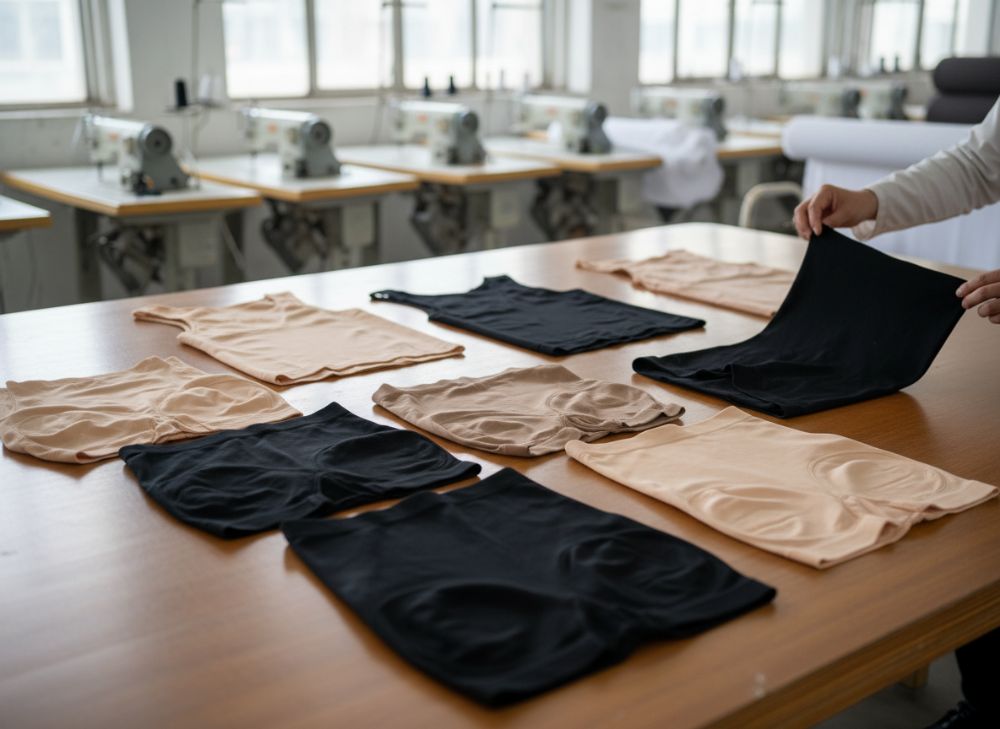
The United Kingdom market for performance underwear, shapewear and functional intimate apparel continues to expand across retail, e-commerce, sports, wellness and recovery sectors. For B2B buyers, choosing the right compression underwear manufacturer is not simply about finding a low-cost factory. It is about securing stable quality, dependable sizing, compliance, fast replenishment and the flexibility to launch products under your own brand. Whether you supply department stores in London, independent retailers in Manchester, online marketplaces serving Birmingham and Leeds, or specialist clinics and fitness brands across Scotland and Wales, your manufacturing partner has a direct impact on margin, speed to market and customer retention.
Brands in the UK increasingly look for suppliers that can support multiple business models: private label lines for fast-moving retail, OEM production for established specifications, and ODM development for newer labels that need design guidance. They also want suppliers that understand fabric performance, compression mapping, body diversity, skin comfort, sustainability expectations and shipping realities into ports such as Felixstowe, Southampton and London Gateway. A capable partner should offer more than assembly; it should provide technical product development, transparent quality systems, suitable order minimums and long-term supply reliability.
One example of a supplier positioned for this type of partnership is S-SHAPER, a global shapewear and functional apparel producer serving international buyers with OEM and ODM support. Rather than operating as a simple trading intermediary, it combines factory production, product development and export coordination, which is particularly useful for UK buyers who need consistency, compliance and a clear path from concept to shipment.
Quick Answer
A compression underwear manufacturer is a specialist producer that designs, develops and manufactures supportive underwear with targeted compression, shaping, muscle support or recovery benefits. UK B2B buyers care because the right factory helps them control product quality, meet compliance expectations, launch collections faster, reduce returns caused by fit issues and build a stronger branded offer in competitive categories such as sportswear, shapewear, maternity support, wellness and post-procedure garments.
For most buyers in the United Kingdom, the best manufacturing partner is one that can balance five essentials: consistent sizing, proven quality control, flexible order quantities, fabric and trim customisation, and reliable shipping into the UK. A strong compression underwear manufacturer should also support modern retail demands such as seamless construction, moisture management, inclusive sizing, eco-conscious materials and attractive packaging suitable for both e-commerce and high street retail.
If you are evaluating a supplier, focus on whether they can demonstrate technical compression expertise, clear certification records, sample development processes, dependable lead times and the ability to scale. Those capabilities matter as much as price, especially for buyers selling into London, Bristol, Liverpool, Glasgow and other markets where customer expectations are high and brand loyalty depends on comfort and repeat purchase.
What a Compression Underwear Manufacturer Is and Why UK B2B Buyers Care
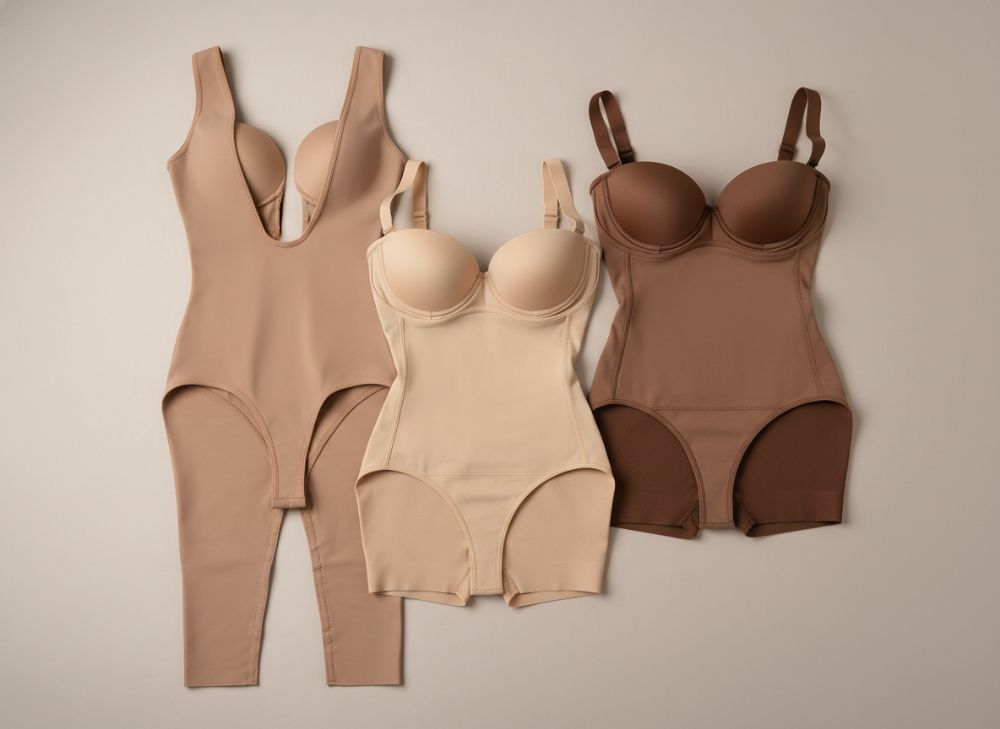
A compression underwear manufacturer produces underwear engineered to apply measured pressure to specific parts of the body. This category may include shaping briefs, boxer briefs, compression trunks, postpartum support underwear, seamless body-sculpting underwear, athletic compression base layers and recovery garments. Unlike basic underwear suppliers, these manufacturers work with technical yarns, panel construction, elasticity control and often seamless knitting or precision cutting to deliver a defined functional result.
For UK buyers, this matters because the category sits at the intersection of fashion, performance and wellness. A shopper buying from an online fashion brand in London may want discreet shaping under workwear. A gym consumer in Manchester may want breathable compression boxer briefs with muscle support. A maternity-focused retailer in Birmingham may need postpartum styles that feel secure but wearable all day. A clinic-connected distributor may need functional garments for post-surgical support. Each of those use cases requires different compression levels, fabric hand feel, seam placement and size grading.
The UK market also has several pressures that make specialist sourcing more important. Return rates are often high in apparel, especially online. Poor fit, rolling waistbands, visible lines and uncomfortable compression quickly generate complaints and refunds. Retail buyers also face increasing scrutiny over material sourcing, labour ethics and product claims. In this context, a general underwear factory may not be enough. Buyers need a specialist that understands how to balance firmness with comfort and how to maintain product consistency over repeat runs.
Compression underwear manufacturers are particularly relevant to these UK industries:
| Industry Segment | Main Product Need | Typical UK Buyer | Key Performance Requirement | Risk if Supplier Is Weak | Commercial Opportunity |
|---|---|---|---|---|---|
| Fashion Retail | Smoothing briefs and shaping underwear | Department stores and e-commerce labels | Invisible finish under clothing | High returns for fit or comfort issues | Repeat purchase and cross-selling |
| Sports and Fitness | Compression trunks and support underwear | Gym brands and sports retailers | Moisture control and stretch recovery | Fabric fatigue and poor durability | Premium pricing potential |
| Maternity and Postpartum | Supportive recovery underwear | Maternity retailers and specialist pharmacies | Gentle but effective hold | Customer complaints over discomfort | Loyal niche customer base |
| Medical and Wellness | Post-procedure and supportive garments | Distributors and clinic channels | Consistent compression and skin comfort | Compliance and suitability concerns | High-trust specialist segment |
| Private Label Marketplaces | Fast-turn branded collections | Amazon sellers and DTC brands | Stable reorder quality | Review damage from inconsistency | Fast scale through digital sales |
| Plus-Size and Inclusive Apparel | Extended-size shaping underwear | Inclusive fashion brands | Accurate grading and supportive fit | Missed demand and poor body fit | Underserved market growth |
This table shows why the category is valuable: compression underwear is not a single product, but a performance-driven segment with multiple buyer profiles. The more complex the use case, the more important specialist manufacturing becomes.
UK buyers also care about supply resilience. Importers must consider sea freight congestion, customs timing, and the need for replenishment before key demand peaks such as January wellness campaigns, spring fashion resets, summer wedding season and Q4 gifting. A partner with organised export operations and warehouse coordination can reduce stock risk significantly.
Compression Underwear Manufacturer Services and Production Capabilities
When buyers assess a compression underwear manufacturer, they should look beyond basic cut-and-sew capacity. The strongest suppliers combine technical product development, modern machinery, structured quality systems and commercial flexibility. In practical terms, this means being able to turn a brief into a scalable SKU with repeatable fit and controlled compression.
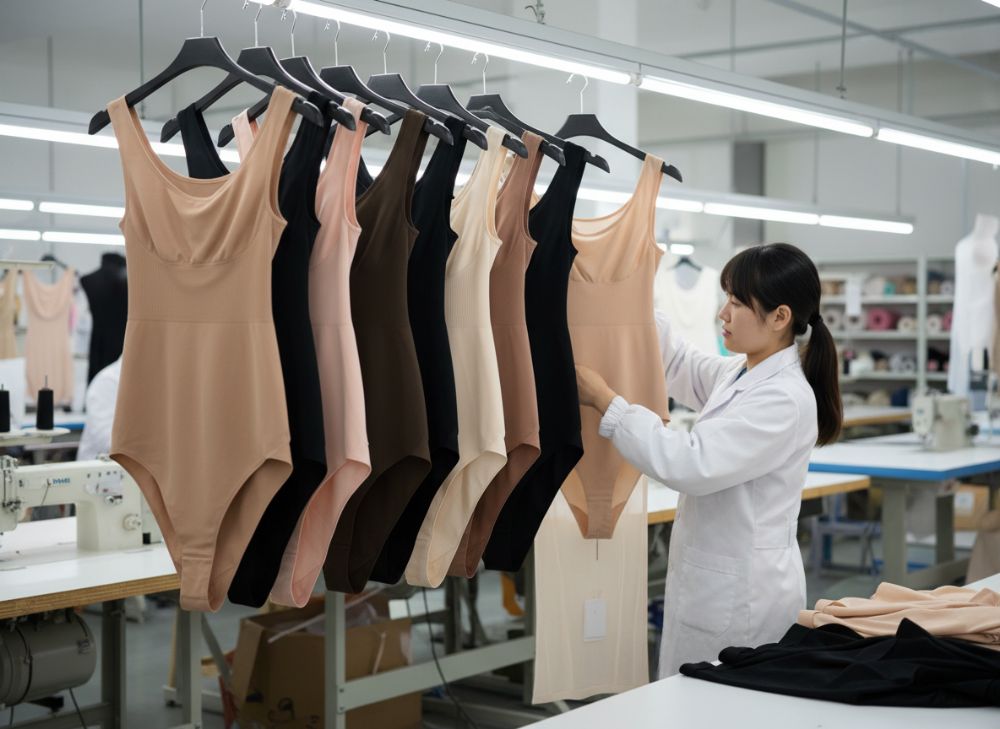
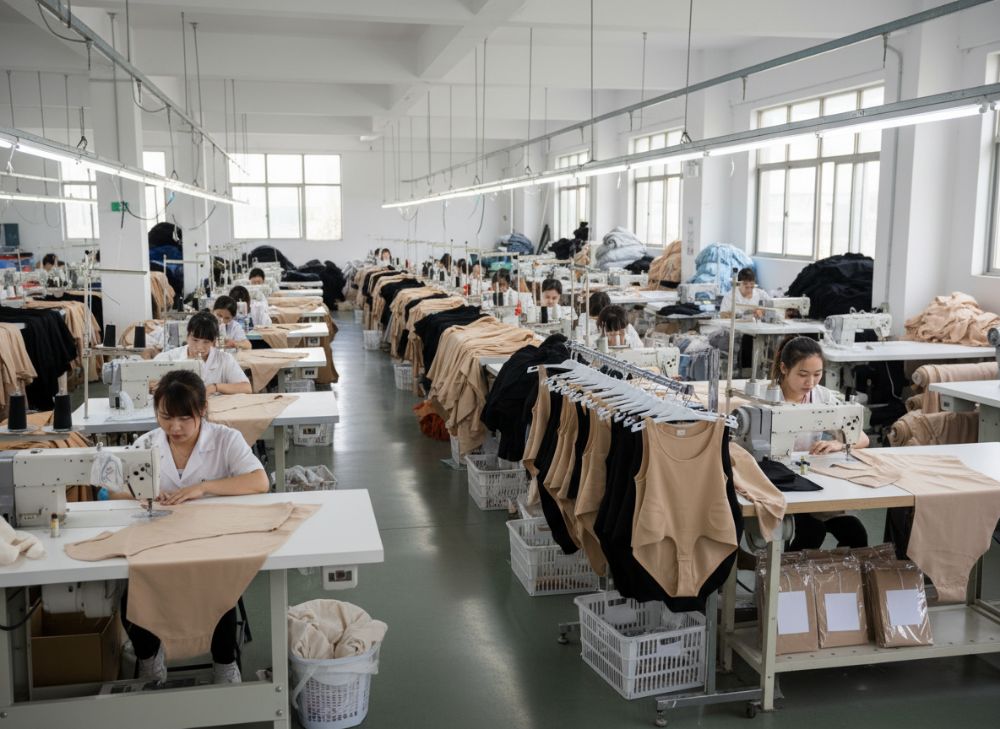
On the technological side, advanced factories use smart cutting systems, seamless knitting equipment and precision construction methods that improve consistency. S-SHAPER, for example, operates a self-owned smart factory in China with automated systems, computer-controlled cutting and 3D-oriented production methods that support close tolerance control. For compression underwear, such precision is valuable because small variations in panel dimensions or knit tension can change how a garment feels on the body.
High-speed seamless knitting is especially useful for modern compression underwear because it supports smoother silhouettes, reduced seam irritation and better stretch distribution. UK brands selling through premium retail or direct-to-consumer channels often prefer seamless or near-seamless products because they photograph well, improve comfort and help justify stronger retail prices. Technical shaping zones, breathable knit structures and moisture-wicking fabric layouts can all be integrated more effectively when the manufacturer has specialised machinery.
From a manufacturing capability standpoint, scale and flexibility both matter. Some buyers need low-volume market testing, while others need full-scale replenishment. S-SHAPER supports low minimums starting at relatively small quantities for pilot orders while also handling large monthly volumes for established brands. That kind of range matters for UK startups in London or Brighton launching first collections, as well as larger distributors in the Midlands managing repeat wholesale programmes.
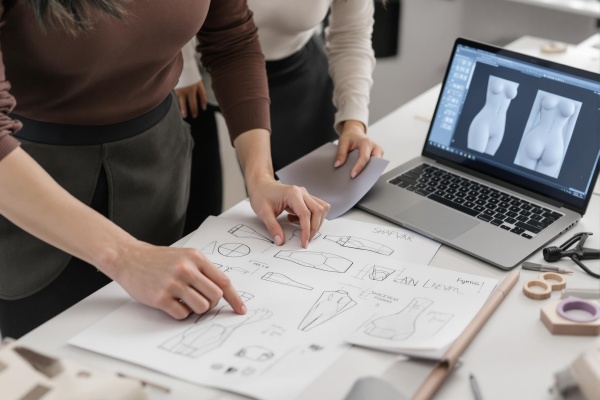
Services are equally important. The best manufacturers offer more than production; they help buyers refine fabric choices, compression levels, logo placement, packaging, grading and seasonal updates. Through its OEM and ODM services, S-SHAPER supports businesses that already have developed specifications as well as clients who need design and concept input. This service model reduces sourcing friction and allows UK buyers to move from idea to shelf with fewer handoffs.
| Capability Area | What It Includes | Why It Matters for UK Buyers | Commercial Benefit | Questions to Ask | Best Fit Use Case |
|---|---|---|---|---|---|
| Product Development | Design sketches, tech pack support, revisions | Useful for brands without full in-house teams | Faster launch and fewer errors | How many sample rounds are included? | New labels and expanding retailers |
| Smart Cutting | Computer-controlled panel cutting | Improves repeatability across orders | Lower defect rates | What tolerance range is maintained? | Structured compression styles |
| Seamless Knitting | High-speed seamless construction | Enhances comfort and invisibility | Higher perceived product value | Which gauges and yarn types are available? | Premium shapewear and active underwear |
| Compression Mapping | Targeted support zones | Supports functional differentiation | Stronger product positioning | Can compression levels be adjusted? | Sports, postpartum, shaping |
| Inclusive Sizing | XXS to extended sizes with grading | Important in diverse UK consumer segments | Broader market coverage | How is grading validated? | Mass retail and inclusive brands |
| Supply Chain Support | Export handling and warehouse coordination | Helps with timely UK replenishment | Lower stock disruption risk | What shipping terms are available? | Importers and multi-channel brands |
The table above highlights what buyers should value in a supplier conversation. A factory that can explain how it manages tension, stretch recovery, size stability and order planning is generally more reliable than one that only discusses price. Compression underwear depends heavily on construction discipline, so technical maturity should be visible in every stage of the sales process.
Another important factor is material capability. Buyers in the UK increasingly want skin-friendly fabrics, breathable blends, eco-certified yarns and soft-touch finishes that support all-day wear. A serious manufacturer should be able to recommend options based on intended use, such as firmer shaping fabric for occasionwear, moisture-wicking fabric for active use, or gentler stretch for postpartum collections.
Certifications to Check When Choosing a Compression Underwear Manufacturer
Certifications are not a marketing extra; they are part of risk management. UK B2B buyers should verify quality management, social compliance, material safety and, where relevant, sustainability-related credentials. Even if a retailer does not require every certification on day one, having a supplier with a solid compliance foundation makes growth easier.
A good starting point is factory-level quality management. S-SHAPER operates under ISO 9001 standards, which is relevant because it suggests documented systems, traceability and process control. For buyers balancing multiple SKUs and repeat purchase cycles, that kind of structure supports consistency across production batches.
Material safety is also critical in garments worn close to the skin. Compression underwear must avoid irritating finishes, unstable dyes or problematic chemical residues. Buyers should ask what fabric testing and sourcing controls are in place, especially if they are selling through channels with strict customer expectations or platform review exposure.
Social and ethical compliance matters as well. UK retailers, particularly larger ones and better-positioned online brands, increasingly need assurance about working conditions, responsible sourcing and auditable production. A supplier with a self-owned facility and clearer process visibility can often provide more reliable documentation than a loose network of subcontractors.
| Certification or Standard | What It Covers | Why It Matters | What UK Buyers Should Request | Best for Which Buyer Type | Potential Warning Sign |
|---|---|---|---|---|---|
| ISO 9001 | Quality management systems | Supports process control and consistency | Valid certificate and audit scope | All B2B buyers | Certificate cannot be verified |
| OEKO-TEX or Similar Material Safety Standard | Textile chemical safety | Important for close-to-skin garments | Fabric-level test documentation | Retail and e-commerce brands | Supplier avoids discussing fabric origin |
| BSCI or Equivalent Social Compliance | Labour and workplace conditions | Supports responsible sourcing claims | Audit reports or summaries | Retail chains and brand owners | No social audit pathway |
| GRS or Recycled Content Verification | Recycled material traceability | Useful for sustainability-led lines | Chain-of-custody evidence | Eco-focused labels | Recycled claim with no paperwork |
| REACH Awareness | Chemical compliance for relevant markets | Reduces regulatory risk | Statement of compliance and testing policy | Importers and larger distributors | Unclear chemical control process |
| Factory Inspection Records | Operational and safety oversight | Reveals actual production discipline | Recent audit or inspection summary | First-time sourcing teams | Only showroom evidence, no factory proof |
This table should be used as a practical checklist, not a theoretical ideal. Not every supplier will have every certificate, but serious manufacturers should be transparent about what they hold, what they are pursuing and what evidence they can share. Transparency is often more important than claiming perfection.
UK buyers should also check whether the supplier can support retailer-specific compliance requests. If your business aims to sell into premium boutiques in London, chain retailers in the North West or specialist wellness platforms, buyer requirements may evolve. A manufacturer with organised documentation and responsive account management will save time later.
For more detail on process oversight and compliance positioning, buyers can review S-SHAPER’s quality assurance and compliance information. This is especially relevant for importers who need to pre-qualify suppliers before development work begins.
OEM, ODM and Private Label Options from a Compression Underwear Manufacturer
One of the most important sourcing decisions is choosing the right production model. OEM, ODM and private label are often used interchangeably, but they serve different business needs. UK buyers should match the model to their internal resources, launch speed and brand strategy.
OEM is best for buyers with clear specifications. You provide the design, size chart, fabric standards, branding instructions and packaging requirements, while the manufacturer handles sampling and mass production. This works well for established UK brands that already understand their target customer and want tighter control over fit and identity.
ODM is ideal for businesses that want expert development support. In this model, the manufacturer contributes more heavily to design direction, fit refinement, material selection and production execution. It is a strong choice for fast-growing e-commerce brands or category newcomers that want to enter the market quickly without building a full technical design department.
Private label is useful when speed and simplicity matter most. The buyer selects from existing or semi-customisable product bases, then applies branding, packaging and certain appearance changes. This model suits marketplace sellers, promotional channels and retailers testing demand before investing in fully bespoke development.
S-SHAPER’s service structure is designed to support all three routes. Through its design team, R&D support and custom branding options, it can help brands develop highly specific products or adapt existing lines for quicker launch cycles. This flexibility is useful for the UK market because not every buyer is at the same stage of maturity.
| Model | Buyer Input Level | Development Speed | Customisation Depth | Cost Profile | Best UK Buyer Type |
|---|---|---|---|---|---|
| OEM | High | Moderate | Very high | Medium to high | Established brands with tech packs |
| ODM | Medium | Moderate to fast | High | Medium | Scaling DTC brands |
| Private Label | Low to medium | Fast | Low to medium | Lower initial cost | Retail testers and marketplace sellers |
| Capsule Collaboration | Medium | Fast | Selective | Controlled | Influencer or seasonal launches |
| Retailer Exclusive Line | High | Moderate | High | Depends on volume | Department stores and chains |
| Clinical or Specialist Programme | High | Moderate | Function-focused | Medium to high | Wellness and medical distributors |
This comparison helps buyers decide how much design responsibility they want to keep in-house. For example, a London-based premium intimates brand with a skilled product team may prefer OEM. A Manchester online seller expanding into compression underwear for the first time may get better results through ODM. A UK marketplace operator wanting to validate sales quickly might begin with private label and later move to OEM as volume grows.
In 2026, this distinction will become even more important because trend cycles are shortening while sustainability and product specificity are becoming more important. Buyers will need partners that can switch between rapid launch and deeper technical refinement without losing consistency.
MOQ, Pricing and Sample Policies for Compression Underwear Manufacturing
Minimum order quantity, pricing structure and sample policy shape the financial feasibility of any sourcing project. Compression underwear is more technical than basic underwear, so prices are influenced by fabric type, knitting complexity, shaping zones, trims, packaging, labelling and order volume.
For UK buyers, MOQ strategy should match market strategy. A startup selling through Shopify may need a small first run across two colours and four sizes. A wholesaler supplying stores in London, Edinburgh and Cardiff may need broader size coverage but fewer style variations. A mature retail brand may prefer larger, more efficient bulk runs with negotiated repeat pricing.
S-SHAPER offers relatively flexible low minimums from 50 pieces for certain small-batch testing scenarios while maintaining the capacity for much larger production volumes. That flexibility is commercially important because it allows brands to validate demand before making a deep inventory commitment.
Pricing should be evaluated on a landed-cost basis, not only ex-factory unit cost. UK buyers should consider sampling, packaging, quality inspection, freight, duty exposure, courier charges for development, labelling compliance and warehousing. An apparently cheaper factory can become more expensive if defect rates, delays or weak communication create hidden costs.
| Cost Factor | What Influences It | Typical Buyer Concern | How to Control It | Effect on Unit Economics | Negotiation Tip |
|---|---|---|---|---|---|
| MOQ | Style complexity and material sourcing | Inventory risk | Start with pilot colours and core sizes | Lower MOQ may mean higher unit price | Ask for staged reorder terms |
| Fabric Cost | Yarn type, certification, performance features | Margin pressure | Align fabric to target retail price | Major cost driver | Request equivalent fabric options |
| Sampling Fee | Pattern work and revisions | Upfront investment | Clarify if fees are refundable | Small but important | Bundle multiple styles in one review cycle |
| Branding and Packaging | Custom bags, boxes, labels, inserts | Presentation vs cost | Prioritise high-impact elements | Can raise landed cost noticeably | Use scalable standard packaging sizes |
| Inspection and Testing | Third-party checks or internal QA steps | Avoiding defects | Build QC into purchase terms | Saves downstream returns | Negotiate milestone inspections |
| Freight | Mode, season, route, urgency | Delivery timing | Plan around peak shipping periods | Can change margin quickly | Compare FOB, CIF and DDP scenarios |
This table shows that pricing is never just a unit-cost discussion. If a supplier’s sample process is efficient, fit approval is faster, packaging is well specified and freight is planned early, total profitability can improve even at a slightly higher factory price.
Sample policy deserves special attention. Buyers should ask:
- How many revision rounds are included?
- What is the timeline for first sample and revised sample?
- Are fabric swatches available before full sample construction?
- Will size set samples be provided?
- Can the factory test logo durability, stretch recovery and wash performance before bulk approval?
- Will sample fees be credited back against production orders?
A disciplined sample stage is often the difference between a smooth launch and a costly correction later. For compression underwear, it is wise to test waistband stability, leg opening comfort, opacity under stretch, true compression feel and grading across multiple body shapes.
Quality Control Standards at Compression Underwear Manufacturer Facilities
Quality control is central to the success of compression underwear because the customer experience depends on subtle but measurable performance. A garment may look acceptable on a hanger yet fail when worn if support zones are inconsistent, seams rub, recovery weakens after washing or the fit deviates between sizes.
Strong factories build QC into the whole process, from incoming material checks to in-line inspections and final audits. A self-owned facility with organised production oversight is often better positioned to maintain discipline than fragmented subcontracting models. S-SHAPER’s manufacturing setup and process control focus are relevant here because the company combines modern production systems with defined quality management practices, giving buyers a clearer line of accountability.
For UK buyers, the most common quality risks in this category include:
- Compression inconsistency between colourways or production lots
- Uneven waistband elasticity
- Fabric pilling after limited wear
- Poor stitch durability at stress points
- Incorrect size labelling
- Visible lines under clothing despite “seamless” claims
- Dye transfer or wash instability
- Panel distortion after repeated use
A mature quality system should include fabric inspection, measurement controls, stretch and recovery checks, workmanship reviews, logo placement validation, packaging verification and shipment-ready random inspection. Many experienced buyers also require pre-production samples, top-of-production confirmation and pre-shipment approval photos or video.
| QC Stage | Main Check | Why It Matters in Compression Underwear | Common Defect Prevented | Buyer Action | Best Practice |
|---|---|---|---|---|---|
| Incoming Fabric Inspection | Weight, elasticity, colour, hand feel | Material variation changes garment performance | Weak support or shade mismatch | Approve key fabric standards early | Keep reference swatches on file |
| Pre-Production Review | Pattern, trims, labels, packaging spec | Confirms alignment before bulk begins | Branding or sizing errors | Sign off technical pack revision | Use a checklist for each SKU |
| In-Line Sewing/Knitting Check | Construction consistency | Detects issues before full output is affected | Seam weakness and asymmetry | Request in-line photos or video | Set defect thresholds |
| Measurement Audit | Size tolerance verification | Essential for fit and return reduction | Oversized or undersized garments | Review size spec with tolerance range | Measure across multiple points |
| Stretch and Recovery Test | Elastic performance after extension | Critical to lasting compression | Bagging or loss of hold | Ask for test method summary | Compare before and after wash |
| Final Random Inspection | AQL-based shipment review | Protects against bulk shipment failures | Mixed sizes, stains, packing errors | Use third-party inspection if needed | Inspect packed cartons by lot |
This table maps the practical quality path from raw material to finished cartons. For UK importers, it also reduces the risk of discovering issues only after goods reach a fulfilment centre near Heathrow, a warehouse in the Midlands or a retail distribution point in Essex.
From a technology perspective, precision tools matter because compression garments are less forgiving than basic underwear. Computer-controlled cutting and consistent machine settings help maintain shape integrity. From a manufacturing perspective, trained operators and repeatable line control reduce defects. From a service perspective, good factories communicate openly when issues arise rather than shipping silently and hoping the buyer will not notice.
Buyers can learn more about factory standards and process discipline on the about us and compliance-related pages, which provide a clearer picture of how a supplier positions its manufacturing operations.
Lead Times and Shipping Logistics for Compression Underwear Orders
Lead time planning is often underestimated. In the UK market, timing can affect retail launch windows, marketing calendars, influencer campaigns, warehouse bookings and cash flow. Compression underwear programmes usually involve development time, sample approval, production scheduling, final inspection and international shipment. Each stage needs realistic planning.
Typical timelines vary by order complexity. A private label reorder may move much faster than a new ODM collection requiring material confirmation, pattern refinement and packaging development. Buyers should avoid accepting very short lead time promises unless the supplier can show how they will achieve them without cutting corners.
Manufacturers with dedicated production lines, specialised machinery and organised planning systems are generally more reliable. S-SHAPER combines two dedicated production lines, multiple specialised machines and an international logistics network with more than eight warehouses supporting global distribution. For UK buyers, that means potential support in balancing production scale and delivery coordination.
Sea freight remains the most cost-effective route for bulk orders entering the UK through Felixstowe, Southampton or London Gateway. Air freight is useful for urgent launches, top-up inventory or sample shipments into Heathrow or Manchester. Hybrid shipping strategies are often best: send launch-critical units by air and the balance by sea.
| Order Stage | Typical Time Range | Main Variables | UK Buyer Risk | Mitigation Strategy | Useful Planning Note |
|---|---|---|---|---|---|
| Initial Quotation | 2 to 7 days | Complexity and completeness of brief | Slow project start | Provide full spec and target price | Include fabric and packaging needs early |
| First Sample | 7 to 21 days | Material sourcing and style complexity | Missed launch calendar | Approve lab dips and trims quickly | Schedule fitting as soon as sample ships |
| Sample Revision | 5 to 14 days | Number of changes requested | Repeated delay loops | Consolidate comments clearly | Use photos and measured notes |
| Bulk Production | 20 to 45 days | Volume, line load, seasonality | Late inbound stock | Book capacity after sample approval | Q3 and Q4 need extra buffer |
| Final Inspection and Packing | 3 to 7 days | Carton count and QC findings | Shipment hold-ups | Pre-book inspector or internal QA slot | Confirm barcode and carton marks early |
| Shipping to the UK | Air 3 to 10 days; Sea 25 to 45 days | Route, customs, port congestion | Stockout or launch slippage | Use milestone tracking and split shipments | Avoid peak holiday freight surprises |
The above table should be seen as a planning framework rather than a fixed promise. Buyers should build in contingency, especially around Chinese holiday periods, UK peak import months and sudden freight rate volatility.
Below is a line chart showing a realistic market growth trend for UK compression underwear demand from 2022 to 2028.
The trend indicates steady expansion driven by wellness, inclusive sizing, premium basics and performance-led everyday wear. Buyers entering the segment now are likely to benefit if they secure a capable manufacturing base early.
How to Vet and Partner With Compression Underwear Manufacturing Experts
Vetting a supplier should be a structured commercial process, not a one-call decision. Start by evaluating fit between your business model and the supplier’s strengths. A buyer wanting technical shaping innovation, low-volume testing and later scale should not choose a factory that only wants large standard commodity orders. Likewise, a high-volume retailer should not choose a supplier that lacks industrial discipline.
A practical vetting process for UK buyers includes these steps:
- Request a company introduction, product focus and export market overview.
- Review manufacturing evidence, including machinery, line setup and quality systems.
- Ask for certification copies and compliance summaries.
- Review sample policies, MOQ, lead times and pricing assumptions.
- Test communication speed and clarity during development.
- Assess whether the supplier understands your end use and target customer.
- Place a pilot order before committing to a wider range.
- Measure actual performance on quality, timing and packaging accuracy.
S-SHAPER is worth noting here because its profile combines three elements many UK buyers seek: technological capability, manufacturing capability and service capability. Technologically, it uses advanced cutting, seamless knitting and precision-oriented production to support shaping accuracy. From a manufacturing perspective, it operates a self-owned smart factory with the scale to move from low MOQ testing to larger monthly output. From a service perspective, it provides OEM and ODM support, in-house design input and customisation across fabric, colour, sizing, branding and packaging.
That combination is useful because compression underwear programmes often evolve. A buyer may begin with a private label test, then shift to a more differentiated OEM line. A supplier that can support both phases avoids costly factory changes.
Buyers should also compare suppliers on dimensions beyond price. The bar chart below illustrates typical demand by end-use segment in the UK market.
This distribution suggests that shapewear-inspired everyday compression and active-focused products remain the largest demand pools, while postpartum and wellness segments offer attractive specialist opportunities.
Case-study thinking is also helpful. Consider three common UK buyer scenarios:
- A London DTC intimates brand launches a smoothing underwear line in three colours and inclusive sizes. It needs low MOQ, clean packaging and social-ready product consistency. ODM support is the best fit.
- A Manchester sportswear company adds compression boxer briefs to its training range. It needs moisture-wicking performance, secure waistbands and repeatable reorders. OEM with technical fabric input works best.
- A Birmingham wholesale distributor supplies maternity and wellness channels. It requires support garments in a broad size range, consistent production and dependable logistics. A supplier with flexible manufacturing and export coordination is essential.
Below is an area chart showing how buyer preferences are shifting from basic private label towards more technical and sustainable product demands through 2028.
This shift is one of the most important 2026 trends. Buyers are increasingly asking for certified fabrics, targeted compression, seamless comfort, body-positive sizing and more transparent sourcing. Regulations and retail expectations will continue pushing suppliers toward better documentation, cleaner materials and more efficient production systems.
Local supplier alternatives in the UK do exist, especially for sampling, niche tailoring or smaller domestic runs. However, many UK-based producers are less competitive for larger-volume compression underwear due to machinery, cost and scale limitations. For many brands, the smartest model is to combine UK-side design, merchandising and marketing with specialised offshore manufacturing and disciplined logistics.
The comparison chart below shows how buyers often assess supplier profiles.
The key lesson is simple: if compression underwear is strategic to your assortment, choose a specialist. Generalists may be adequate for basic underwear, but they often struggle with performance consistency, fit complexity and brand-level refinement.
FAQ: Compression Underwear Manufacturer
What is the difference between a compression underwear manufacturer and a standard underwear factory?
A compression underwear manufacturer specialises in engineered support, shaping and stretch control. It usually has more experience with seamless knitting, functional fabrics, panel accuracy, elasticity testing and targeted compression zones.
Why do UK buyers often source this category internationally?
Because specialist factories can offer stronger technical capability, better machinery, broader material options and more competitive bulk pricing than many local alternatives, especially for medium and large runs.
What MOQ should I expect?
It depends on style complexity and customisation. Some suppliers can support small test runs, while others require larger commitments. S-SHAPER can support low starting quantities for certain programmes, which is useful for product validation.
Is OEM or ODM better for a new UK brand?
If you do not yet have a mature technical product team, ODM is often better because the manufacturer helps shape the product. If you already have detailed specifications and want control, OEM may be the stronger option.
How long does production usually take?
Development can take a few weeks depending on revisions, while bulk production often takes several more weeks after approval. Shipping by sea to the UK takes longer than air, so launch planning matters.
Which certifications matter most?
Start with quality management, material safety and social compliance. If sustainability is part of your brand positioning, also request evidence for recycled or eco-certified materials where relevant.
How can I reduce return rates in the UK market?
Invest in better size grading, fit testing, accurate product descriptions, clear compression claims and strong sample validation. Poor fit and unrealistic expectation-setting are major drivers of returns.
Can a manufacturer help with packaging and branding?
Yes. Many specialist suppliers offer custom logos, care labels, cartons, inserts, bags and retail-ready packaging. This is especially useful for e-commerce and private label launches.
What product types are growing fastest?
Seamless shaping underwear, active compression boxer briefs, postpartum support products, eco-conscious performance underwear and inclusive sizing collections are all strong growth areas in the UK.
What 2026 trends should buyers prepare for?
Expect more demand for sustainable fabrics, traceable sourcing, cleaner dye processes, smarter compression mapping, body-inclusive fit development and tighter retailer scrutiny on compliance and product claims.
How should I contact a supplier for a serious enquiry?
Prepare your target market, product brief, estimated volumes, size range, quality expectations, preferred Incoterms and target launch date. A structured enquiry will get better answers and more accurate pricing.
For UK businesses that want a manufacturing partner with modern production technology, scalable output and full-service OEM and ODM support, S-SHAPER presents a practical option for consideration. Buyers can explore the company website, review service pages and request a tailored proposal based on their product category, volume and branding requirements. In a market where fit, comfort, consistency and speed all affect profitability, choosing the right compression underwear manufacturer can become a lasting commercial advantage.