The UK shapewear market is moving quickly, and buyers now need more than a basic wholesale source. They need a butt lifter shorts manufacturer that can deliver consistent fit, reliable compression, inclusive sizing, strong compliance, and dependable shipping into trade hubs such as London, Manchester, Birmingham, Felixstowe and Southampton. For importers, e-commerce brands, department store buyers, private label start-ups and wellness retailers, supplier choice directly affects returns, reviews, margins and repeat orders.
This guide explains what matters when sourcing from a butt lifter shorts manufacturer for the United Kingdom market. It covers production capabilities, certifications, OEM and ODM options, minimum order quantities, quality control, shipping logistics, trend shifts through 2026 and practical supplier vetting steps. It also explains how a strategic partner such as S-SHAPER can help brands manage development, production and international fulfilment more efficiently.
Quick Answer
A butt lifter shorts manufacturer is a specialised apparel producer that designs and manufactures shaping shorts engineered to lift, sculpt and smooth the lower body through targeted compression, fabric recovery and pattern construction. UK B2B buyers care because the right manufacturer can improve sell-through, reduce fit complaints, support private label growth and maintain compliance with retailer and consumer expectations.
For most UK buyers, the best manufacturing partner is not simply the one with the lowest unit price. It is the one that can combine fabric performance, stable sizing, controlled compression, ethical production, clear communication, flexible MOQs and predictable delivery. This matters whether the product is sold online in London, through fitness boutiques in Leeds, via wholesale channels in Glasgow or through marketplaces serving customers across England, Scotland, Wales and Northern Ireland.
In practical terms, buyers should prioritise five things:
- Verified manufacturing expertise in shapewear rather than generic cut-and-sew apparel only.
- Documented quality systems and material traceability.
- OEM, ODM or private label flexibility based on business stage.
- Scalable production from test runs to large repeat orders.
- Strong export support and logistics planning for the UK market.
| Buyer Type | Main Need | Common Risk | Best Supplier Feature | Typical Order Style | UK Relevance |
|---|---|---|---|---|---|
| E-commerce start-up | Low-risk launch | Over-ordering | Low MOQ with sampling | Private label trial run | Useful for testing demand in London and nationwide online |
| Established DTC brand | Consistent repeat quality | Fit variation | Stable tech packs and QC | Monthly replenishment | Important for reducing return rates in the UK |
| Retail chain buyer | Compliance and volume | Late delivery | Factory capacity and audit readiness | Seasonal purchase orders | Critical for store launches across major cities |
| Importer/distributor | Margin protection | Hidden costs | Transparent quotations | Bulk container or consolidated shipping | Important for landed cost planning via Felixstowe |
| Wellness/postpartum brand | Comfort and function | Unsupported performance claims | Material testing and careful development | Specialised line production | Relevant to pharmacy and health-related retail channels |
| Marketplace seller | Fast restocking | Stockouts | Scalable output and warehouse support | Mixed-size repeat orders | Supports rapid UK online sales cycles |
The table above shows why sourcing priorities vary by buyer type. A start-up may value low MOQ above all else, while a retail chain may care more about audited processes and shipment reliability. The best butt lifter shorts manufacturer adapts service to these realities.
What Is a butt lifter shorts manufacturer and Why B2B Buyers Care
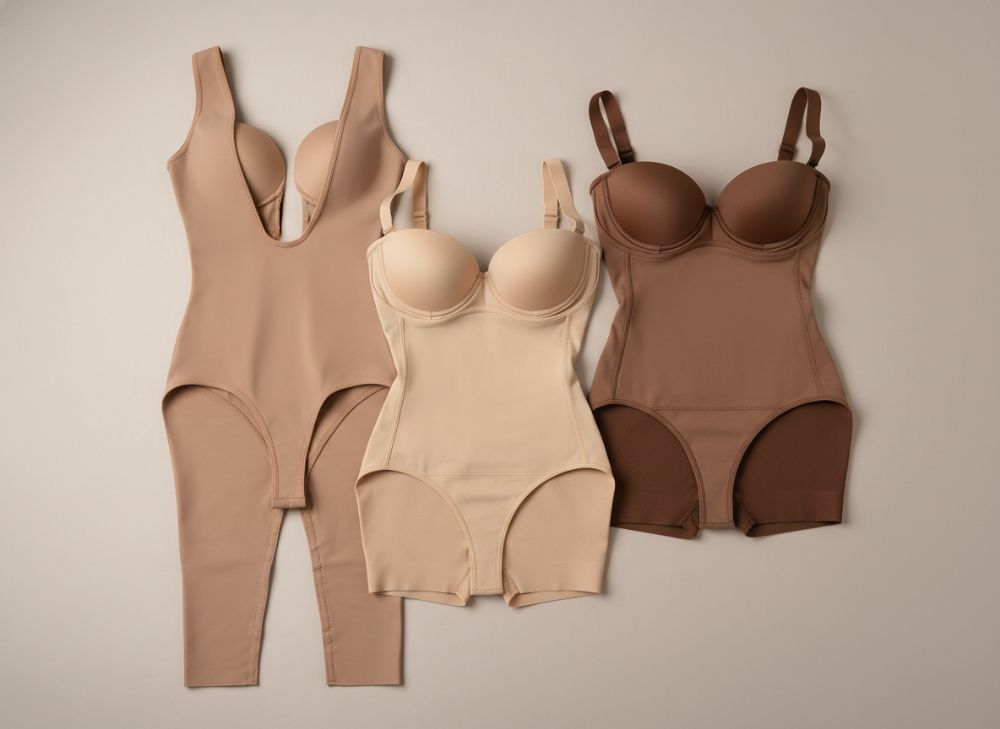
A butt lifter shorts manufacturer develops and produces shorts that shape the hips, buttocks, waist and upper thighs using contour panels, compression zones, seamless knitting, power mesh, elastic structures and recovery-focused fabrics. Some products are designed for daily fashion use, while others target fitness, postpartum support, occasion wear or post-procedure needs where permitted by buyer positioning and local regulations.
B2B buyers care because this category is technically more sensitive than ordinary leggings or underwear. If the compression is too weak, the garment fails to perform. If it is too strong, customers may report discomfort, rolling edges or poor breathability. If the size grading is off, return rates climb sharply. In the UK market, where online reviews strongly influence conversion, one inconsistent production run can damage a brand quickly.
Market demand is also broadening. Buyers increasingly request:
- Mid-thigh and high-waist styles for dresses and occasionwear.
- Seamless butt-lifting shorts for gymwear and athleisure.
- Postpartum-friendly shaping shorts with softer compression zones.
- Eco-conscious fabric options for sustainability-led retail.
- Inclusive sizing from XXS to 6XL for broader consumer reach.
Across the UK, consumer demand is influenced by fashion retail in London, social media-driven DTC growth in Manchester and Birmingham, and cross-border e-commerce shipping throughout the country. Buyers therefore need suppliers that understand both product engineering and commercial agility.
The line chart illustrates a realistic growth pattern in shapewear sourcing demand for the UK market. While exact performance varies by channel, the long-term direction is clearly upward, particularly for categories that combine comfort with visible shaping benefits.
| Product Type | Core Feature | Typical End Use | Target Consumer | Technical Complexity | Buyer Note |
|---|---|---|---|---|---|
| High-waist butt lifter shorts | Waist shaping plus glute enhancement | Daily wear | Fashion-conscious shoppers | Medium | Best for broad retail appeal |
| Seamless sculpt shorts | Smooth under clothing | Workwear and occasionwear | Office and event users | High | Requires advanced knitting capability |
| Gym shaping shorts | Lift plus stretch recovery | Fitness and athleisure | Active consumers | Medium to high | Fabric rebound is critical |
| Postpartum support shorts | Softer graduated compression | Recovery wear | New mothers | High | Comfort claims must be realistic |
| Post-surgical style shorts | Controlled support zones | Specialist use | Recovery-led retail channels | High | Requires precise development and positioning |
| Eco-fabric shaping shorts | Performance with certified materials | Sustainable collections | Conscious shoppers | Medium | Useful for premium brand storytelling |
This product table helps buyers match category strategy to technical risk. The more performance-sensitive the product, the more important specialist expertise becomes.
butt lifter shorts manufacturer Services and Production Capabilities
When evaluating a supplier, UK buyers should separate capabilities into three layers: technological capabilities, manufacturing capabilities and service capabilities. This makes comparison clearer and prevents confusion between what a supplier says it can do and what it can actually deliver at scale.
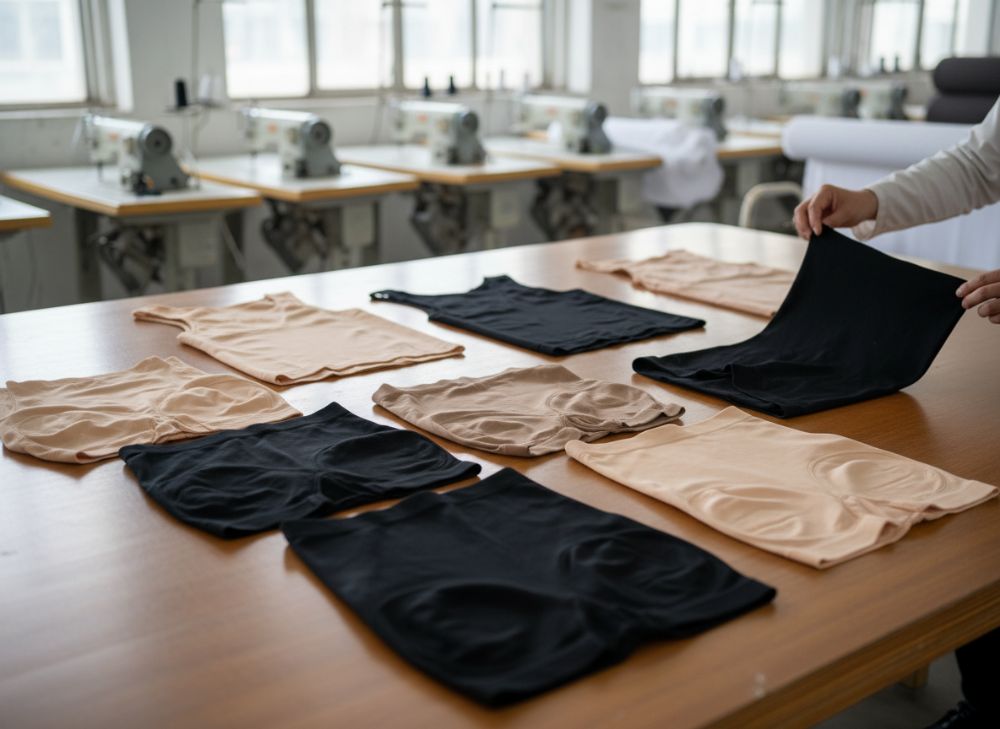
Technological capabilities include the machinery, software and production systems that affect precision and consistency. Strong manufacturers use computer-controlled cutting, seamless knitting, three-dimensional shaping techniques and pattern engineering that support targeted compression and more stable fit outcomes. A capable partner should be able to explain how they control tolerance, manage compression placement and test elasticity recovery over repeated wear.
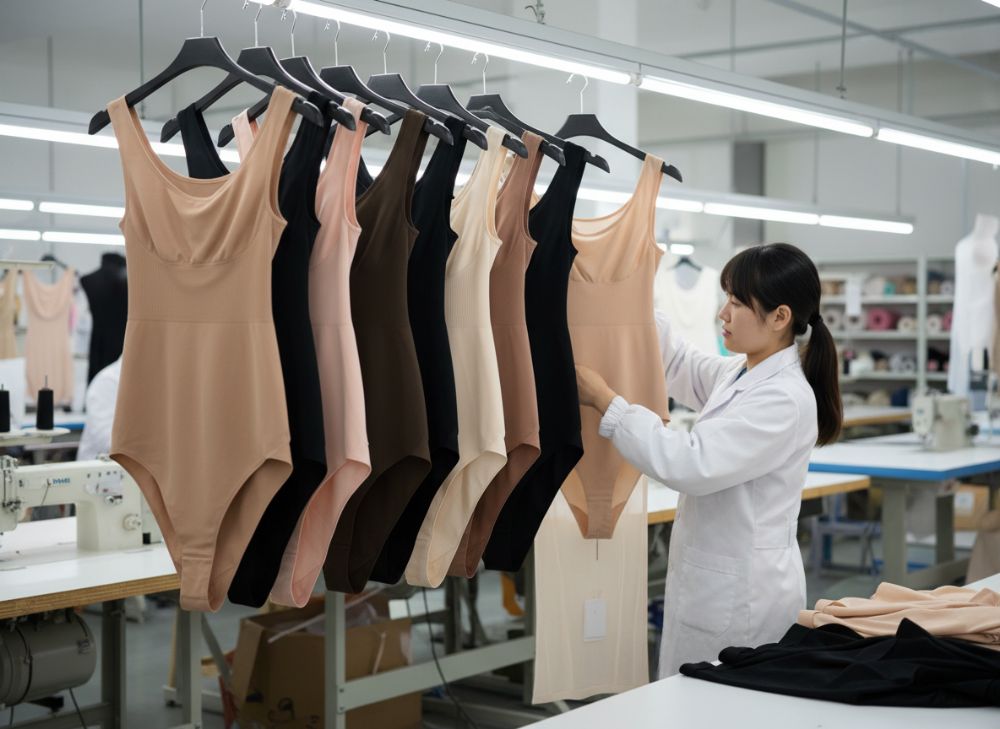
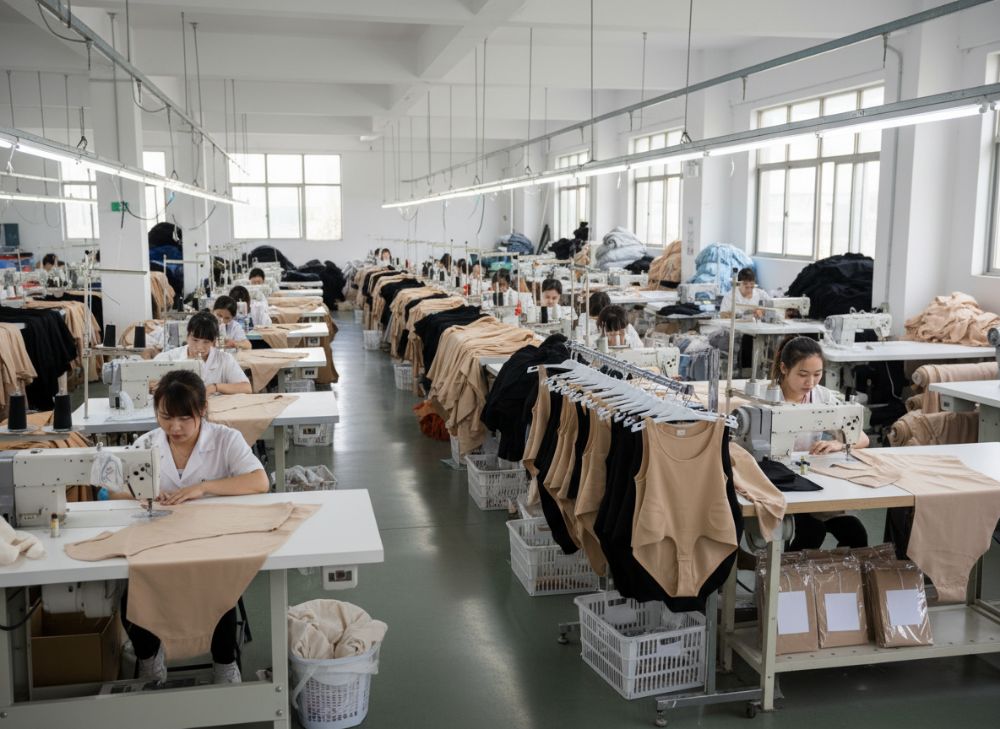
S-SHAPER is a useful example of this approach. Through its modern self-owned smart factory in China, it integrates automated production and intelligent manufacturing systems to support stable quality and scalable output. Its technical set-up includes smart cutting and 3D weaving with close tolerance control, as well as high-speed seamless knitting. For UK buyers, this matters because precision reduces size inconsistency and helps maintain the smooth silhouette expected in shapewear.
Manufacturing capabilities relate to scale, line efficiency, size range, fabric handling and output flexibility. Buyers should ask whether the factory can handle low-volume test orders and then increase capacity quickly once a style proves successful. They should also check whether the supplier can manage a full size run, colour matching, customised trims and repeated replenishment without changing fit from batch to batch.
S-SHAPER supports both smaller pilot programmes and larger volume production. It offers low MOQ entry points while maintaining the capacity for major monthly output. For UK brands, that flexibility is valuable when testing new collections ahead of Black Friday, spring launches or summer shapewear demand peaks. Its inclusive size capability from XXS to 6XL also supports brands that want broader market appeal.
Service capabilities include design support, communication speed, development workflow, export experience, packaging customisation and after-sales problem solving. This is where many generic suppliers fall short. A good butt lifter shorts manufacturer should help the buyer make better commercial decisions, not just produce to order.
S-SHAPER positions itself as a full-service OEM and ODM partner rather than a factory only. Its in-house team supports concept development, material recommendations, sample refinement, testing adjustments, branding details and flexible delivery planning. It also supports international clients through a broad logistics network and multiple overseas warehouse resources, helping reduce friction for brands serving European and UK customers.
| Capability Area | What to Check | Why It Matters | Ideal Evidence | Impact on UK Buyers | Risk If Missing |
|---|---|---|---|---|---|
| Smart cutting | Digital pattern accuracy | Cleaner panel consistency | Machine list and tolerance data | Better fit repeatability | Size mismatch returns |
| Seamless knitting | High-speed circular or seamless systems | Smoother finish | Sample proof and production images | Supports premium retail positioning | Visible seams under clothing |
| Compression engineering | Zoned shaping design | Performance credibility | Tech pack and wear test notes | Higher customer satisfaction | Weak shaping effect |
| Inclusive grading | XXS to plus-size control | Broader SKU coverage | Size chart and grading rules | Better access to UK mass market | Restricted audience |
| Output scalability | Small to large runs | Business growth support | Capacity statement | Easier replenishment planning | Stock delays |
| Product development support | Fabric, trims and fit advice | Faster launch decisions | Sampling workflow | Useful for private label brands | Longer development cycles |
The explanation behind this table is simple: technical strength drives product integrity, while service strength drives commercial reliability. Buyers need both.
Certifications to Check When Choosing butt lifter shorts manufacturer
Certifications do not guarantee perfection, but they do help buyers reduce sourcing risk. For the UK market, they show whether a supplier can work within internationally recognised quality, safety and ethical frameworks. Because shapewear sits close to the skin and often uses synthetic blends, material safety and production traceability are especially important.
At minimum, buyers should look for evidence of quality management, material compliance and responsible manufacturing. A supplier’s willingness to provide up-to-date documents is often as important as the certificates themselves. Slow or evasive responses are a warning sign.
S-SHAPER operates with ISO 9001-certified quality management processes and places emphasis on eco-certified, skin-friendly materials and full-process control. Buyers can review more on its quality assurance and compliance page. For UK importers selling through established retail channels, this type of documentation supports smoother onboarding and retailer confidence.
| Certification or Standard | What It Covers | Why UK Buyers Should Care | Best Use Case | Document to Request | Practical Note |
|---|---|---|---|---|---|
| ISO 9001 | Quality management systems | Supports consistent production control | All supplier evaluations | Valid certificate copy | Useful baseline but not enough alone |
| OEKO-TEX or similar textile safety standard | Restricted substances and skin contact safety | Important for close-to-skin garments | Premium and wellness lines | Material test certificate | Check scope and expiry date |
| BSCI or social compliance audit | Labour and workplace conditions | Relevant for retailer and ESG expectations | Retail and export supply | Audit summary or rating | Especially useful for chain stores |
| GRS or recycled material verification | Recycled content claims | Supports sustainability positioning | Eco-focused collections | Transaction certificate if applicable | Avoid vague “green” claims without proof |
| REACH-related material compliance | Chemical restrictions | Supports market suitability and risk reduction | EU and UK-oriented supply | Lab test report | Important for long-term import confidence |
| Factory audit reports | Operational and facility checks | Improves due diligence | High-volume sourcing | Third-party or buyer audit results | Useful before annual contracts |
Buyers should also verify whether testing is done on finished garments or only on raw materials. Finished-garment checks are more useful because stretch, dye and trim combinations may affect final performance.
OEM, ODM and Private Label Options at butt lifter shorts manufacturer
One of the most important sourcing decisions is choosing the right development model. UK buyers typically work through OEM, ODM or private label depending on speed, originality, budget and in-house design capability.
OEM is best when the buyer already has a product concept, measurements, artwork, packaging direction or an existing best-seller to replicate with improvements. The manufacturer follows the buyer’s design and brand identity while managing production execution. This works well for established DTC brands and multi-channel retailers that want tighter control over differentiation.
ODM suits buyers who want to enter the market faster with support from the supplier’s existing design and product development expertise. The manufacturer may adapt an existing block, recommend fabric combinations, refine compression balance and produce a market-ready collection with the buyer’s input. This often reduces development time and technical risk.
Private label is usually the fastest route. The buyer selects a proven style, applies custom branding, adjusts packaging and launches quickly. It is a common entry point for UK online sellers and boutique distributors testing category demand.
S-SHAPER offers all three models through its OEM and ODM service. Its team supports fabric choice, logo application, size customisation, colour selection, packaging and style refinement, which is especially helpful for buyers expanding from leggings or lingerie into shapewear for the first time.
| Model | Best For | Speed to Market | Customisation Level | Development Cost | Typical UK Buyer |
|---|---|---|---|---|---|
| OEM | Brands with clear product specs | Medium | Very high | Medium to high | Established DTC or retailer-owned label |
| ODM | Buyers needing design support | Medium to fast | High | Medium | Growing brands entering shapewear |
| Private label | Fast launch projects | Fast | Moderate | Low to medium | Marketplace sellers and boutiques |
| Co-development | Buyers with concept but incomplete tech pack | Medium | High | Medium | Trend-led online businesses |
| Retail exclusive program | Chains needing unique SKU sets | Medium | Very high | High | Department stores and catalogue groups |
| Capsule test launch | Seasonal or influencer collections | Fast | Moderate to high | Controlled | Social commerce brands |
The table shows that there is no single “best” model. The best choice depends on how much technical control the buyer wants and how quickly it needs to launch.
MOQ, Pricing and Sample Policies for butt lifter shorts manufacturer
MOQ is often the first topic buyers ask about, but it should not be viewed in isolation. The true question is whether the MOQ aligns with the buyer’s test strategy, target margin and size curve. A low MOQ sounds attractive, but if the style requires too many colours or too broad a size range at launch, working capital can still become strained.
For butt lifter shorts, price depends on fabric composition, compression complexity, seamless or cut-and-sew construction, logo method, packaging, colour count, trim details and order volume. Sampling charges also vary depending on whether the buyer is modifying an existing style or building a new one from scratch.
S-SHAPER is suited to buyers who need flexibility at different growth stages. It can support small-batch testing from relatively low MOQs starting at 50 pieces, while also scaling to larger production programmes once sales are validated. This structure is useful for UK brands that want to test one or two hero SKUs online before committing to a broader collection.
Buyers should ask for quotations in a format that clearly separates the following:
- Sample charge
- Pattern or development fee if applicable
- Unit price by quantity tier
- Branding and packaging cost
- Carton and master packing cost
- Shipping term and port basis
| Cost Element | What Affects It | Low-Volume Impact | High-Volume Impact | Buyer Advice | Margin Effect |
|---|---|---|---|---|---|
| Fabric | Nylon, spandex, recycled blends, GSM | Higher per unit | Better negotiation range | Request alternatives by performance tier | Major cost driver |
| Construction | Seamless, panels, waist support | Complexity raises price | Efficiency improves cost | Match design to selling price | High |
| Logo application | Heat transfer, woven label, print | Set-up cost matters | Amortised more easily | Choose simple branding for tests | Moderate |
| Packaging | Box, polybag, insert, barcode | Can disproportionately add cost | Improves with scale | Keep launch packaging lean | Moderate |
| Sampling | New pattern or existing block adjustment | Higher relative burden | Lower relative burden | Use samples to finalise fit before bulk | Indirect but important |
| Freight | Mode, carton size, fuel and route | High per unit | Better consolidated economics | Model landed cost early | High for UK importers |
The practical lesson from this table is that unit price alone is misleading. UK buyers must compare total landed cost, including duty assumptions, inland transport and packaging choices.
Quality Control Standards at butt lifter shorts manufacturer Facilities
In shapewear, quality control must go beyond checking whether the garment looks acceptable. The factory should inspect fit, stitch integrity, elasticity recovery, measurement tolerance, shade consistency, bonding strength where relevant, trim attachment and packaging accuracy. A well-managed butt lifter shorts manufacturer should use in-line and final inspection stages rather than relying on end-of-line checks only.
For UK buyers, the strongest quality systems usually include:
- Pre-production review against approved sample
- Material inspection before cutting or knitting
- In-line checks at key production stages
- Measurement control by size
- Stretch and recovery assessment
- Final AQL-based inspection
- Packing verification and carton drop checks where needed
S-SHAPER’s self-owned factory model is relevant here because it gives greater control over process discipline than purely outsourced sourcing structures. Its emphasis on automated systems and strict quality control helps reduce common shapewear problems such as uneven compression, inconsistent waistbands and poor size repeatability. Buyers exploring the company’s background can review its about us page for more context on its manufacturing approach.
The bar chart shows how demand intensity varies by channel and application. Private label online and daily wear remain strong in the UK, while specialist segments can still be profitable if supported by strong product positioning.
| QC Checkpoint | What Is Checked | When It Happens | Why It Matters | Recommended Standard | Buyer Action |
|---|---|---|---|---|---|
| Raw material inspection | Fabric defects, composition, shade | Before production | Prevents hidden material problems | Recorded batch approval | Ask for incoming QC reports |
| Pattern and marker review | Measurement accuracy | Pre-production | Protects fit consistency | Approved tech pack alignment | Sign off PPS carefully |
| In-line sewing or knitting inspection | Assembly quality and zone placement | During production | Catches defects early | Documented patrol checks | Request in-line photos |
| Stretch and recovery test | Elastic performance | During and after production | Critical for shaping function | Internal or lab benchmark | Ask for method used |
| Final measurement audit | Spec tolerance by size | Before packing | Reduces return risk | Defined tolerance sheet | Verify size set approval |
| Final AQL inspection | Overall defect rate | Pre-shipment | Shipment acceptance control | AQL level agreed in advance | Use third-party check when needed |
The explanation here is straightforward: each checkpoint removes a different type of risk. Skipping even one can create expensive downstream problems once goods reach UK consumers.
Lead Times and Shipping Logistics for butt lifter shorts manufacturer
Lead times are shaped by development complexity, raw material readiness, production loading, quality review and transport mode. UK buyers should not ask only, “How fast can you make it?” They should ask, “What are the milestones from sample approval to final delivery, and what can delay each stage?”
Typical timelines may include:
- 7 to 14 days for basic sample updates
- 2 to 4 weeks for development of new styles
- 3 to 6 weeks for bulk production after final approval
- Air freight for urgent launches
- Sea freight for margin-sensitive larger orders
Shipping into the United Kingdom usually requires planning around port choice, customs timing and inland distribution. Goods may arrive through Felixstowe, Southampton, London Gateway or other key entry points before moving onward to fulfilment centres near Birmingham, Manchester or the South East. For e-commerce brands, warehouse speed after port clearance can be just as important as factory output speed.
S-SHAPER’s broader international logistics support and multi-warehouse network are relevant here because they can help buyers build more agile replenishment strategies. That matters when stock needs to be split between UK fulfilment, European channels and cross-border online sales.
| Stage | Typical Time Range | Main Risk | How to Reduce Delay | Best for UK Buyers | Commercial Effect |
|---|---|---|---|---|---|
| Sampling | 7-21 days | Repeated revisions | Provide clear comments and measurements | All buyers | Speeds launch decisions |
| Material booking | 5-15 days | Fabric shortages | Confirm colour and composition early | Seasonal programmes | Affects production start |
| Bulk production | 20-45 days | Factory overload | Reserve capacity in advance | Repeat orders | Protects stock continuity |
| Final inspection | 1-3 days | Failed QC | Use pre-shipment checklist | Retail orders | Prevents defective imports |
| Air freight | 5-10 days transit | High cost | Use for replenishment only | Fast-moving online SKUs | Margin pressure but fast sales capture |
| Sea freight | 25-40 days transit | Port congestion | Plan around peak seasons | Large volume orders | Best landed cost efficiency |
For UK buyers, the best logistics strategy often combines slower sea shipments for core stock with selective air replenishment for best-sellers. This hybrid model improves margin control without sacrificing availability.
The area chart reflects an important category trend: sourcing is steadily moving toward seamless construction, comfort-first shaping and better material credentials. This is likely to continue through 2026.
How to Vet and Partner With butt lifter shorts manufacturer Experts
Supplier vetting should be methodical. The goal is not just to find a producer but to build a reliable operating partner. UK buyers should compare potential factories on evidence, not presentation. A polished catalogue means little without strong process control and transparent communication.
Start with product and category fit. Ask what percentage of the factory’s business is shapewear versus general apparel. A true specialist will discuss compression mapping, edge rolling prevention, gusset comfort, fabric rebound, pattern balance and size grading detail with confidence.
Next, validate manufacturing evidence. Ask for machine lists, sample timelines, QC flowcharts, facility photos, current certificates and references from comparable markets. Then test communication: send a detailed enquiry and assess whether responses are clear, technically sound and commercially aware.
UK buyers should also evaluate landed-cost awareness. The best suppliers understand that a good quote must support customs planning, packaging compliance and realistic shipping modes. They should be comfortable discussing Incoterms, carton optimisation and replenishment strategy.
One practical sourcing approach is to begin with a structured pilot:
- Choose one or two core butt lifter shorts styles.
- Develop a clear size chart and target compression brief.
- Order samples in more than one size.
- Wear-test across body types common to your customer base.
- Place a small first bulk order.
- Monitor return reasons and consumer reviews.
- Refine before large-scale rollout.
This process is particularly useful in the UK, where fit expectations vary significantly across demographics and channels. A style that performs well on a social media campaign may still need grading adjustments for mainstream retail customers.
The comparison chart highlights why specialists usually outperform generic factories in shapewear. The category requires higher technical control and more informed product development support.
As for partnership strategy, buyers should look for suppliers that can support them over several stages of growth. S-SHAPER is relevant here because it blends technical manufacturing capacity, scalable production and full-service development support. It works with international brands across multiple regions, which is useful for UK companies planning expansion beyond their domestic market.
Future trends through 2026 will make supplier quality even more important. Three shifts stand out:
- Technology: greater use of smart cutting, digital pattern optimisation, 3D knitting and data-led fit refinement.
- Policy and compliance: stronger expectations around traceability, chemical safety, honest sustainability communication and responsible manufacturing.
- Sustainability: more demand for eco-certified fabrics, lower-waste production and durable garments that reduce return-related waste.
UK buyers who prepare now will be in a stronger position as retailer requirements and consumer scrutiny increase.
| Vetting Step | Question to Ask | Good Sign | Warning Sign | Why It Matters | Decision Impact |
|---|---|---|---|---|---|
| Category focus | How much of your business is shapewear? | Clear technical answer | Very broad generic response | Shows expertise depth | High |
| Sample quality | Can you provide revised fit quickly? | Structured comments and updates | Repeated mistakes | Predicts bulk accuracy | High |
| Compliance | What certificates are current? | Prompt document sharing | Expired or vague proof | Reduces import risk | High |
| Communication | Who manages my project? | Named account support | Fragmented replies | Improves execution speed | Medium to high |
| Capacity | Can you scale if sales rise? | Clear production planning | Uncertain output claims | Supports growth | High |
| Logistics | How do you support UK delivery planning? | Understands transit options | No freight awareness | Protects stock flow | Medium |
This final table acts as a working buyer checklist. If a supplier performs well across all six areas, the partnership is far more likely to succeed.
FAQ: Butt Lifter Shorts Manufacturer
What makes a good butt lifter shorts manufacturer for the UK market?
A good supplier combines shaping expertise, stable sizing, documented quality control, compliant materials, clear communication and delivery reliability. UK buyers should also look for flexibility in MOQs and support with private label or OEM development.
What MOQ should a new buyer expect?
It varies by construction and customisation level, but low-volume trial orders are increasingly available from specialist suppliers. S-SHAPER, for example, can support small-batch entry points starting from 50 pieces for certain programmes, which is useful for launch testing.
Is OEM or ODM better for a start-up?
If the start-up has a strong product vision and technical detail, OEM may work well. If it needs design guidance and faster development, ODM is usually more practical. Private label is often the quickest route for a low-risk market test.
How long does production usually take?
After sample approval, many projects run around 3 to 6 weeks for production, though timing depends on fabric readiness, order size and construction complexity. Shipping to the UK then depends on whether you use air or sea freight.
What certifications matter most?
ISO 9001 is a strong baseline for quality management. Material safety and social compliance evidence are also highly relevant, especially for UK retailers and sustainability-led brands.
How can buyers reduce return rates?
Focus on accurate grading, realistic compression, clear size charts, multi-size fit testing and consistent quality control. It also helps to choose a manufacturer experienced in inclusive sizing and shapewear-specific construction.
Why do specialised shapewear factories outperform generic apparel suppliers?
Because the category depends on compression balance, elasticity recovery, close tolerance control and comfort engineering. These are technical issues that many general factories do not manage well.
What UK sectors buy butt lifter shorts most actively?
E-commerce brands, lingerie retailers, athleisure labels, maternity and postpartum brands, occasionwear-focused shops and import distributors all source this category. Demand is strongest where comfort, body confidence and practical shaping intersect.
Can a manufacturer support sustainable product development?
Yes, if it has access to eco-certified fabrics, responsible sourcing processes and transparent documentation. Buyers should request proof rather than relying on marketing claims.
How should I start a partnership with S-SHAPER?
A practical route is to begin with a focused enquiry covering product type, quantity, target price, sizing, branding needs and delivery timeline. From there, review its main website, company background, compliance capabilities and OEM/ODM services to align the project scope.
For UK buyers, the overall conclusion is clear: the best butt lifter shorts manufacturer is one that can move beyond simple production and act as a technical, operational and commercial partner. In a category where comfort, fit and repeatability define reputation, that difference is significant.