
OEM vs ODM shapewear is primarily a question of ownership and development responsibility. Choose OEM when your team has a defined product concept and needs a manufacturer to produce it. Choose ODM when you need supplier-led development or want to adapt an existing technical platform. Choose private label when speed and lower development complexity matter more than creating a completely new garment.
The best route is not automatically the most customised one. For a shapewear launch, the right model depends on how clear your product brief is, which features genuinely differentiate the brand, the quantity you can commit to, and how much sampling, fit work and commercial risk your team can manage.
Define OEM, ODM and Private Label
The terminology is not always applied consistently by suppliers, so define the scope in writing rather than relying on the label alone.
| Model | Typical starting point | Main development responsibility | Best suited to |
|---|---|---|---|
| OEM | Your own product specification, design or technical concept | Brand sets the requirements; manufacturer engineers and produces to the agreed brief | Brands with clear product direction and specific performance requirements |
| ODM | A supplier’s existing capability, pattern base or product concept, adapted for the buyer | Shared; supplier provides the foundation and development support | Brands seeking differentiated products without starting from zero |
| Private label | A ready or near-ready catalogue product | Supplier has already developed the product | Retailers and brands prioritising a faster, simpler range launch |
OEM shapewear development
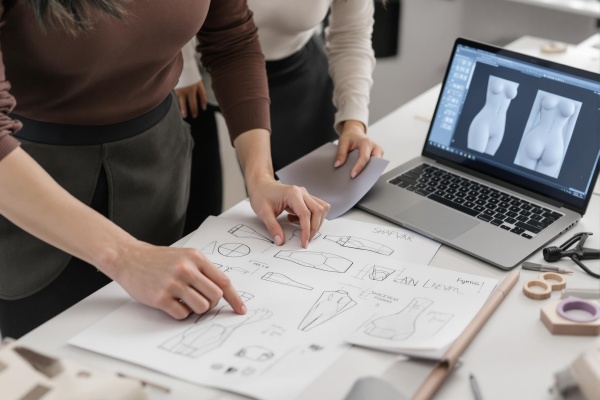
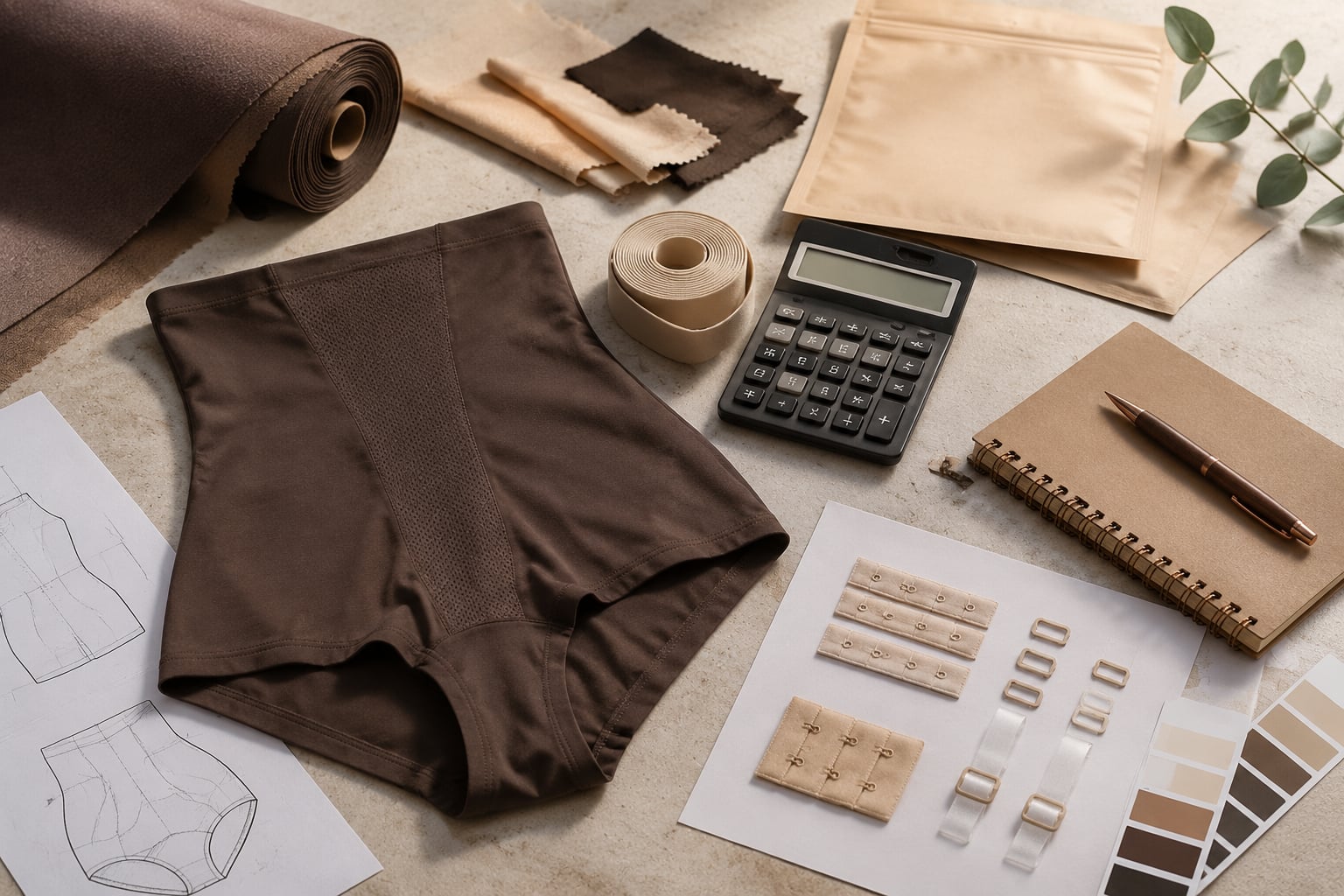
In an OEM shapewear project, the buyer typically brings a detailed concept. This may include a tech pack, size chart, target compression zones, fabric composition direction, construction drawings, colour standards and packaging requirements.
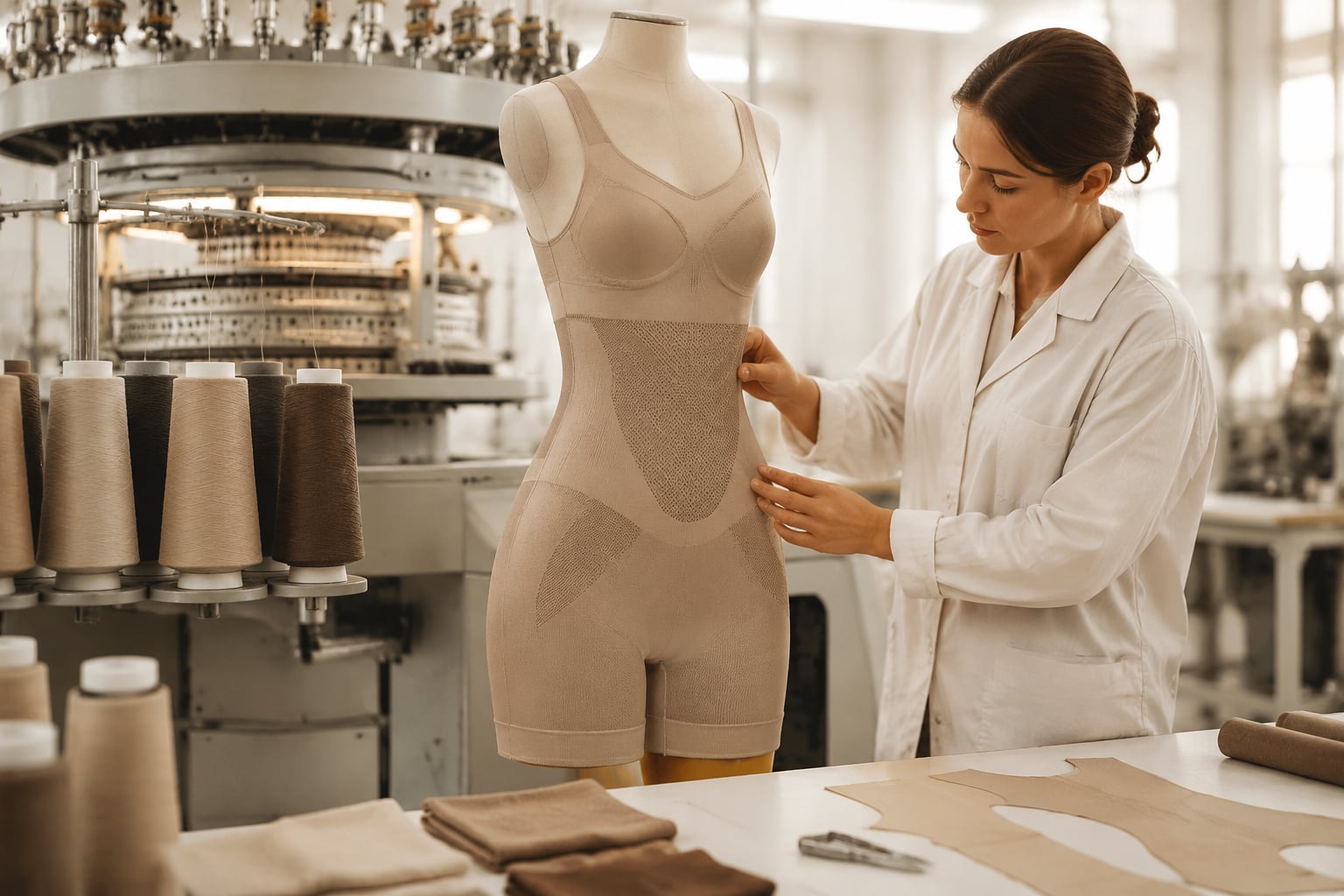
The manufacturer then translates that brief into production-ready garments. This can involve pattern development, grading, material sourcing, sample making and manufacturing planning. OEM does not necessarily mean every component is invented from scratch; it means the product is made to the buyer’s defined requirements.
OEM is often appropriate for a signature bodysuit, a high-waist brief with a distinctive waist construction, or a product designed around a specific fit gap in the German and wider European market.
ODM shapewear development
ODM begins with the manufacturer’s development expertise, established patterns, material options or proven shapewear constructions. The buyer selects or co-develops a product direction and then adapts it.
For example, a brand might start with an existing seamless shaping shorts platform and specify a new length, colour range, compression level, branding and retail packaging. The supplier may advise on feasible knit structures, bonding techniques, gusset construction or size grading based on its existing know-how.
ODM can offer more differentiation than private label while reducing the uncertainty and development burden of a fully original OEM programme.
Private-label shapewear
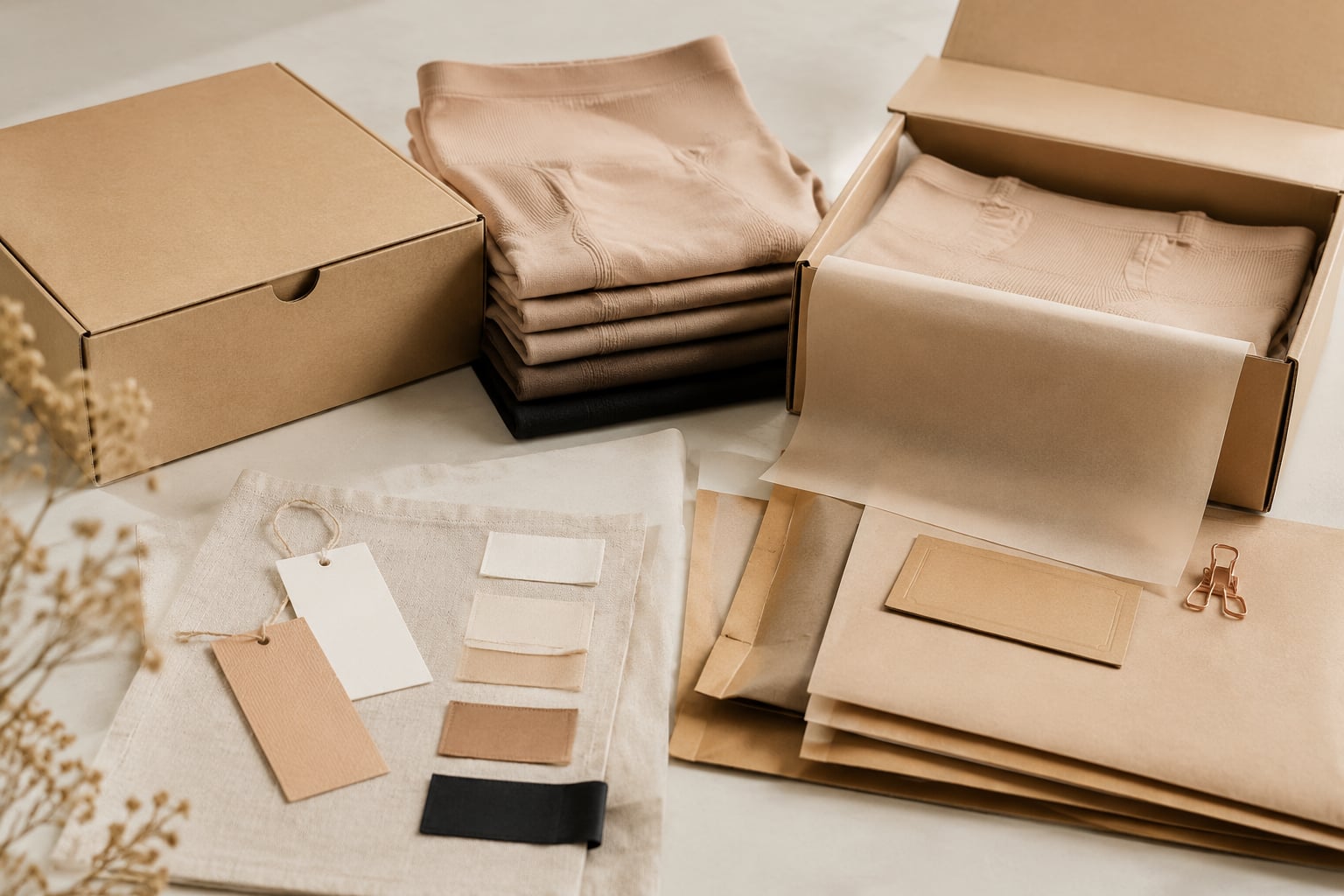
Private label generally means selling an existing supplier product under your own brand. Changes are usually limited to options already available: labels, hangtags, packaging, selected colours, or sometimes standard size ranges.
It is a practical entry route when a buyer wants to test demand for smoothing briefs, shaping shorts or basic bodysuits before investing in a bespoke collection. However, it may be harder to create a distinct position if comparable products are accessible to other buyers.
Private label can still require careful review. A product being ready to brand does not automatically mean it matches your fit expectations, quality standard, claims, packaging needs or target retail price.
Compare the Required Inputs
The amount of information a buyer must provide rises significantly from private label to OEM. Missing inputs do not disappear; they become assumptions made during development, which can create delays, unsuitable samples or unexpected cost.
What an OEM brief should include
For OEM shapewear, provide enough detail for the supplier to understand both the garment and its intended wearer. At minimum, consider:
- Product type and intended use, such as everyday smoothing, occasionwear support or post-partum comfort positioning
- Target wearer profile and key fit concerns
- Required shaping zones, including tummy, waist, thighs, back or bust
- Desired level and distribution of compression
- Construction preferences, such as bonded hems, seamless knitting, power mesh panels, boning or adjustable straps
- Fabric direction, hand feel, opacity, stretch recovery, breathability and target fibre composition
- Target size range and the body measurements behind it
- Colour requirements and standards for colour approval
- Branding, care labels, packaging and barcode requirements
- Target ex-works or landed-cost direction, if available
- Expected order quantities, launch timing and replenishment expectations
A sketch alone is rarely sufficient for a complex shaping garment. Two garments can look similar on a flat drawing yet perform very differently due to panel placement, fabric weight, elastane content, seam tension and pattern balance.
What an ODM buyer needs to provide
ODM needs a commercial and aesthetic direction, even when the supplier provides the technical starting point. Useful inputs include:
- The product category and target price positioning
- Your desired customer and retail channel
- The functional outcome you want, such as firmer waist support without visible lines
- Reference products, with comments on what to retain or avoid
- Brand style rules for colours, trims and packaging
- Required size range and market priorities
- The degree of exclusivity or differentiation expected
The more clearly you describe the outcome, the more effectively the supplier can recommend an appropriate platform. Asking for “premium shapewear” is too broad; explaining that you need a mid-thigh short that remains comfortable during all-day office wear gives a development team something practical to evaluate.
What a private-label buyer needs to provide
Private label is simpler, but not input-free. Confirm:
- Which existing model and variation you want
- Available colours and sizes
- Branding method and artwork
- Packaging format
- Quantity by size and colour
- Product-label information needed for your sales market
- Your required quality-approval process before bulk production
Do not assume that a catalogue item’s standard size chart matches your customer base. Fit expectations, buying patterns and return reasons can differ by channel and brand position.
Understand Development Responsibility
A project becomes smoother when the parties agree on who owns each decision. This is especially important in shapewear because “fit” and “support” are subjective unless converted into measurable requirements.
| Development area | OEM | ODM | Private label |
|---|---|---|---|
| Product concept | Primarily buyer-led | Shared or supplier-led | Supplier-led |
| Pattern starting point | New or buyer-defined | Existing platform adapted | Existing supplier pattern |
| Material selection | Buyer specification or joint sourcing | Supplier options with buyer selection | Usually fixed or limited options |
| Fit approval | Buyer approves to its standards | Buyer approves supplier-developed samples | Buyer verifies the existing fit |
| Branding and packaging | Buyer-led | Buyer-led within project scope | Buyer-led within available options |
| Production process | Manufacturer-led | Manufacturer-led | Manufacturer-led |
For every model, the buyer should retain final approval of the product sold under its brand. The supplier may have strong development expertise, but it cannot fully define your customer promise, sales claims or acceptable return-risk level.
Set clear decision gates
A practical shapewear development plan usually includes decision gates for:
- Product concept and commercial viability
- Material and trim direction
- First sample review
- Fit and wear feedback
- Pre-production sample approval
- Packaging and label approval
- Bulk-production release
Document what approval means at each stage. For example, “approved fit” should clarify whether the sample is approved for silhouette, compression, movement, size grading, hem stability and visible-line performance, or only for overall appearance.
Compare Customisation Scope
Customisation should focus on what shoppers will notice and what supports your commercial position. Not every change adds meaningful value, and each change can introduce development work, minimum-order implications or production risk.
Typical OEM customisation options
OEM offers the widest scope, potentially including:
- New patterns and panel layouts
- Bespoke shaping-zone placement
- Custom fabric specifications or exclusive material combinations
- New seamless knit programmes
- Distinctive neckline, strap, gusset or closure designs
- Custom colour development
- Brand-specific size charts and grading
- Bespoke trims, labels, packaging and garment presentation
The limitation is feasibility. A design may look attractive but fail to deliver consistent support, comfort or durability at production scale. Early input from a shapewear manufacturer helps identify where the pattern, fabric and construction must work together.
Typical ODM customisation options
ODM customisation is usually more selective. It can include:
- Adjusting garment length or neckline
- Choosing from available fabrics, colours or knit variations
- Modifying branding and packaging
- Refining support zones within an existing pattern family
- Adding selected trims or functional details
- Creating a tailored assortment from established silhouettes
ODM is often the most balanced option where a brand needs a recognisable product but does not require a completely new engineering programme.
Typical private-label options
Private-label changes normally concentrate on presentation:
- Woven or printed brand labels
- Care and size labels
- Hangtags and inserts
- Branded boxes, bags or sleeves
- Existing colour and size options
Some suppliers may offer limited colour or trim changes, but buyers should treat these as exceptions to confirm rather than assumptions.
Avoid customisation without a customer benefit
Common costly changes include highly specific fabrics with no measurable wear advantage, multiple launch colours with uncertain demand, and unusual trims that complicate care or quality control. Before approving a custom feature, ask:
- Does it improve shaping, comfort, fit or visual identity?
- Can customers understand the benefit?
- Does it align with the expected retail price?
- Can it be checked consistently during production?
- Will it complicate reorders?
Plan Samples and Approvals
Sampling is not simply a formality before bulk production. It is the point where a product idea is tested against real bodies, materials and movement.
For shapewear, a visual review on a mannequin is not enough. The sample should be assessed during wear, including sitting, walking, bending and repeated dressing. A garment can create a smooth silhouette while still rolling at the waist, cutting into the thigh, shifting at the bust or becoming uncomfortable over several hours.
A practical shapewear sample sequence
The exact sample path varies by project, but an OEM or ODM programme may include:
- Development sample — checks the product concept, construction and material direction.
- Fit sample — refines measurements, compression, proportions and comfort.
- Size-set sample — checks grading across the intended size range.
- Pre-production sample — confirms the bulk-ready product, colour, trims, labels and packaging.
Private label may require fewer stages, but buyers should still inspect a branded production-representative sample before giving final approval.
Build a useful fit-review process
Use wearers who reflect the intended customer rather than relying on a single sample size or one person’s opinion. Record feedback in a structured form:
- Was the garment easy to put on and remove?
- Was the shaping effect aligned with the product promise?
- Did the waist, leg openings or straps roll, dig in or shift?
- Was the fabric sufficiently opaque when stretched?
- Did seams, bonded edges or closures cause discomfort?
- Was the size recommendation intuitive?
- Did the garment recover its shape after wear and washing tests agreed for the project?
Agree corrective actions in writing. Vague comments such as “make it more comfortable” should become specific instructions, such as reducing elastic tension at the leg opening or revising the waist height.
Review Time, Cost and Risk Drivers
OEM, ODM and private label differ less in a simple “cheap versus expensive” way than in where time, cost and risk sit.
| Factor | OEM | ODM | Private label |
|---|---|---|---|
| Upfront development effort | Highest | Moderate | Lowest |
| Product uniqueness potential | Highest | Moderate to high | Lower |
| Sampling complexity | Highest | Moderate | Lower |
| Speed to market | Usually slower | Often balanced | Often faster |
| Fit and technical uncertainty | Higher at the start | Reduced by existing platforms | Lower product-development uncertainty |
| Long-term differentiation | Strong if executed well | Good with meaningful adaptations | Depends mainly on brand, assortment and service |
Main cost drivers
Do not assess cost only by the quoted garment price. Review the full project cost, which may include:
- Pattern and development work
- Sampling and revisions
- Custom materials, dyes, trims or packaging
- Testing or verification required for your market and claims
- Minimum order quantities by colour, fabric or component
- Size-range complexity
- Freight, duties, storage and quality-inspection costs
- Cost of delays, markdowns or returns if fit is wrong
For Germany and the EU, check early what product information, fibre labelling, consumer safety requirements and substantiation for performance claims apply to your specific sales model. Requirements can differ according to product type, materials, claims and route to market. Confirm responsibilities with appropriate compliance advisers and your supplier rather than assuming that a generic label format is sufficient.
Main risk drivers
The central OEM risk is that an unproven concept needs more development than expected. The central ODM risk is believing a platform is “proven” without confirming it suits your customer, size range and brand promise. The central private-label risk is lack of product distinction or a mismatch between a standard item and your market position.
Other frequent risks include:
- Approving samples without wear testing
- Adding too many custom elements to an initial launch
- Treating compression as a single, universally understood term
- Failing to define tolerances, measurements and approval criteria
- Launching a wide size range without reviewing grading
- Making shaping, body-contouring or comfort claims that the product cannot consistently support
- Assuming exclusivity where no exclusivity agreement exists
Choose the Right Model for the Project
Use the project objective—not ambition alone—to select a model.
Choose OEM when product control is central
OEM is usually the strongest route when your brand has a well-defined product gap to solve and can provide clear direction. It is suitable when the product itself is meant to be a defensible differentiator, such as a distinctive silhouette, fit system, fabric combination or shaping construction.
Choose OEM if you can commit to a structured development process, evaluate samples carefully and manage the added time and commercial uncertainty.
Choose ODM when you need a strong starting point
ODM is a practical choice when you want more than a branded stock item but do not need every aspect engineered from the beginning. It works well for brands adding a shapewear category, expanding an existing range or testing a refined positioning with controlled development exposure.
The key is to establish exactly what is being adapted. Ask which parts are standard, which changes are technically possible, and whether other buyers may use the same foundation.
Choose private label when speed and validation matter
Private label makes sense when you want to validate category demand, serve a clear basic need or broaden an assortment with lower development complexity. It can also be useful for retailers that place more value on merchandising, channel access and brand presentation than on proprietary garment engineering.
Select private label only after reviewing the actual garment, size chart, available options and product-documentation needs. Fast does not mean automatic approval.
A short selection checklist
Choose OEM if you answer “yes” to most of these questions:
- Do we have a specific product concept that existing models cannot meet?
- Can we define our customer, fit direction and performance priorities?
- Are we prepared for iterative samples and technical decisions?
- Will the garment’s construction be central to our brand differentiation?
Choose ODM if these statements fit better:
- We need supplier expertise and an established technical base.
- We want meaningful adaptation without full ground-up development.
- We want to reduce early fit and construction uncertainty.
- We can differentiate through selected features, branding and assortment strategy.
Choose private label if these are the priorities:
- We need a market-ready product foundation.
- We want to test demand before deeper product investment.
- Our customisation needs are mainly brand presentation.
- We accept that product exclusivity may be limited.
Prepare the Supplier Brief
A concise but complete supplier brief prevents avoidable back-and-forth and makes quotations more comparable. It should be suitable for OEM, ODM or private label enquiries, with the level of detail adjusted to the model.
Supplier brief template
1. Project overview
- Brand and sales channel
- Product category
- Intended launch period
- Target customer and key market
2. Development model
- OEM, ODM or private label
- Reason for choosing that route
- Required level of product and packaging customisation
3. Product requirements
- Garment type and reference images
- Target shaping effect and comfort priorities
- Preferred construction, materials and colours
- Size range and target body measurements
- Required product features and features to avoid
4. Commercial requirements
- Expected quantity by style, colour and size
- Target cost direction, if shareable
- Reorder expectations
- Required packaging and labelling format
5. Quality and approval process
- Sample stages required
- Fit-review process and approvers
- Measurement tolerances to be agreed
- Inspection expectations
- Required product documentation or testing to confirm
6. Questions for the supplier
- Which elements can be customised?
- What minimum quantities apply to each custom element?
- Which materials and colours are available?
- What sample stages are recommended?
- What information is needed before production can be scheduled?
- Who is responsible for each approval and final product specification?
For brands comparing development partners, review the supplier’s OEM and ODM shapewear options alongside its wider shapewear development and production services. The objective is not simply to find a factory that can make a garment, but to establish whether its process matches your product ambition and internal capabilities.
S-SHAPER supports OEM, ODM and private-label shapewear projects from product development through scalable series production. If you are preparing a new range, use the brief above to define your starting point, then explore business solutions for shapewear brands that align with your route to market.