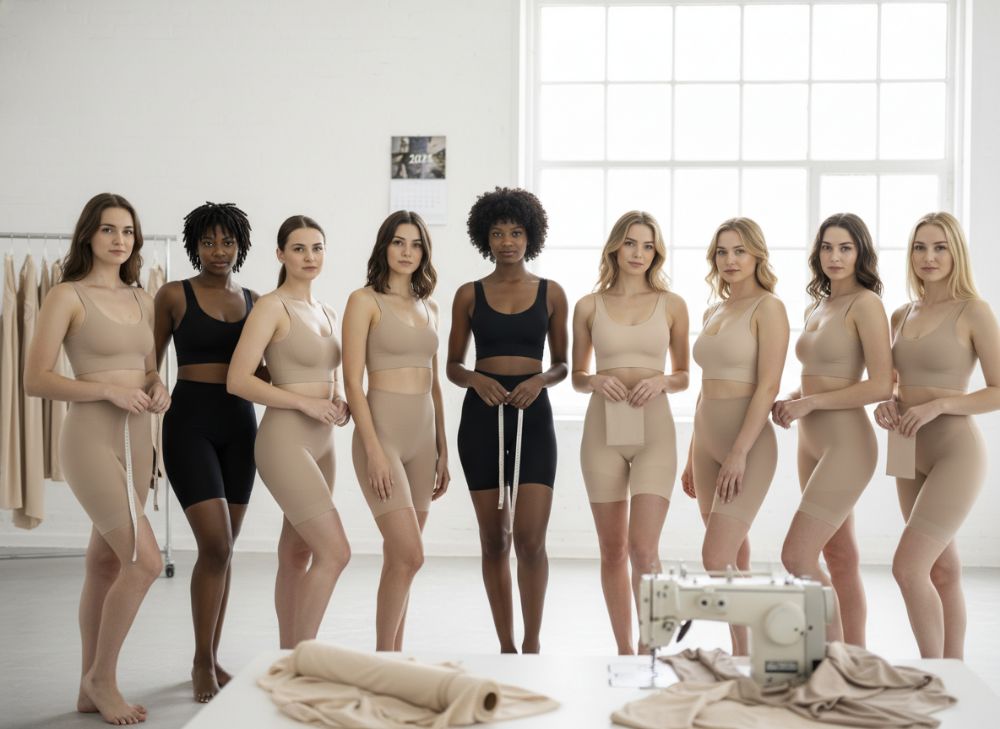
For buyers in the United Kingdom, the best butt lifter shorts are shaping shorts designed to enhance the natural curve of the hips and buttocks while smoothing the waist, tummy, and upper thighs. They are most often bought by lingerie and shapewear brands, private label retailers, e-commerce sellers, fitnesswear distributors, postpartum product companies, and boutique fashion chains in cities such as London, Manchester, Birmingham, Glasgow, and Leeds. The strongest products combine medium to firm compression, breathable stretch fabric, stable recovery, inclusive sizing, and a comfortable fit for daily wear. For trade buyers, success usually depends on balancing fabric performance, realistic MOQ, compliance, and reliable OEM or ODM support.
In the UK market, shoppers increasingly expect shapewear that looks invisible under clothing, feels soft against sensitive skin, and works across multiple use cases such as occasion wear, office wear, recovery support, and everyday confidence dressing. That is why butt lifting shorts are no longer a niche item. They now sit at the intersection of fashion, bodywear, wellness, and functional apparel.
This guide explains what best butt lifter shorts are, who buys them most, which materials and constructions matter, what price bands to expect in wholesale, and how to choose a dependable factory partner. For buyers seeking a one-stop manufacturing partner, S-SHAPER offers integrated shapewear development for international markets, including the United Kingdom, with capabilities spanning design support, flexible production, and scalable logistics.
Quick Answer
The best butt lifter shorts for the UK market are high-stretch shaping shorts engineered with targeted lift zones, controlled compression, breathable yarns, and body-inclusive size grading. The most commercially successful styles usually feature a high waist, sculpting front panel, open-knit or ruched butt zone, anti-roll waistband, and smooth leg finish. UK buyers prefer products that create a visibly lifted look without obvious padding, bulky seams, or discomfort during all-day wear.
From a business standpoint, the strongest-selling wholesale categories are:
- Daily seamless butt lifter shorts for online marketplaces
- High-waist sculpting shorts for department store and boutique resale
- Postpartum shaping shorts for wellness and maternity retailers
- Performance-influenced lift shorts for athleisure sellers
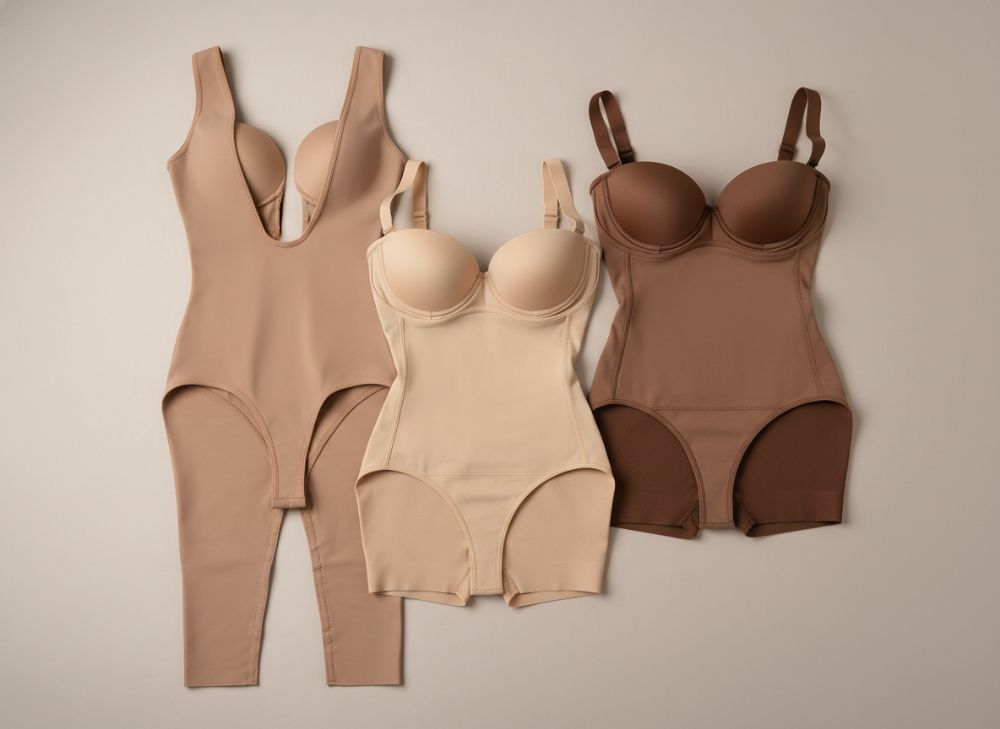
- Private label nude-tone collections for inclusive fashion brands
For importers and brand owners, the “best” product is not just about appearance. It must also deliver stable repeat production, low defect rates, trusted compliance, and room for branding. A reliable supplier should support custom logos, labels, packaging, fit adjustments, and consistent replenishment.
| Buying Goal | Recommended Style | Compression Level | Best Fabric Blend | Main Sales Channel | Commercial Advantage |
|---|---|---|---|---|---|
| Everyday comfort | Seamless high-waist short | Medium | Nylon/spandex | DTC e-commerce | High repeat purchase |
| Occasion wear | Firm control butt lifter short | Medium-firm | Polyamide/elastane | Boutiques | Strong visual shaping |
| Postpartum use | Supportive recovery short | Light-medium | Soft touch knit | Maternity retail | Comfort and support balance |
| Premium private label | Bonded edge sculpt short | Medium | Microfibre/spandex | Brand websites | Luxury finish |
| Fitness crossover | Scrunch or contour short | Light-medium | Moisture-wicking knit | Social commerce | Trend-led appeal |
| Inclusive size launch | Extended-size shaping short | Medium | High-recovery stretch blend | Marketplace + retail | Broad audience reach |
The table above shows that the best butt lifter shorts vary by sales channel and consumer expectation. In the United Kingdom, a product that works for a fast-moving Amazon seller may not be ideal for a premium private label launch in Chelsea or Edinburgh. Product-market fit matters as much as fabric quality.
What Is Best Butt Lifter Shorts and Who Buys It Most
Butt lifter shorts are shapewear shorts constructed to lift and define the buttocks while simultaneously smoothing surrounding areas such as the lower abdomen, hips, and thighs. Unlike conventional control shorts, they use design engineering to direct support away from the glute area or to frame it strategically. This may be done through knit mapping, contour panels, compression zoning, under-butt support bands, or shaped openings. The goal is a naturally curvy look rather than a flat, compressed result.
In the UK, the main buyers fall into several business groups:
- Private label shapewear brands building online collections
- Fashion retailers adding invisible bodywear to occasionwear ranges
- Cross-border e-commerce sellers serving Amazon UK, TikTok Shop, and Shopify stores
- Lingerie importers supplying independent retailers
- Fitness and lifestyle brands entering body contouring categories
- Postpartum and wellness distributors
The biggest end-user groups are women aged roughly 22 to 45, although the audience is widening. Bridal customers, office professionals, mothers after childbirth, event shoppers, and body-confident social media buyers all contribute to demand. In places such as London and Manchester, fashion-driven buyers often prioritise silhouette enhancement under dresses and tailored garments. In cities with strong online retail fulfilment networks such as Birmingham and Leicester, repeat orders are driven by convenience, price tiering, and inclusive sizing.
There is also a clear wholesale distinction between “fashion shaping” and “functional support.” Fashion shaping products sell on before-and-after visuals and outfit compatibility. Functional support products sell on comfort, stability, and daily wear. The best suppliers understand how to develop collections for both angles.
| Buyer Type | Typical Order Focus | Preferred Price Band | Key Product Need | Most Important Risk | Reorder Potential |
|---|---|---|---|---|---|
| Private label startups | Low MOQ testing | Entry-mid | Branding flexibility | Inconsistent fit | High if launch performs |
| Established shapewear brands | Refined fit and scalability | Mid-premium | Stable production quality | Lead time delays | Very high |
| Boutique retailers | Trend-led curated stock | Mid | Visual appeal | Slow movers | Moderate |
| Marketplace sellers | Fast-turn SKUs | Entry-mid | Competitive landed cost | Returns from size issues | High |
| Maternity and wellness sellers | Comfort-driven designs | Mid | Soft support | Claims compliance | Moderate-high |
| Department store suppliers | Compliance and packaging | Mid-premium | Reliability and finish | Audit failure | High |
This market segmentation helps buyers match product design to channel strategy. A TikTok-led launch may need strong visual lift and simple size messaging. A department store programme may need broader nude shades, refined packaging, and high compliance confidence.
Key Specs of Best Butt Lifter Shorts: Fabric and Compression
Product performance starts with fabric engineering. In this category, fabric must do four things at once: stretch, recover, breathe, and shape. If any one of these fails, the shorts will either feel uncomfortable, flatten the wrong areas, or lose shape after wash and wear.
The most common material blends for premium butt lifter shorts are nylon or polyamide with spandex or elastane. Polyester blends appear more often in lower-cost or athleisure crossover styles. For the UK market, breathable and skin-friendly hand feel is especially important because consumers wear shapewear year-round in variable temperatures, often under workwear or occasion outfits for long periods.
Compression should also be chosen with care. Too little compression produces weak shaping and low customer satisfaction. Too much compression increases returns, fit complaints, and discomfort. Most successful UK styles sit in the medium to medium-firm range, with mapped zones rather than full-garment rigidity.
Key spec areas to review before production include:
- Fabric composition percentage
- GSM or yarn density
- Stretch and recovery testing
- Waistband stability
- Breathability and moisture management
- Panel placement or knit mapping
- Opacity under light and movement
- Colourfastness, especially for black and nude tones
| Specification Area | Common Option | Best Use | Advantages | Possible Drawback | UK Buyer Note |
|---|---|---|---|---|---|
| Fabric blend | 75-90% nylon, 10-25% spandex | Daily shaping | Soft, stretchy, smooth | Higher cost than basic polyester | Preferred for premium feel |
| Compression level | Medium | All-day wear | Comfortable and commercial | Less dramatic effect | Best broad-market balance |
| Compression level | Medium-firm | Occasion wear | Sharper shaping result | Can increase returns | Use clear sizing guidance |
| Butt lift zone | Open-knit or contour panel | Natural lift effect | Enhances shape visually | Needs precise fit grading | Popular in social commerce |
| Waistband | Double-layer anti-roll | High waist control | Improves comfort and support | More material cost | Strong for premium SKU |
| Leg opening | Bonded or laser-cut | Invisible finish | Low VPL under dresses | Requires stable bonding quality | High demand in occasionwear |
The table above shows why fabric selection cannot be separated from the end use. A bridal retailer in London may prioritise invisibility under satin dresses. An online shapewear brand in Birmingham may need stronger control with lower cost sensitivity. A seller focused on postpartum comfort may choose softer elasticity and lower pressure.
On the technology side, advanced factories now use smart cutting, precise pattern engineering, and three-dimensional knitting to improve consistency. S-SHAPER’s manufacturing system, for example, combines modern cutting control, seamless knitting capability, and strict quality routines to help brands maintain stable fit across multiple production runs. For trade buyers, that kind of technical consistency matters more than dramatic marketing claims.
Popular Styles and Size Options for Best Butt Lifter Shorts
The UK market supports a wide range of butt lifter short silhouettes. The right choice depends on customer demographics, average order value, and style positioning.
High-waist shorts remain the strongest all-round commercial option because they provide combined tummy control and butt lift. Mid-thigh lengths are popular under dresses and officewear, while shorter inseams are often chosen for warm-weather wear and fashion-led outfits. Some styles use ruching at the back, while others rely on support panels or compression contrast to create the lift effect.
Popular styles include:
- High-waist seamless butt lifter shorts
- Mid-thigh shaping shorts with open butt contour
- Firm control shorts with under-butt support bands
- Seamless scrunch-back contour shorts
- Postpartum smoothing shorts with softer compression
- Long-leg anti-chafe lift shorts
Inclusive sizing is now a commercial requirement rather than a niche offer. UK consumers increasingly expect XXS to plus-size availability, and brands that stop too early in the size curve can lose a large share of demand. Successful suppliers provide custom grading and test fit blocks across multiple sizes, not just a standard sample size.
| Style Type | Typical Length | Main User Scenario | Ideal Size Range | Strength | Commercial Note |
|---|---|---|---|---|---|
| High-waist seamless short | Mid-thigh | Daily wear | XS-3XL | Broadest appeal | Best starter SKU |
| Firm sculpting short | Upper-mid thigh | Occasion dressing | S-4XL | Visible shaping effect | Needs precise size chart |
| Scrunch lift short | Short | Social and athleisure styling | XS-XL | Trend-led demand | Works well online |
| Postpartum support short | Mid-thigh | Recovery support | M-4XL | Comfort priority | Claims must be careful |
| Anti-chafe long-leg short | Above knee | Summer dresses | XS-5XL | Dual function shaping | Excellent repeat sales |
| Premium bonded short | Mid-thigh | Luxury invisible wear | XS-3XL | Smooth finish | Higher AOV opportunity |
For brands planning a UK launch, a smart assortment often begins with three core SKUs: one seamless everyday style, one stronger sculpt style, and one anti-chafe or long-leg variant. This covers the widest practical use cases and gives consumers a clearer entry point into the brand.
Case studies from online sellers show that returns frequently come from poor size communication rather than product failure. Brands that include fit videos, body-type examples, and dual measurements in cm and inches often perform better. This is particularly important in the UK, where consumers compare fit expectations across US, EU, and domestic labels.
Seamless vs Cut-and-Sew Best Butt Lifter Shorts Methods
The construction method has a major effect on comfort, appearance, manufacturing cost, and scalability. In butt lifter shorts, the two dominant methods are seamless knitting and cut-and-sew panel construction. Each has a valid place in the market.
Seamless shorts are made using circular knitting or similar techniques that reduce side seams and allow body-mapped zones to be integrated into the garment. They are often softer, smoother, and more comfortable for long wear. They are especially suitable for e-commerce, daily wear, and invisible-under-clothes positioning.
Cut-and-sew shorts are made from separate pattern pieces that are stitched together. This approach gives factories more freedom to create stronger control panels, specialised butt-lifting structures, mesh inserts, or complex shaping architecture. They are often used in premium sculpting products or in items requiring stronger compression.
Neither method is automatically better. The correct method depends on the target price, shaping intensity, and branding concept.
| Factor | Seamless Method | Cut-and-Sew Method | Best For | Cost Impact | Buyer Insight |
|---|---|---|---|---|---|
| Comfort | Very high | Moderate-high | Daily wear | Moderate | Seamless wins for softness |
| Invisible finish | Excellent | Good | Dresses and workwear | Moderate | Important for UK occasionwear |
| Strong shaping | Moderate | Excellent | Firm control ranges | Varies | Cut-and-sew suits sculpting |
| Design complexity | Moderate | High | Special panel engineering | Higher in complex builds | Useful for differentiated SKUs |
| Production speed | High for standard styles | Moderate | Core repeats | Efficient at scale | Good for replenishment programmes |
| Brand positioning | Modern, comfort-led | Technical, shaping-led | Depends on strategy | Depends on trim use | Choose based on end consumer |
For brands evaluating suppliers, it is useful to ask what machinery, knitting gauge, and panel development expertise the factory has in-house. A factory that can only assemble simple shorts may not be able to execute high-performance lift structures consistently. S-SHAPER’s technical profile is relevant here because it combines seamless knitting capability with precise cutting and a controlled factory system, giving buyers the flexibility to develop either comfort-led or more engineered shaping programs. Buyers can review more about manufacturing standards through its quality assurance and compliance information.
In practical UK sourcing terms, seamless often performs best for high-volume, lower-return product lines sold online, while cut-and-sew is useful for brands wanting differentiated premium control pieces in smaller focused collections.
How to Customize Best Butt Lifter Shorts for Private Label
Private label customisation is where margins and long-term brand value are built. Many UK sellers begin with white-label stock, but the stronger businesses move quickly into customised development because generic products are easy to copy and difficult to defend on price.
Good customisation starts with a clear brief. A buyer should define:
- Target consumer and use case
- Compression level
- Waist height and leg length
- Tone range, including inclusive nudes
- Logo application method
- Packaging format
- Desired certifications or material standards
- Target retail price and landed cost range
Private label options commonly include woven labels, heat-transfer logos, custom care labels, Pantone-matched colours, custom size grading, gusset modifications, waistband branding, and retail-ready packaging. More advanced development may include exclusive knit structures, fabric finishes, or product naming collections tied to a brand story.
For UK buyers, packaging is often underestimated. Strong retail presentation can improve conversion online and in store. Clean typography, clear fit instructions, and honest shaping claims reduce confusion and increase trust.
Service capability matters as much as product capability. A manufacturer should be able to support concept refinement, sampling, revisions, and production scale-up. S-SHAPER positions itself as a full-service OEM and ODM provider, which is valuable for brands that need help from concept to finished product rather than only contract manufacturing. Its OEM and ODM service page outlines how brands can customise fabrics, colours, sizes, branding, and packaging.
When customising, buyers should request the following sample process:
- Reference image or concept discussion
- Tech pack or spec confirmation
- Material and construction recommendation
- First proto sample
- Fit comments and revision round
- Pre-production sample approval
- Bulk production with QC checkpoints
A common mistake is over-customising too early. For a first UK launch, it is often better to customise fit, logo, colour, and packaging on a proven shape rather than inventing a highly complex structure before real sales data exists.
Wholesale Pricing and MOQ for Best Butt Lifter Shorts Orders
Wholesale prices vary widely depending on material quality, construction method, order volume, packaging, and branding complexity. For UK importers, landed cost also depends on freight route, customs handling, warehousing, and timing around seasonal peaks.
Typical factory price ranges for butt lifter shorts may look like this:
- Basic seamless styles: lower entry price band
- Mid-grade shaping shorts with targeted zones: moderate price band
- Premium bonded or complex panel shorts: higher price band
- Postpartum or functional specialist versions: moderate to premium band
Minimum order quantity is another key buying factor. Small and mid-sized UK brands increasingly need low-risk trial runs before committing to container-scale volumes. That is why flexible MOQ has become a major competitive advantage among suppliers. Some factories only want large orders, while others are structured to support sampling, test launches, and then fast scaling.
S-SHAPER is notable here because it supports low MOQs from 50 pieces for small-batch testing while also having the capacity to scale to high monthly volume for larger programmes. That combination is particularly useful for UK brands launching through Shopify, Amazon UK, Not On The High Street, or wholesale showroom channels before moving into larger replenishment cycles.
| Product Tier | Indicative Ex-Factory Price | Typical MOQ | Customisation Level | Lead Time Range | Best Buyer Type |
|---|---|---|---|---|---|
| Basic seamless | £3.20-£4.80 | 200-500 pcs | Low-medium | 20-30 days | Marketplace sellers |
| Mid-range shaping short | £4.80-£7.20 | 100-300 pcs | Medium | 25-35 days | Private label brands |
| Premium bonded style | £7.00-£10.80 | 300-800 pcs | High | 30-45 days | Premium retailers |
| Complex cut-and-sew sculpt short | £6.50-£9.80 | 200-500 pcs | High | 30-40 days | Shapewear specialists |
| Postpartum support style | £5.50-£8.50 | 100-300 pcs | Medium-high | 25-40 days | Maternity and wellness sellers |
| Small batch sample run | Higher per unit | 50-100 pcs | Medium | 15-25 days | New brand testing |
The pricing table should be treated as a planning reference rather than a fixed quote. Trim choices, package inserts, custom dyeing, multiple sizes, and warehousing support can all affect final cost. In the UK, landed cost modelling should also factor in import duty, last-mile fulfilment from hubs such as Felixstowe, Southampton, or London Gateway, and seasonal storage.
Best Butt Lifter Shorts Market Trends and Demand Forecast 2026
The UK market for butt lifter shorts is expected to remain on a growth path through 2026, driven by continued demand for body-enhancing essentials, the blurring of shapewear and activewear, social commerce influence, and broader size inclusivity. The category is no longer driven solely by “special occasion” dressing. It has become part of everyday wardrobe planning.
Three major forces are shaping demand:
- Comfort-first shapewear replacing rigid legacy control garments
- Social media acceleration of silhouette-focused styles
- Sustainability and fibre transparency becoming purchase factors
Policy and consumer expectation are also moving together. UK retailers increasingly look for better traceability, responsible sourcing, and more transparent quality practices. Products made with eco-certified yarns, skin-friendly fabrics, and durable performance properties are likely to perform better in premium channels through 2026.
Technological development will also matter. Smart knitting, refined compression zoning, anti-roll waistband engineering, and precision grading across plus sizes will separate advanced suppliers from commodity factories. Buyers that rely only on the lowest price may find it harder to maintain review quality and customer retention.
The line chart above illustrates a realistic upward market index trend through 2026. Growth is supported by omnichannel retail, premiumisation in selected segments, and stronger conversion for shapewear that promises both comfort and visual improvement.
The bar chart shows where demand is likely to concentrate. E-commerce-led brands and marketplaces should remain the largest channels in the UK, but boutiques and department stores still matter for premium positioning and in-person fit confidence.
This area chart highlights the shift from rigid legacy shapewear to more comfort-led seamless shaping garments. UK consumers increasingly prefer products that can be worn for hours without sacrificing appearance.
The comparison chart demonstrates why supplier capability will matter more by 2026. With review-driven retail and higher consumer expectations, advanced suppliers offering better fit consistency, flexible MOQ, and dependable logistics will outperform purely price-led competitors.
Looking ahead, the strongest trends for 2026 are likely to include:
- Recycled or eco-certified yarn adoption in premium lines
- Greater nude shade diversity for different skin tones
- Body mapping and 3D shaping technology for more natural lift
- Hybrid shapewear-activewear products
- UK-focused fulfilment strategies using local warehousing partners
- Sharper compliance documentation for retail acceptance
Tips for Sourcing Best Butt Lifter Shorts From Top Regions
Global sourcing for butt lifter shorts usually involves comparing China, Turkey, Southeast Asia, and in some cases parts of Eastern Europe. For most UK buyers, China remains the dominant sourcing region because of its depth in shapewear manufacturing, machinery investment, fabric ecosystem, and speed to scale. However, not all Chinese factories are equal. The difference between a commodity workshop and a modern specialised shapewear manufacturer is substantial.
When sourcing from top regions, UK buyers should evaluate:
- Product specialisation in shapewear rather than general apparel only
- Sampling speed and revision quality
- In-house machinery and technical development ability
- QC system and documentation
- Export experience to Europe and the UK
- Logistics options and warehousing support
- Responsiveness in English and problem solving
China remains particularly strong for seamless knitting, compression engineering, broad fabric sourcing, and OEM/ODM flexibility. Ports and industrial hubs linked to Shenzhen, Dongguan, Guangzhou, and Ningbo help keep production and export efficient. For UK importers shipping through Felixstowe, Liverpool, Southampton, and London Gateway, predictable documentation and packing quality are just as important as unit cost.
Turkey can be attractive for faster transit into Europe and certain knitwear programmes, but MOQ and style complexity may vary. Southeast Asia may work well for selected cost-sensitive apparel, though not every region has the same shapewear-specific development depth.
| Region | Main Strength | Potential Limitation | Best Buyer Profile | Typical Advantage | UK Sourcing Note |
|---|---|---|---|---|---|
| China | Shapewear expertise and scale | Supplier quality varies widely | Most importers | Best balance of capability and cost | Ideal for OEM and ODM growth |
| Turkey | Regional proximity | Less depth in some specialist constructions | Faster-turn European sellers | Transit time | Check fit development strength |
| Vietnam | Competitive garment production | Not always shapewear-specialised | Cost-focused brands | Stable apparel manufacturing | Review seamless capacity closely |
| Indonesia | Selected apparel sourcing value | Smaller shapewear ecosystem | Niche buyers | Alternative sourcing base | Best for simpler styles |
| Eastern Europe | Nearer delivery to UK | Higher price in many cases | Premium smaller runs | Closer communication timezone | Useful for urgent repeat orders |
| Multi-region strategy | Risk diversification | Complex supply management | Larger brands | Continuity planning | Good after volume grows |
A practical sourcing checklist for UK buyers includes requesting fabric composition sheets, stretch recovery tests, production images, sample timelines, packaging references, and recent export experience. It is also smart to ask where the supplier’s nearest logistics support is and whether they can help with phased shipments or warehouse replenishment.
S-SHAPER’s profile aligns well with this need because it combines a self-owned smart factory in China with international market experience, multiple warehouse links, and a service structure designed for OEM and ODM clients. Buyers can learn more about the company background on its about us page. Its strength is not only manufacturing volume, but also the combination of technical development, flexible order support, and established export handling.
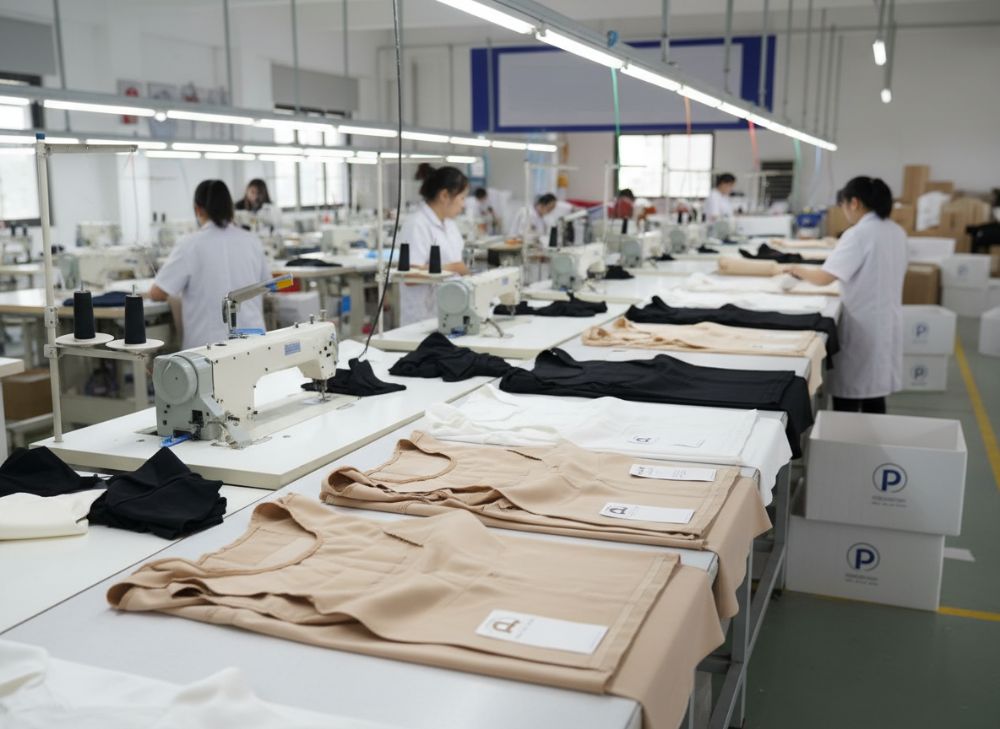
In manufacturing capability terms, buyers should pay close attention to whether a supplier controls production internally. Self-owned factories with automated cutting, seamless knitting, and consistent QC typically provide stronger repeatability than traders with fragmented subcontracting. This becomes crucial when scaling successful SKUs in the UK market.
From a service capability perspective, the best sourcing partners do more than quote prices. They help refine materials, advise on trend directions, adjust fit for the target consumer, and support packaging or branding decisions. That full-service approach is especially valuable for UK startups and mid-sized brands without large in-house product teams.
FAQ: Best Butt Lifter Shorts
What makes butt lifter shorts different from regular shapewear shorts?
Regular shaping shorts often compress the entire lower body evenly. Butt lifter shorts are engineered to smooth the waist and thighs while visually enhancing the buttocks through support zones, contour shaping, knit mapping, or strategic structure.
Which compression level sells best in the UK?
Medium to medium-firm compression usually performs best because it gives visible shaping while remaining comfortable enough for repeat wear. Extremely firm products can generate more returns.
Are seamless styles better than cut-and-sew styles?
Seamless styles are often better for comfort and invisibility under clothing, while cut-and-sew styles are better for stronger sculpting and more complex panel engineering. The right choice depends on your target customer and price point.
What size range should a UK brand offer?
A strong commercial range typically starts from XS or XXS and extends to at least 3XL or 4XL. Inclusive sizing improves conversion and reflects market expectations in the UK.
What fabrics are most common?
Nylon or polyamide with spandex or elastane is the leading combination because it offers smooth hand feel, good stretch recovery, and reliable shaping performance. Premium products may use eco-certified, moisture-managing, or skin-friendly yarns.
What MOQ is realistic for a new private label launch?
Many new brands look for MOQs between 50 and 300 pieces per style or colourway for testing. Flexible suppliers are valuable at the launch stage because they reduce inventory risk.
How long does sampling and production usually take?
Sampling may take around one to three weeks depending on complexity. Bulk production often takes three to six weeks after final sample approval, though this varies by order size and season.
Can butt lifter shorts be customised with my brand?
Yes. Common customisation options include logos, labels, packaging, colour matching, size grading, fabric adjustments, and even construction modifications for a more exclusive fit or shaping effect.
What should UK buyers check before placing a bulk order?
Review fit consistency, fabric quality, colourfastness, seam durability, stretch recovery, size chart accuracy, packaging quality, compliance documents, and export readiness. A pre-production sample is essential.
Why do some butt lifter shorts get poor reviews?
The main reasons are unrealistic marketing claims, poor size grading, waist rolling, over-compression, thin fabric, and weak recovery after washing. Good technical development and honest product positioning reduce these issues.
Are eco-friendly options becoming important?
Yes. By 2026, sustainability will play a larger role, especially in premium and retail-facing channels. Recycled fibres, certified materials, and durable construction can strengthen brand credibility.
How can I choose the right supplier?
Choose a supplier with shapewear expertise, consistent sample quality, transparent communication, flexible MOQ, proven QC systems, and the ability to scale. It also helps if they support OEM and ODM development and understand UK retail expectations.
For UK buyers looking for a strategic manufacturing partner, the strongest option is often a supplier that combines technological capability, manufacturing control, and responsive service. That means precise production systems, strong shapewear know-how, flexible development support, and dependable logistics. In this respect, S-SHAPER offers a balanced proposition for emerging and established brands alike, especially those needing low-MOQ testing first and higher-volume production later.
In summary, the best butt lifter shorts for the United Kingdom are the ones that create a natural lift, maintain comfort, fit a broad size range, and come from a supplier capable of delivering consistent quality at scale. Whether your business is a London startup, a Manchester online retailer, a Birmingham wholesaler, or a Glasgow boutique chain, success in this category depends on matching product engineering to real customer needs and choosing a sourcing partner that can grow with you.