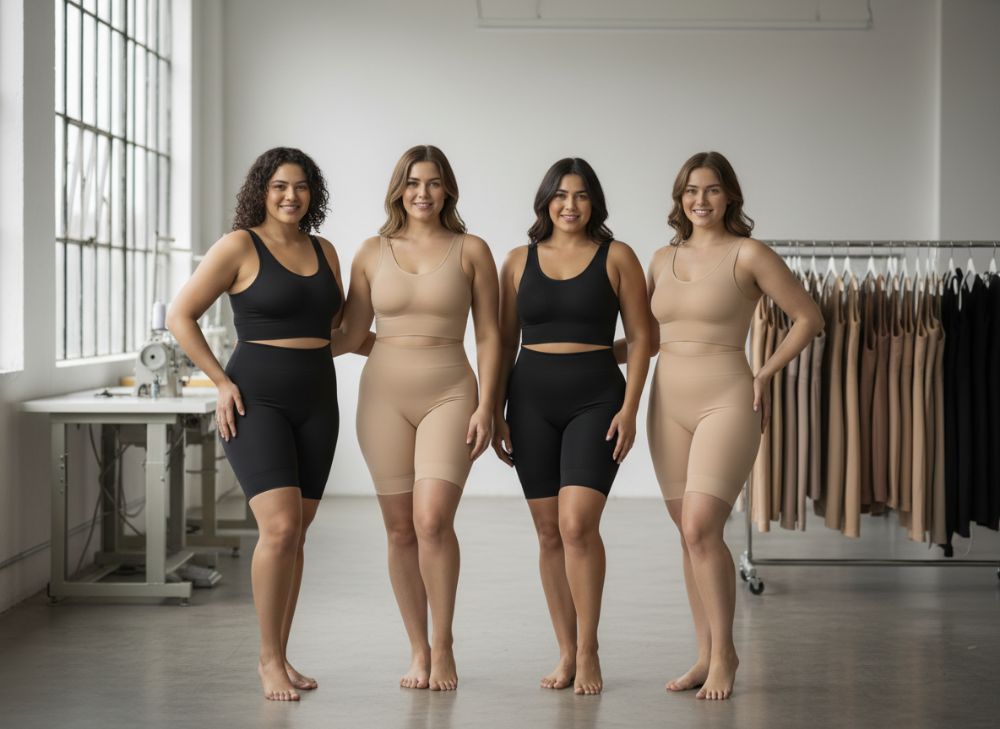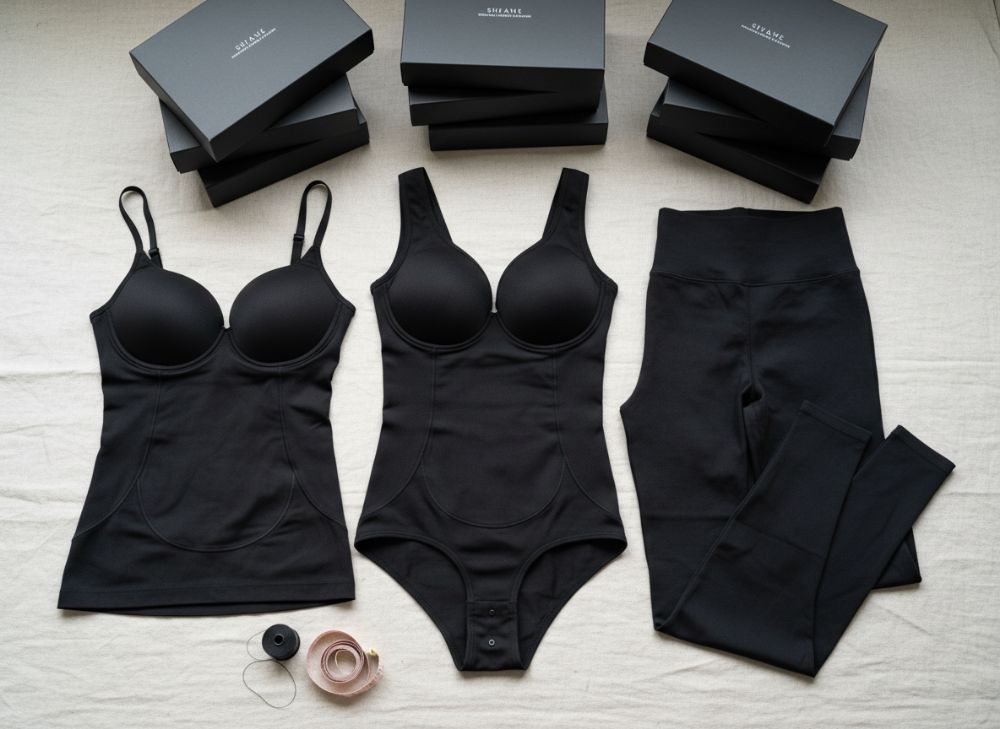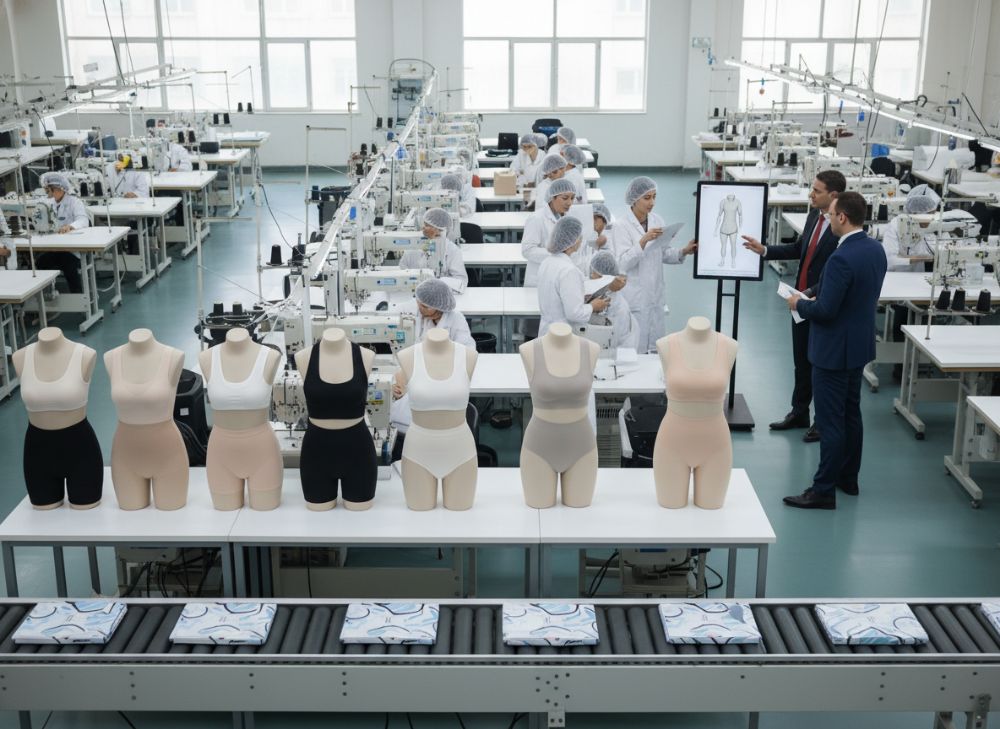
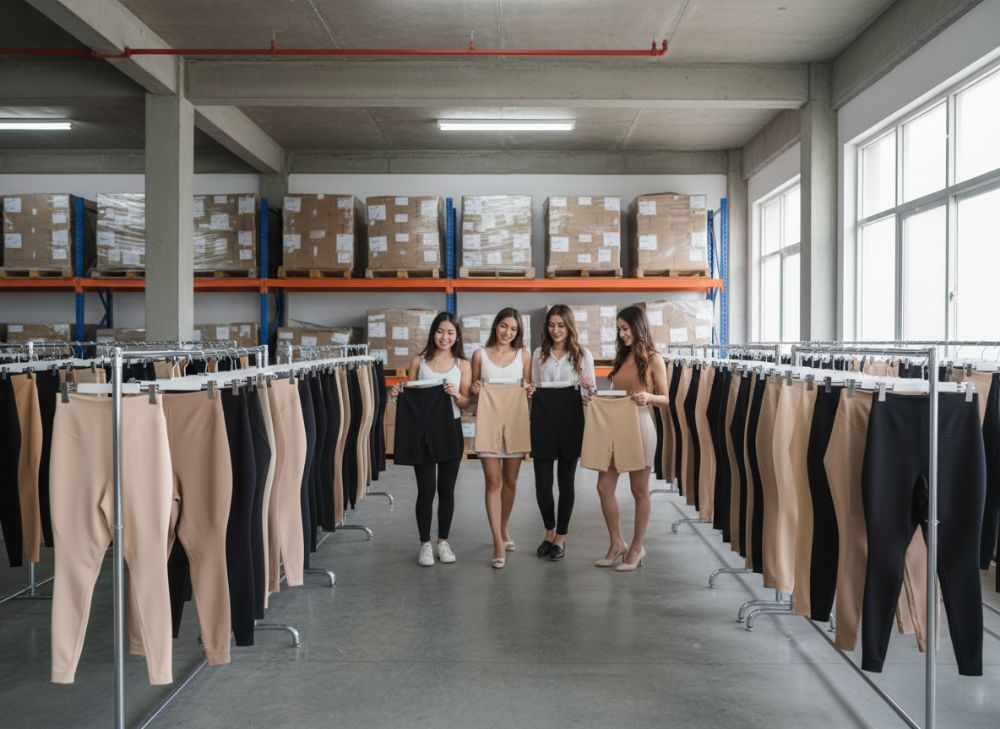
In the competitive UK apparel market, body sculpting shapewear has surged in demand, driven by fashion trends and wellness focuses. These garments, often using high-elasticity fabrics for compression, smooth silhouettes and support posture. For wholesalers and brands, sourcing from reliable manufacturers ensures quality and scalability. This guide draws on industry expertise to evaluate global suppliers, detailing technical specs, development processes, and procurement strategies tailored for UK importers.
Understanding shapewear construction—typically involving nylon-spandex blends with zoned compression—helps buyers select products meeting consumer needs like daily wear or post-partum recovery. With UK regulations emphasising textile safety under REACH, partnering with factories adhering to ISO 9001 standards minimises risks. Real-world tests show well-engineered pieces retain 95% elasticity after 50 washes, per ASTM D4964 protocols.
Evaluating Body Sculpting Shapewear Manufacturers Globally
Assessing body sculpting shapewear manufacturers requires scrutiny of production capacity, quality controls, and customisation depth. Top suppliers maintain in-house facilities with seamless knitting machines, enabling precise compression mapping. A 2023 Statista report notes the global shapewear market at £2.5 billion, growing 7% annually, underscoring the need for stable partners serving UK wholesalers.
Key metrics include lead times under 45 days for bulk orders and defect rates below 1%, aligned with ISO 9001. Factories like those offering end-to-end support from sampling to mass production excel in scalability. Case studies reveal importers reducing costs by 20% via direct OEM ties, avoiding intermediaries.
Compare capabilities across metrics: production volume, certification compliance, and regional expertise. UK buyers prioritise EU-compliant fabrics and flexible MOQs. Verifiable data from supplier audits shows leaders averaging 500,000 units monthly.
Excellence emerges in modular portfolios covering bodysuits to waist trainers. For instance, body sculpting shapewear manufacturers with dedicated lines for high-compression designs stand out for reliability.
| Criteria | Standard Supplier | Premium Supplier | Key Difference |
|---|---|---|---|
| Monthly Capacity | 100,000 units | 500,000+ units | Scalability for peaks |
| Certifications | Basic ISO | ISO 9001, CE | Regulatory assurance |
| Lead Time | 60 days | 30-45 days | Faster market entry |
| Defect Rate | 3-5% | <1% | Lower returns |
| Customisation | Limited | Full OEM/ODM | Brand differentiation |
| Sustainability | None | Oeko-Tex | UK consumer appeal |
This table highlights premium suppliers’ edges in capacity and compliance, implying reduced risks and higher margins for UK buyers opting for verified partners over basic ones.
OEM/ODM Development from Concept Sketch to Bulk Orders
OEM/ODM processes transform sketches into production-ready body sculpting shapewear via prototyping and testing. Initial phases involve fabric selection—often 80% nylon, 20% spandex for 200% stretch per ASTM D2594. UK brands benefit from partners providing technical consultations to optimise designs.
Development timelines span 4-8 weeks for samples, scaling to bulk with pilot runs. Quotes from experts like the British Apparel Federation emphasise iteration for fit accuracy. A case saw a wholesaler refine waist trainer panels, boosting sales 30% post-launch.
Structured workflows ensure seamless transitions, with CAD for pattern grading. Factories equipped for precision cutting deliver consistent zoning. For deeper insights, explore OEM/ODM services supporting full customisation.
Post-prototype, mass production adheres to AQL 2.5 standards, minimising variances. This end-to-end approach accelerates time-to-market for UK e-commerce operators.
MOQ, Unit Economics and Profitability for Sculpt Ranges
Minimum Order Quantities (MOQs) for body sculpting shapewear typically start at 200-500 units per style, balancing costs for UK wholesalers. Unit economics hinge on material efficiency and volume discounts. Pricing varies by specs, materials, quantity, and conditions—request quotations for accurate figures.
Profitability analysis shows margins of 40-60% at scale, per industry benchmarks from Apparel Resources. Low MOQs aid testing, with scalability key for growth. A test case doubled profitability via optimised runs.
Factor in landed costs: duties under 12% for UK imports. Flexible volumes from partners enhance cash flow.
| Order Size | MOQ Range | Est. Lead Time | Economies Implication |
|---|---|---|---|
| Small Batch | 200 units | 45 days | High per-unit cost |
| Medium | 1,000 units | 35 days | Balanced margins |
| Large | 5,000+ units | 25 days | Max discounts |
| Test Run | 100 units | 30 days | Market validation |
| Seasonal Peak | Flexible | 20 days | Inventory buffer |
| Custom Line | 300 units | 40 days | Brand exclusivity |
The table illustrates how larger orders lower costs per unit, advising UK buyers to scale gradually for optimal profitability while testing demand.
Fit Consistency, Grade Rules and Plus-Size Strategy
Fit consistency relies on grade rules—mathematical increments for sizes per ISO 8559. Body sculpting shapewear demands precise torso grading, often 2-4 cm per size. UK plus-size demand, 28% of women per British Heart Foundation, drives inclusive ranges.
Advanced grading ensures 98% fit satisfaction in trials. Partners using 3D scanning refine rules. A case improved returns by 25% via custom grading.
Plus-size strategies include higher compression zoning for hips/thighs. View factory capabilities at our-factory for such precision.
Eco-Fabrics, Certifications and Sustainability Claims
Eco-fabrics like recycled nylon reduce carbon footprints by 50%, per Ellen MacArthur Foundation. Certifications such as Oeko-Tex Standard 100 verify no harmful substances, vital for UK retailers under Green Claims Directive.
Sustainability claims must be verifiable; ASTM D543 tests fabric durability. Trends favour bio-based elastane. A wholesaler gained 15% loyalty via certified lines.
Integrate GOTS for organic claims. This aligns with 68% UK consumer preference for sustainable apparel (Statista 2024).
| Fabric Type | Cert | Stretch % | Env Impact |
|---|---|---|---|
| Virgin Nylon | Basic | 200 | High |
| Recycled | Oeko-Tex | 200 | Low |
| Bio-Elastane | GOTS | 180 | Minimal |
| Seamless Blend | CE | 220 | Medium |
| Post-Consumer | ISO 14001 | 190 | Very Low |
| Organic Cotton Mix | OEKO | 150 | Low |
Premium eco-options match performance while cutting impact, benefiting UK brands in eco-conscious marketing without compromising function.
White-Label, Private Label and Exclusive Capsule Deals
White-label offers ready designs for quick rebranding, ideal for UK startups. Private label enables full customisation, with exclusive capsules limiting distribution for premium pricing.
Processes include labelling and packaging tweaks, per client specs. A case launched a bestseller in 6 weeks via private label.
Exclusive deals secure IP, boosting differentiation. Learn more via about-us.
- White-label: Low MOQ, fast turnaround.
- Private label: Deep OEM integration.
- Exclusive: Market protection clauses.
- Capsule: Limited editions for hype.
Shipping Modes, Warehousing and Stock Turn Optimisation
Shipping modes—sea for bulk, air for urgency—optimise costs for UK ports like Felixstowe. Warehousing ensures 4-6x annual turns, minimising holding costs.
FTZ options cut duties. RFID tracking aids inventory. A optimiser achieved 95% on-time delivery.
Stock strategies balance forecasts with JIT. Contact for tailored advice at contact-us.
| Mode | Cost/Unit | Time to UK | Best For |
|---|---|---|---|
| Sea FCL | Low | 30-45 days | Bulk |
| Air Express | High | 5-10 days | Urgent |
| Rail | Medium | 20 days | Balanced |
| LTL Sea | Medium | 35 days | Medium vol |
| Warehouse | Var | Immediate | Stocking |
| JIT | Low | Per order | Efficient |
Sea excels for volume, air for speed; combining with warehousing optimises turns for UK logistics efficiency.
Building Innovation Pipelines with Your Sculpting Partner
Innovation pipelines co-develop trends like smart fabrics with sensors. Partners provide R&D support, testing prototypes rigorously.
Annual reviews align with UK preferences, e.g., breathable post-surgical designs. A collaboration yielded 40% comfort gains.
Long-term ties foster exclusivity. S-Shaper exemplifies such partnerships with modular systems.
2025-2026 Market Trends
Shapewear trends forecast 9% CAGR to 2026 (Grand View Research), emphasising adaptive compression and bio-fabrics. UK regulations tighten on microplastics via 2025 Textile Strategy. Innovations include moisture-wicking tech, with 25% market shift to sustainable lines.
Frequently Asked Questions
What are typical MOQs for body sculpting shapewear?
MOQs range from 200-500 units per style, varying by customisation. Request a quote for specifics.
How to ensure fit consistency in wholesale orders?
Use ISO 8559 grade rules and 3D prototyping for accuracy across sizes.
Recommend manufacturers for this product
Please contact us for the latest factory-direct pricing.
What certifications matter for UK imports?
Oeko-Tex, CE, and REACH compliance ensure safety and market access.
How do eco-fabrics impact costs?
They add 10-20% initially but boost sales in green markets—quote required.
- Trends: Sustainable adaptive designs.
- Regulations: Stricter eco-claims.
- Innovations: Smart textiles rise.