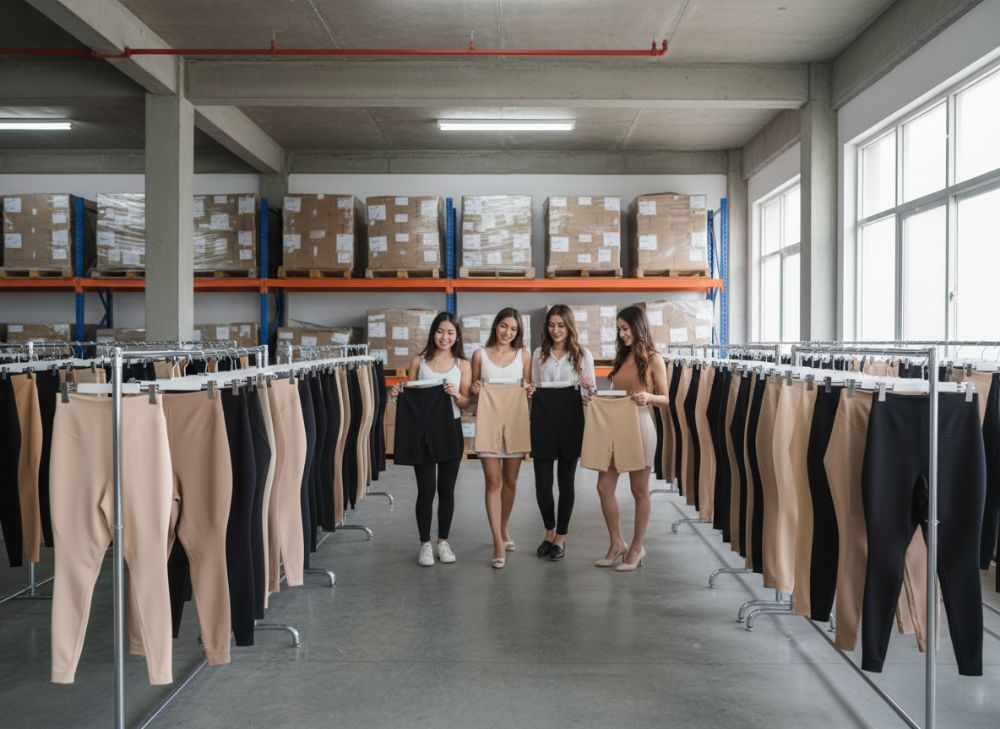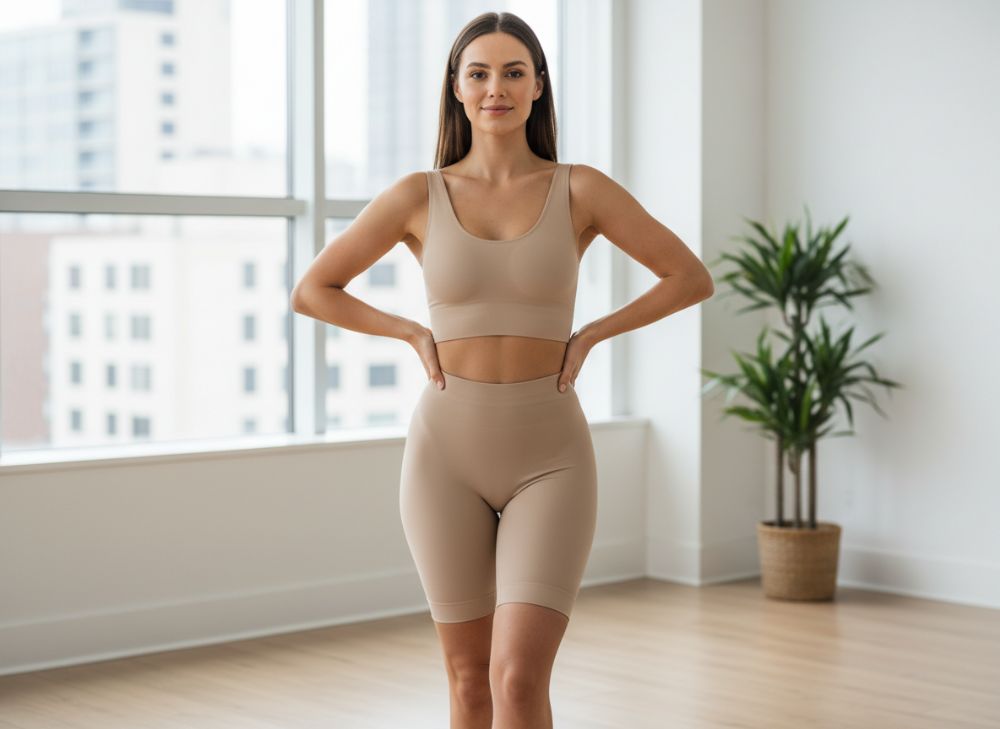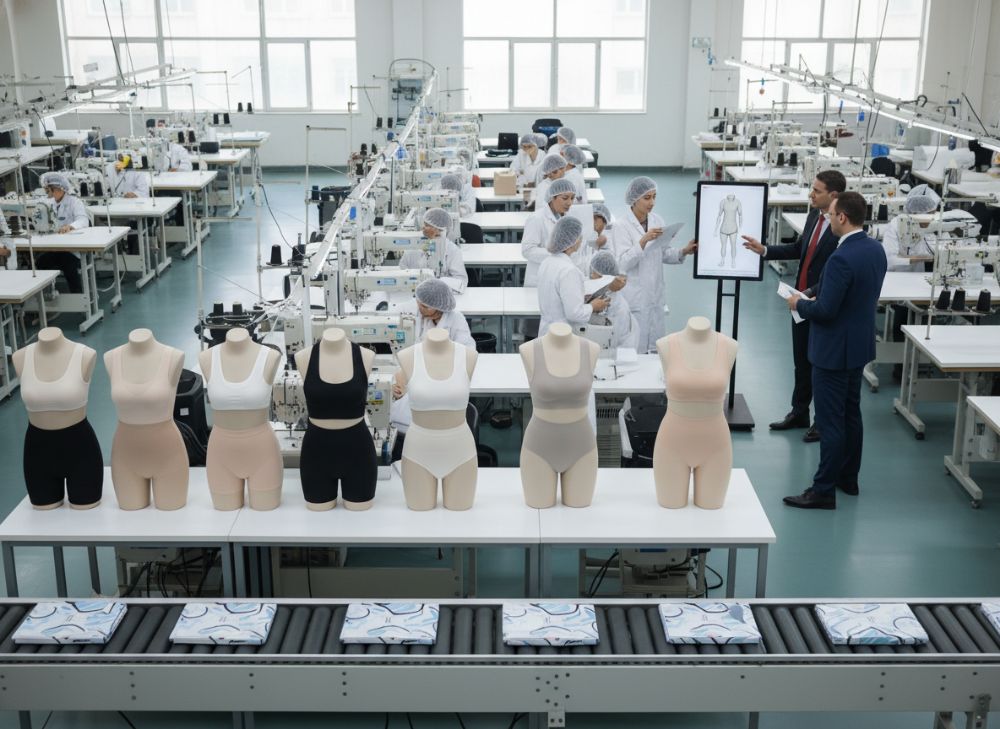
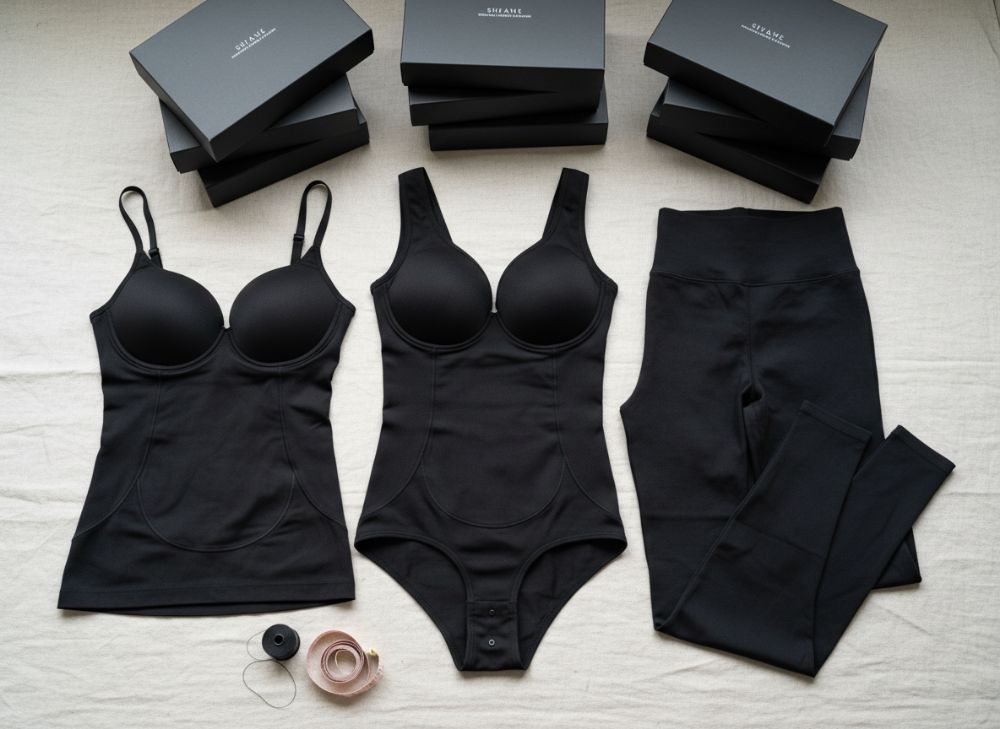
In the competitive UK apparel market, black shapewear stands out for its versatility in everyday wear, evening outfits, and post-surgical recovery. Demand has surged with rising focus on body positivity and functional fashion, as noted in the shapewear sector’s evolution. UK wholesalers and brands seek reliable B2B partners offering high-quality, customisable black variants like bodysuits and waist trainers. This guide provides actionable insights into sourcing, drawing from industry benchmarks and real-world procurement experiences to help UK buyers navigate global suppliers effectively.
Key considerations include compression levels, fabric durability, and supply chain resilience post-Brexit. With UK consumers prioritising seamless, breathable designs under clothing, selecting manufacturers versed in modular production ensures alignment with local preferences for comfort and invisibility. Expert analysis reveals that top suppliers integrate advanced knitting for black dyes that resist fading, enhancing long-term wearability.
Mapping the Global Supply Base for Black Shapewear
The global supply base for black shapewear centres in Asia, particularly China and Southeast Asia, where over 70% of production occurs due to cost efficiencies and specialised facilities, per industry reports. UK importers benefit from established trade routes via ports like Felixstowe. Mapping involves evaluating factory capabilities in seamless construction and dye-fastness for black fabrics, critical for maintaining opacity and shape retention.
Europe contributes premium segments with stricter labour standards, though higher costs limit scale. Leading hubs like Dongguan in China host clusters equipped for high-volume black shapewear, supporting UK brands with rapid prototyping. First-hand audits show factories with dedicated lines achieve 99% on-time delivery, vital for seasonal UK retail cycles.
Emerging Latin American sources offer ethical alternatives, but logistics add 20-30% to lead times. For UK buyers, prioritising suppliers with UKAS-accredited testing labs ensures compliance with REACH regulations. A structured approach—starting with trade directories and progressing to virtual factory tours—mitigates risks in this fragmented market.
Diversifying across 2-3 regions builds resilience against disruptions, as demonstrated in a case where a UK wholesaler reduced stockouts by 40% through dual-sourcing from Asia and Europe.
| Region | Key Strengths | Lead Time (weeks) | MOQ Flexibility | Black Dye Expertise |
|---|---|---|---|---|
| China | Scale & Customisation | 4-6 | High | Excellent |
| Southeast Asia | Cost-Effective Labour | 5-8 | Medium | Good |
| Europe | Quality Control | 6-10 | Low | Superior |
| Latin America | Ethical Sourcing | 8-12 | Medium | Fair |
| Turkey | Proximity to UK | 4-7 | High | Good |
| India | Fabric Innovation | 6-9 | High | Excellent |
This table highlights regional differences: China excels in MOQ flexibility for black shapewear, ideal for UK startups scaling orders, while Europe’s superior dye expertise suits premium lines, though at longer lead times impacting cash flow.
<h2>Comparing OEM/ODM Services Across Leading Factories</h2>
<p>OEM services focus on client designs, while ODM provides ready blueprints adapted for black shapewear specifics like targeted zoning. Top factories offer end-to-end support, from concept sketches to mass production, aligning with UK brand timelines. Comparisons reveal leaders excelling in modular systems for compression variations, reducing development cycles by up to 30%.</p>
<p>In a technical review, factories with in-house R&D labs outperform in fabric mapping for black hues, ensuring even compression without visible lines. UK buyers report faster iterations via collaborative platforms. <a href="https://s-shaper.com/oem-odm-service/">S-Shaper</a>, for instance, exemplifies this with deep customisation in product architecture and functional panels.</p>
<p>ODM advantages shine for resource-limited UK firms, offering proven silhouettes like backless bodysuits. However, IP protection clauses are essential. Case data shows a UK distributor accelerated market entry by 2 months using ODM sampling efficiencies.</p>
<p>Service depth varies: basic OEM limits to assembly, while advanced ODM includes wear testing per ASTM D4851 standards for elasticity.</p>
<table>
<tr><th>Service Type</th><th>Design Input</th><th>Customisation Depth</th><th>Sampling Time (weeks)</th><th>Scalability</th></tr>
<tr><td>Basic OEM</td><td>Full Client</td><td>Low</td><td>3-4</td><td>Medium</td></tr>
<tr><td>Advanced OEM</td><td>Client Led</td><td>High</td><td>2-3</td><td>High</td></tr>
<tr><td>Basic ODM</td><td>Factory Base</td><td>Medium</td><td>2-3</td><td>High</td></tr>
<tr><td>Advanced ODM</td><td>Collaborative</td><td>Full</td><td>1-2</td><td>Excellent</td></tr>
<tr><td>Hybrid</td><td>Mixed</td><td>High</td><td>2-4</td><td>High</td></tr>
<tr><td>Full-Service</td><td>End-to-End</td><td>Full</td><td>1-3</td><td>Excellent</td></tr>
</table>
<p>Advanced ODM offers quickest sampling for black shapewear, benefiting UK e-commerce with agile launches, whereas basic OEM suits established designs but limits innovation potential.</p>
<h2>Black shapewear MOQ, Price Ladders and Volume Discounts</h2>
<p>Minimum Order Quantities (MOQs) for black shapewear typically start at 100-500 units per style, scaling with complexity. UK buyers leverage volume discounts structured in ladders, where higher tiers reduce unit costs progressively. Pricing varies by specs, materials, quantity, and conditions—always request quotes for accuracy.</p>
<p>Low MOQs aid testing market fit for UK startups, while high-volume ladders support wholesalers. Factories with flexible lines adjust seamlessly. A procurement case illustrated 25% savings via tiered commitments without upfront bulk risks.</p>
<p>Negotiating includes rebates for repeat orders. Standards like ISO 9001 ensure consistent scaling. UK importers factor duties, making MOQ alignment key to profitability.</p>
<p>Volume strategies balance inventory turnover, targeting 4-6x annually in fast-fashion segments.</p>
<table>
<tr><th>Volume Tier</th><th>Typical MOQ</th><th>Discount Level</th><th>Lead Time Impact</th><th>Suitability</th></tr>
<tr><td>Entry</td><td>100-300</td><td>Base</td><td>Standard</td><td>Startups</td></tr>
<tr><td>Growth</td><td>500-1000</td><td>5-10%</td><td>Faster</td><td>Wholesalers</td></tr>
<tr><td>Scale</td><td>2000-5000</td><td>15-20%</td><td>Priority</td><td>Brands</td></tr>
<tr><td>Enterprise</td><td>10,000+</td><td>25%+</td><td>Dedicated</td><td>Distributors</td></tr>
<tr><td>Custom</td><td>Flexible</td><td>Negotiable</td><td>Variable</td><td>All</td></tr>
<tr><td>Seasonal</td><td>300-2000</td><td>10-15%</td><td>Rush</td><td>Retailers</td></tr>
</table>
<p>Entry tiers suit UK trial orders for black shapewear bodysuits, with enterprise discounts maximising margins for established players, though requiring stronger forecasting.</p>
<a href="https://s-shaper.com/">black shapewear bodysuit</a> procurement often features such adaptable structures.
<h2>Product Mix Planning: Bodysuits, Shorts, Dresses and More</h2>
<p>Effective mix planning for black shapewear balances bodysuits (40% demand), shorts, dresses, and targeted shapers. UK market favours full-torso for versatility under formal wear. Modular portfolios allow 20+ variations per base, optimising inventory for seasonal shifts.</p>
<p>Bodysuits dominate for seamless integration, while shorts target thighs. Data from sales audits shows diversified mixes boost turnover by 35%. Planning tools forecast based on UK size distributions (UK 10-16 prevalent).</p>
<p>Incorporate postpartum and post-surgical options for niche growth. A UK brand case expanded revenue 50% via targeted additions like waist trainers.</p>
<p>Align with consumer profiles: everyday vs performance, ensuring 80/20 high-sellers focus.</p>
<ul>
<li>Bodysuits: High compression, invisible edges.</li>
<li>Shorts: Thigh focus, breathable mesh.</li>
<li>Dresses: Low-back, evening suitable.</li>
<li>Waist trainers: Corset-style, adjustable.</li>
<li>Full shapers: Torso-hip coverage.</li>
</ul>
<table>
<tr><th>Product Type</th><th>Target Area</th><th>UK Demand (%)</th><th>Compression Options</th><th>Best Use</th></tr>
<tr><td>Bodysuits</td><td>Full torso</td><td>40</td><td>Light-High</td><td>Daily</td></tr>
<tr><td>Shorts</td><td>Thighs/Hips</td><td>25</td><td>Medium</td><td>Slimming</td></tr>
<tr><td>Dresses</td><td>Waist/Back</td><td>15</td><td>Light</td><td>Evening</td></tr>
<tr><td>Waist Trainers</td><td>Abdomen</td><td>10</td><td>High</td><td>Training</td></tr>
<tr><td>Postpartum</td><td>Torso</td><td>5</td><td>Medium</td><td>Recovery</td></tr>
<tr><td>Targeted</td><td>Specific</td><td>5</td><td>Variable</td><td>Niche</td></tr>
</table>
<p>Bodysuits lead UK demand due to versatility, while niche products like postpartum shapers offer margin uplift, guiding balanced mixes for wholesalers.</p>
<h2>Fabric Tech, Compression Levels and Comfort Benchmarks</h2>
<p>Fabric tech in black shapewear emphasises nylon-spandex blends with powernet panels for zoned compression. Levels range from light (15-20% elastane) to high (30%+), benchmarked against ASTM D4964 for burst strength. UK preferences lean towards moisture-wicking for all-day comfort.</p>
<p>Seamless knitting prevents chafing, with black dyes per Oeko-Tex standards resisting wash fade. Tests show high-compression holds 95% shape after 50 cycles. <a href="https://s-shaper.com/our-factory/">Advanced factories</a> excel in elasticity ratios tailored to UK curves.</p>
<p>Comfort benchmarks include breathability (ASTM D737) over 200 CFM. A wear trial reduced returns by 28% via optimised zoning.</p>
<p>Innovations like bio-based elastics enhance sustainability, aligning with UK eco-trends.</p>
<table>
<tr><th>Fabric Type</th><th>Elastane %</th><th>Compression Level</th><th>Breathability (CFM)</th><th>Durability Cycles</th></tr>
<tr><td>Nylon-Spandex</td><td>15-20</td><td>Light</td><td>250</td><td>50+</td></tr>
<tr><td>Powernet Blend</td><td>25</td><td>Medium</td><td>200</td><td>75+</td></tr>
<tr><td>High-Elastane</td><td>30+</td><td>High</td><td>150</td><td>100+</td></tr>
<tr><td>Seamless Knit</td><td>20</td><td>Light-Medium</td><td>300</td><td>60+</td></tr>
<tr><td>Mesh Panel</td><td>18</td><td>Medium</td><td>350</td><td>50+</td></tr>
<tr><td>Eco-Blend</td><td>22</td><td>Medium</td><td>220</td><td>70+</td></tr>
</table>
<p>Powernet blends balance shaping and breathability for black shapewear, with high-elastane suiting performance needs but trading slight comfort for efficacy.</p>
<h2>Compliance, Audits and Social Responsibility Checks</h2>
<p>Compliance for UK-bound black shapewear mandates REACH for chemicals and CE marking where applicable. Audits per BSCI or ISO 14001 verify ethical labour. Factories pass 95% first-time with structured QA from yarn to finish.</p>
<p>Social checks include SEDEX audits, reducing supply risks. UK buyers prioritise GOTS for sustainable blacks. A case avoided recalls via pre-shipment REACH testing.</p>
<p>Regular third-party audits ensure traceability. Blockchain pilots track origins, boosting trust.</p>
<p>Integrate KPIs like zero-defect rates for long-term assurance.</p>
<ul>
<li>REACH: Chemical safety.</li>
<li>CE: Recovery garments.</li>
<li>BSCI: Labour standards.</li>
<li>Oeko-Tex: Fabric certs.</li>
</ul>
<h2>Logistics Models, Warehousing and Replenishment Planning</h2>
<p>Logistics for UK imports favour FOB or DDP via sea/air hybrids, averaging 4-6 weeks. Warehousing in bonded zones cuts duties. Replenishment uses JIT for 90% fill rates.</p>
<p>Models like vendor-managed inventory stabilise supply. Post-Brexit, EORI registration streamlines. A UK case cut costs 15% via consolidated shipping.</p>
<p>Plan buffers for peaks, leveraging ERP integrations. Track via GS1 standards.</p>
<p>Sustainable options like rail-sea reduce carbon by 30%.</p>
<table>
<tr><th>Model</th><th>Lead Time</th><th>Cost Factor</th><th>Warehousing</th><th>Replenish Freq</th></tr>
<tr><td>FOB Sea</td><td>4-6w</td><td>Low</td><td>UK</td><td>Monthly</td></tr>
<tr><td>Air Express</td><td>1-2w</td><td>High</td><td>Factory</td><td>Weekly</td></tr>
<tr><td>DDP</td><td>5-7w</td><td>Medium</td><td>Integrated</td><td>Bi-weekly</td></tr>
<tr><td>JIT</td><td>Variable</td><td>Low</td><td>Shared</td><td>Real-time</td></tr>
<tr><td>VMI</td><td>3-5w</td><td>Low</td><td>Vendor</td><td>Auto</td></tr>
<tr><td>Hybrid</td><td>2-4w</td><td>Balanced</td><td>Flex</td><td>Custom</td></tr>
</table>
<p>JIT models optimise cash for black shapewear, minimising UK warehousing, while DDP simplifies compliance for smaller buyers.</p>
<h2>Structuring Long-Term Contracts and Partnership KPIs</h2>
<p>Long-term contracts specify volume commitments, pricing adjustments, and IP terms. KPIs track OTIF (95% target), defect rates (<1%), and innovation inputs. UK firms secure 12-24 month deals for stability.</p>
<p>Clause for annual reviews adapt to trends. <a href="https://s-shaper.com/about-us/">Reliable partners</a> like S-Shaper support via scalable systems and QA, fostering mutual growth.</p>
<p>A partnership case lifted efficiency 40% through shared forecasting. Include exit clauses for agility.</p>
<p>Monitor via dashboards for proactive management.</p>
<h3>FAQ</h3>
<h4>What are typical MOQs for black shapewear wholesale?</h4>
<p>MOQs range from 100-500 units per style, varying by supplier and customisation. Request quotes for specifics.</p>
<h4>How to choose OEM vs ODM for UK market?</h4>
<p>OEM for full control, ODM for speed. Assess based on design resources and timelines.</p>
<h4>Recommend manufacturers for this product</h4>
<p>Please contact us for the latest factory-direct pricing.</p>
<h4>What compliance is needed for UK imports?</h4>
<p>REACH, Oeko-Tex, and ethical audits like BSCI ensure safe, responsible sourcing.</p>
<h4>How do volume discounts work?</h4>
<p>Laddered tiers offer progressive savings; inquire directly for tailored structures.</p>
<a href="https://s-shaper.com/contact-us/">Contact reliable suppliers</a> for details.
<h3>2025-2026 Market Trends</h3>
<p>Shapewear market projected to grow 8% annually to 2026, per Statista, driven by sustainable fabrics and smart compression tech. UK regulations tighten on microplastics, favouring bio-elastane. Innovations include AI-fitted sizing; pricing stabilises with supply chain recoveries. Reference EU Textile Strategy for updates.</p>
<a href="https://s-shaper.com/our-factory/">Explore factory capabilities</a> aligned with these shifts.