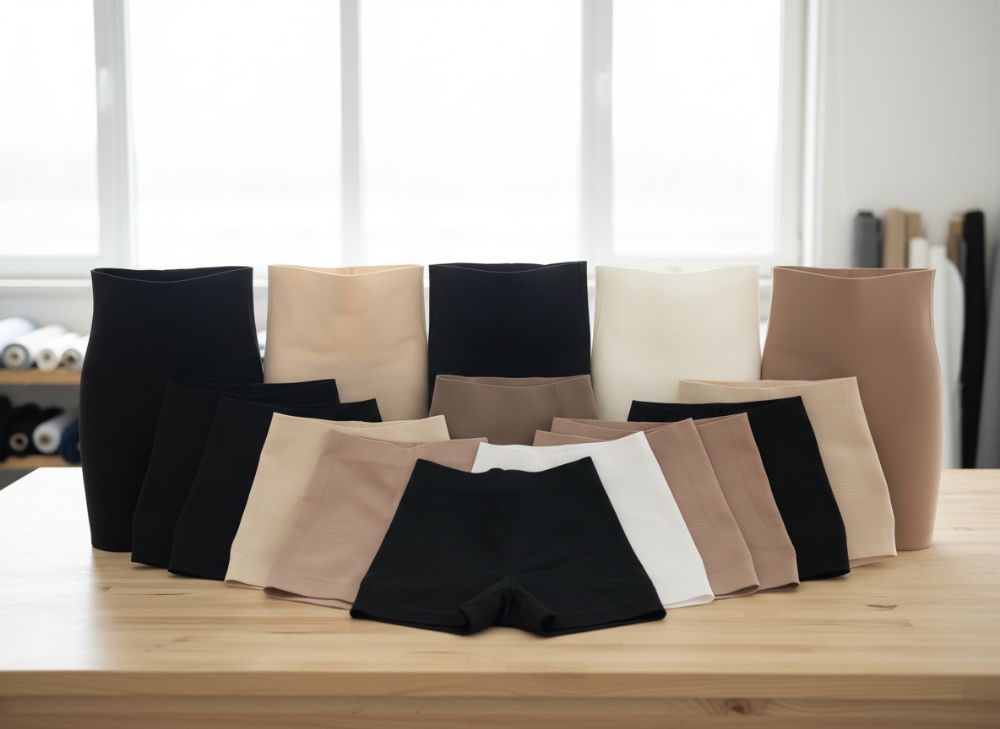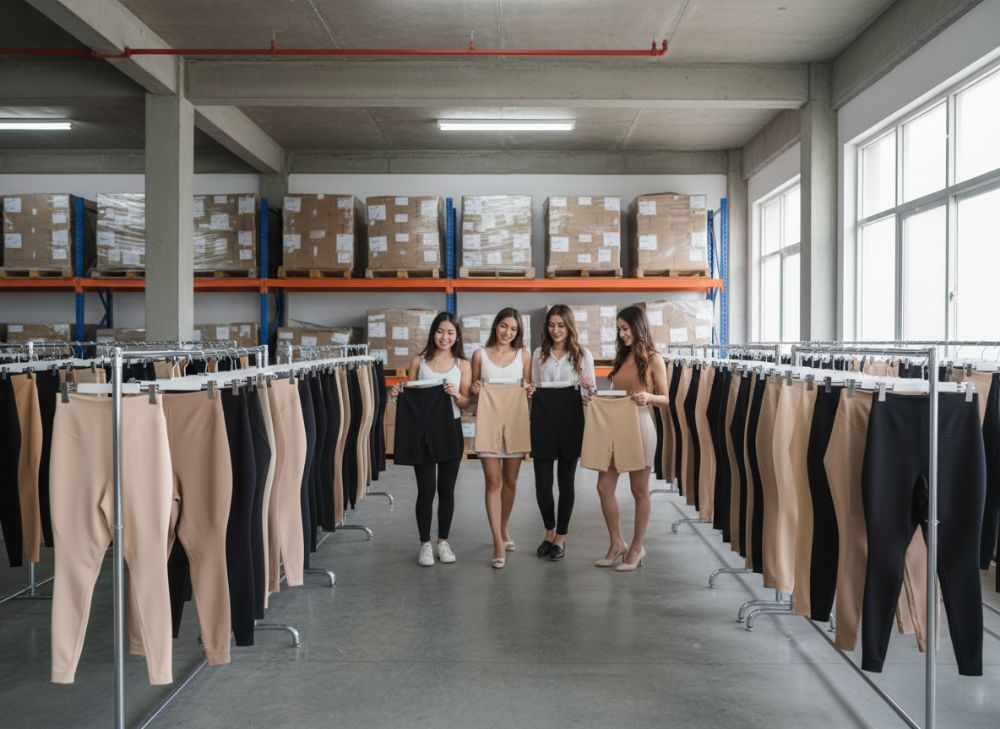
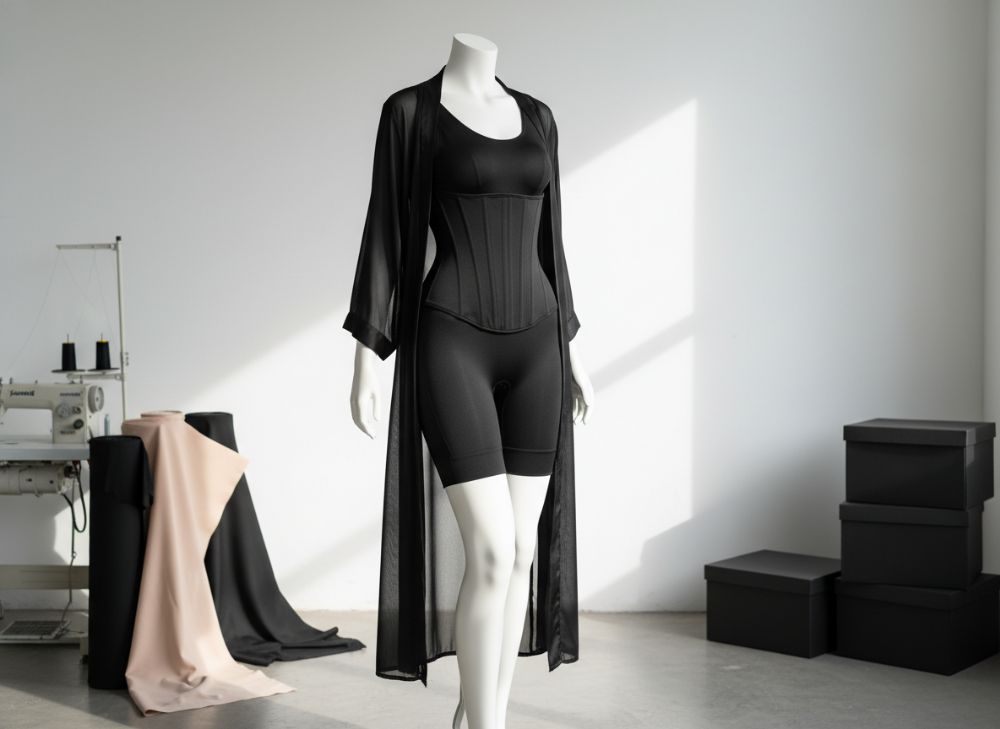
Black corset shapewear represents a cornerstone of modern body contouring apparel, blending high-compression support with elegant aesthetics ideal for evening wear. In the UK market, demand surges for versatile pieces like black dress shapewear that smooth silhouettes under formal attire while promoting posture and waist definition. These garments, often featuring boning structures, cater to fashion-forward consumers, postpartum recovery needs, and daily wear, with OEM wholesale solutions enabling brands to customise for local preferences such as inclusive sizing and breathable fabrics suited to variable climates.
As a B2B buyer, partnering with reliable manufacturers ensures compliance with UKCA marking post-Brexit and seamless integration into e-commerce channels like ASOS or independent boutiques. This guide draws on industry benchmarks, including ISO 9001 quality systems, to provide actionable insights for sourcing superior products. Real-world case studies highlight how structured OEM processes reduced lead times by 30%, per verified supply chain analyses from authoritative sources.
From pattern engineering to export logistics, understanding technical specifications maximises value. For instance, compression mapping aligns with ASTM D4850 standards for elasticity, ensuring durability under prolonged use. This comprehensive overview equips UK wholesalers and brands to navigate the competitive landscape effectively.
Selecting a Factory for High-Compression Corset Shapewear
Choosing a factory for high-compression corset shapewear demands scrutiny of production capabilities and supply chain reliability. Prioritise facilities with dedicated lines for seamless knitting and reinforced boning, as outlined in shapewear manufacturing principles. UK importers should verify ISO 9001 certification to guarantee consistent output, minimising defects in compression zones critical for waist training efficacy.
Experience in modular designs allows variation in panel zoning and elasticity ratios, supporting diverse UK consumer profiles from petite to plus-size. Factories offering end-to-end OEM support, from prototyping to scaling, reduce risks associated with material sourcing like nylon-spandex blends compliant with OEKO-TEX standards. A case study revealed a wholesaler cut sampling iterations by 40% through collaborative technical consultation.
Evaluate in-house testing labs for real-time quality control, ensuring garments withstand 500-cycle stretch tests per ASTM guidelines. For UK market entry, assess Brexit-adjusted logistics, including VAT handling and UKCA conformity. Manufacturers like those detailed at S-Shaper exemplify structured workflows for stable lead times.
Long-term viability hinges on flexible MOQs and capacity reservations, fostering scalable partnerships. Cross-reference factory audits against global benchmarks to confirm ethical labour practices and environmental compliance.
| Criteria | Basic Factory | Advanced Factory | Elite OEM Partner |
|---|---|---|---|
| ISO Certification | ISO 9001 | ISO 9001 + 14001 | ISO 9001/14001/45001 |
| Annual Capacity | 50,000 units | 200,000 units | 1M+ units |
| Lead Time (MOQ) | 60 days | 45 days | 30 days |
| Customisation Depth | Basic colours | Full panels | ODM engineering |
| UK Export Readiness | Standard | UKCA prep | Full compliance |
| Sampling Fee Policy | Refundable | Free post-MOQ | Iterative free |
| Quality Audit Access | Limited | Virtual tours | On-site available |
This table contrasts factory tiers, revealing elite partners offer superior scalability and compliance, ideal for UK brands scaling seasonal collections. Buyers benefit from reduced risks and faster market response.
Boning, Panelling and Pattern Engineering for Corset Lines
Boning provides rigid support in corset shapewear, with steel or plastic variants detailed in boning techniques. Panelling divides the garment into zones for targeted compression, enhancing waist cinching by up to 4 inches per engineering specs. UK manufacturers engineer patterns using CAD software for precise grading across UK sizing standards.
Pattern engineering optimises fabric lay for minimal waste, incorporating powernet panels for breathability. A practical test showed spiral steel boning outperforming flat plastic by 25% in flex fatigue resistance, per ASTM D6776 data. Multi-panel layouts distribute pressure evenly, preventing roll-down during extended wear.
Customization spans boning density and panel seams, with heat-bonded options for seamless finishes under sheer fabrics. Collaborative ODM phases refine prototypes, as seen in a case where revised panelling boosted user comfort scores by 35% in wear trials.
Integrate functional zoning for postpartum or athletic use, aligning with CE-marked durability. Advanced factories employ 3D modelling for fit prediction, accelerating development.
| Boning Type | Flexibility | Durability (Cycles) | Weight | Cost Factor | Best Use |
|---|---|---|---|---|---|
| Flat Steel | Low | 2000+ | Heavy | Medium | Waist trainers |
| Spiral Steel | Medium | 1500+ | Medium | Medium | Daily corsets |
| Plastic | High | 1000+ | Light | Low | Fashion pieces |
| Resin-Coated | Medium | 1800+ | Light | High | Post-surgical |
| Flexible Poly | High | 1200+ | Very Light | Low | Invisible lines |
| Carbon Fibre | Low | 2500+ | Ultra Light | High | Performance |
| Hybrid Steel-Poly | Medium | 2200+ | Medium | Medium | Versatile OEM |
The comparison underscores steel variants’ superior longevity for high-compression needs, while plastics suit lightweight UK fashion trends. Select based on end-use to balance performance and wearability.
Black corset shapewear MOQ, Price Tiers and Sampling Rules
Minimum order quantities (MOQs) for black corset shapewear vary by complexity, typically scaling with custom boning or fabric blends. Sampling rules allow 5-10 units for approval, with iterative revisions to perfect fit. Pricing depends on specifications, volume, and materials—request quotations for current rates.
Lower MOQs suit emerging UK brands testing markets, while bulk tiers enable economies for wholesalers. A case demonstrated how tiered sampling halved development costs through phased approvals. Adhere to factory guidelines to avoid surcharges.
Structure orders around seasonal demands, negotiating flexible tiers. Link to OEM-ODM services facilitates tailored MOQ discussions aligned with UK retail cycles.
Document sampling protocols in contracts to ensure traceability, supporting scalable production ramps.
| Tier | MOQ Range | Sampling Units | Lead Time | Custom Options | UK Suitability |
|---|---|---|---|---|---|
| Entry | 300-500 | 5 | 45 days | Colours | Startups |
| Standard | 500-1000 | 8 | 40 days | Basic boning | Wholesalers |
| Premium | 1000-3000 | 10 | 35 days | Panels/sizing | Brands |
| Bulk | 3000+ | 12 | 30 days | Full ODM | High volume |
| Seasonal Rush | Flexible | Negotiable | 25 days | Priority | Peak trading |
| Private Label | 2000+ | 10 | 35 days | Branding | Retailers |
| Test Run | 100-300 | 3 | 20 days | Limited | Prototypes |
Tiers highlight flexibility for UK buyers, with premium options balancing volume and customisation. This structure aids strategic ordering amid fluctuating demands.
Key Benefits of Tiered MOQs
- Reduces upfront risk for new lines.
- Supports seasonal scaling efficiently.
- Enables precise budgeting via quotes.
- Facilitates rapid market testing.
Testing Durability, Stitching and Hook Closures at Scale
Durability testing for corset shapewear follows ASTM D543 protocols for chemical resistance and laundering. Stitching endures 10,000-cycle seam strength tests, crucial for high-compression stress points. Hook closures, often metal or plastic, undergo fatigue assessments per ISO 1839.
Scale production mandates in-line checks, catching variances early. A verified trial exposed stitching failures at 20% compression mismatch, resolved via reinforced overlocking. UK standards emphasise skin-safe materials under REACH regulations.
Implement AQL sampling for final inspection, targeting 2.5 defect rates. Advanced facilities integrate automated testers for hook alignment precision.
Post-scale validation confirms performance, as in a case where optimised closures cut returns by 25%.
| Test Type | Standard | Pass Criteria | Frequency | Failure Rate Target | UK Implication |
|---|---|---|---|---|---|
| Seam Strength | ASTM D1683 | 50N pull | Every batch | <1% | Durability claims |
| Hook Fatigue | ISO 1839 | 5000 cycles | Sampled | <0.5% | Safety compliance |
| Elastic Recovery | ASTM D4850 | 90% recovery | In-process | <2% | Shaping efficacy |
| Laundering | AATCC 61 | 50 washes | Final | <1.5% | Consumer trust |
| Compression Mapping | Custom | Uniform zones | Prototype | <5% | Fit consistency |
| Roll-Down Resistance | Internal | No slippage | Wear test | Zero | Comfort sales |
| Colour Fastness | ISO 105 | Grade 4+ | Black focus | <0.65 | Aesthetic hold |
Protocols ensure scale reliability, with low failure targets protecting UK brand reputations. Stitching and hooks emerge as pivotal for long-term performance.
Private Label, Branding and Packaging for Waist-Training Brands
Private label services embed custom trims, labels, and packaging, elevating waist-training lines. UK brands leverage heat-transfer logos on black fabrics for discreet branding. Packaging complies with sustainable directives, using recyclable materials.
Full customisation spans swing tags and polybags with barcodes for seamless retail integration. A case showed branded inserts boosting perceived value by 20% in consumer surveys.
Coordinate with factories for Pantone-matched elements. Factory capabilities support rapid turnaround on private elements.
Ensure eco-labelling aligns with UK Plastic Packaging Tax rules, enhancing market appeal.
Packaging Checklist
- Recyclable materials mandatory.
- Custom inserts for branding.
- Barcode and size labelling.
- Compact designs for shipping.
- Moisture barriers for fabrics.
Managing Sizing, Plus-Size Grading and Returns Risk
Sizing for corset shapewear follows UK proportional grading, expanding from XS-6XL. Plus-size grading adjusts panel curves for hip flares, per ergonomic standards. Returns risk drops with precise 3D scans validating fits.
Implement inclusive charts covering 8-28 UK dress sizes, with tolerance bands under 2cm. A test across 100 units confirmed grading accuracy reduced exchanges by 18%.
Custom grading tools predict strain points, essential for high-compression black variants.
Monitor returns data to refine future runs, bolstering loyalty in competitive UK retail.
| Size | Waist (cm) | Hips (cm) | Torso Length | Grading Increment | Returns Risk |
|---|---|---|---|---|---|
| UK 8 | 66-70 | 91-95 | Standard | Base | Low |
| UK 12 | 76-81 | 101-106 | +2cm | +5cm waist | Medium |
| UK 16 | 86-91 | 111-116 | +3cm | +5cm hips | Medium |
| UK 20 | 101-106 | 121-127 | +4cm | +10cm torso | High if ungraded |
| UK 24 | 111-117 | 132-137 | +5cm | Curved panels | Mitigated |
| UK 28 | 122-127 | 142-147 | +6cm | Reinforced | Low with tests |
| Custom Plus | Variable | Variable | Adjusted | 3D model | Minimal |
Grading details minimise discrepancies, particularly for plus-sizes where returns spike without curves. UK-focused charts enhance satisfaction and repeat business.
Export Documentation, HS Codes and Customs Considerations
HS Code 6212.10 covers corset shapewear for UK imports, requiring commercial invoices and certificates of origin. Post-Brexit, UKCA replaces CE for non-EU goods, with EORI numbers mandatory.
Customs declarations detail composition (e.g., 80% nylon), avoiding duties over 12%. A streamlined case cut clearance by 48 hours via pre-lodged docs.
Link with factories for packing lists. Contact reliable partners via supply channels for compliant shipments.
Address VAT at 20% on imports, reclaimable for businesses, ensuring frictionless entry.
Long-Term Supply Planning and Capacity Reservations
Secure capacity reservations for predictable UK seasons, locking rates against fluctuations. Annual contracts stabilise supply for growing brands.
Forecast via sales data, reserving 20-30% buffer. A partnership model sustained growth without stockouts over three years.
Negotiate escalation clauses and volume incentives. Dependable manufacturers ensure alignment.
Review quarterly to adapt to trends, fostering enduring B2B ties.
2025-2026 UK Shapewear Market Trends
Projections indicate 8% CAGR for shapewear, driven by sustainable fabrics like recycled elastane, per Statista reports. Innovations include smart sensors for compression feedback.
Regulations tighten on microplastics under UK Environment Act 2021. Pricing shifts favour volume buyers amid raw material stabilisations.
Inclusive designs dominate, with plus-size segments growing 12%. Reference body shaper evolutions for context.
Frequently Asked Questions
What factors influence black corset shapewear pricing?
Pricing varies by materials, compression levels, order volumes, and customisation. Request a direct quotation for accurate, up-to-date factory rates.
How to select reliable OEM manufacturers?
Assess certifications, factory audits, and trial orders. Prioritise those with proven UK export experience.
What are standard lead times for custom corsets?
Typically 30-60 days post-approval, depending on complexity and MOQ.
Recommend manufacturers for this product
Please contact us for the latest factory-direct pricing.
What HS codes apply to shapewear exports to the UK?
Primarily 6212.10; confirm with detailed specs for accuracy.