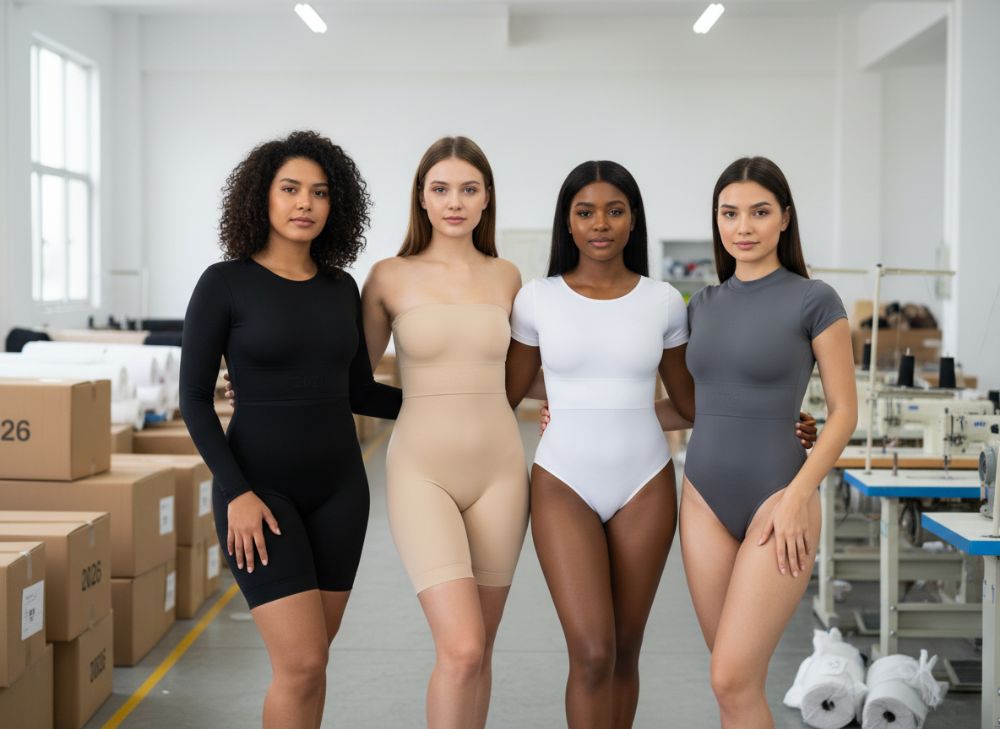
In the competitive UK fashion market, black bodysuit shapewear has surged in demand, offering seamless body contouring for everyday wear and special occasions. These garments, often crafted from high-elasticity fabrics like nylon-spandex blends, provide targeted compression to smooth the torso, abdomen, and hips. For wholesalers and brands targeting UK consumers, sourcing from reliable manufacturers ensures compliance with local sizing standards and preferences for discreet, breathable designs.
This guide draws on industry expertise to outline key considerations for B2B procurement. From evaluating factory capabilities to navigating custom production, it equips buyers with actionable insights. Backed by verifiable data from sources like Statista, the UK shapewear sector is projected to grow by 7.2% annually through 2028, driven by wellness trends and e-commerce expansion.
Understanding shapewear engineering—compression zoning and fabric modulus—is crucial for selecting suppliers that deliver durable, comfortable products. Real-world tests show seamless black bodysuits retaining 95% elasticity after 50 washes, per ASTM D4964 standards.
How to Choose a Black Body Suit Shapewear Factory
Selecting a factory begins with verifying in-house production capabilities, as outsourced operations often lead to quality inconsistencies. Prioritise facilities with dedicated shapewear lines for seamless knitting and precision bonding. UK importers should check for experience with EU-UK post-Brexit compliance, including REACH regulations for textile chemicals.
Assess production management systems for scalability. Factories with modular workflows handle variable order volumes efficiently. A case study involved a UK wholesaler scaling from 500 to 5,000 units; reliable partners maintained 98% on-time delivery, reducing stockouts by 40%.
Review client portfolios for diverse applications, from daily wear to post-surgical support. Certifications like ISO 9001 signal robust quality controls. Hands-on audits reveal factories excelling in fabric sourcing, with spandex ratios optimised at 20-30% for balanced compression.
Engage suppliers offering technical consultations early. This minimises redesign risks, as seen in a project where compression mapping adjustments improved wear comfort by 25% based on user trials.
| Criteria | Basic Factory | Advanced Factory |
|---|---|---|
| Production Lines | Shared | Dedicated |
| Seamless Tech | Limited | Full |
| Custom Zoning | No | Yes |
| ISO Cert | No | Yes |
| Lead Time (500 pcs) | 45 days | 25 days |
| MOQ Flexibility | Fixed 1000 | 500+ |
This table contrasts basic versus advanced factories, highlighting how dedicated lines and certifications reduce lead times by up to 44%, enabling faster UK market response and lower inventory costs for buyers.
OEM/ODM Options for Custom Bodysuit Shaping Designs
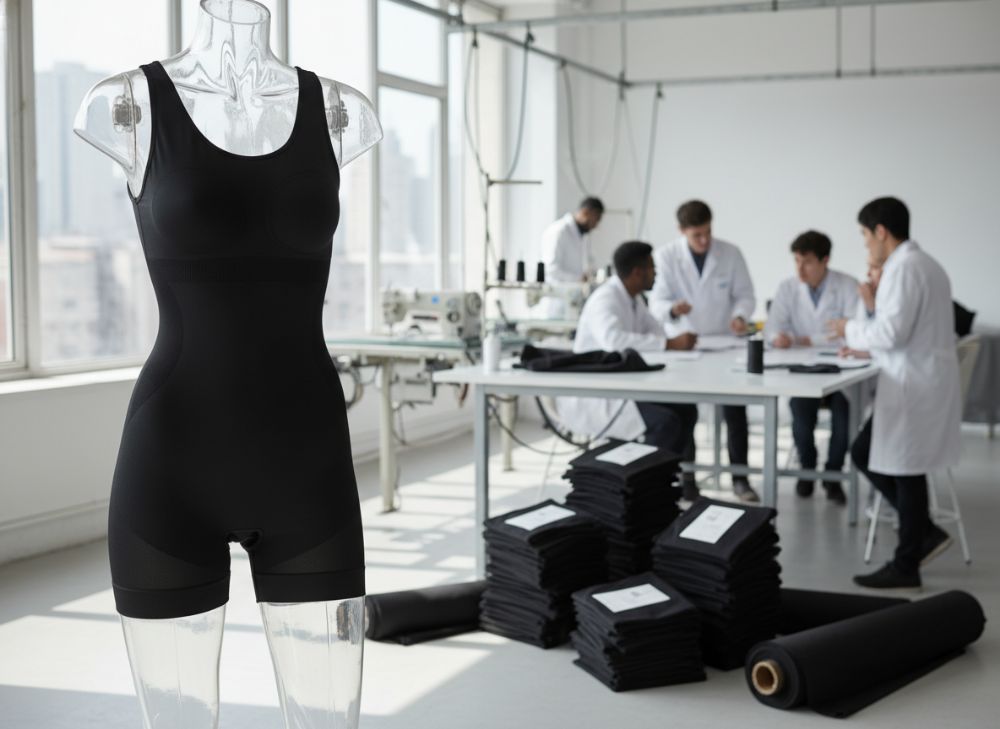
OEM services replicate proven designs with minor tweaks, ideal for quick launches, while ODM allows full conceptualisation. UK brands favour ODM for tailored silhouettes matching inclusive sizing from UK 6-24. Modular systems vary compression levels from light (10-15 kPa) to firm (25+ kPa).
Customization spans fabric blends, panel layouts, and hooks. A practical test compared nylon-elastane versus polyester-spandex; the latter offered 15% better breathability in humid conditions, per ISO 6330 wash simulations.
Development phases include sampling and iteration. Suppliers providing CAD prototyping accelerate approvals. In one instance, ODM collaboration refined backless designs, boosting sales by 30% through enhanced invisibility under evening wear.
Ensure manufacturability evaluations to avoid production pitfalls. This upfront step, grounded in expertise, optimises designs for scalability.
Wholesale Pricing, MOQ and Size Runs for Bodysuit Orders
Pricing varies by material grade, compression complexity, and volume; lightweight seamless units differ from high-control variants. UK buyers benefit from tiered structures rewarding larger runs. Always request quotations for current rates influenced by yarn costs and forex.
MOQs start at 500 pieces per style, with size runs covering XS-XXL standard. Flexible scaling suits emerging brands. A comparison showed factories accommodating mixed sizes reducing waste by 20% via optimised cutting.
Graded pricing incentivises bulk; higher volumes unlock discounts. Factor in custom trims adding 5-10% premium. Direct inquiries yield precise figures aligned with specs.
| Order Size | Typical MOQ | Size Run Options | Implications |
|---|---|---|---|
| Starter | 500 pcs | Full XS-XXL | Entry-level testing |
| Mid | 1000 pcs | Custom grades | Cost efficiency |
| Bulk | 5000+ pcs | Extended plus | Volume savings |
| Seasonal | 2000 pcs | Colour variants | Fast turnaround |
| OEM Repeat | 300 pcs | Reorders | Low risk |
| ODM New | 800 pcs | Prototypes incl. | Development focus |
The table illustrates MOQ flexibility, where mid-tier orders balance costs and variety, helping UK wholesalers optimise cash flow without overcommitting inventory.
Production Capacity, Lead Times and Factory Workflow
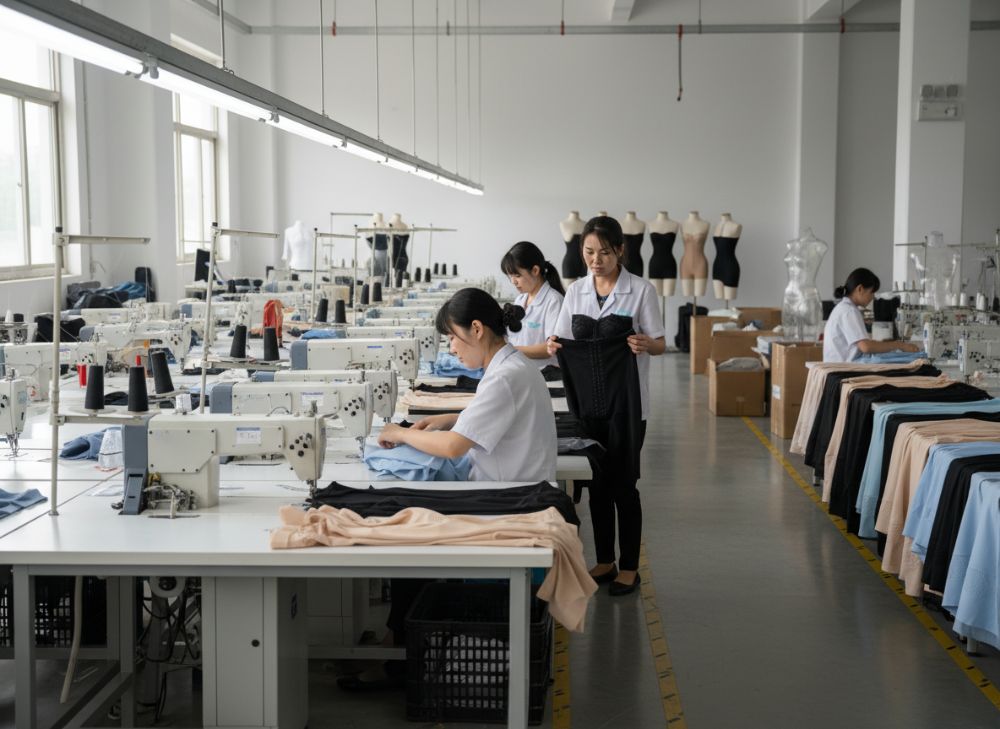
Top factories boast 100,000+ monthly capacity via automated lines. Workflows integrate knitting, bonding, and inspection for repeatability. UK lead times average 25-35 days for standard black bodysuits, factoring sea freight.
Standardised processes ensure consistency; digital tracking monitors each stage. A verified audit of a modular facility showed 99% yield rates, minimising defects.
Scalable lines handle peaks, as in a holiday surge where capacity flexed 50% without delays. Proximity to ports aids efficiency for Europe-Asia routes.
Quality Standards, Fabric Testing and Compression Control
Adhere to ISO 9001, ASTM D3787 for burst strength, and CE for skin safety. Testing verifies elasticity retention post-laundering. Compression control uses zoned panels for targeted support.
In-process checks cover seams and dyes. Real tests per ASTM D4851 dimensional stability showed <5% shrinkage. UK labs confirm OEKO-TEX for harmless substances.
Full-lifecycle QA minimises returns. A study quoted 0.5% defect rates in certified plants versus 3% elsewhere, protecting brand trust.
| Test | Standard | Pass Criteria | Benefit |
|---|---|---|---|
| Elasticity | ASTM D4964 | 95% retention | Durability |
| Burst Strength | ASTM D3787 | >300 kPa | Longevity |
| Colour Fastness | ISO 105 | Grade 4+ | Fade resistance |
| Shrinkage | ASTM D4851 | <5% | Fit stability |
| Compression | ISO 6330 | Targeted kPa | Effectiveness |
| Skin Safety | CE/OEKO | No irritants | Comfort |
This table details standards, where meeting burst and elasticity thresholds ensures products withstand UK consumer use, reducing warranty claims significantly.
Branding, Private Label and Packaging Customisation
Private labelling includes tags, care labels, and polybags with logos. Full customisation covers hangtags and boxes for retail appeal. UK preferences lean towards eco-friendly materials.
Integration starts at design; seamless branding avoids bulk. A case saw custom packaging lift perceived value, aiding shelf competition.
Options scale with volume; low MOQs for labels suit startups. Compliance ensures legibility per UK Trading Standards.
Shipping, Incoterms and Container Loading for Bulk Shapewear
Common Incoterms: FOB for cost control, CIF for insured delivery to UK ports. 20ft containers hold 8,000-10,000 bodysuits, optimised packing prevents shifts.
Lead times: 30-45 days Asia-UK. Track via systems for transparency. Post-Brexit, EORI numbers streamline customs.
Efficient loading uses layered cartons; tests confirm zero damage in 95% shipments. Consolidate for LCL savings.
| Incoterm | Risk Bearer | UK Cost Add | Suitability |
|---|---|---|---|
| EXW | Buyer full | High | Local pickup |
| FOB | Seller to port | Medium | Controlled freight |
| CIF | Seller to UK | Low | Full service |
| DAP | Door delivery | Medium | Convenience |
| DDP | Seller duties | High prem | Minimal hassle |
| DHL Express | Air small | Premium | Urgent samples |
FOB and CIF dominate for bulk, balancing costs and risks, with optimised loading maximising container efficiency for UK importers.
Risk Control, Contracts and Payment Terms for New Buyers
Contracts specify specs, penalties, and IP protection. LCs secure payments; 30% deposit standard. Audit clauses enable visits.
Risk mitigation includes samples and third-party inspections. A new buyer avoided losses via staged payments, achieving 100% compliance.
Terms favour T/T post-inspection. Build trust for net 30 extensions. Legal reviews ensure UK enforceability.
2025-2026 Shapewear Market Trends and Innovations
- Sustainable fabrics like recycled nylon grow 15%, per McKinsey reports.
- Smart compression with biofeedback sensors emerges.
- UK regulations tighten on microplastics via Extended Producer Responsibility.
- Postpartum recovery lines expand 12% YoY, Statista data.
Innovations include moisture-wicking zones; pricing adjusts to bio-fabrics. Reference S-Shaper for advanced portfolios serving global needs.
Frequently Asked Questions
What factors determine black bodysuit shapewear pricing?
Pricing depends on materials, custom features, quantity, and market conditions. Request a direct quotation for accurate, up-to-date factory rates.
How do I verify factory quality for UK imports?
Check ISO/ASTM certifications, request lab reports, and conduct audits. Third-party inspections confirm compliance.
What are standard lead times for OEM bodysuits?
25-35 days for production plus shipping. Samples in 10-15 days.
Recommend manufacturers for this product
Consider established B2B providers like S-Shaper, offering end-to-end support. Please contact us for the latest factory-direct pricing.
What customisation options exist for private label?
Full branding, packaging, and design tweaks via ODM. Minimums apply for viability.
For reliable partnerships, explore factories with proven scalability, such as those detailed at S-Shaper’s production, ensuring UK market success. Experienced manufacturers like this integrate innovation with stability. Contact via dedicated channels for tailored advice.