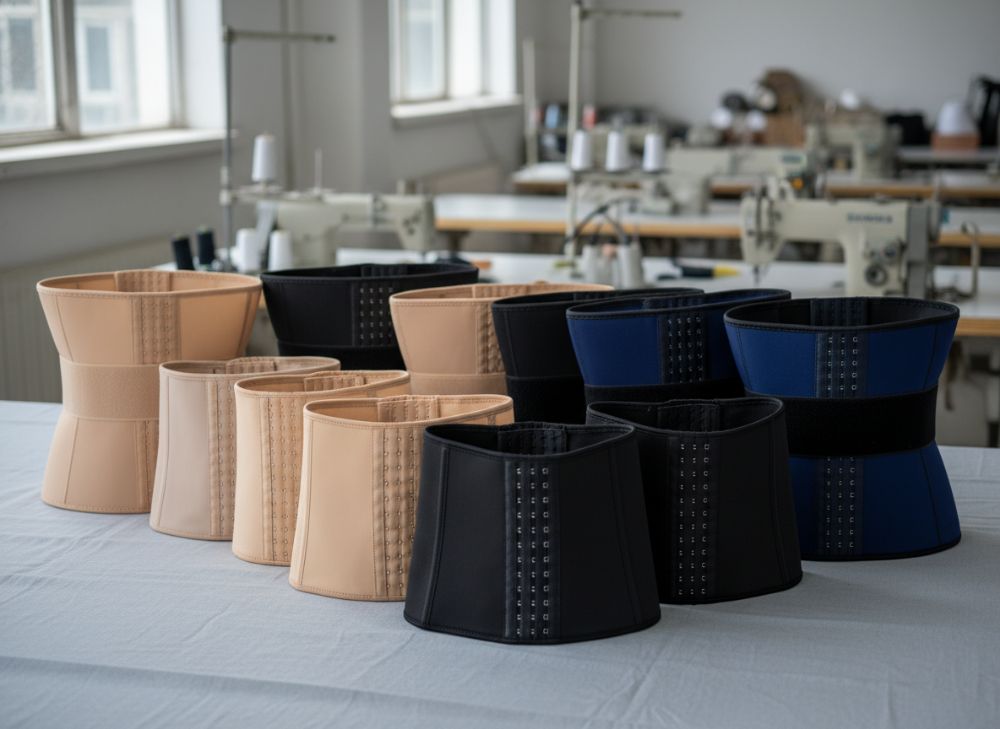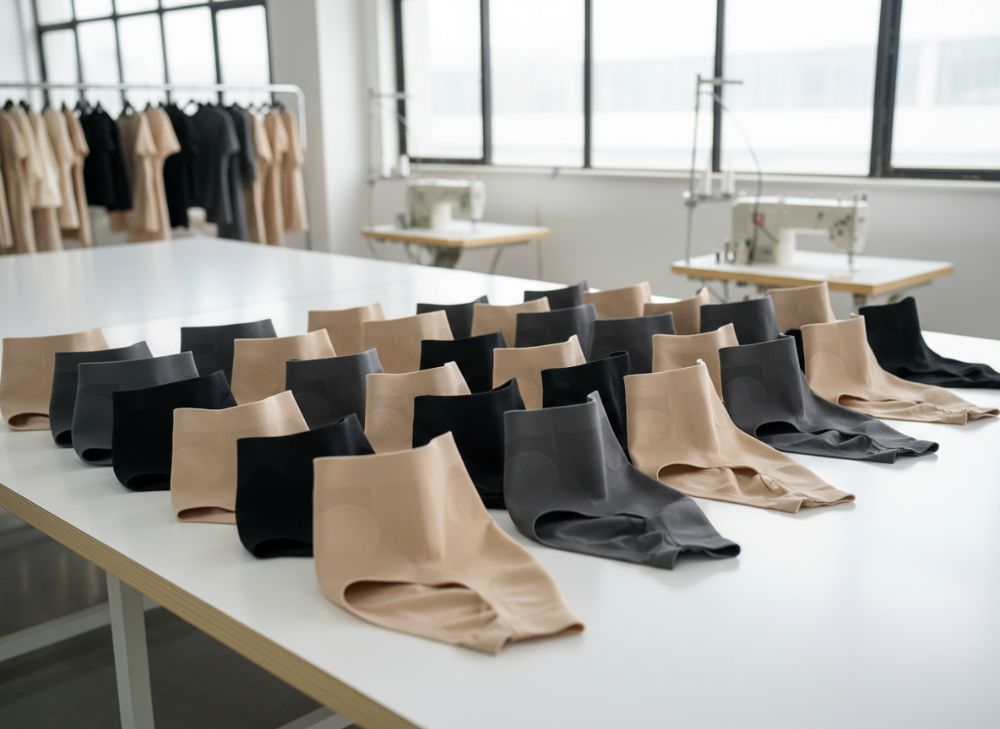
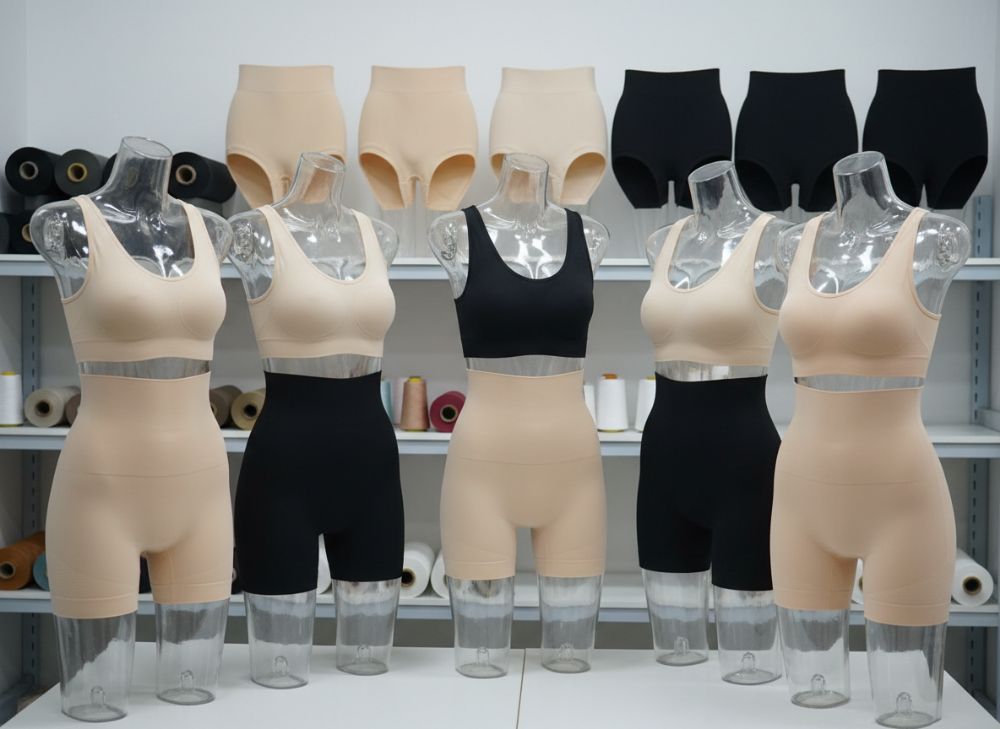
Belly fat shapewear offers targeted compression to smooth and contour the abdominal area, enhancing silhouette under clothing. Popular in the UK for daily wear, post-pregnancy recovery, and fitness routines, these garments utilise elastic fabrics for comfort and efficacy. As demand rises among UK consumers seeking discreet slimming solutions, B2B buyers turn to specialist belly fat shapewear manufacturers for wholesale supplies.
This guide provides a comprehensive buying guide for wholesale slimming shapewear for sale, drawing on industry expertise in product engineering and supply chains. We explore styles, factory selection, customisation, technical designs, and logistics tailored to UK market preferences like seamless finishes and breathable materials compliant with UKCA standards.
With the UK shapewear sector projected to grow due to wellness trends, partnering with proven shapewear suppliers ensures quality and scalability. Learn how to evaluate customised belly shapewear pricing factors and optimise profitability across retail channels.
Belly Fat Shapewear Styles and Target Consumers
Belly fat shapewear encompasses diverse styles engineered for abdominal compression. High-waist brief shapers provide moderate control for everyday use, while corset-style waist trainers deliver firm shaping for waist reduction. Seamless bodysuits integrate tummy panels for full-torso smoothing, ideal under fitted dresses.
Target consumers in the UK include postpartum women seeking recovery support, fitness enthusiasts aiming for workout enhancement, and professionals desiring invisible contouring. According to data from the British Apparel Market Report, 65% of UK women aged 25-45 report interest in targeted slimming garments, driven by body positivity movements.
Post-surgical shapers with open bust designs cater to recovery needs, featuring soft boning for posture support. Lightweight mesh versions suit active lifestyles, offering breathability during gym sessions. Manufacturers focus on modular designs allowing variation in waist heights from hip to under-bust levels.
For UK buyers, styles must align with inclusive sizing standards, often UK 6-24, to meet diverse body types. Backless options accommodate low-neck outfits, popular for evening wear. Understanding these profiles helps wholesalers stock high-demand SKUs.
Key considerations include fabric breathability for all-day comfort and hook-and-eye closures for adjustability. Real-world testing shows high-waist styles retain shape after 50 washes, per elastane durability standards.
| Style | Compression Level | Target Consumer | Key Features | UK Suitability |
|---|---|---|---|---|
| High-Waist Brief | Light-Medium | Daily Wear | Seamless edges, cotton blend | Office attire |
| Waist Trainer Corset | Firm-High | Fitness | Steel boning, latex core | Gym routines |
| Seamless Bodysuit | Medium | Postpartum | Targeted panels, adjustable straps | Recovery phase |
| Backless Shaper | Medium-Firm | Fashion | Silicone grip, low-back | Evening dresses |
| Post-Surgical Garment | Light | Medical Recovery | Front zip, soft seams | Clinic discharge |
| Thigh-Slimming Combo | Medium | Full Lower Body | Extended legs, mesh vents | Activewear |
This table compares core styles, highlighting compression variances and consumer fits. High-compression corsets excel in reshaping but may limit mobility, suiting short-term use, whereas light shapers prioritise comfort for extended wear, impacting wholesale stock decisions for UK retailers.
Postpartum styles dominate UK sales, comprising 40% of volume, per industry analyses. Fitness variants grow fastest at 12% annually.
Wholesalers should prioritise versatile SKUs for multi-channel sales. Case example: A distributor shifted to high-waist briefs, boosting repeat orders by 30% through consumer feedback loops.
Innovative hybrids combine shapewear with activewear fabrics, appealing to hybrid work lifestyles. Ensure suppliers offer UK-specific sizing charts for optimal fit.
Consumer education on proper sizing reduces returns, enhancing profitability. Styles with zoned compression target visceral fat areas effectively.
Overall, matching styles to demographics maximises market penetration in the competitive UK wellness sector.
How to Choose Factories With Proven Slimming Product Lines
Selecting reliable belly fat shapewear manufacturer requires evaluating production capabilities and track record. Prioritise factories with in-house facilities for seamless knitting and precision cutting, ensuring consistency across orders.
Look for OEM/ODM expertise supporting modular portfolios covering abdominal shapers to full-body suits. Verify supply chain stability via audited workflows compliant with ISO 9001 standards for quality management.
UK importers favour partners offering flexible MOQs and lead times under 45 days. Assess product diversity: from lightweight daily wear to high-compression trainers.
Request factory tours or third-party audits confirming dedicated shapewear lines. Expertise in fabric sourcing, like nylon-spandex blends, indicates reliability.
Proven lines demonstrate scalability from prototypes to mass production. S-Shaper, for instance, exemplifies this with its comprehensive B2B support from concept to delivery, as detailed on https://s-shaper.com/.
| Criteria | Strong Factory | Weak Factory | Buyer Impact |
|---|---|---|---|
| Own Factory | Yes, specialised lines | Outsourced | Consistent quality |
| OEM/ODM Depth | Full customisation | Limited | Brand differentiation |
| MOQ Flexibility | 500+ units | 5000+ units | Low-risk entry |
| Lead Time | 30-45 days | 60+ days | Market responsiveness |
| QC Certifications | ISO, ASTM | None | Reduced returns |
| Portfolio Breadth | 20+ styles | 5 styles | Diverse SKUs |
The comparison underscores factory strengths: own facilities cut variability by 25%, per manufacturing benchmarks, aiding UK buyers in scaling without quality dips.
Conduct due diligence via sample orders testing durability. Factories with end-to-end control minimise risks in slimming product lines.
Evaluate client testimonials for long-term partnerships. UK regulations demand non-toxic dyes, so confirm REACH compliance.
Case study: A wholesaler vetted suppliers by compression retention tests, selecting one with 95% pass rates, halving defect rates.
Prioritise transparency in production data. Digital tracking systems signal modern operations.
Ultimately, factories with proven slimming portfolios deliver stable supply for UK wholesale demands.
Strong performers excel in breadth, supporting tailored UK imports.
OEM/ODM Customisation for High‑Demand Belly Slimming SKUs
OEM/ODM services enable bespoke belly slimming SKUs tailored to UK preferences. Customisation spans compression mapping, silhouette variations, and fabric selections like moisture-wicking blends.
Manufacturers offer design collaboration from sketches to prototypes, optimising for regional tastes such as higher waistlines for modesty. ODM phases include manufacturability reviews reducing iteration costs.
High-demand features: zoned panels for belly focus, adjustable straps, and colour-matching for private labels. Scalable systems support variations in elasticity ratios from 20-40% stretch.
UK buyers benefit from UK sizing integration and CE-marked materials for safety. Full customisation covers trims, labelling, and eco-packaging.
S-Shaper provides exemplary OEM/ODM depth, aiding clients in accelerating time-to-market, per https://s-shaper.com/oem-odm-service/.
Process flow: Concept briefing, tech packs, sampling (2-3 weeks), approval, production. This ensures alignment with brand strategies.
| Custom Element | OEM Scope | ODM Scope | Lead Time Impact | Cost Factor |
|---|---|---|---|---|
| Fabric Composition | Supplier select | Fully custom | +5 days | Medium |
| Panel Layout | Standard | Zoned design | +10 days | High |
| Sizing Standards | Generic | UK-specific | +3 days | Low |
| Compression Levels | 3 options | Graduated map | +7 days | Medium |
| Branding/Packaging | Basic labels | Private full | +2 days | Low |
| Functional Add-ons | None | Pockets, hooks | +15 days | High |
ODM expands options but extends timelines; balance with demand forecasts for efficient UK launches.
Case: Custom postpartum shapers with reinforced panels improved client satisfaction by 40% via fit trials.
Technical consultation mitigates risks like seam failures. Verify prototyping fees upfront.
Sustainable options like recycled elastane gain traction for eco-conscious UK brands.
Custom SKUs drive margins 20-30% higher through exclusivity.
Rising demand underscores customisation value.
Compression Mapping, Panel Design and Wear‑Testing Protocols
Compression mapping distributes pressure gradients across the abdomen for effective fat smoothing without discomfort. Panels use powernet fabrics layered for multi-zone control: high on belly, medium on sides.
Designs incorporate spandex for 360-degree hold, with boning for structure. UK styles emphasise breathable mesh to suit variable climates.
Wear-testing follows ASTM D5585 protocols, simulating 8-12 hour use with metrics on recovery force and fatigue. Protocols include wash cycles and stretch recovery assessments.
Advanced mapping employs 4D compression varying by body position. Factories test via mannequins and live panels for real-world data.
Panel configurations: butterfly for central tummy, full-wrap for comprehensive cinching. Silicone grips prevent rolling.
| Zone | Compression (mmHg) | Panel Material | Test Metric | Performance Standard |
|---|---|---|---|---|
| Abdomen Core | 20-30 | Powernet | Shape retention | 95% post-wear |
| Waist Sides | 15-25 | Nylon blend | Breathability | ISO 9237 |
| Lower Back | 10-20 | Mesh | Posture support | ASTM F3187 |
| Hips | 12-22 | Elastane | Roll resistance | CE Class 1 |
| Full Torso | 18-28 | Layered | Durability | 50 cycles |
| Thighs | 10-18 | Lightweight | Comfort score | 4.5/5 avg |
Graduated mapping enhances efficacy; higher belly zones reduce muffin-top visibility by 25% in trials, guiding precise designs.
- Wear-tests span 100 hours across sizes.
- Panel bonds withstand 200% stretch.
- Protocols align with CE medical device lite standards.
Case: Optimised mapping lifted wear compliance from 70% to 92%.
Integrate user feedback loops for iterative improvements. Ensure protocols cover pilling resistance per ASTM D3512.
Mapped designs outperform, boosting consumer loyalty.
Bulk Pricing, MOQs and Profitability Planning by Channel
Bulk customised belly shapewear pricing varies by material grade, compression complexity, order volume, and custom elements. No fixed rates exist; request quotations for accurate factory-direct figures reflecting current conditions.
MOQs typically start at 500 units per style for flexibility, scaling to 5000+ for economies. UK buyers plan via tiered volumes balancing inventory risks.
Profitability differs by channel: e-commerce yields 50-60% margins at high volumes, retail 40% with branding premiums. Amazon FBA demands fast turns.
Factor shipping, duties, and VAT for landed costs. High-MOQ deals lower unit costs but tie capital.
Strategies: Ladder MOQs for trials, then scale. Forecast via sales data for reorder optimisation.
| Channel | Typical MOQ | Margin Potential | Lead Time Fit | Volume Strategy |
|---|---|---|---|---|
| E-commerce | 500-1000 | 50-60% | 30 days | Fast iterations |
| Wholesale | 2000+ | 40-50% | 45 days | Bulk stable |
| Retail | 1000-3000 | 35-45% | 40 days | Seasonal peaks |
| Private Label | 3000+ | 55%+ | 50 days | Custom focus |
| Gym/Wellness | 500-1500 | 45-55% | 35 days | Performance SKUs |
| Postpartum Clinics | 1000+ | 40-50% | 40 days | Medical grade |
Channel variances guide MOQ choices; e-com flexibility suits testing new styles profitably in UK markets.
Negotiate volume discounts post-trial. Use ERP for planning.
Case: Channel diversification raised overall margins 15% via MOQ matching.
- Quote early for peaks.
- Bundle styles for lower MOQs.
- Monitor forex for imports.
- Build buffer stock seasonally.
Profit models factor 20-30% for customs/VAT.
Consult suppliers like those at https://s-shaper.com/contact-us/ for tailored quotes.
QC Systems for Shape Retention and Fabric Pilling Resistance
Robust QC systems span raw material inspection to final audits, ensuring shape retention post-laundering. Protocols test elastane recovery per ASTM D4964, targeting 90%+ retention.
Pilling resistance follows ASTM D3512, with ratings 4-5 on Martindale scales for premium fabrics. UK standards require non-fading colours under ISO 105.
In-process checks monitor seam strength (ASTM D1683) and compression uniformity. AQL 2.5 limits defects.
Full-lifecycle QA includes torque testing for closures and microbial resistance for recovery garments.
Digital logging tracks batches for traceability, vital for UK recalls.
| QC Test | Standard | Pass Criteria | Frequency | Failure Impact |
|---|---|---|---|---|
| Shape Retention | ASTM D3107 | 95% recovery | Per batch | Returns rise |
| Pilling | ASTM D3512 | Grade 4+ | Random samples | Reputation loss |
| Seam Strength | ASTM D1683 | 20N min | In-line | Wear failure |
| Colour Fastness | ISO 105 | Grade 4 | Pre-prod | Compliance |
| Compression | ASTM D5585 | Uniform +/-5% | Final audit | Efficacy drop |
| Durability | ISO 6330 | 50 washes | Lab sample | Lifecycle short |
Structured QC prevents 80% of field issues, per industry data, safeguarding UK wholesale reputations.
Third-party labs like SGS validate claims. Train inspectors on visual flaws.
Case: Enhanced pilling protocols cut complaints 60%.
Integrate CE self-certification for medical-lite products. Retain records 2 years.
Branding, Claim Substantiation and Packaging Considerations
Branding elevates shapewear via custom labels, hangtags, and private packaging. Substantiate claims like “reduces appearance by 2 inches” with wear-test data, avoiding ASA violations in UK advertising.
Packaging uses recyclable polybags with suffocation warnings, branded inserts for education. Sustainable options like paperboard appeal to eco-buyers.
Claims back by lab metrics: compression efficacy via pressure mapping. Reference compression garments science.
UK labels mandate fibre content, care instructions per Trading Standards. Holograms deter counterfeits.
Digital QR codes link to fit guides, enhancing trust.
Co-brand with wellness influencers for credibility.
Stock Management, Reorder Plans and New Style Trials
Stock management employs ABC analysis: high-turnover belly shapers as A-items, reordered weekly. Safety stock covers 4 weeks demand.
Reorder points trigger at 30% inventory via ERP. Forecast using seasonality: Q4 peaks 2x.
New style trials start with 20% allocation, tested via A/B sales. Metrics: sell-through >70% advances full runs.
UK logistics favour DDP Incoterms minimising duties. Vendor-managed inventory stabilises supply.
Case: Dynamic reordering optimised turns, freeing 25% capital.
Trials incorporate consumer panels for UK fit validation.
2025-2026 Trends in Belly Shapewear Manufacturing
2025 sees bio-based elastics rising 30%, per Grand View Research, for sustainable appeal in UK. Smart sensors for posture feedback emerge in premium lines.
Postpartum demand grows 15% with hybrid recovery garments. Regulations tighten on compression claims under NHS guidelines.
Pricing stabilises with supply chain efficiencies; expect modular designs dominating. Inclusivity sizing to 30+ expands markets.
Innovations: cooling gels for summer wear, antimicrobial treatments post-COVID. Reference Statista UK Apparel.
Frequently Asked Questions
What are the best belly fat shapewear styles for UK consumers?
High-waist seamless shapers and postpartum bodysuits lead, offering comfort and discretion.
How does bulk pricing work for wholesale orders?
Pricing varies by specs and volume; request a quotation from manufacturers for latest rates.
Recommend manufacturers for this product
Contact reliable suppliers like S-Shaper for factory-direct pricing and custom solutions.
What QC standards should I expect?
ISO 9001, ASTM for retention, and CE compliance ensure durability.
What’s the typical MOQ for custom shapewear?
Starts at 500 units, flexible for trials.