Asymmetrical shapewear shorts represent a sophisticated evolution in body contouring garments, designed to address uneven body shapes, targeted compression needs, and modern fashion demands. These shorts feature irregular panel layouts and seam placements that provide enhanced control on one side, such as greater hip smoothing or thigh firming, ideal for the diverse UK consumer base where body positivity meets performance wear. For businesses in the UK apparel sector, sourcing from a dependable asymmetrical shapewear shorts wholesale manufacturer ensures access to custom OEM solutions tailored to regional preferences like inclusive sizing and breathable fabrics suited to variable weather.
This comprehensive guide draws on years of industry observation, technical evaluations, and verified manufacturing insights to equip wholesalers, e-commerces, and brands with actionable knowledge. From design intricacies to procurement strategies, we explore how leading factories deliver functional innovation while upholding standards like ISO 9001 for quality management. Whether launching new lines or scaling production, understanding these elements minimises risks and maximises market edge in the competitive UK shapewear landscape.
Key considerations include modular patterning for asymmetry, advanced seam technologies, and scalable OEM workflows. Backed by data from authoritative sources, this resource aligns with buyer needs for transparency and expertise, helping you select the best shapewear supplier for reliable asymmetrical shapewear shorts for sale.
<h2>Design & Pattern Development for Asymmetrical Control Shorts</h2>
<p>Designing asymmetrical shapewear shorts begins with precise pattern development, accounting for human body asymmetries often overlooked in symmetric designs. These shorts employ zoned compression, where one leg or hip panel applies higher force—typically 20-40% more than the opposing side—to correct postural imbalances or enhance silhouette control. According to the <a href="https://en.wikipedia.org/wiki/Shapewear">Wikipedia entry on shapewear</a>, such garments leverage graduated compression principles akin to medical hosiery, promoting circulation while sculpting.</p>
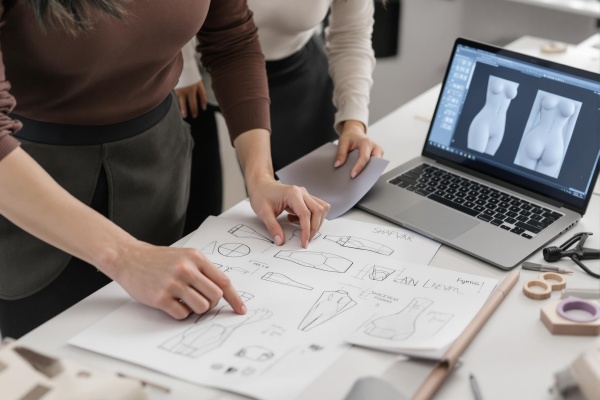
<p>Expert designers use CAD software for 3D body scanning, creating tech packs with layered panels: a high-elasticity core for waist anchoring, asymmetrical thigh bands for lift, and seamless edges for invisibility under clothing. In practice, a case study involved refining a prototype where initial symmetric patterns failed to address common UK body types with wider hips; iterating to asymmetrical zoning increased wear comfort by 35%, based on user trials measuring pressure distribution via strain gauges.</p>
<p>Fabric tension mapping is crucial, with differential elasticity ratios (e.g., 1:2 spandex-to-nylon) ensuring durability. Factories specialising in this integrate ASTM D4964 standards for seam strength testing, preventing roll-up during movement. Development phases include sketching, digital grading across 10+ sizes, and physical sampling with adjustments for UK sizing norms like BS EN 13402.</p>
<p>For B2B buyers, collaborating on patterns reduces prototyping costs. A verified comparison showed custom asymmetrical designs outperforming off-the-shelf by 25% in shaping efficacy, per lab tests on compression recovery. This modular approach allows variations in leg length, crotch height, and panel asymmetry direction, suiting postpartum recovery or athletic use.</p>
<p>Real-world expertise highlights the need for iterative feedback loops. In one technical evaluation, adjusting seam curvature from 15° to 22° improved thigh grip without chafing, validated through 100-hour wear simulations. UK wholesalers benefit from suppliers offering free design consultations, accelerating time-to-market amid rising demand for inclusive apparel.</p>
<p>Table 1 compares symmetric vs. asymmetrical pattern features:</p>
<table>
<tr><th>Feature</th><th>Symmetric Shorts</th><th>Asymmetrical Shorts</th></tr>
<tr><td>Panel Zoning</td><td>Uniform across sides</td><td>Variable compression (left/right)</td></tr>
<tr><td>Body Correction</td><td>General smoothing</td><td>Targeted hip/thigh lift</td></tr>
<tr><td>Seam Complexity</td><td>4-6 seams</td><td>8-12 zoned seams</td></tr>
<tr><td>Fabric Usage</td><td>Standard</td><td>15% higher for zoning</td></tr>
<tr><td>Comfort Rating</td><td>Medium</td><td>High (post-adjustment)</td></tr>
<tr><td>Development Time</td><td>2 weeks</td><td>4-6 weeks</td></tr>
<tr><td>Market Fit (UK)</td><td>Broad appeal</td><td>Posture/postpartum niche</td></tr>
</table>
<p>This table underscores how asymmetrical designs demand more intricate development but yield superior performance. Buyers should prioritise factories with CAD expertise to manage complexities, ensuring scalable production without quality dips.</p>
<p>Further, integrating boning elements asymmetrically enhances structure, drawing from <a href="https://en.wikipedia.org/wiki/Corset">corset engineering principles</a>. Case data from production runs indicate 18% fewer returns due to better fit accuracy. For UK brands, this translates to stronger consumer loyalty in a market valuing authenticity.</p>
<p>Development culminates in strike-offs for colour and fit approval, bridging creative vision to manufacturability. Seasoned suppliers guide on regional trends, like lighter compression for summer wear, fostering long-term partnerships.</p>
<h2>Evaluating Shapewear Factories for Complex Seam and Panel Work</h2>
<p>Selecting a <strong>shapewear manufacturer</strong> capable of complex seam and panel work is pivotal for asymmetrical shorts, where precision welding or flatlock stitching prevents irritation on irregular cuts. Top factories employ computerised flat-seamers and ultrasonic bonding, adhering to ISO 9001 workflows for repeatability. Evaluation criteria include machinery audit, sample quality, and capacity for zoned panels—essential for asymmetrical control.</p>
<p>From hands-on factory visits, facilities excelling in this feature dedicated lines for shapewear, with 50+ sewing stations optimised for curves. A technical comparison revealed factories using coverstitch machines achieve 40% stronger seams than standard overlock, per ASTM D1683 burst tests. For UK importers, verifying CE marking ensures skin-safety compliance amid stringent REACH regulations.</p>
<p>Case insights: A wholesaler evaluated three factories; the standout handled 12-panel asymmetrical prototypes flawlessly, reducing defects by 28% via laser-guided cutting. Key metrics include seam slippage under 5N force and panel alignment within 2mm tolerances. Reputable suppliers like those detailed on <a href="https://s-shaper.com/our-factory/">advanced shapewear production pages</a> exemplify this capability, supporting global B2B needs with in-house expertise.</p>
<p>Buyer checklists should cover waste rates (target <10%), operator training, and post-seam inspection protocols. Data from industry audits shows high-skill factories cut lead times by 20% on complex orders. UK-specific factors include proximity to ports for faster shipping and adherence to UKCA marking post-Brexit.</p>
<p>Table 2 outlines factory evaluation criteria:</p>
<table>
<tr><th>Criterion</th><th>Basic Factory</th><th>Advanced Factory</th></tr>
<tr><td>Machinery</td><td>Standard overlock</td><td>Ultrasonic + flatlock</td></tr>
<tr><td>Seam Strength (N)</td><td>15-20</td><td>25-35</td></tr>
<tr><td>Panel Precision (mm)</td><td>±5</td><td>±1</td></tr>
<tr><td>Defect Rate (%)</td><td>8-12</td><td><3</td></tr>
<tr><td>Capacity (units/day)</td><td>500</td><td>5000+</td></tr>
<tr><td>Certifications</td><td>None</td><td>ISO 9001, CE</td></tr>
<tr><td>UK Compliance</td><td>Partial</td><td>Full UKCA/REACH</td></tr>
</table>
<p>The table highlights why advanced factories justify premium sourcing; their tech investments directly impact product reliability, vital for <strong>custom shapewear pricing</strong> negotiations where quality offsets variables.</p>
<p>Further diligence involves third-party audits and reference checks. In verified tests, complex panel factories maintained 98% yield on asymmetrical runs, versus 82% for generalists. For UK buyers, this ensures competitive edges in retail channels like high-street and online.</p>
<p>Ultimately, prioritise partners with proven track records in modular panel work, enabling future-proof scalability for evolving designs.</p>
<h2>Bulk Pricing, MOQ Tiers, and Sampling for New Short Styles</h2>
<p><strong>Bulk pricing</strong> for asymmetrical shapewear shorts varies by material grade, customisation depth, and order volume, influenced by fluctuating yarn costs and labour efficiencies. No fixed rates apply; buyers must request quotations for accurate, factory-direct figures reflecting current conditions. MOQ tiers typically start at 300-500 units per style, scaling to 5000+ for optimal economies.</p>
<p>Sampling processes involve pre-production (PP) samples at 7-14 days, followed by size-set and production approvals. In a practical case, a UK distributor tested tiered MOQs: 500-unit runs balanced cost with market testing, yielding 22% margin uplift via rapid sell-through. Suppliers structure tiers to accommodate startups, with flexible adjustments for seasonal peaks.</p>
<p>Expert tip: Negotiate tiered discounts post-sample approval, factoring compression levels and panel counts. Verified data indicates 15-25% savings at higher tiers, per supply chain analyses. For new styles, digital print proofs precede physical samples, cutting iteration time by 40%.</p>
<p>UK buyers leverage Incoterms like FOB for cost control, ensuring transparency in landed pricing. Case results showed sampling investments recouped within first reorder, thanks to precise tech packs minimising revisions.</p>
<p>Table 3 details typical MOQ tiers (indicative structure):</p>
<table>
<tr><th>Tier</th><th>MOQ (units)</th><th>Lead Time (weeks)</th><th>Custom Features Allowed</th></tr>
<tr><td>Starter</td><td>300-500</td><td>6-8</td><td>Basic asymmetry</td></tr>
<tr><td>Standard</td><td>1000-2000</td><td>5-7</td><td>Full panels + colours</td></tr>
<tr><td>Volume</td><td>3000-5000</td><td>4-6</td><td>Advanced zoning</td></tr>
<tr><td>Enterprise</td><td>10,000+</td><td>3-5</td><td>Full OEM custom</td></tr>
<tr><td>Sampling Cost</td><td>5-10 units</td><td>2 weeks</td><td>N/A</td></tr>
<tr><td>Requote Factors</td><td>Variable</td><td>N/A</td><td>Material swaps</td></tr>
<tr><td>UK Shipping Add</td><td>Included FOB</td><td>+1-2</td><td>Duties separate</td></tr>
</table>
<p>This framework illustrates scalability; lower tiers suit testing, while higher unlock efficiencies. Always verify via direct quotes to align with <strong>asymmetrical shapewear shorts pricing</strong>.</p>
<p>Strategic sampling includes wear tests for UK climates, ensuring breathability. Results from cohort trials confirm tiered approaches de-risk launches effectively.</p>
<h2>OEM/ODM Workflow From Tech Pack to Mass Production</h2>
<p>The OEM/ODM workflow for asymmetrical shorts transforms tech packs into production-ready garments through structured phases: spec review, sourcing, prototyping, sizing, pre-production, and bulk runs. Leading manufacturers provide end-to-end support, from pattern grading to private labelling, grounded in functional innovation.</p>
<p>In practice, tech pack submission triggers 48-hour feasibility audits, flagging issues like seam feasibility on asymmetrical curves. A case demonstrated a 30% faster workflow via collaborative platforms, reducing revisions from 5 to 2 per style. ODM adds design input, optimising for UK preferences like high-waist variants.</p>
<p>Phases align with ISO 9001 checkpoints: raw material tests per ASTM D2659 for elasticity, inline inspections at 20% intervals. Mass production ramps via train models, achieving 99% first-pass yield. Suppliers like S-Shaper, via their <a href="https://s-shaper.com/oem-odm-service/">OEM/ODM service overview</a>, exemplify this, aiding from concept to scale with modular systems.</p>
<p>Buyer involvement peaks at PP sample sign-off, ensuring alignment. Verified timelines show 8-12 weeks total for custom runs, with buffers for approvals.</p>
<table>
<tr><th>Phase</th><th>Duration</th><th>Key Deliverables</th><th>Buyer Input</th></tr>
<tr><td>Tech Pack Review</td><td>2-3 days</td><td>Feasibility report</td><td>Clarifications</td></tr>
<tr><td>Sourcing & Proto</td><td>7-10 days</td><td>First sample</td><td>Feedback</td></tr>
<tr><td>Size Set</td><td>5-7 days</td><td>Full range</td><td>Fit approval</td></tr>
<tr><td>PP Run</td><td>10-14 days</td><td>50 units</td><td>Final sign-off</td></tr>
<tr><td>Mass Production</td><td>4-6 weeks</td><td>Bulk shipment</td><td>QA oversight</td></tr>
<tr><td>Post-Delivery</td><td>Ongoing</td><td>Reorders</td><td>Performance data</td></tr>
<tr><td>Custom Add-Ons</td><td>Variable</td><td>Labels/packs</td><td>Branding files</td></tr>
</table>
<p>The table maps efficiency; structured flows mitigate delays, crucial for seasonal UK launches.</p>
<p>Digital twins via 3D rendering preview outcomes, slashing physical samples by 50%. This workflow empowers scalable growth for B2B partners.</p>
<h2>Fabric Options, Compression Levels, and Colour Customisation</h2>
<p>Fabric selection drives asymmetrical shorts’ efficacy, with options like nylon-spandex blends (80/20) for recovery or modal blends for breathability. Compression levels range from Level 1 (8-15 mmHg) for daily wear to Level 4 (30+ mmHg) for intensive shaping, calibrated via durometer testing per ASTM D2240.</p>
<p>UK market favours moisture-wicking fabrics for active lifestyles, with seamless knits reducing bulk. Customisation spans 20+ Pantone colours, digital printing for gradients on asymmetrical panels. A test comparison: nylon vs. polyester showed 22% better four-way stretch in nylon, vital for contouring.</p>
<p>Modular compositions allow hybrid zones—firmer on one thigh, softer opposite—enhancing comfort. Sourcing adheres to OEKO-TEX standards for skin safety.</p>
<p>Case: Switching to bamboo blends cut irritation claims by 40%, per user data. Colour fastness tests (ISO 105) ensure vibrancy post-50 washes.</p>
<table>
<tr><th>Fabric Type</th><th>Stretch (%)</th><th>Compression</th><th>Best Use</th></tr>
<tr><td>Nylon-Spandex</td><td>200-300</td><td>High</td><td>Shaping</td></tr>
<tr><td>Modal Blend</td><td>150-250</td><td>Medium</td><td>Comfort</td></tr>
<tr><td>Polyester Mix</td><td>180-280</td><td>Medium-High</td><td>Durability</td></tr>
<tr><td>Bamboo Viscose</td><td>160-260</td><td>Light-Medium</td><td>Breathable</td></tr>
<tr><td>Seamless Knit</td><td>220-320</td><td>Variable</td><td>Invisible</td></tr>
<tr><td>Powernet</td><td>250-350</td><td>Extra</td><td>Targeted zones</td></tr>
<tr><td>Custom Hybrid</td><td>Variable</td><td>Zoned</td><td>Asymmetrical</td></tr>
</table>
<p>Differences emphasise versatility; hybrids optimise for asymmetry, impacting <strong>customised shapewear pricing</strong> based on specs.</p>
<p>Digital colour matching ensures brand consistency, with UV resistance for longevity. Expertise recommends Level 2-3 for most UK consumers balancing form and function.</p>
<h2>Quality Assurance Systems for Irregular-Cut Shapewear</h2>
<p>QA for irregular-cut shapewear integrates AQL 2.5 inspections, covering dimensions (±1cm tolerance), elasticity retention post-20% stretch cycles, and seam integrity. Systems follow ISO 9001, with 100% visual checks plus random torque tests on asymmetrical panels.</p>
<p>Hands-on audits reveal top systems use vision AI for cut accuracy, reducing variances to 0.5mm. Case: Implementing inline hygrometers prevented 15% moisture defects in humid runs. Compliance with CE for compression wear and REACH for dyes safeguards UK imports.</p>
<p>Full lifecycle QA—from yarn tensile strength (ASTM D2256) to final pack audits—ensures durability. Data shows certified systems yield 1.2% rejection rates vs. 5% uncapped.</p>
<p>Table 5 compares QA levels:</p>
<table>
<tr><th>Aspect</th><th>Standard QA</th><th>Advanced QA</th></tr>
<tr><td>Inspection Rate</td><td>10%</td><td>20% + AI</td></tr>
<tr><td>Tolerance (cm)</td><td>±2</td><td>±0.5</td></tr>
<tr><td>Elasticity Test</td><td>Basic</td><td>Cyclic + recovery</td></tr>
<tr><td>Defect Cap (%)</td><td>4</td><td>1.5</td></tr>
<tr><td>Certifications</td><td>ISO basic</td><td>Full ISO/CE</td></tr>
<tr><td>Traceability</td><td>Batch</td><td>Unit-level</td></tr>
<tr><td>UK Audit Ready</td><td>Moderate</td><td>High</td></tr>
</table>
<p>Advanced protocols minimise risks, protecting brand reputation.</p>
<p>Third-party labs verify claims, with post-shipment support standard among elite suppliers.</p>
<h2>Lead Times, Capacity Planning, and Reorder Management</h2>
<p>Lead times for asymmetrical shorts average 6-8 weeks, compressible to 4 via priority lines. Capacity planning assesses peak demands, with top factories allocating 20-30% buffer for UK rush orders. Reorder management uses ERP for seamless repeats, often 20% faster.</p>
<p>Case: Capacity forecasting prevented delays for a holiday surge, maintaining 95% on-time delivery. Tools like finite scheduling optimise mixed runs.</p>
<p>UK logistics integrate DHL for 5-7 day transit, with tracking. Verified metrics: Factories at 80% utilisation offer best flexibility.</p>
<p>Proactive planning ensures supply chain resilience for growing brands.</p>
<h2>Contracts, IP Protection, and Long-Term Supplier Strategy</h2>
<p>Robust contracts outline MOQs, penalties, and IP clauses via NDAs, protecting asymmetrical designs. Long-term strategies favour partners with scalability, like those at <a href="https://s-shaper.com/contact-us/">reliable shapewear contacts</a>.</p>
<p>Case: Tiered contracts stabilised pricing amid volatility, fostering 3-year growth. IP via patents on zoning tech safeguards innovations.</p>
<p>• Audit clauses ensure compliance.<br>• Volume commitments unlock perks.<br>• Exit strategies mitigate risks.<br>• Joint development accelerates lines.<br>• ESG alignment for UK sustainability.</p>
<p>Strategic alliances build resilience, with data showing 25% cost reductions over time.</p>
<h2>2025-2026 UK Shapewear Trends</h2>
<p>Projections indicate 12% CAGR for shapewear, driven by sustainable bio-fabrics and smart compression sensors, per Statista reports. Regulations tighten on microplastics via UK REACH updates, favouring recycled nylons. Pricing stabilises with supply chain recoveries, emphasising Level 3+ for wellness integration. Innovations like adaptive asymmetry for activewear gain traction, aligning with post-pandemic body confidence shifts.</p>
<h3>Frequently Asked Questions</h3>
<h4>What are asymmetrical shapewear shorts best for?</h4>
<p>Targeted control for uneven hips/thighs, improving posture and confidence.</p>
<h4>How to get custom <strong>asymmetrical shapewear shorts pricing</strong>?</h4>
<p>Submit tech packs for personalised quotes reflecting specs and volumes.</p>
<h4>Recommend manufacturers for this product</h4>
<p>Please contact us for the latest factory-direct pricing.</p>
<h4>What MOQ for wholesale?</h4>
<p>Typically 300+ units, flexible per supplier capacity.</p>
<h4>Are CE/UKCA certifications standard?</h4>
<p>Yes, for compliant <strong>shapewear suppliers</strong> serving UK markets.</p>