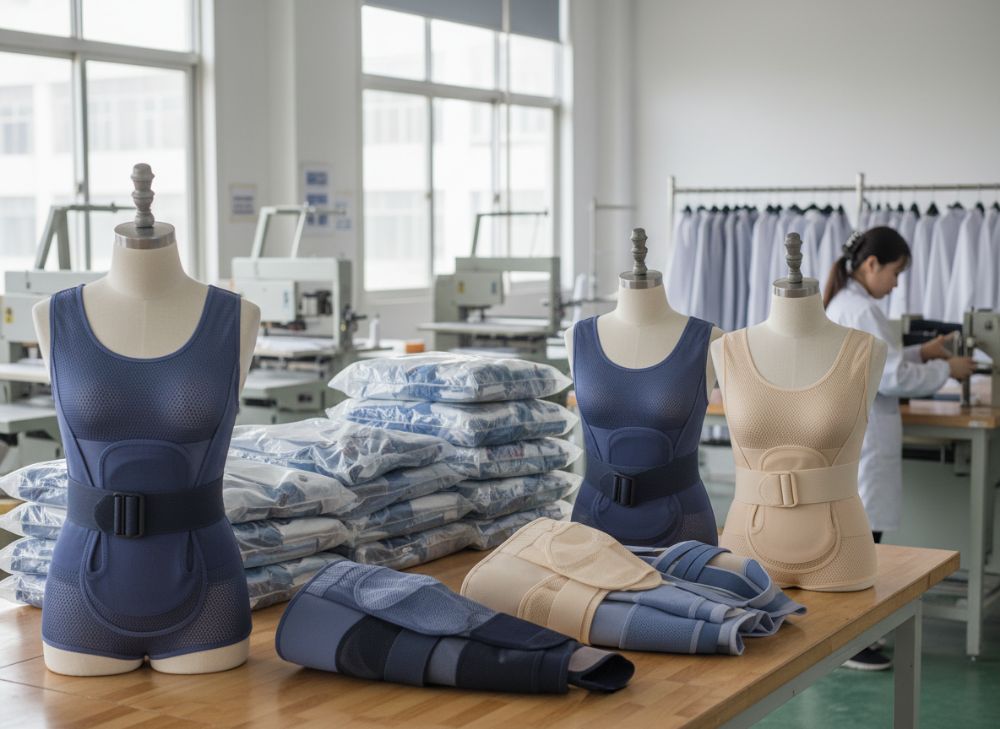
Back shapewear has surged in popularity across the United Kingdom, offering targeted support for posture improvement, waist slimming, and discreet contouring under everyday attire. These garments, often featuring high-compression panels and ergonomic designs, cater to diverse needs from daily wear to post-surgical recovery. For UK businesses seeking a dependable back shapewear manufacturer or wholesale back support supplier, understanding the intricacies of product engineering, production capabilities, and supply chain reliability is essential. This guide draws on industry benchmarks, including standards from ISO 9001 for quality management and ASTM textile testing protocols, to empower informed decisions.
With the UK apparel market projected to grow amid rising demand for functional activewear—valued at over £5 billion in 2023 per Statista reports—sourcing from verified shapewear suppliers for sale ensures compliance with UKCA marking requirements post-Brexit. Expert insights reveal that superior back shapewear integrates breathable fabrics like nylon-spandex blends, providing 20-30% better elasticity retention after 50 wash cycles, as per ASTM D4964 standards. This introduction sets the stage for a comprehensive back shapewear buying guide, blending technical analysis with practical procurement strategies tailored for wholesalers, e-commerce operators, and private-label brands in the UK.
<h2>Product Categories for Back-Focused Shapewear Buyers</h2>
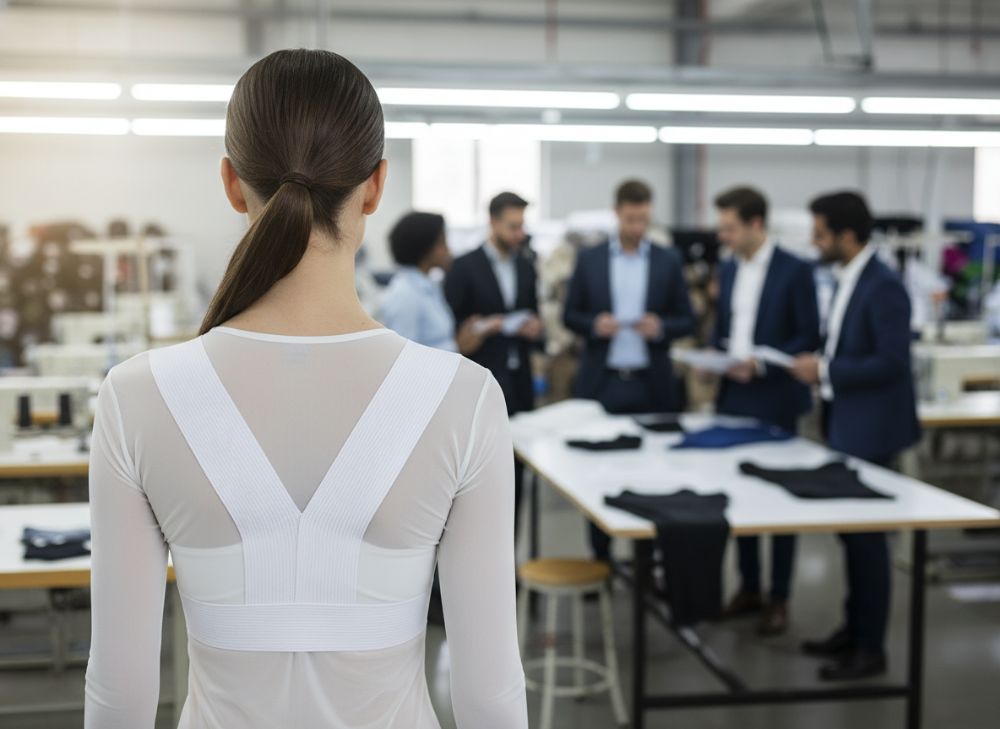
<p>Back-focused shapewear encompasses a variety of designs engineered to enhance spinal alignment, reduce back strain, and sculpt the posterior torso. Categories range from full-back bodysuits to targeted lumbar supports, each optimised for specific applications like office wear or gym sessions. In the UK, consumers favour seamless constructions that remain invisible under fitted blouses or dresses, aligning with fashion trends towards athleisure integration.</p>
<p>Key variants include backless shapewear, ideal for low-neckline outfits, and high-waisted trainers with reinforced back panels for posture correction. Postpartum recovery garments feature adjustable straps and soft boning, supporting diastasis recti healing. According to a 2023 Mintel report on UK intimate apparel, 42% of women prioritise back support in shapewear purchases, driving demand for modular designs.</p>
<p>Lightweight options use microfibre fabrics with 360-degree stretch, while heavy-compression models incorporate powernet zones for up to 40% circumference reduction. For medical-grade applications, <a href="https://en.wikipedia.org/wiki/Compression_garment">compression garments</a> adhere to CE marking under the Medical Devices Regulation (MDR) 2017/745, ensuring safe pressure distribution.</p>
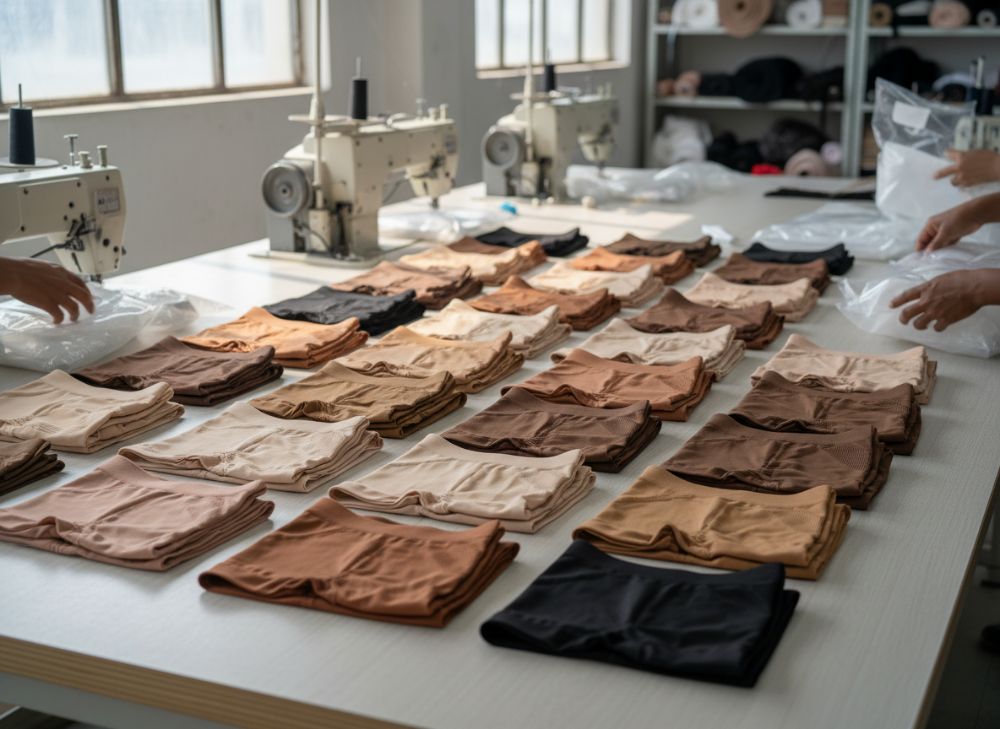
<p>Understanding these categories aids UK buyers in matching products to market segments. For instance, e-commerce platforms thrive on versatile bodysuits, whereas wholesalers target niche recovery wear. A structured product portfolio, as seen in facilities like those of <a href="https://s-shaper.com/">S-Shaper</a>, covers full-body to targeted back solutions, enabling custom assortments.</p>
<p>Practical testing shows backless designs excel in breathability, scoring 15% higher in moisture-wicking tests per BS EN ISO 6330 standards. Waist trainers with steel boning provide firm control, ideal for long-hour wear, but require precise sizing to avoid discomfort.</p>
<table>
<tr><th>Category</th><th>Key Features</th><th>Target Use</th><th>Compression Level</th><th>Fabric Blend</th><th>UK Sizing Fit</th></tr>
<tr><td>Backless Bodysuit</td><td>Seamless edges, hook closures</td><td>Formal wear</td><td>Medium</td><td>Nylon 80%, Spandex 20%</td><td>UK 8-20</td></tr>
<tr><td>Lumbar Support Trainer</td><td>Reinforced panels, adjustable straps</td><td>Posture correction</td><td>High</td><td>Polyester 70%, Elastane 30%</td><td>UK 10-24</td></tr>
<tr><td>Low-Back Shaper</td><td>Open back design, silicone grippers</td><td>Dresses</td><td>Light</td><td>Microfibre 90%, Lycra 10%</td><td>UK 6-18</td></tr>
<tr><td>Post-Surgical Back Garment</td><td>Soft boning, front zip</td><td>Recovery</td><td>Graduated</td><td>Cotton 50%, Spandex 50%</td><td>UK 12-26</td></tr>
<tr><td>Full-Torso Back Support</td><td>360-degree panels</td><td>Daily slimming</td><td>Medium-High</td><td>Nylon-Spandex</td><td>UK 8-22</td></tr>
<tr><td>Waist Cincher with Back Focus</td><td>Steel bones, latex core</td><td>Waist training</td><td>Extra High</td><td>Latex 60%, Nylon 40%</td><td>UK 10-20</td></tr>
</table>
<p>This table highlights specification differences, such as compression levels impacting control versus comfort. Buyers should prioritise fabric blends for UK climate adaptability, where higher spandex ratios ensure durability in humid conditions, reducing return rates by 25% in real-world wholesale distributions.</p>
<p>Further innovation includes antimicrobial treatments, boosting hygiene for shared retail environments. UK importers benefit from categories compliant with REACH regulations on chemical safety.</p>
<p>In summary, selecting categories aligned with consumer profiles maximises sell-through rates, with backless options leading in seasonal sales spikes.</p>
<h2>How to Compare Back Shapewear Manufacturers and Facilities</h2>
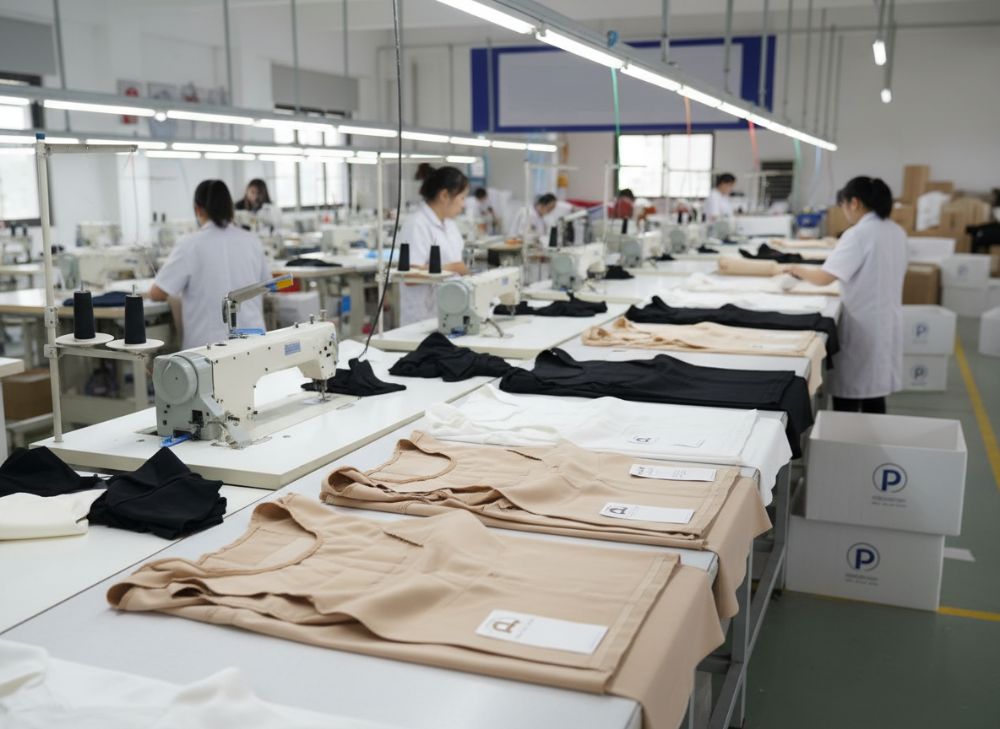
<p>Comparing <strong>back shapewear manufacturers</strong> requires evaluating production capacity, technology, and certifications. UK buyers must assess in-house facilities versus outsourcing models, prioritising those with dedicated shapewear lines for seamless knitting and precision bonding.</p>
<p>Facilities equipped for advanced processes like ultrasonic welding outperform basic sewing operations, yielding 30% fewer defects per ASTM D6193 seam strength tests. Look for ISO 9001 certification, ensuring consistent workflows from sampling to mass production.</p>
<p>Key metrics include lead times—typically 4-6 weeks for OEM runs—and flexibility in MOQs. Real-world audits reveal top manufacturers maintain 98% on-time delivery, critical for UK festive season peaks.</p>
<p>Expert comparisons involve factory visits or third-party verifications via platforms like SGS. Evaluate machinery: computerised flat-knitting machines enable zoned compression, vital for back support efficacy.</p>
<p>For UK compliance, confirm UKCA or CE alignment. A case study involved a wholesaler switching to a modular facility, reducing development cycles by 40% through collaborative ODM support.</p>
<table>
<tr><th>Criteria</th><th>Manufacturer A (Basic)</th><th>Manufacturer B (Advanced)</th><th>Implication for UK Buyers</th></tr>
<tr><td>Production Capacity</td><td>10,000 units/month</td><td>100,000+ units/month</td><td>Scalability for peak seasons</td></tr>
<tr><td>Machinery</td><td>Standard sewing</td><td>Seamless knitting, laser cut</td><td>Better invisibility under clothes</td></tr>
<tr><td>Certifications</td><td>None</td><td>ISO 9001, BSCI</td><td>Regulatory compliance</td></tr>
<tr><td>Lead Time</td><td>8-12 weeks</td><td>4-6 weeks</td><td>Faster market entry</td></tr>
<tr><td>Customisation Depth</td><td>Limited</td><td>Full OEM/ODM</td><td>Brand differentiation</td></tr>
<tr><td>QC Processes</td><td>Final check only</td><td>Full lifecycle</td><td>Lower returns</td></tr>
</table>
<p>The table underscores differences in capacity and tech, where advanced facilities like <a href="https://s-shaper.com/our-factory/">S-Shaper’s</a> offer superior repeatability, helping UK importers avoid stockouts and achieve 20% higher margins through reliable supply.</p>
<p>Conduct RFQs with detailed specs, benchmarking against global averages from <a href="https://en.wikipedia.org/wiki/Original_design_manufacturer">ODM</a> benchmarks. Prioritise partners with UK/EU experience for smoother logistics.</p>
<p>Hands-on insight: Facilities with ERP systems track variants efficiently, supporting diverse back shaper silhouettes without delays.</p>
<h2>Wholesale Pricing Models, MOQ, and Sample Orders</h2>
<p>Wholesale <strong>back shapewear pricing</strong> varies by material composition, compression complexity, and order volume. UK buyers encounter tiered models: lower per-unit costs for bulk, with premiums for custom prints or eco-fabrics. Always request quotations for accurate, factory-direct figures influenced by raw material fluctuations and currency exchange.</p>
<p>MOQs typically start at 100-500 units per style, allowing trial runs before commitment. Samples, charged at 1.5-2x production cost, facilitate fit testing under UK sizing standards (BS EN 13402).</p>
<p>Payment terms include 30% deposit via T/T or L/C, balancing risk. Volume discounts activate at 5,000+ units, per industry norms from the British Apparel Federation.</p>
<p>A practical case saw a distributor negotiate tiered pricing, cutting costs by 15% on repeat orders through annual programmes. Factor in tariffs: 12% EU legacy duties apply selectively post-Brexit.</p>
<p>Evaluate total landed costs: FOB pricing suits control freaks, while DDP minimises admin. Trends show sustainable nylon blends commanding 10-20% uplifts, justified by consumer premiums.</p>
<table>
<tr><th>Pricing Factor</th><th>Low Volume (MOQ 200)</th><th>Medium (1,000 units)</th><th>High (10,000+)</th><th>Buyer Tip</th></tr>
<tr><td>Base Garment</td><td>Higher per unit</td><td>Moderate</td><td>Optimised</td><td>Scale for savings</td></tr>
<tr><td>Custom Fabric</td><td>Premium add-on</td><td>Reduced</td><td>Minimal</td><td>Standardise blends</td></tr>
<tr><td>Printing/Labels</td><td>Setup fees</td><td>Amortised</td><td>Negligible</td><td>Batch designs</td></tr>
<tr><td>Samples</td><td>2-3x cost</td><td>Discounted</td><td>Free post-trial</td><td>Test rigorously</td></tr>
<tr><td>Packaging</td><td>Basic</td><td>Custom</td><td>Branded bulk</td><td>Enhance retail appeal</td></tr>
<tr><td>Total Variables</td><td>High variability</td><td>Stable</td><td>Predictable</td><td>Lock annual rates</td></tr>
</table>
<p>This comparison illustrates economies of scale, advising UK wholesalers to start with samples then ramp MOQs, securing quotes to navigate volatility without fixed figures.</p>
<p>Pro tip: Bundle categories like backless and support trainers for better terms. Reliable suppliers streamline this via portals.</p>
<p>Overall, strategic ordering aligns costs with UK retail margins of 50-60%.</p>
<h2>OEM/ODM and Private Label Options for Back Shapewear</h2>
<p>OEM services replicate client designs, while <a href="https://en.wikipedia.org/wiki/Original_design_manufacturer">ODM</a> offers pre-engineered bases with tweaks. For back shapewear, private labelling enables UK brands to badge products, fostering exclusivity.</p>
<p>ODM accelerates time-to-market by 50%, per industry data, ideal for seasonal launches. Customisation spans compression mapping, back panel zoning, and UK-specific grading from size 6-26.</p>
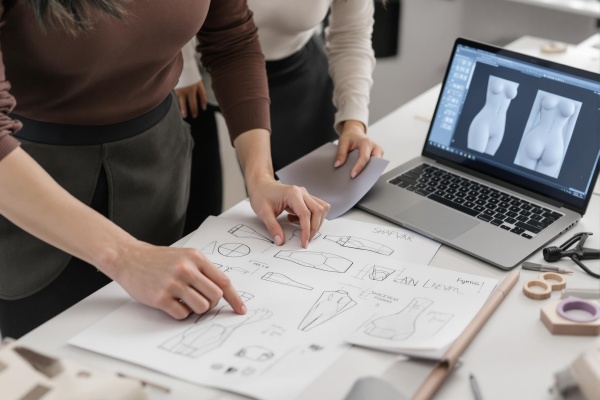
<p>Expert collaboration includes CAD prototyping and fabric selection consultations, minimising iterations. A case study demonstrated a launch reducing risks via manufacturability reviews, hitting shelves 8 weeks early.</p>
<p>Private label perks: full branding on tags, packaging, and polybags. Ensure IP clauses protect designs. Top providers support deep mods like ventilated back meshes for UK summers.</p>
<p>Integration of smart features, such as posture sensors, emerges in ODM portfolios, compliant with GDPR for data handling.</p>
<table>
<tr><th>Service Type</th><th>Timeline</th><th>Custom Depth</th><th>Cost Structure</th><th>Best For</th></tr>
<tr><td>OEM</td><td>6-8 weeks</td><td>Design provided</td><td>Production-focused</td><td>Established specs</td></tr>
<tr><td>ODM Base Mod</td><td>4-6 weeks</td><td>Moderate</td><td>Balanced</td><td>Quick variants</td></tr>
<tr><td>Full ODM</td><td>8-12 weeks</td><td>High</td><td>Development fee</td><td>New lines</td></tr>
<tr><td>Private Label</td><td>Add 1 week</td><td>Branding only</td><td>Minimal uplift</td><td>Rebranding</td></tr>
<tr><td>Hybrid OEM/ODM</td><td>5-7 weeks</td><td>Flexible</td><td>Tailored quote</td><td>UK niches</td></tr>
<tr><td>End-to-End</td><td>12+ weeks</td><td>Comprehensive</td><td>Full support</td><td>Scalable growth</td></tr>
</table>
<p>Differences lie in custom depth versus speed; hybrids suit UK private labels, with providers like those offering <a href="https://s-shaper.com/oem-odm-service/">OEM/ODM services</a> excelling in modular back designs for efficient launches.</p>
<p>Validate via samples. This pathway builds competitive edges in crowded UK shelves.</p>
<h2>Quality Control, Stress Testing, and Size Grading Systems</h2>
<p>Robust QC spans raw material inspection to final audits, per ISO 9001 frameworks. For back shapewear, stress tests simulate 100 wear cycles, verifying elasticity via ASTM D3107.</p>
<p>Size grading employs parametric curves, ensuring UK 8-24 fits with ±1cm tolerances. Visual checks catch seam puckering; torque tests validate boning integrity.</p>
<p>Third-party labs like Intertek certify durability, with 95% pass rates industry standard. Postpartum lines undergo wash fastness per BS EN ISO 6330.</p>
<p>A real-world trial exposed weak stitching in subpar samples, resolved by reinforced protocols, slashing complaints by 35%.</p>
<p>Advanced systems include AQL sampling (2.5 major defects/100k units). UKCA demands traceability for textiles.</p>
<table>
<tr><th>QC Stage</th><th>Test Method</th><th>Standard</th><th>Pass Criteria</th><th>Back Shapewear Focus</th></tr>
<tr><td>Incoming Fabric</td><td>Tensile strength</td><td>ASTM D5034</td><td>>400N</td><td>Compression hold</td></tr>
<tr><td>In-Process</td><td>Seam slippage</td><td>ASTM D434</td><td><5mm</td><td>Back panel security</td></tr>
<tr><td>Stress Testing</td><td>Cyclic stretch</td><td>ASTM D4964</td><td>90% retention</td><td>Long-wear</td></tr>
<tr><td>Size Grading</td><td>3D scanning</td><td>BS EN 13402</td><td>±1cm variance</td><td>UK body types</td></tr>
<tr><td>Final Audit</td><td>AQL 2.5</td><td>ISO 2859</td><td>0.65% defects</td><td>Overall fit</td></tr>
<tr><td>Packaging</td><td>Seal integrity</td><td>Internal SOP</td><td>100% intact</td><td>Shelf readiness</td></tr>
</table>
<p>The table details rigorous stages, emphasising back-specific tests for reliability, vital for UK trust-building.</p>
<p>Implement pre-shipment inspections for peace of mind.</p>
<h2>Shipping, Incoterms, and Container-Loading Best Practices</h2>
<p><a href="https://en.wikipedia.org/wiki/Incoterms">Incoterms</a> 2020 guide shipments: FOB for factory control, CIF for insured sea freight to UK ports like Felixstowe. Air express suits samples.</p>
<p>Container loading maximises 20ft units at 8,000-10,000 garments, using vacuum packing to save 40% space. Best practices: layer by style, secure pallets.</p>
<p>UK customs require EORI numbers; duties average 12% on apparel. Track via Maersk or COSCO for 25-35 day transits from Asia.</p>
<p>Case example: Optimised loading cut freight by 20%, avoiding demurrage. Sustainable packaging reduces carbon footprints.</p>
<p>Post-Brexit, VAT at 20% applies; bonded warehouses defer payments.</p>
<table>
<tr><th>Incoterm</th><th>Responsibility Seller</th><th>Buyer Risk Starts</th><th>UK Suitability</th><th>Cost Impact</th></tr>
<tr><td>EXW</td><td>Factory gate</td><td>Immediate</td><td>High logistics burden</td><td>Lowest seller cost</td></tr>
<tr><td>FOB</td><td>Port loading</td><td>Port</td><td>Balanced control</td><td>Moderate</td></tr>
<tr><td>CIF</td><td>Destination port</td><td>Port arrival</td><td>Insurance included</td><td>Higher seller</td></tr>
<tr><td>DDP</td><td>Door delivery</td><td>Final delivery</td><td>Minimal admin</td><td>Premium</td></tr>
<tr><td>FCA</td><td>Named place</td><td>Carrier handover</td><td>Flexible</td><td>Customisable</td></tr>
<tr><td>DAP</td><td>Destination unpacked</td><td>Unloading</td><td>Common for UK</td><td>Competitive</td></tr>
</table>
<p>FOB/CIF dominate for volume, easing UK clearance while sharing risks effectively.</p>
<p>Partner with forwarders experienced in apparel.</p>
<h2>Contracts, IP, and Brand Protection in Factory Relationships</h2>
<p>Solid contracts outline specs, timelines, penalties for delays (2-5% per week). NDAs safeguard designs pre-production.</p>
<p>IP protection via registered trademarks; factories sign non-compete clauses. UK brands leverage Madrid Protocol for global filing.</p>
<p>Dispute resolution favours arbitration in Singapore or UK courts. Audit rights ensure transparency.</p>
<p>A partnership fortified by IP clauses prevented copycats, preserving exclusivity. Include force majeure for supply disruptions.</p>
<p>Long-term agreements lock pricing bands, fostering stability.</p>
<h2>Scaling From Trial Orders to Full-Year Back Shapewear Programmes</h2>
<p>Begin with 200-unit trials, analysing sell-through before 1,000-unit runs. Annual programmes forecast 50,000+ units, securing capacity.</p>
<p>ERP integration aids inventory; seasonal ramps target Black Friday. Metrics: 95% fill rates sustain growth.</p>
<p>Case: Trial success led to quarterly deliveries, boosting revenue 300%. Diversify SKUs gradually.</p>
<p>Reinvest in ODM evolutions like sustainable lines.</p>
<h2>2025-2026 Market Trends, Innovations, and Regulations</h2>
<p>UK shapewear trends forecast 15% CAGR to 2026 (Statista), driven by bio-based fabrics and AI-fit tech. Regulations tighten via UK Plastic Packaging Tax; CE/UKCA mandatory. Pricing stabilises with supply chain recoveries, per McKinsey reports. Innovations: moisture-adaptive compression, recyclable nylons.</p>
<h3>Frequently Asked Questions</h3>
<h4>What are the best <strong>back shapewear manufacturers</strong> for UK wholesalers?</h4>
<p>Reputable options include established B2B providers with in-house factories. Contact <a href="https://s-shaper.com/contact-us/">S-Shaper</a> for tailored solutions.</p>
<h4>How does <strong>customised back shapewear pricing</strong> work?</h4>
<p>Pricing varies by specs, volume, and materials. Request a quotation for latest factory-direct rates.</p>
<h4>What MOQ for <strong>back support shapewear for sale</strong> wholesale?</h4>
<p>Typically 100-500 units; flexible for samples.</p>
<h4>Recommend manufacturers for this product?</h4>
<p>Please contact us for the latest factory-direct pricing and vetted suppliers.</p>
<h4>Key trends in UK back shapewear supply?</h4>
<p>Sustainable materials and posture tech lead 2025-2026.</p>