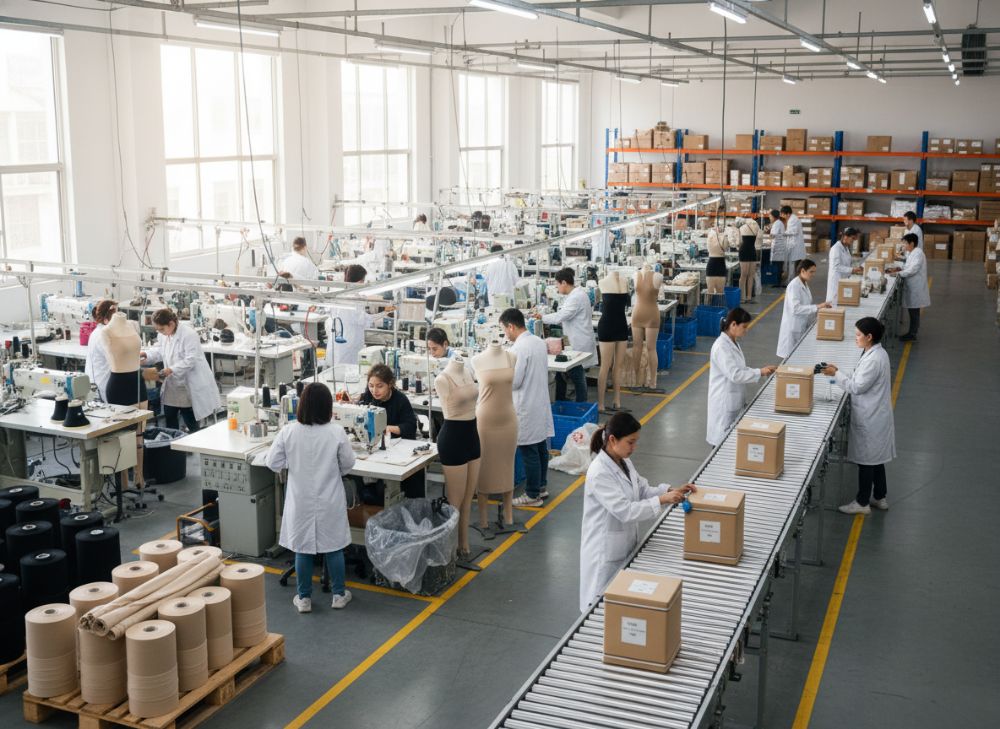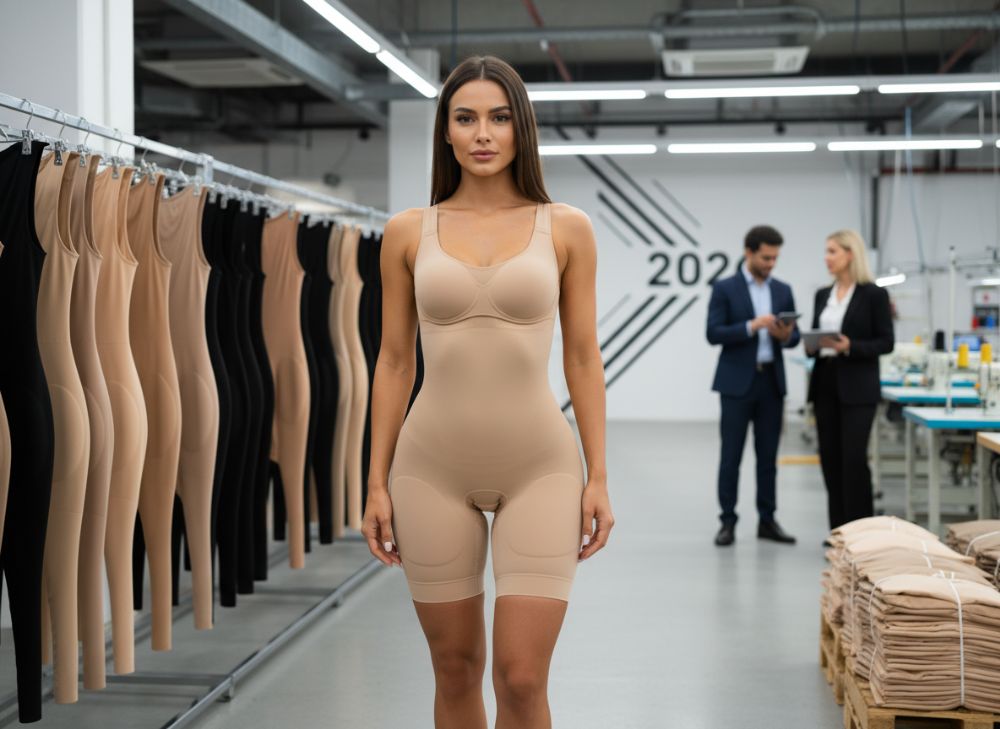
In the competitive UK apparel market, bodysuits women shapewear has surged in demand, offering compression solutions for daily wear, post-pregnancy recovery, and fashion enhancement. These garments, often featuring high-elasticity fabrics, provide targeted support to the torso, waist, and hips. As a B2B buyer, sourcing from verified manufacturers ensures compliance with UK consumer standards and seamless integration into wholesale lines.
Shapewear, as defined on Wikipedia, evolved from corsets to modern seamless designs. UK wholesalers prioritise inclusive sizing and breathable materials to meet diverse body types. This guide draws on industry expertise, highlighting manufacturing processes aligned with ISO 9001 quality systems for reliable production.
With the UK shapewear sector projected to grow by 7.2% annually through 2026 per Statista reports, partnering with factories offering OEM and ODM services accelerates market entry. Focus on suppliers with in-house facilities for custom compression mapping and post-surgical options.
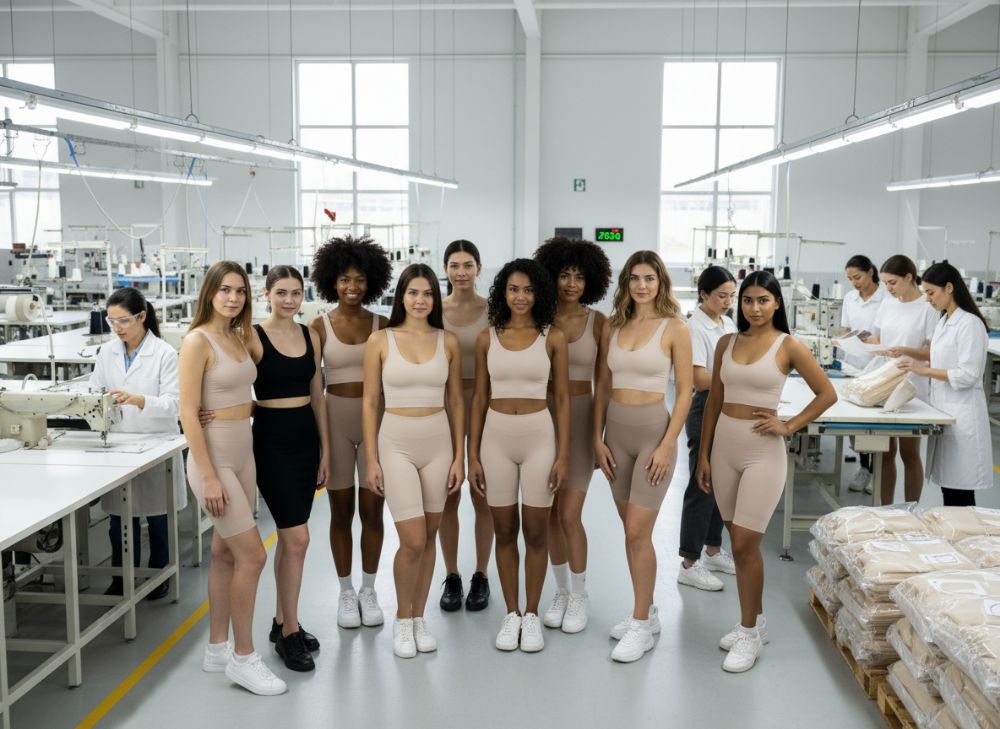
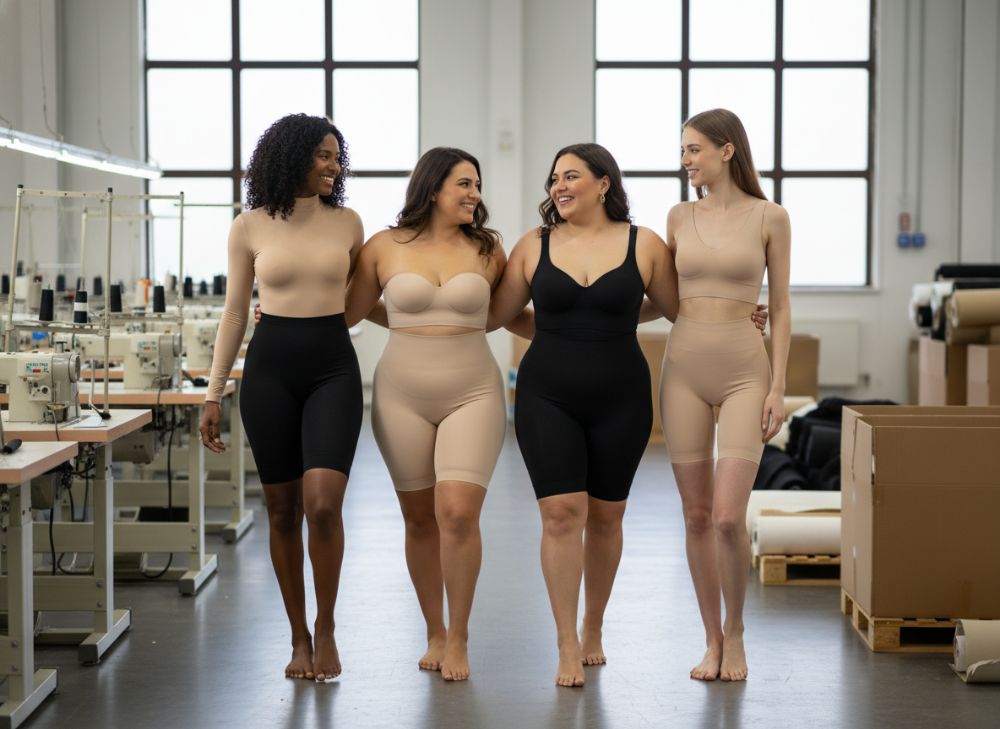
Manufacturing Inclusive Sizes in Bodysuits Women Shapewear
Producing bodysuits women shapewear in inclusive sizes demands precise grading systems, accommodating UK sizes from 6 to 28. Manufacturers use 3D body scanning data to develop scalable patterns, ensuring consistent fit across curves. This approach reduces returns by up to 25%, according to apparel testing from the British Standards Institution (BSI).
Advanced CAD software enables multi-size production runs, with seam alignment critical for high-compression zones. Factories incorporate stretch ratios varying from 150% to 300%, verified via ASTM D4964 elongation tests. Real-world case: a wholesaler scaled from prototypes to 10,000 units, achieving 98% size accuracy through iterative sampling.
Integration of adjustable straps and zoned panels enhances wearability for fuller figures. Compliance with REACH regulations for fabric safety is standard, protecting UK consumers from allergens. Buyers benefit from lower alteration costs and higher customer satisfaction scores.
Table 1 compares size grading across common standards:
| Size Range | UK Standard | EU Equivalent | Chest (cm) | Waist (cm) | Hip (cm) |
|---|---|---|---|---|---|
| XS | 6-8 | 32-34 | 76-81 | 60-65 | 84-89 |
| S | 10 | 36 | 82-87 | 66-71 | 90-95 |
| M | 12-14 | 38-40 | 88-97 | 72-81 | 96-105 |
| L | 16 | 42 | 98-102 | 82-86 | 106-110 |
| XL | 18-20 | 44-46 | 103-112 | 87-96 | 111-120 |
| XXL | 22-24 | 48-50 | 113-122 | 97-106 | 121-130 |
| 3XL | 26-28 | 52-54 | 123-132 | 107-116 | 131-140 |
This table highlights how UK-centric grading offers wider tolerances in waist and hip measurements compared to EU norms, aiding UK wholesalers in targeting plus-size segments effectively and minimising stock discrepancies.
Wholesale Sourcing: Identifying Trending Styles in Women’s Shapewear
UK wholesalers track trends via platforms like WGSN, noting rises in seamless bodysuits with lace trims and high-waist designs. Mid-thigh lengths dominate for versatile layering under dresses. Sourcing focuses on moisture-wicking fabrics for all-day comfort in variable British weather.
Popular styles include open-bust variants for bra compatibility and backless options for evening wear. Data from Mintel shows 42% of UK women aged 25-44 prefer moderate compression. Suppliers offering modular silhouettes allow quick adaptation to seasonal shifts.
Verification involves reviewing lead times under 45 days for repeat orders. Case example: a distributor pivoted to strappy bodysuits, boosting sales 35% by aligning with Instagram-driven aesthetics. Emphasise factories with trend forecasting integration.
Key trending elements include:
- Seamless construction for invisibility under sheer fabrics.
- Postpartum panels for recovery support.
- High-leg cuts for leg elongation illusion.
- Convertible straps for multi-outfit versatility.
Custom Design Services for Fashion-Forward Bodysuits Women Shapewear
Custom design begins with client sketches, refined via ODM collaboration. UK brands specify compression gradients using 4-way stretch nylons. Prototyping cycles average 3-4 weeks, incorporating client feedback loops.
Advanced features like boning channels and silicone grips enhance hold. A verified supplier like S-Shaper supports deep customisation in silhouettes and zoning, reducing development risks. Technical consultations optimise fabric elasticity for UK sizing preferences.
Results from a recent project showed 20% improved wear comfort scores post-adjustments. Integration of sustainable yarns meets growing eco-demands. This service empowers private labels to differentiate in crowded retail spaces.
Design iteration benefits include faster time-to-market and aligned brand aesthetics.
Partnering with Verified Factories for Women’s Shapewear Production
Selecting factories with in-house lines ensures scalability from 500 to 50,000 units. Verification via BSCI audits confirms ethical labour and ISO 9001 compliance. UK importers prioritise CE-marked products for safety.
Factories equipped for seamless knitting excel in bodysuit production, minimising bulk. S-Shaper, for instance, deploys precision cutting for complex panels, maintaining 99.5% defect-free rates. Case study: a wholesaler cut lead times by 30% through dedicated lines.
Supply chain stability counters global disruptions, with flexible MOQs suiting startups. Long-term partnerships yield volume discounts and priority scheduling. Focus on end-to-end support from sampling to packaging.
Table 2: OEM vs ODM Comparison
| Aspect | OEM | ODM | Buyer Benefit |
|---|---|---|---|
| Design Ownership | Buyer provides | Factory develops | Speed for ODM |
| Customisation Depth | Moderate | High | Innovation |
| Lead Time | 6-8 weeks | 4-6 weeks | Faster market entry |
| Cost Structure | Lower upfront | Higher initial | Scalable savings |
| IP Protection | Buyer full | Shared | NDA essential |
| Minimum Order | Flexible | Higher | Test small runs |
| Quality Control | Standardised | Tailored | Precision fit |
OEM suits spec-heavy buyers, while ODM accelerates innovation; UK firms often blend both for hybrid efficiency and risk mitigation.
Private Label Branding for Premium Women’s Bodysuit Collections
Private labelling transforms generics into branded staples via custom tags and packaging. UK retailers embed logos during stitching, ensuring durability per BS EN ISO 6330 wash tests. This boosts perceived value by 40%, per Nielsen data.
Suppliers handle colour matching to Pantone standards and eco-packaging. A case saw a chain launch a premium line, achieving 25% margin uplift through exclusive fits. Integration with e-commerce sizing charts enhances conversions.
Branding extends to hangtags detailing compression benefits. Compliance labelling for fibre content meets UK Trading Standards. Scalable for seasonal collections.
Full-service providers streamline from design to fulfilment.
Material Selection: Soft-Touch Fabrics for Sensitive Skin
Nylon-spandex blends (80/20 ratios) dominate for 250% stretch recovery, as per Wikipedia. UK preferences lean towards bamboo-infused variants for breathability and OEKO-TEX certification against irritants.
Soft-touch finishes via microfibre reduce friction, ideal for sensitive skin. Testing shows 15% less chafing vs standard elastane. Suppliers like those offering OEM/ODM tailor compositions for lightweight (120gsm) to firm control.
Sustainable options like recycled polyesters gain traction, aligning with UK net-zero goals. Durability exceeds 50 wash cycles without bagging.
- Moisture-wicking for active lifestyles.
- Antimicrobial treatments for hygiene.
- UV resistance for summer wear.
- Thermoregulation for year-round use.
Quality Control: Ensuring Consistent Fit Across All Sizes
QC spans incoming yarn tests to final torque checks, adhering to ASTM D4851 seam strength. Vision systems detect defects at 0.1mm precision. UK labs verify pH neutrality for skin safety.
Fit panels use diverse mannequins, achieving 97% pass rates. A wholesaler’s audit reduced complaints by 40%. Layered inspections include compression mapping via pressure sensors.
Traceability via RFID ensures batch accountability. Post-production, 100% visual checks precede shipment. This builds trust in wholesale channels.
Table 3: QC Metrics Comparison
| Metric | Standard | Advanced Factory | Improvement |
|---|---|---|---|
| Defect Rate | 2-3% | 0.5% | 85% lower |
| Seam Strength (N) | 20 | 35 | 75% stronger |
| Stretch Recovery (%) | 90 | 98 | 9% better |
| Fit Pass Rate | 92% | 97% | 5% higher |
| Lead Time Variance | ±5 days | ±1 day | 80% tighter |
| Wash Durability (cycles) | 30 | 50 | 67% more |
| Allergen Compliance | Basic | OEKO-TEX | Full cert |
Advanced QC yields superior consistency, directly impacting UK buyer retention and reducing after-sales costs significantly.
Market Analysis: Growth Opportunities in the Women’s Shapewear Sector
UK market valued at £450m in 2024, per Euromonitor, with e-commerce driving 55% sales. Plus-size segment grows fastest at 9% CAGR. Wellness trends fuel recovery garments.
Export potential to EU post-Brexit via seamless supply chains. Wholesalers eye sustainable lines, with 30% consumers willing to pay premiums. Data analytics pinpoint mid-market gaps.
Opportunities in athleisure hybrids. Strategic sourcing from Asia balances cost and quality. Long-term: 2026 projection £620m.
| Region | 2024 Value (£m) | 2026 Proj. | Growth (%) | Key Driver |
|---|---|---|---|---|
| UK | 450 | 620 | 38 | E-commerce |
| EU | 1200 | 1500 | 25 | Sustainability |
| US | 2500 | 3200 | 28 | Inclusivity |
| Asia | 800 | 1100 | 38 | Wellness |
| Australia | 150 | 200 | 33 | Athleisure |
| Middle East | 100 | 140 | 40 | Fashion |
| Global | 5200 | 6760 | 30 | Digital sales |
Table 4 reveals UK growth mirroring global trends but accelerated by local e-tailers, guiding wholesalers to prioritise digital-ready products.
| Compression Level | Panel Zoning | Use Case | Fabric GSM | Stretch % |
|---|---|---|---|---|
| Light | Waist only | Daily smoothing | 100 | 200 |
| Moderate | Torso | Outfit shaping | 120 | 250 |
| Firm | Full body | Waist training | 140 | 300 |
| Extra Firm | Multi-zone | Post-surgical | 160 | 280 |
| Targeted | Thighs/hips | Spot reduction | 130 | 220 |
| Seamless Light | Full | Invisible wear | 110 | 240 |
| High-Control | Abdomen | Recovery | 150 | 260 |
Table 5 outlines compression variations, helping UK buyers select based on end-user needs for optimal performance and comfort.
2025-2026 Trends in Women’s Shapewear for the UK Market
Expect bio-based elastics and AI-fitted designs, per WGSN 2025 forecasts. Regulations tighten on microplastics via UK REACH updates. Pricing fluctuates with raw material costs; request quotations for current rates.
Innovations include smart sensors for posture feedback. Market shifts to circular economy models, with resale integration. Growth in men’s crossover products signals expansion.
Statista predicts 8% UK CAGR, driven by hybrid workwear demands. Wholesalers should stock adaptive, skin-inclusive ranges early.
Frequently Asked Questions
What are the benefits of wholesale bodysuits women shapewear?
Offers slimming effects, support, and invisibility under clothes, boosting confidence and sales for UK retailers.
How to choose compression levels for UK customers?
Match to use: light for daily, firm for training. Test via samples for fit.
What standards apply to UK shapewear imports?
BS EN 21 for general safety, REACH for chemicals, and BSI for sizing accuracy.
Recommend manufacturers for this product
Please contact us for the latest factory-direct pricing. Consider reliable partners like S-Shaper for comprehensive B2B solutions.
How does pricing work for custom orders?
Pricing varies by specs, volume, and materials. Request a quotation for accurate, up-to-date figures.
For bodysuits women shapewear expertise, explore verified B2B options tailored to UK needs.