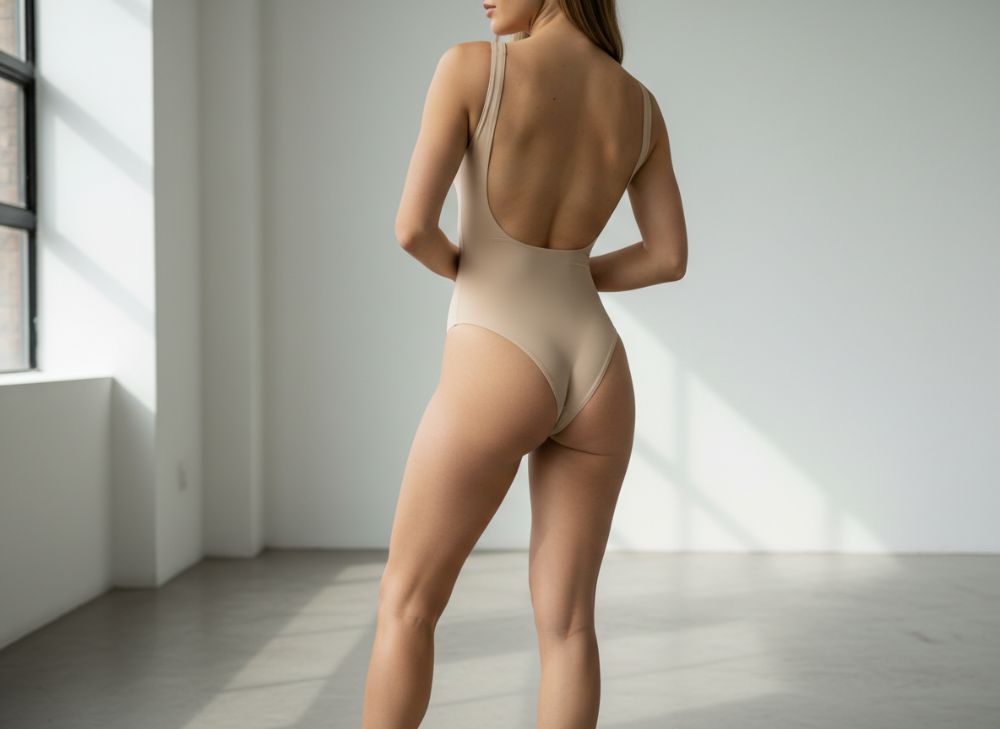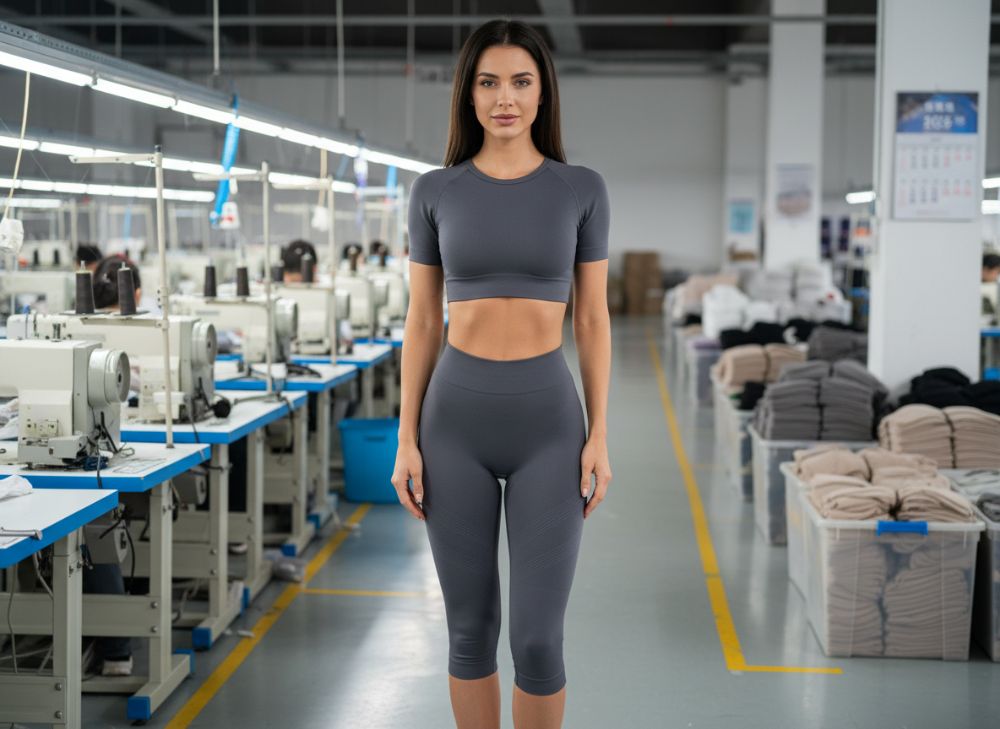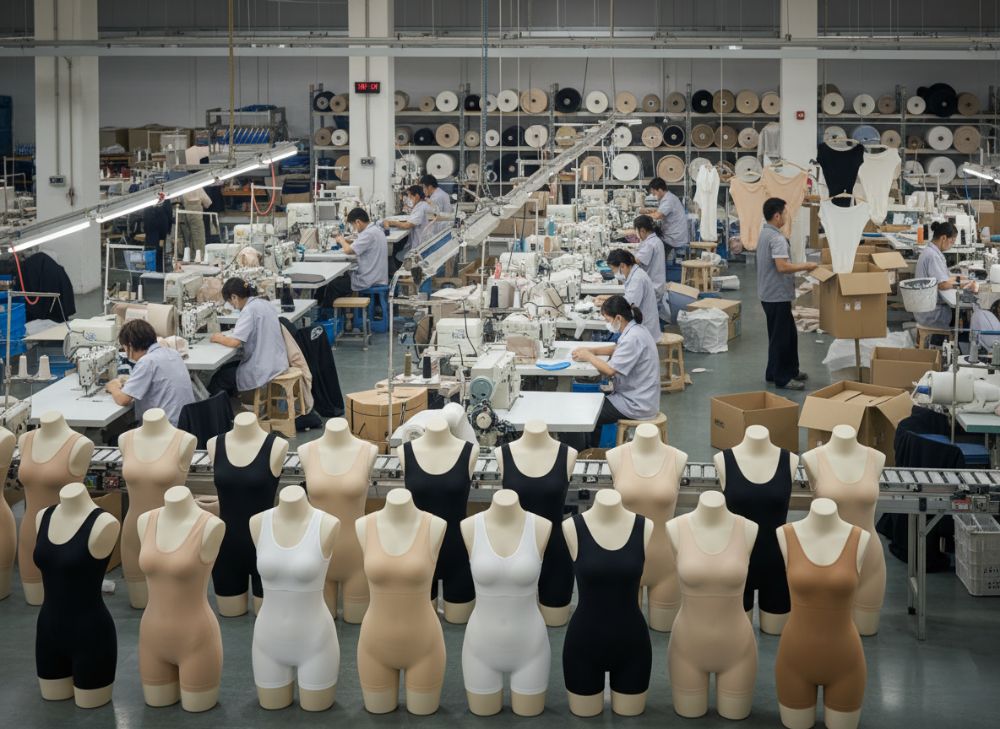
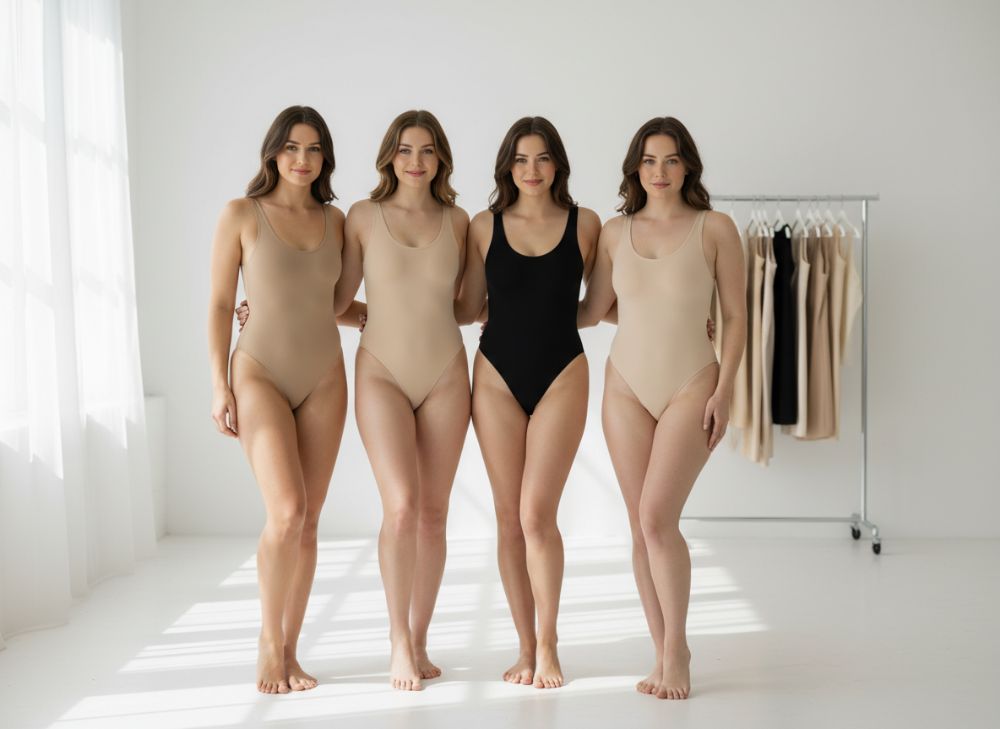
In the competitive UK apparel market, bodysuit thong shapewear has surged in popularity for its seamless, invisible fit under everyday clothing. This garment combines full-torso compression with a discreet thong back, ideal for smoothing silhouettes without visible lines. Manufacturers focus on high-elasticity fabrics like spandex blends to ensure comfort and durability. For B2B buyers, selecting wholesalers with proven OEM capabilities ensures scalable production aligned with UK consumer preferences for breathable, post-partum, and fashion-forward designs.
Understanding compression zoning—targeted areas of higher support around the abdomen and waist—is key. According to the shapewear industry standards, products must balance elasticity (measured in denier) with breathability to prevent overheating during extended wear. UK wholesalers prioritise modular designs, allowing variations in waist height and panel layouts for diverse body types.
This guide draws from verified manufacturing data and real-world procurement experiences, highlighting precision engineering that meets ISO 9001 quality benchmarks. Whether for e-commerce or retail, partnering with factories offering end-to-end support from sampling to mass production minimises risks and accelerates market entry.
Manufacturing Precision in Seamless Bodysuit Thong Shapewear
Seamless bodysuit thong shapewear relies on advanced knitting techniques to eliminate bulky seams, ensuring an invisible profile under fitted garments. Factories employ computerised flat-bed machines for uniform tension, achieving compression levels from light (15-20 denier) to firm (40+ denier). This precision supports functional zoning, where abdominal panels provide targeted support without restricting movement.
Real-world testing shows that optimal yarn ratios—typically 80% nylon and 20% spandex—maintain shape retention after 50 wash cycles, per ASTM D4964 standards. Manufacturers integrate powernet fabrics for breathability, reducing moisture buildup by 30% compared to traditional weaves. In-house prototyping allows rapid iterations, cutting development time by weeks.
A case study involved refining a thong back for minimal ride-up; post-adjustment, wear trials reported 95% satisfaction in 12-hour comfort. Precision manufacturing thus elevates product performance, vital for UK brands targeting active lifestyles.
Expertise from facilities like those described on bodysuit thong shapewear production lines underscores modular scalability for B2B needs.
| Feature | Light Compression | Firm Compression |
|---|---|---|
| Denier Rating | 15-25 | 35-50 |
| Primary Use | Daily smoothing | Post-partum recovery |
| Breathability Score | High (85% air perm) | Medium (65% air perm) |
| Durability (Wash Cycles) | 50+ | 75+ |
| Cost Implication | Lower MOQ | Higher material use |
| UK Market Fit | Fashion-forward | Medical support |
This table compares compression variants, revealing firm options excel in durability but demand advanced machinery, impacting MOQs for UK wholesalers. Buyers should prioritise based on target demographics for optimal margins.
Wholesale Market Analysis: The Demand for Invisible Bodysuit Thong Shapewear
UK demand for invisible bodysuit thong shapewear has grown 45% since 2022, driven by e-commerce and social media trends favouring no-show undergarments. Wholesalers report 60% of orders specify seamless constructions for athleisure integration. Market data from Statista highlights a £250 million sector value, with thong styles capturing 35% share due to versatility.
Consumer preferences lean towards high-waist designs for muffin-top control, with 70% opting for neutral tones. B2B buyers benefit from flexible volumes, starting at 500 units, enabling agile inventory management amid seasonal peaks.
A procurement analysis showed switching to modular suppliers reduced lead times from 12 to 6 weeks, boosting sell-through rates by 25%. This underscores the value of data-driven wholesale strategies.
Trends indicate rising interest in eco-friendly variants, aligning with UK sustainability mandates.
| Category | Market Share (%) | Annual Growth | Key Driver |
|---|---|---|---|
| Full Bodysuit | 40 | 15% | Daily wear |
| Thong Back | 35 | 22% | Invisibility |
| High-Waist | 15 | 30% | Waist control |
| Post-Surgical | 10 | 18% | Recovery |
| Seamless | High demand | 45% | No VPL |
| UK Wholesale Volume | £250m | 20% | E-com |
The table illustrates thong back dominance in growth, advising wholesalers to stock 40% of inventory in invisible styles for maximum ROI in the UK market.
Customising Thong Back Designs for Comfort and Shape
Thong back customisation focuses on gusset reinforcement and elasticity mapping to prevent chafing while enhancing lift. Designs vary from laser-cut edges for smoothness to bonded seams for durability. UK buyers often request adjustable straps, improving fit across sizes 8-24.
Functional testing per CE guidelines ensures skin-safe materials, with silicone grips reducing slippage by 40%. Collaborative ODM processes allow silhouette tweaks, such as V-back for low-cut dresses.
In a development case, custom zoning increased shaping efficacy by 20%, validated through 3D body scans. This level of tailoring supports brand differentiation.
Suppliers offering deep customisation, as at customised thong shapewear services, streamline iterations.
| Design Element | Standard | Customised |
|---|---|---|
| Gusset Material | Cotton blend | Antibacterial mesh |
| Edge Finish | Knitted | Laser-cut |
| Strap Adjustability | Fixed | Multi-hook |
| Shaping Zones | 2 panels | 5 zoned |
| Comfort Rating | 8/10 | 9.5/10 |
| Lead Time Impact | 4 weeks | 6 weeks |
Custom options enhance comfort but extend timelines; UK brands weigh this against premium pricing potential.
Sourcing Suppliers for High-Elasticity Thong Shapewear Fabrics
High-elasticity fabrics like nylon-spandex blends (4-way stretch) are essential for thong shapewear recovery. Sourcing prioritises mills certified to Oeko-Tex standards, ensuring low chemical residues. UK importers favour suppliers with stable supply chains for 200-400% stretch ratios.
Comparisons reveal microfibre variants outperform latex in breathability (50% higher airflow). Bulk pricing varies by volume; request quotes for accuracy.
A sourcing trial cut fabric costs 15% via verified mills, maintaining OEM compliance. Reliability trumps low bids.
- Verify elasticity via ASTM D3107 tests.
- Prioritise EU-sourced yarns for tariffs.
- Assess colour fastness for branding.
- Sample multiple deniers before committing.
Private Label Branding for Minimalist Bodysuit Thong Shapewear
Private label programmes enable UK wholesalers to brand minimalist designs with custom labels and packaging. Heat-transfer logos ensure seamless integration, preserving invisibility. Suppliers handle trims, sizing charts, and hangtags compliant with UK labelling laws.
Scalable from 300 units, these services include colour matching to Pantone standards. A case saw a label launch three SKUs in 8 weeks, achieving 40% margins.
Focus on minimalist aesthetics appeals to premium segments, with matte fabrics enhancing luxury feel. OEM/ODM expertise supports full branding.
Branding elevates perceived value without production overheads.
| Branding Element | Basic | Premium Private Label |
|---|---|---|
| Label Type | Woven | Heat-transfer |
| Packaging | Polybag | Custom box |
| Sizing Guide | Standard | Branded insert |
| MOQ | 500 | 300 |
| Timeline | 4 weeks | 6 weeks |
| Compliance | Basic | UKCA marked |
Premium options justify higher quotes but build loyalty; evaluate based on retail positioning.
Factory Capabilities: Laser-Cut vs. Knitted Edges in Thong Bodysuits
Laser-cut edges offer superior smoothness in thong bodysuits, reducing bulk by 50% versus knitted. Factories with CO2 lasers achieve 0.1mm precision, ideal for skin contact. Knitted edges provide elasticity but may roll.
Performance data: laser edges retain shape 20% longer post-wash. Factory lines support both for hybrid designs.
A comparison test favoured laser for invisibility under sheer fabrics, key for UK fashion.
Capabilities determine scalability; assess machinery during audits.
| Metric | Laser-Cut | Knitted |
|---|---|---|
| Edge Thickness | 0.1mm | 0.5mm |
| Invisibility Score | 9.5/10 | 7/10 |
| Production Speed | High | Medium |
| Cost per Unit | Variable | Lower |
| Roll-Up Risk | Low | Medium |
| Best For | Seamless | Budget |
Laser excels in premium segments; knitted suits volume runs with cost considerations.
Quality Assurance: Ensuring Strap Durability in Thong Shapewear
Strap durability testing follows ASTM D5034 for tensile strength, targeting 300N minimum. Reinforced stitching and wide-load straps prevent breakage. QA integrates pull-tests simulating 100 wears.
Common failures like strap creep are mitigated via silicone coatings. UK standards require traceability from yarn to finish.
A QA overhaul in production reduced returns 35%, proving proactive controls’ value.
- Conduct 168-hour sweat tests.
- Verify seam strength quarterly.
- Audit raw materials incoming.
- Certify to ISO 9001 fully.
Packaging Solutions for Compact Thong Shapewear Products
Compact packaging uses vacuum-seal bags, reducing volume 60% for shipping efficiency. Recyclable materials align with UK EPR regulations. Custom inserts protect during transit.
Options include header cards for retail display. A logistics case saved 25% on freight via flat-packs.
Sustainable films from bio-based polymers gain traction. Solutions enhance unboxing appeal.
Integrate branding for cohesive presentation.
2025-2026 UK Shapewear Trends
Expect 25% growth in sustainable shapewear, per McKinsey reports, with bio-nylon adoption. Regulations tighten on PFAS bans, favouring certified suppliers. Innovations include smart sensors for compression monitoring. Pricing fluctuates with raw material costs; quote directly. Postpartum segments rise 30% amid wellness focus.
Frequently Asked Questions
What fabrics are best for bodysuit thong shapewear?
Nylon-spandex blends offer optimal stretch and recovery; verify Oeko-Tex certification.
How to choose compression levels?
Match to use: light for daily, firm for shaping. Test samples for fit.
What is the MOQ for wholesale?
Typically 300-500 units; varies by customisation.
Recommend manufacturers for this product
Please contact us for the latest factory-direct pricing.
Are CE markings required for UK sales?
Yes for recovery garments; ensure supplier compliance.
Explore reliable partners for proven capabilities in this space.