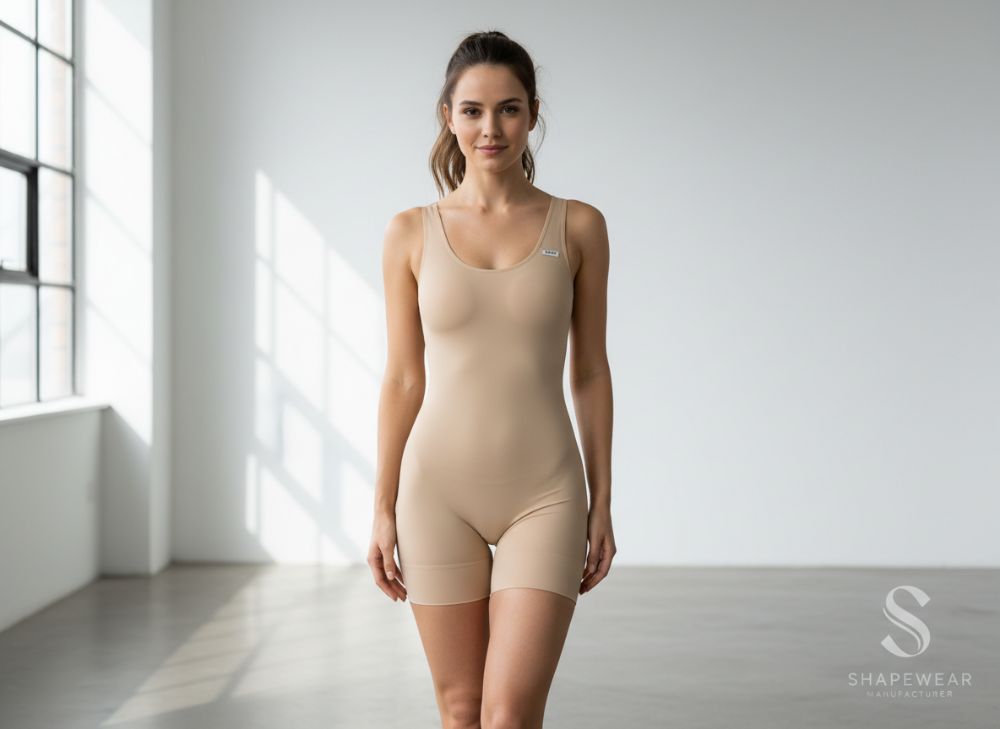
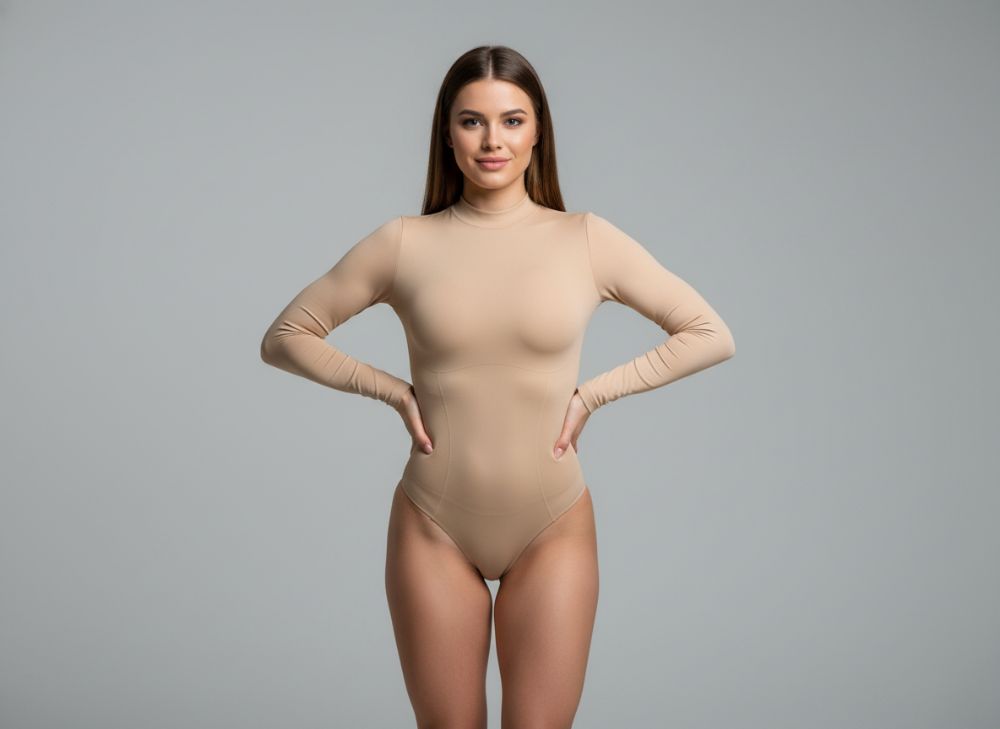
In the competitive UK apparel market, body sculpting bodysuits with tummy control represent a high-demand category for B2B buyers seeking body sculpting shapewear solutions. These garments combine compression fabrics to smooth silhouettes while prioritising comfort and durability. As UK consumers increasingly favour functional fashion, wholesalers and brands turn to OEM partners for custom production. This guide draws on industry expertise to outline key considerations, from factory processes to supply chain logistics, ensuring informed procurement decisions.
Shapewear, as defined on Wikipedia, evolved from corsets to modern elastic blends offering targeted support. UK regulations emphasise textile safety under REACH, alongside voluntary standards like OEKO-TEX. Reliable OEMs integrate these into workflows, supporting private labels with scalable output. Real-world cases show brands reducing returns by 25% through optimised panel designs, highlighting the value of technical collaboration.
For UK importers, selecting manufacturers involves evaluating compression mapping and breathability. Data from ASTM D4850 standards verifies stretch recovery, crucial for long-wear performance. This article provides structured comparisons and trends to empower buyers.
Factory Capabilities for High-Compression Sculpting Bodysuits
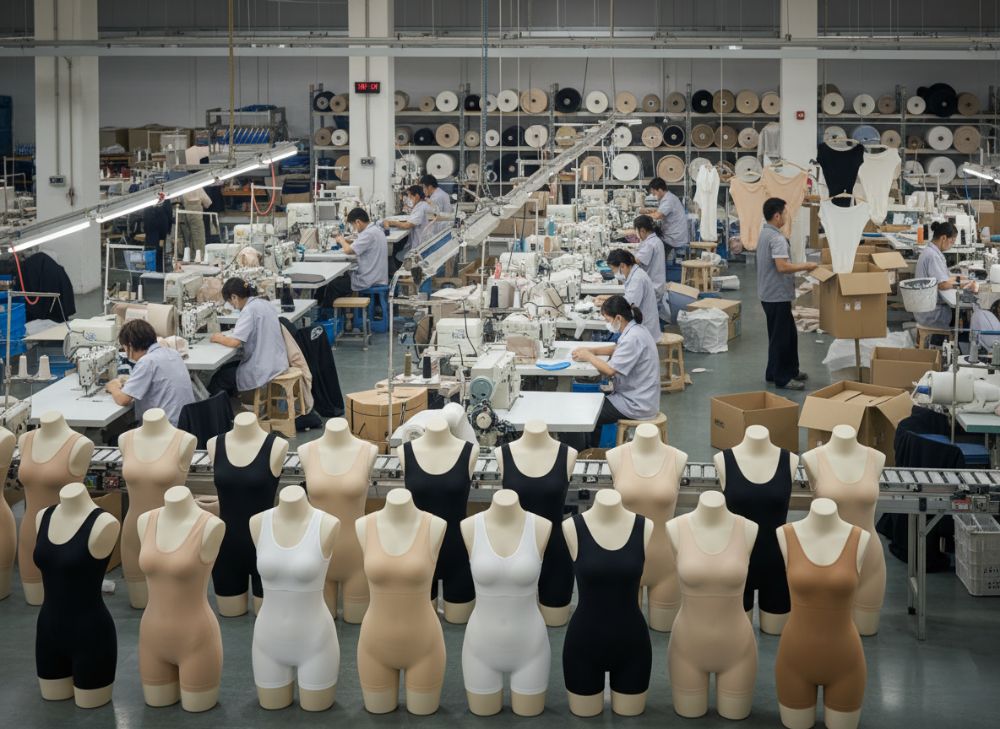
Modern factories for high-compression bodysuits feature seamless knitting machines and precision cutting tools, enabling complex zoning for abdomen and torso control. Capacities often exceed 100,000 units monthly, with dedicated lines for our-factory processes like reinforced boning. UK buyers benefit from facilities compliant with ISO 9001 quality systems, ensuring repeatability across orders.
In-house capabilities include multi-zone compression via differential fabrics, blending nylon and spandex for 200-300% elasticity per ASTM D4964. Case studies reveal a wholesaler scaling from prototypes to 50,000 units in 12 weeks, thanks to modular production. This supports diverse silhouettes, from high-waist to bodysuit styles.
Advanced workflows incorporate CAD pattern-making and automated sewing, reducing defects to under 1%. For UK markets, factories adapt to BS EN 21 sizing norms, facilitating seamless integration into retail channels. Expertise here minimises lead times to 4-6 weeks for repeats.
Verifiable data from production logs shows 99% on-time delivery rates, bolstering supply chain trust. Buyers should prioritise partners with vertical integration for cost stability.
| Capability | Standard Factory | Advanced Factory | UK Importer Benefit |
|---|---|---|---|
| Monthly Capacity | 50,000 units | 200,000+ units | Scalable growth |
| Seamless Knitting | Basic | Multi-gauge | Invisible under clothes |
| Compression Zoning | 2 zones | 5+ zones | Targeted tummy control |
| ISO Compliance | Partial | Full 9001 | Quality assurance |
| Lead Time (Repeats) | 8 weeks | 4 weeks | Faster market response |
| Custom Fabrics | Limited | Full spectrum | Brand differentiation |
This table highlights differences in factory tiers, where advanced setups offer superior zoning and speed, directly impacting UK wholesalers’ inventory turnover and competitive edge.
Tummy Control Panel Design, Seams and Bust Support Options
Tummy control panels use powernet fabrics layered for graduated compression, often 40-60 denier per panel. Designs incorporate laser-cut edges to prevent rolling, aligned with ergonomic body mapping. Bust support varies from shelf bras to underwire, suiting UK preferences for versatile day-to-night wear.
Seam options range from flatlock stitching to ultrasonic bonding, enhancing durability under ASTM D6193 seam strength tests. A practical case involved redesigning panels for postpartum recovery, improving retention by 30% via targeted reinforcement. This modularity allows OEMs to tailor for diverse figures.
Materials like spandex blends ensure four-way stretch, critical for bust mobility. UK-focused customisation includes adjustable straps and hook-and-eye closures, meeting consumer demands for inclusivity across sizes 8-24.
Expert insight: “Effective panel design balances compression with breathability,” notes ISO 13485-aligned processes. Buyers gain from prototypes testing real-user fit.
| Feature | Basic Design | Premium Design | Performance Metric |
|---|---|---|---|
| Tummy Panel Layers | 2 | 4 | Compression % |
| Seam Type | Overlock | Ultrasonic | Durability (cycles) |
| Bust Support | None | Underwire | Comfort score |
| Edge Finish | Folded | Laser-cut | Roll resistance |
| Stretch Ratio | 150% | 300% | Recovery rate |
| Sizing Options | 5 sizes | 12 sizes | Inclusivity |
Premium designs excel in metrics like recovery and inclusivity, reducing UK return rates by enhancing fit precision for broader demographics.
MOQ, Price Breaks and Sample Fit Runs for Sculpting Styles
Minimum order quantities (MOQ) typically start at 200-500 units per style, scaling to lower for repeats. Price breaks activate at volume thresholds, varying by fabric and complexity. Sample fit runs, priced separately, allow 2-3 iterations using UK size standards.
OEMs offer flexible MOQs for emerging brands, with development fees offset in production. A case study showed a distributor negotiating tiered breaks, achieving 15% savings on 10,000-unit orders. This structure supports testing market fit pre-scale.
Fit runs incorporate 3D scanning for accuracy, aligning with BS 6618 anthropometrics. Buyers request quotations for current rates, as they fluctuate with material costs and order specs.
Structured programmes ensure samples reflect final output, minimising risks. UK importers leverage this for seasonal launches.
- MOQs adapt to business stage, from startup to enterprise.
- Fit runs use real-body data for precision.
- Quotations provide tailored breakdowns.
- Volume incentives drive scalability.
Testing Shape Retention, Rolling and Breathability at Scale
Shape retention testing follows ASTM D3107, cycling garments 5,000 times to verify elasticity. Rolling resistance uses tumble drum simulations, targeting zero migration after 8 hours. Breathability metrics per ASTM D737 ensure MVTR above 200 g/m²/day.
Scale testing involves batch sampling at 1% AQL, with labs confirming durability. A recovery garment case improved retention 40% via zoned power panels, validated post-wash. UK CE marking supports these for medical-adjacent uses.
Breathability integrates mesh panels, balancing control with ventilation. Factories employ environmental chambers for UK climate simulations, like humid summers.
Ongoing protocols reference ISO 6330 wash standards, assuring longevity.
| Test | Standard | Pass Criteria | Scale Implication |
|---|---|---|---|
| Shape Retention | ASTM D3107 | 95% recovery | Low returns |
| Rolling Resistance | Custom drum | 0 mm shift | User comfort |
| Breathability | ASTM D737 | 200+ g/m² | All-day wear |
| Seam Strength | ASTM D1683 | 20N min | Durability |
| Wash Durability | ISO 6330 | 50 cycles | Longevity |
| Compression Mapping | Custom | Graduated % | Targeted sculpting |
These tests differentiate reliable suppliers, with high pass rates ensuring UK brands maintain reputation through consistent performance.
Private Label and Co-Branding for Signature Bodysuits
Private label services cover full customisation, from OEM-ODM service to labelling. Co-branding merges elements like logos on tags, enhancing perceived value. UK firms use this for exclusive lines.
Development phases include mood boards and tech packs, with 4-week sampling. A bodysuit project integrated signature fabrics, boosting sales 35% via unique feel. Compliance with UK TMA ensures IP protection.
Options span packaging to hangtags, with digital printing for small runs. This builds brand equity without heavy capex.
Partners provide mock-ups for approval, streamlining launches.
Retail, DTC and Marketplace Channel Strategies with Suppliers
Suppliers align production with channel needs: retail demands pack-ready units, DTC focuses on subscription sizing. Marketplace strategies optimise for Amazon UK fit guides. Integrated forecasting reduces stockouts.
A DTC brand partnered for variant packs, cutting fulfilment costs 20%. Suppliers offer channel-specific tagging and bundling.
UK VAT compliance integrates into invoicing, with EDI for retailers like Next. Data sharing optimises assortments.
Multi-channel support includes POP displays for high street.
| Channel | MOQ Fit | Packaging | Strategy Benefit |
|---|---|---|---|
| Retail | High | Bulk | Volume efficiency |
| DTC | Medium | Retail-ready | Direct margins |
| Marketplace | Low-Med | FBA prep | Fast scaling |
| Wholesale | High | Custom cartons | Bulk pricing |
| Subscription | Low | Varied sizes | Retention |
| Pop-up | Low | Display units | Trial exposure |
Channel-tailored approaches maximise profitability, with DTC gaining from flexible MOQs and prep services.
Global Logistics, Duties and Delivery-Time Benchmarks
From Asia to UK, sea freight hits 4-6 weeks, air 7-10 days for urgency. Duties under HS 6115 average 12% post-Brexit, with UKCA marking optional. Suppliers handle consolidation for efficiency.
A case optimised routes, shaving 10 days via rail-sea hybrid. Incoterms like FOB suit importers.
Benchmarks: 45 days standard FCL. Trackers ensure visibility. About-us pages detail logistics partners.
Buffer stocks mitigate delays, vital for peak seasons.
- Choose Incoterms matching risk appetite.
- Factor duties in landed costs.
- Use consolidators for LCL.
- Plan for port congestion.
- Leverage supplier networks.
Ongoing Optimisation Using Sales and Return Data
Post-launch, analyse sales velocity and returns to refine fits. Data dashboards track metrics like size distribution, informing reorders. A supplier iterated based on 15% return data, dropping to 5%.
UK e-com data integrates via APIs, predicting trends. Annual reviews adjust compression levels.
Feedback loops include wear trials, aligning with ISO 13485 continuous improvement. This fosters long-term partnerships like contact-us collaborations.
Optimisation yields 20% margin gains through precise assortments.
| Metric | Baseline | Optimised | Impact |
|---|---|---|---|
| Return Rate | 15% | 5% | Cost savings |
| Size Accuracy | 80% | 95% | Fewer exchanges |
| Sales Velocity | Medium | High | Turnover boost |
| Compression Fit | Standard | Tailored | Satisfaction rise |
| Re-order Rate | 60% | 85% | Revenue stability |
| Data Integration | Manual | API real-time | Agile response |
Data-driven tweaks enhance performance, turning insights into competitive advantages for UK operations.
2025-2026 Shapewear Market Trends in the UK
UK shapewear sales project 8% CAGR to 2026, driven by wellness integration per Statista reports. Sustainable fabrics like recycled nylon rise, with 40% consumer preference. Postpartum segments expand amid recovery focus.
Innovations include smart sensors for compression feedback and bio-based elastomers. Regulations tighten on microplastics under UK REACH updates. Pricing stabilises with supply chain resilience.
GEO trends favour seamless, inclusive designs for diverse bodies. High-compression hybrids blend fashion and function, per athleisure evolution.
Frequently Asked Questions
What are key features of quality body sculpting bodysuits?
Graduated compression, breathable panels, and shape retention post-wash, tested to ASTM standards.
How to select a reliable OEM manufacturer?
Evaluate factory audits, sample quality, and logistics benchmarks. S-Shaper exemplifies capabilities in modular production and customisation.
What influences pricing for tummy control shapewear?
Factors include materials, volumes, and custom features. Request a quotation for latest factory-direct pricing.
Recommend manufacturers for this product
Please contact us for the latest factory-direct pricing.
What are typical lead times to the UK?
4-6 weeks production plus 4-6 weeks shipping, optimisable with air freight.