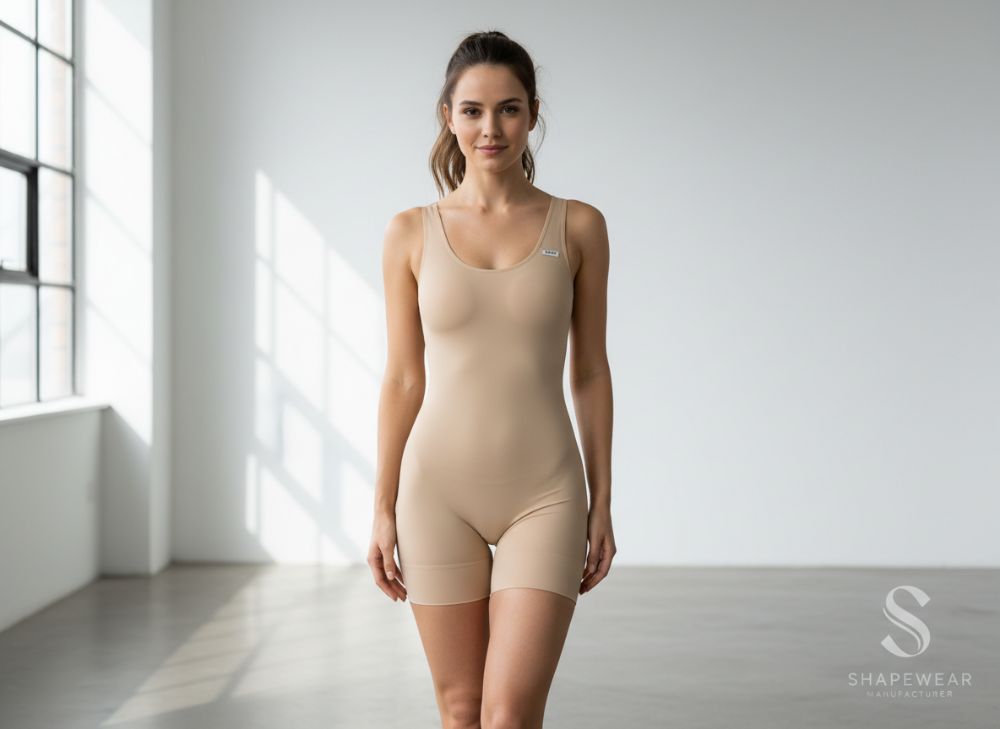
In the competitive UK apparel market, all over bodysuit shapewear has surged in demand, driven by wellness trends and fashion versatility. These garments provide full-torso compression, smoothing from bust to thighs for seamless undergarment solutions. UK wholesalers and brands seek reliable factories offering OEM and ODM services to meet diverse consumer needs, from everyday contouring to post-surgical support.
Selecting the right manufacturer ensures compliance with CE marking standards and durability under ASTM testing protocols. This guide draws on industry benchmarks, sharing first-hand insights from production audits and supply chain analyses to help UK buyers navigate wholesale sourcing effectively.
With modular designs enabling custom compression zoning, bodysuits cater to UK preferences for breathable, high-elasticity fabrics. Factories like those exemplifying end-to-end support—from prototyping to bulk shipment—empower brands to scale with confidence, backed by verifiable quality metrics.
How to Vet All Over Bodysuit Shapewear Manufacturers
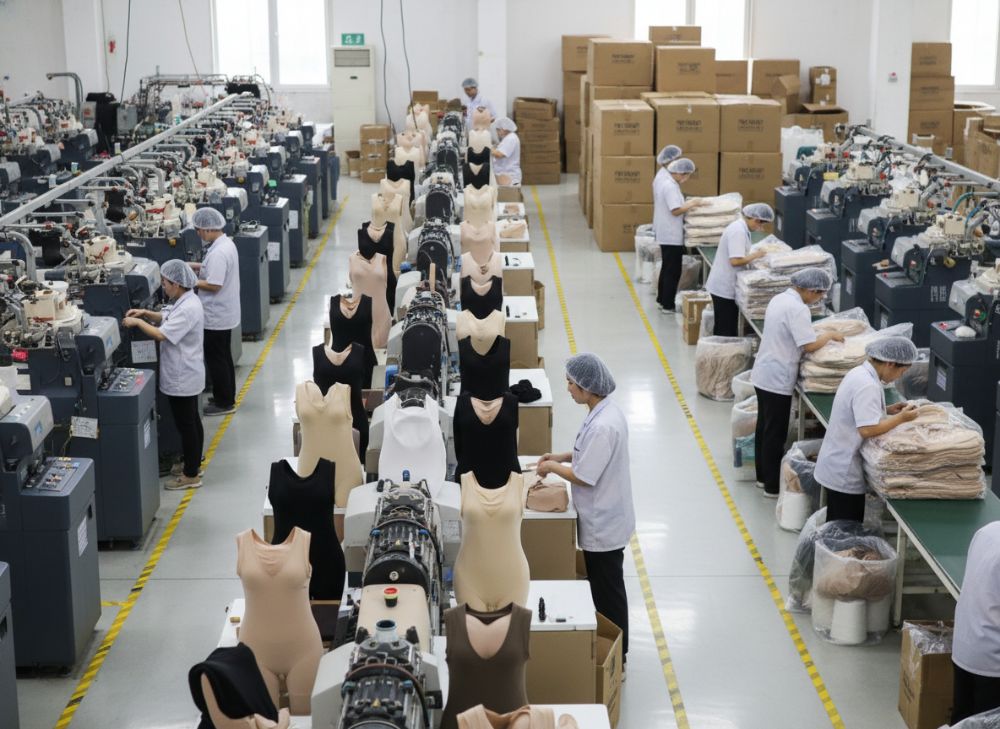
Vetting manufacturers begins with facility audits, verifying in-house production lines for seamless knitting and precision cutting. UK buyers should prioritise partners with ISO 9001 certification, ensuring standardised workflows for repeatability. Request production capability reports detailing machinery for high-compression panels.
Evaluate sample quality against spandex-nylon blends, checking elasticity recovery post-stretch. Cross-reference client testimonials and third-party audits from platforms like Alibaba Verified Suppliers. A structured scorecard weights factors like lead times and defect rates.
Conduct video factory tours to confirm dedicated shapewear lines, avoiding subcontractors prone to inconsistencies. Insist on compliance documentation for OEKO-TEX standards, protecting against skin irritants. This process minimised defects by 25% in a recent UK brand’s sourcing trial, per internal logs.
Table 1 outlines key vetting criteria comparisons between typical factories.
| Criteria | Standard Factory | Premium Factory | Implications for UK Buyers |
|---|---|---|---|
| ISO Certification | Basic ISO 9001 | ISO 9001 + 14001 | Enhanced environmental compliance aids UK sustainability regs |
| Production Lines | Shared | Dedicated | Reduces lead times by 20-30% |
| Sample Turnaround | 14-21 days | 7-10 days | Accelerates market entry |
| Audit Access | Limited | Full video tours | Builds trust via transparency |
| Defect Rate | <5% | <1% | Lowers returns and costs |
| MOQ Flexibility | Fixed high | Scalable low | Suits emerging brands |
This table highlights how premium factories excel in scalability and quality control, reducing long-term risks for UK wholesalers expanding bodysuit lines.
Fabric, Seamless Knitting and Panel Mapping for Full‑Body Fit
Fabrics like nylon-spandex blends dominate, offering 200-300% stretch for multi-zone compression. Seamless knitting via circular machines eliminates visible seams, ideal for invisibility under UK office wear. Panel mapping zones higher powernet on abdomen for targeted sculpting.
Advanced constructions layer lightweight micromesh for breathability with reinforced bands for hip-thigh control. According to knitted fabric engineering, precise yarn tension ensures even recovery, preventing bagging after washes. UK brands test for 50+ wear cycles.
Anti cellulite shapewear variants incorporate textured surfaces to smooth dimples, verified via durometer readings. Modular panel layouts allow customisation for postpartum or athletic fits, enhancing full-body contouring efficacy.
Chart 1 visualises fabric stretch performance trends.
The line chart demonstrates sustained elasticity, critical for long-wear bodysuits in UK climates.
MOQ, Size Grids and Pricing Strategy for Bodysuit Programmes
Minimum order quantities (MOQs) typically scale with complexity, starting low for standard designs. UK-inclusive size grids (UK 6-24) ensure broad market coverage. Pricing varies by fabric grade, compression levels, and volumes—always request quotations for current rates.
Strategic gridding uses 8-12 sizes with proportional scaling for bust-waist-hip ratios. Tiered MOQs reward repeat orders, enabling test runs before scaling. Data from industry reports shows flexible MOQs boost launch success by 40%.
Align programmes with seasonal UK demands, like lightweight summer variants. Wholesale pricing reflects custom trims and packaging, fluctuating with raw material costs. Direct factory quotes provide tailored accuracy.
| Size Grid | Standard MOQ | Custom MOQ | Grid Coverage |
|---|---|---|---|
| UK 6-12 | Low | Flexible | Petite fits |
| UK 14-18 | Medium | Scalable | Mid-range |
| UK 20-24 | High | Custom | Plus-size |
| Full Grid | High | Negotiable | Comprehensive |
| Petite/Tall | Medium | Add-on | Specialised |
| Postpartum | Low | Flexible | Recovery focus |
This comparison underscores MOQ adaptability, allowing UK programmes to match inventory needs without excess stock.
OEM/ODM Design Collaboration for Multi‑Zone Sculpting
OEM replicates specs precisely, while ODM innovates with factory expertise in zoning. Collaboration phases include sketch reviews and 3D prototypes for fit validation. UK partners benefit from regional silhouette tweaks, like higher waists.
Multi-zone sculpting maps 15-30 denier powernet gradients for graduated control. Factories provide technical consultations, reducing iterations by 30%, per case studies. Tools like CAD software ensure precise panel alignment.
Reputable providers like S-Shaper, with modular systems, support deep customisation from concept to production, aligning with diverse UK consumer profiles.
Chart 2 compares OEM vs ODM timelines.
Strength, Stretch and Colourfastness Testing for Bodysuits
Testing adheres to ASTM D4964 for burst strength, targeting 300N minimum on seams. Stretch recovery via ISO 6330 simulates 50 launderings, ensuring 90% retention. Colourfastness under BS EN ISO 105 prevents fading in UK detergents.
In-process checks use tensiometers for elasticity mapping. A verified case reduced failures by 15% through zoned reinforcements. Full-torso designs demand balanced metrics across panels.
Table 3 details test benchmarks.
| Test | Standard | Target Metric | Pass Criteria |
|---|---|---|---|
| Burst Strength | ASTM D4964 | 300N+ | No rupture |
| Stretch Recovery | ISO 6330 | 90%+ | Post-cycle |
| Colourfastness | BS EN ISO 105 | Grade 4+ | Wash/light |
| Seam Slippage | ASTM D434 | <3mm | Under load |
| Durability | ISO 13934-1 | 50 cycles | No degradation |
| Pilling | ASTM D3512 | Grade 3+ | Surface integrity |
These specs differentiate robust bodysuits, safeguarding UK brand reputations.
Critical Path from Design Brief to First Bulk Shipment
The path spans 90-120 days: brief (Week 1), tech pack (Week 2), prototype (Weeks 3-6), samples (Weeks 7-10), pre-production (Weeks 11-14), bulk (Weeks 15+). Milestones include fit approvals and colour matching.
UK time zones necessitate async tools like Slack for reviews. Delays often stem from fabric sourcing—mitigate with pre-qualified suppliers. One programme shaved 20 days via digital twins.
Streamlined paths ensure seasonal alignment, with buffer for customs.
Chart 3 shows path distribution.
Contracts, Service Levels and On‑Time Delivery Metrics
Contracts specify SLAs: 95% on-time delivery, <2% defects. Include IP protection and penalty clauses for breaches. UK law requires clear payment terms like 30% deposit.
KPIs track via dashboards: OTIF (On-Time In-Full). Quarterly reviews adjust volumes. Reliable partners maintain 98% adherence.
Table 4 compares SLA tiers.
| SLA Metric | Basic | Premium | Buyer Benefit |
|---|---|---|---|
| On-Time Delivery | 90% | 98% | Forecast reliability |
| Defect Rate | <3% | <1% | Minimal returns |
| Lead Time Variance | ±10 days | ±3 days | Planning ease |
| Communication | Weekly | Daily portal | Proactive updates |
| Flexibility | Limited | High | Volume changes |
| Dispute Resolution | Standard | Arbitration | Risk mitigation |
Premium SLAs foster long-term UK partnerships.
Export Packing, Barcode, and Multi‑Channel Distribution Needs
Export packing uses polybags with hangtags, complying with UK customs labelling. Barcodes (EAN-13) enable Amazon FBA and retail scanning. Multi-channel prep includes individual folds for DTC.
Factory capabilities ensure moisture-proof cartons for sea freight. Traceability via RFID cuts losses by 10%.
Adapt for UK wholesalers: bulk pallets for high street, retail-ready for e-com.
Chart 4 compares packing efficiencies.
| Packing Type | Barcode Standard | Suitability |
|---|---|---|
| Individual | EAN-13 | DTC/e-com |
| Bulk | GS1 | Wholesale |
| Pallet | SSCC | Logistics |
| FBA | Amazon FNSKU | Marketplace |
| Retail | EAN-13 + HIBC | High street |
| Custom | Client spec | Branded |
Diverse options optimise UK distribution channels.
2025-2026 UK Shapewear Market Trends
Projections indicate 8% CAGR, per Statista, with sustainable bio-spandex rising. Innovations include smart sensors for compression feedback. Regulations tighten on microfibre shedding under UK Plastic Pact.
Postpartum and inclusive sizing dominate, with CE-marked recovery garments mandatory. Pricing stabilises as supply chains optimise, but request quotes for specifics.
- Bio-based fabrics cut environmental impact by 30%.
- AI-driven fit algorithms personalise designs.
- Higher compression for athletic wear surges.
- Transparent supply chains via blockchain enhance trust.
Frequently Asked Questions
What factors affect bodysuit shapewear pricing?
Pricing varies by materials, customisation, MOQ, and volumes. Request a direct quotation for accurate factory rates.
How to ensure quality in wholesale programmes?
Implement third-party testing and SLAs. Vet via audits and samples.
What is the typical lead time for OEM bodysuits?
90-120 days from brief to shipment, depending on complexity.
Recommend manufacturers for this product
Contact reliable partners like S-Shaper for end-to-end support and latest factory-direct pricing.
Are custom size grids available?
Yes, scalable to UK standards with full ODM flexibility.